
01 Context
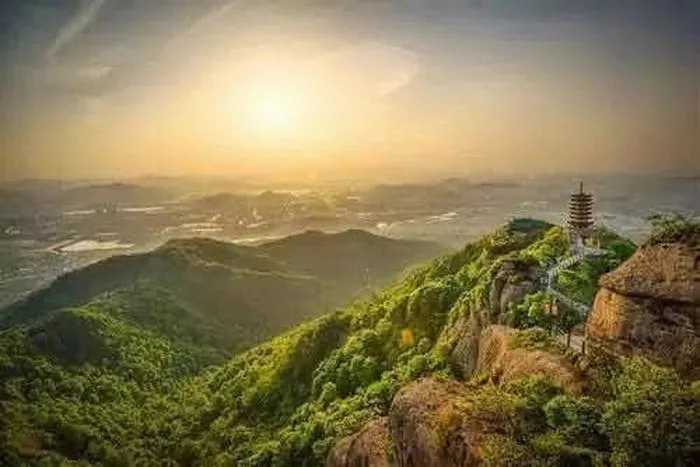
Shaoxing Manyuan is situated in the southeast of Shaoxing city, just north of the renowned Kuaiji Mountain. Historically, Kuaiji Mountain has been a cultural highland of China. It is famous for the ancient legend of Yu the Great controlling floods, a story passed down through generations, and for being a gathering place of scholars from the Wei and Jin dynasties. Notably, Wang Xizhi and Xie Lingyun lived and created in the Yexi area of Jishan, producing some of the most exquisite literary and artistic works representing Chinese intellectuals. During the Ming Dynasty, Wang Yangming retreated to seclusion on Mount Kuaiji, where he studied psychology and Taoist philosophy. While Shaoxing’s urban area—with its small bridges and flowing waters—reflects the gentle and sincere essence of ancient Yue culture, Kuaiji Mountain symbolizes the integrity and purity of Shaoxing’s Qingyue cultural heritage.
02 Geological Exploration
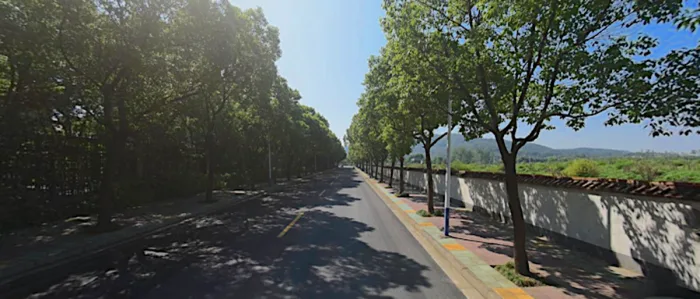
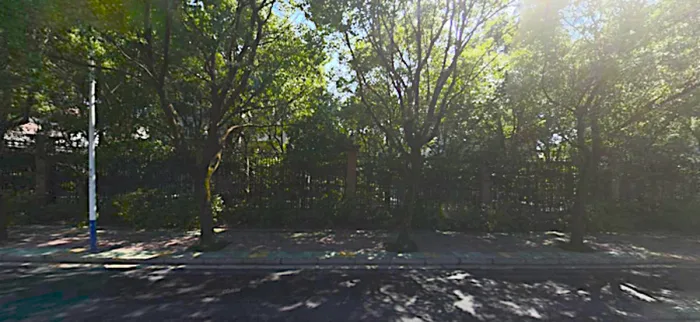
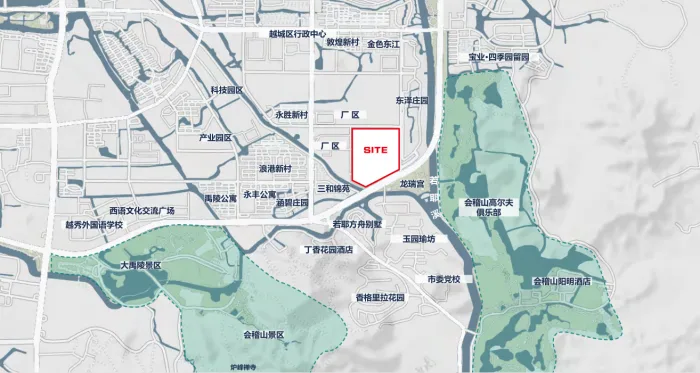
When I first visited the site, several kilometers away, I could already see the lush greenery of Kuaiji Mountain and the statue of Dayu standing prominently. Due to strict visual control regulations within the scenic area, building heights are limited, and the surrounding developments are concealed within dense foliage, preserving the ancient and tranquil character of Kuaiji Mountain. The site is bordered by Huanjiang Road to the west, Shengshan Road to the south, and the Shaoxing Second Ring Road to the north, with a one-meter-wide green belt along the ring road. Tall, mature camphor trees line both the eastern and northern roads, providing an excellent microclimate for the site.
03 Planning Concept
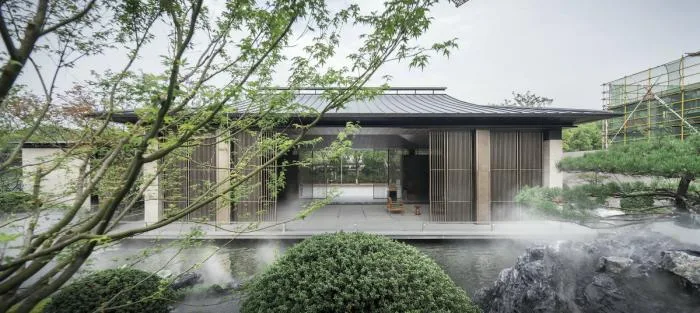
The entire park spans 201.4 acres with a floor area ratio of 1.15. The housing types include row houses, stacked villas, and standalone villas. From the early stages, the landscape team was actively involved in planning and spatial optimization, aiming to create a harmonious architectural landscape that blends seamlessly with the natural and cultural atmosphere of Kuaiji Mountain.
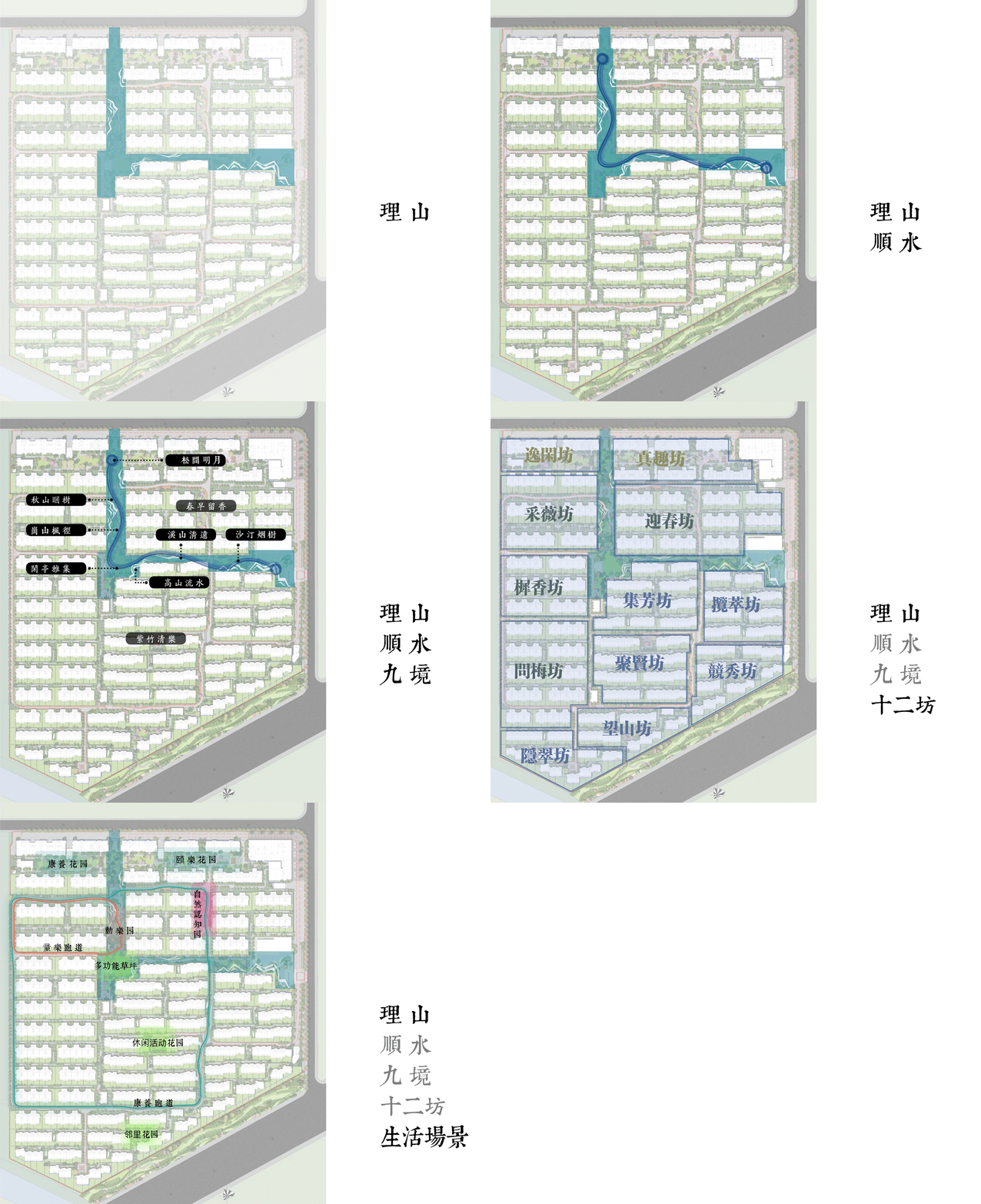
The finalized landscape plan follows the concept of “two parks, nine boundaries, and twelve squares.” This structure offers residents a sense of belonging and clear spatial orientation through appropriately scaled neighborhoods. Connecting the two main entrances on the east and north sides is an “L” shaped public landscape axis, creating a continuous, scroll-like linear space. Along this axis, nine resident nodes have been developed, enriching the environment with a blend of tourism and social functions.
Named “Garden,” the project reflects the landscape’s value and the aspirations it represents. The challenge was to design a contemporary garden that preserves the site’s original peaceful and humanistic atmosphere while aligning with modern aesthetics and lifestyles.
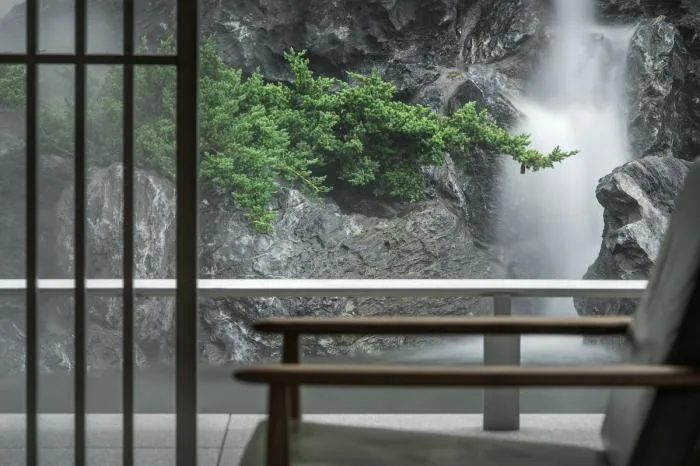
Qi Biaojia of the Ming Dynasty once wrote in his “Record of Yuezhong Garden Pavilion”: “The water in Yuezhong is nothing but mountains, the mountains in Yuezhong are nothing but water, and the mountains and waters in Yuezhong are nothing but gardens.” Mountains, waters, forests, and springs have long been the ideal habitat for the Chinese people. “Flatlands, hills, and valleys lie within the universe’s grasp,” and gardens serve as the key medium to bring mountains and waters into daily life. This project embraces the philosophy of “mountains and waters entering the garden, ancient quality meets modern beauty” as its guiding principle for landscape design.
04 Interpretation
Bridging Past and Present
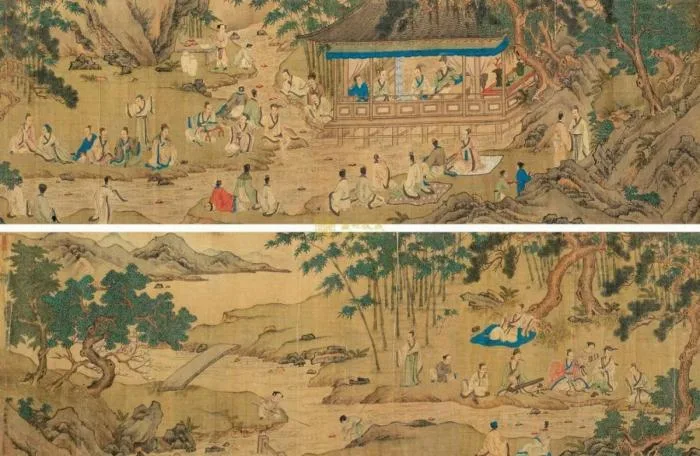
△ Wen Zhengming · “Lanting Elegant Collection Picture”
Mr. Tong Jun once described Chinese gardens as “three-dimensional Chinese paintings.” For ancient scholars, garden design often followed painting principles, and many important gardeners were skilled painters. Gardens have always been valued as picturesque, transcendent carriers of artistic conception.
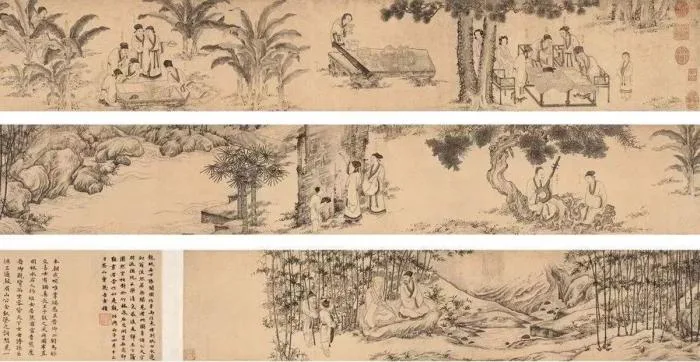
△ Li Gonglin, “Map of the Western Garden Elegant Collection”
Since the Wei and Jin dynasties, the tradition of elegant gatherings in gardens has passed down through generations of literati. Although most gardens have been lost, artistic paintings from various dynasties preserve refined memories of those times. Yaji, a traditional spiritual practice, can now be understood as a high-quality interaction where people connect with each other and with nature.
4.1 Site Review
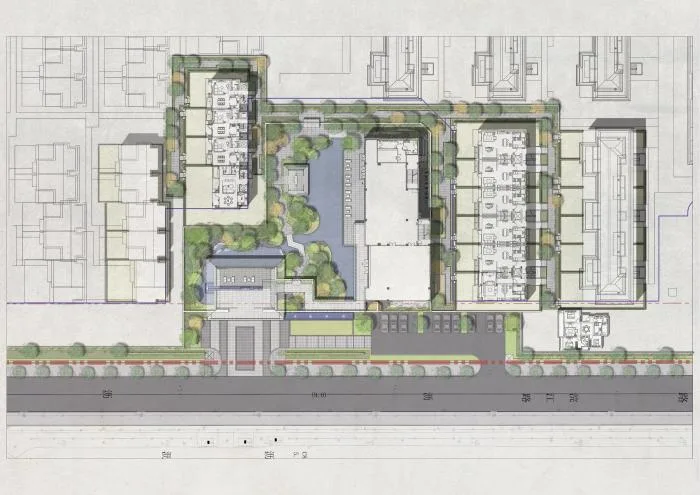
The demonstration area is located at the eastern starting point of the “L” shaped landscape axis and serves as the main entrance garden for the entire project. It belongs to the “outer garden,” intended for use by all residents and external visitors. The two-story building on the north side currently functions as a sales center and will later be converted into a commercial space providing services for the area. Due to differing uses during the sales period and after delivery, two flow paths naturally form. During sales, these paths connect to create an experiential park loop. After delivery, they separate into internal and external flows: one for residents returning home and another for business visitors.
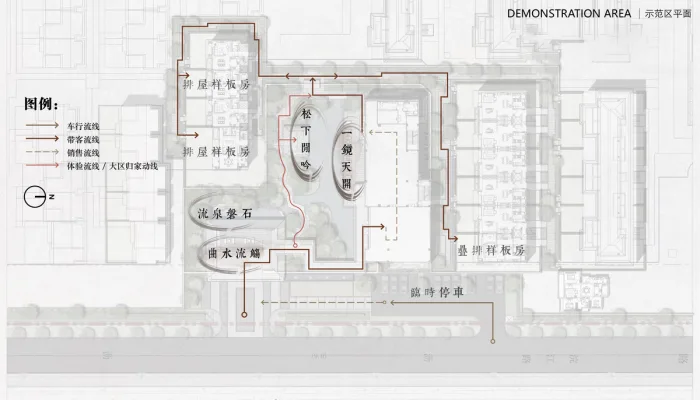
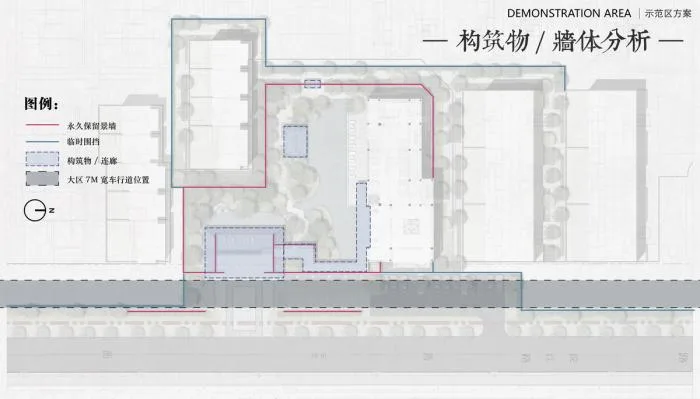
Initially, the architectural master plan featured a rectangular demonstration area with a two-story commercial building on the north side. The main entrance was centrally positioned on the south side, protruding beyond the wall and creating a strong architectural presence. The entrance opened towards the mountain, revealing a garden centered around a water feature. After careful review, the plan was optimized: the main entrance was moved southward and set back, two row houses on the south side were removed, and an external space was added outside the rectangular main garden. The display wall was also extended from 67 meters to 85 meters in both directions.
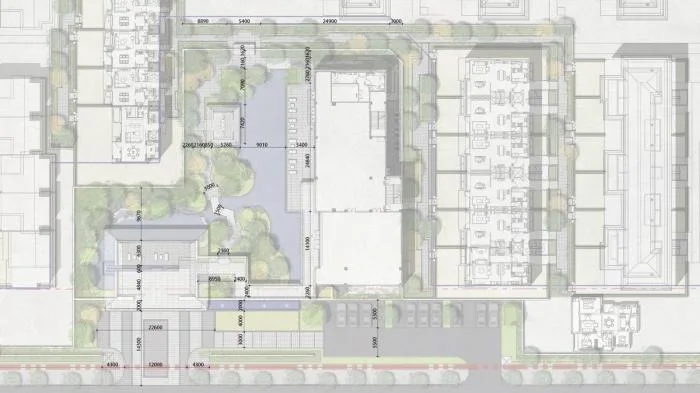
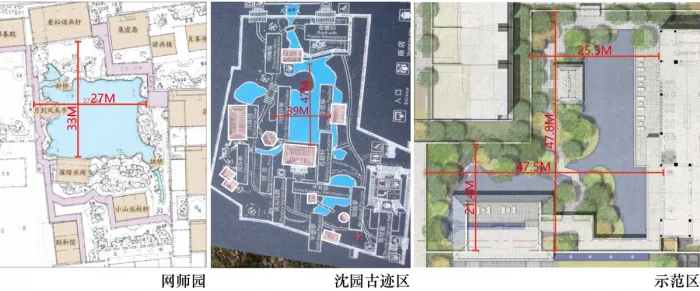
The main garden measures 48 meters wide and 25 meters deep, drawing inspiration from Shen Yuan, a famous Song Dynasty garden in Shaoxing, and the proportions of the Suzhou Wangshi Garden. The design aims to create a sense of expanding scale from small to large.
4.2 Lishan Mountain Shunshui Source
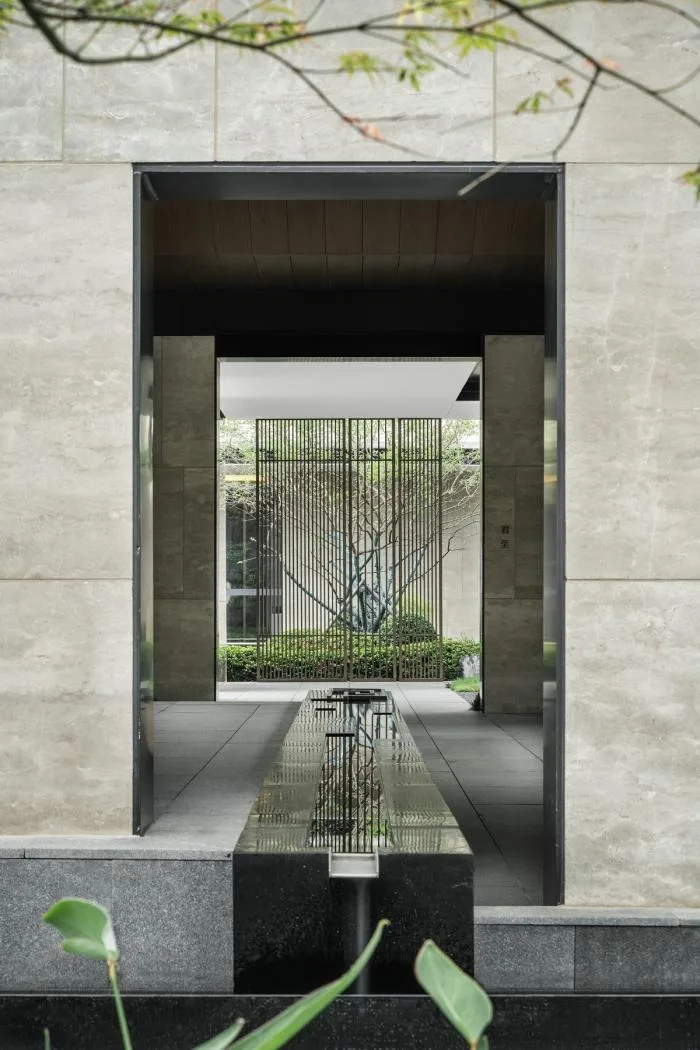
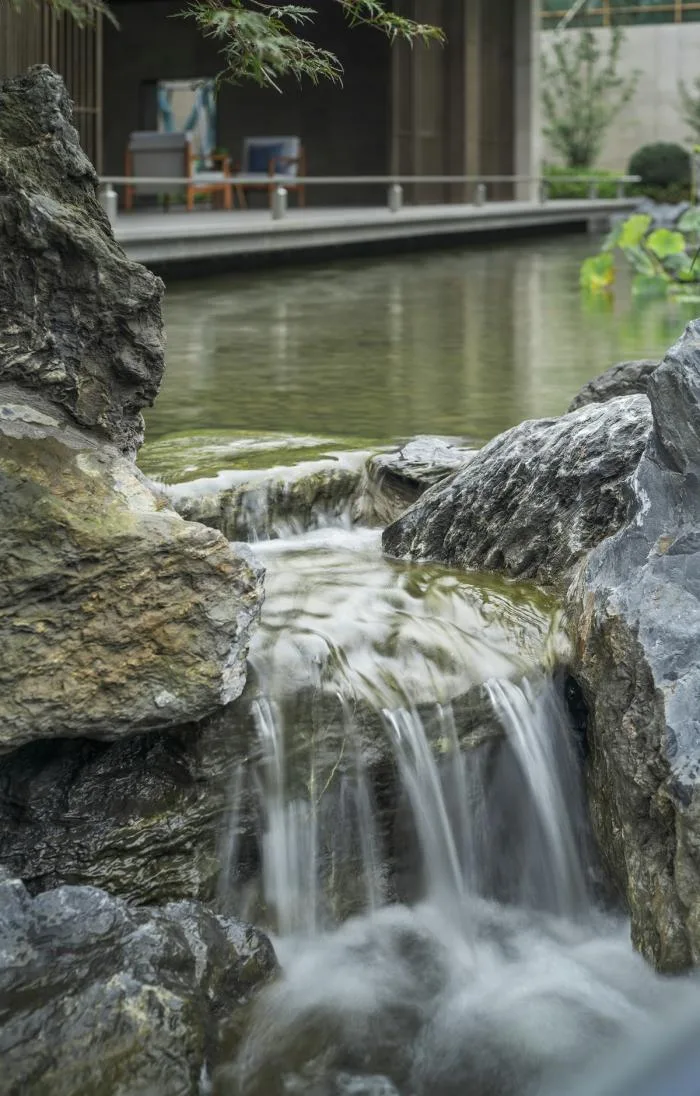
“Stacking mountains and managing water” is fundamental in traditional garden design. Mountains are precious and static, water is dynamic and vital, and the flow of energy (qi) is the core principle of Chinese garden aesthetics. Since this garden is built on flat terrain, the challenge was how to bring the essence of mountains and water into the space with subtle changes.
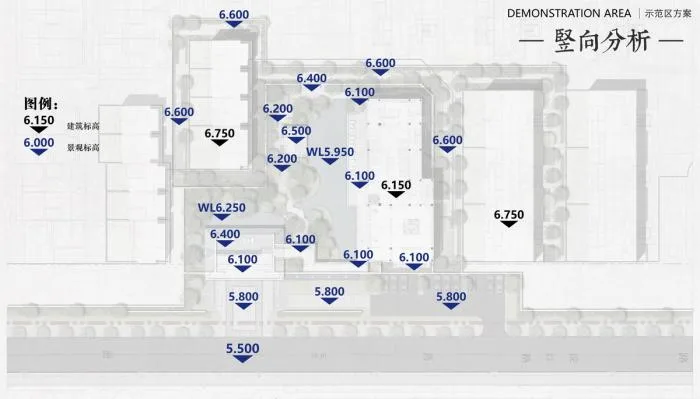
By raising the garden’s base elevation by 30 centimeters and an additional 30 centimeters at the entrance, a 60-centimeter height difference was used to create the water source and flow direction throughout the garden. Through carefully designed linear channels and two drops, the water’s path is extended before it merges into the central pond. The mountain range is arranged along the west and south walls, forming a picturesque forest backdrop, enhanced by the distant Kuaiji Mountain.
4.3 Structural Layout
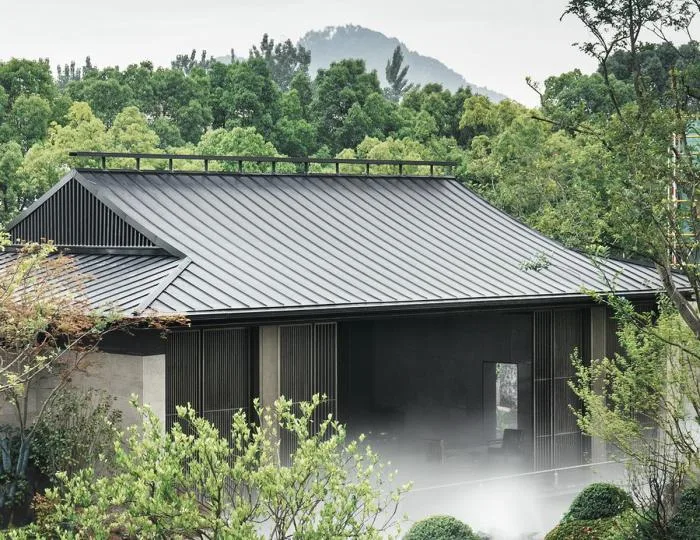
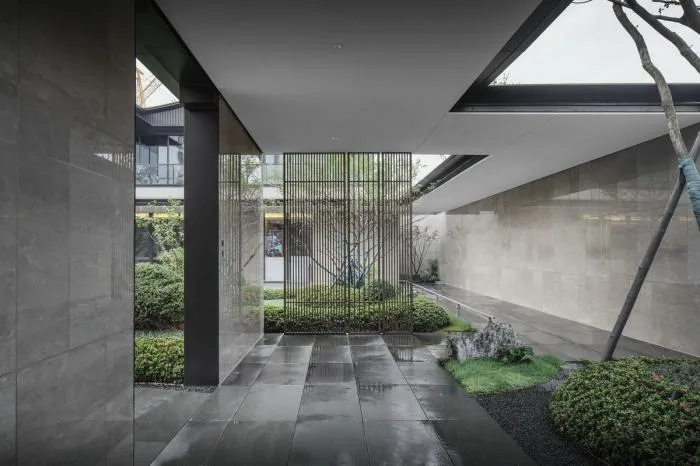
Once the basic landscape pattern was established, the next step was to integrate functional flow paths and visual elements to strategically position key structures within the space. On the L-shaped site, four structures were arranged: the entrance flower hall, the east-side corridor, the pond platform pavilion, and the inner garden firewood gate. These structures vary in scale and balance, ranging from grand to delicate, elevated to grounded, designed for different experiences such as passing through, resting, or enjoying views. They blend harmoniously with the surrounding mountains, forests, water features, plants, and people to create a rich and diverse spatial experience.
To ensure a cohesive design, all architectural and interior elements of these structures were uniformly designed by ZSD Zhuoshi.
4.4 Gradual Spatial Transition
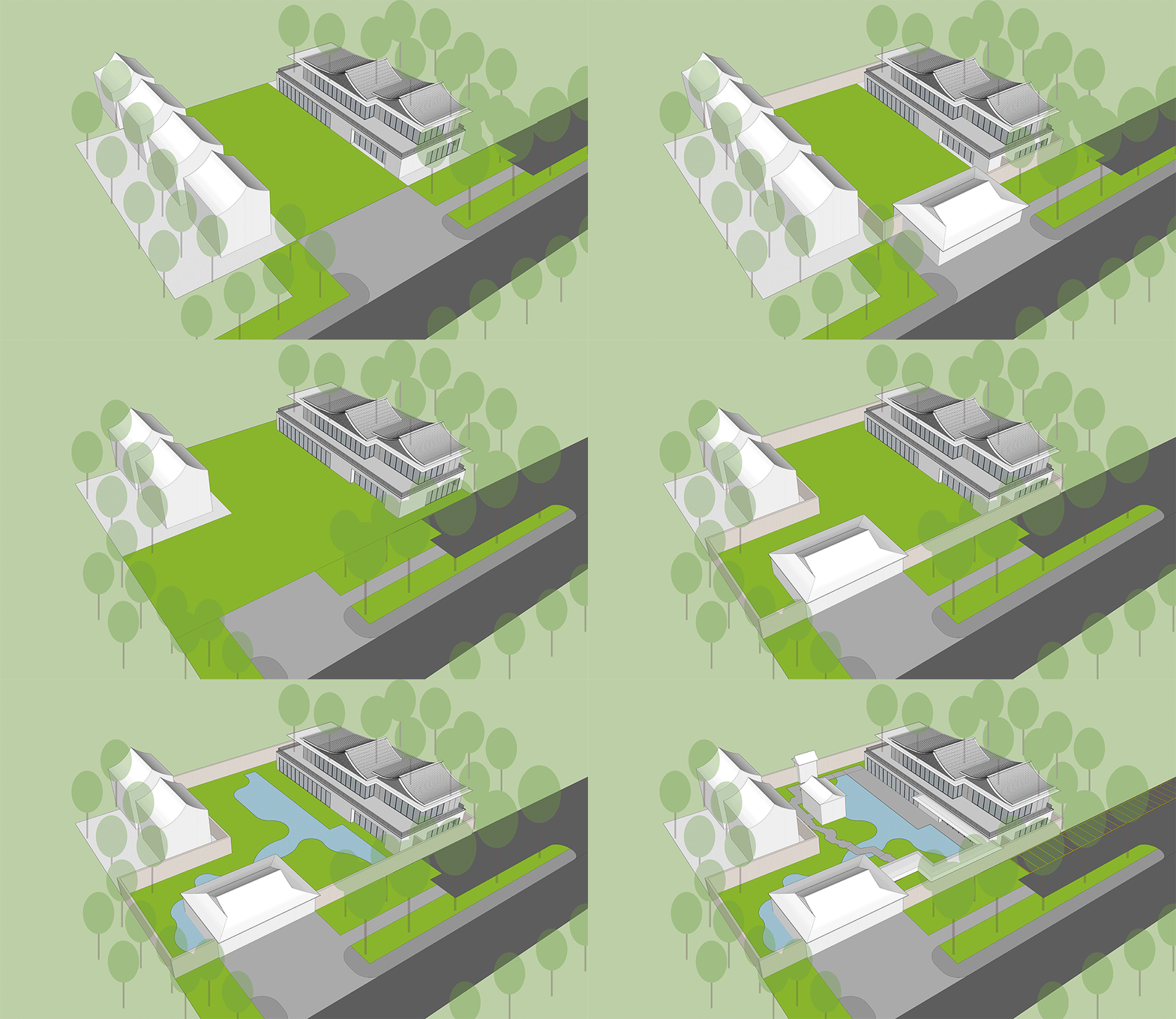
△ Landscape design process animation
The site is organized into four sequential entry spaces, connecting architecture, interior, and landscape through a narrative of landscape scenes.
Step One: Retreat and Borrow the Scenery to View the Forest
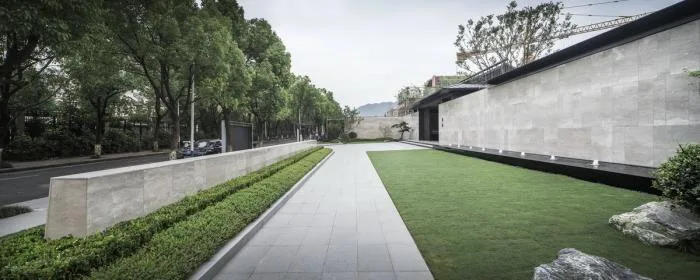
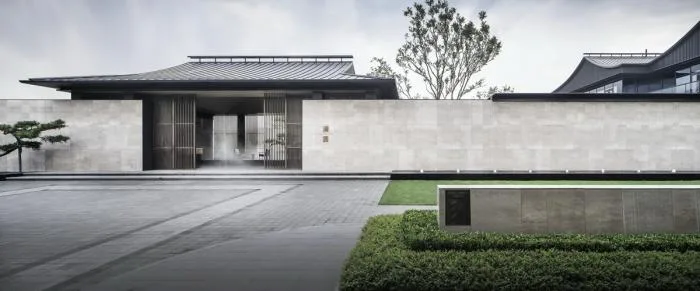
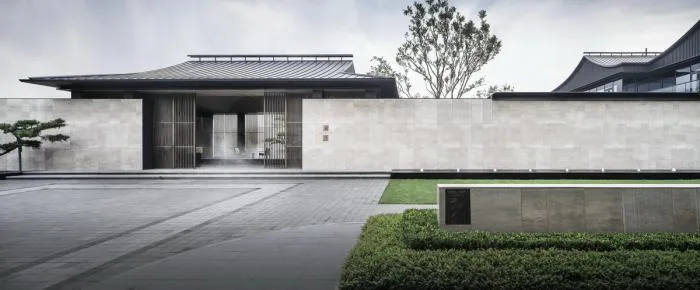
Using Huijishan as the distant backdrop, the entrance flower hall and scenic wall were intentionally left open within the original boundary, creating a welcoming and open forecourt. The camphor tree lining Huanjiang Road naturally frames the foreground. The parking area is located on the north side of the forecourt, guiding visitors’ gaze along the path toward Kuaiji Mountain. The entrance flower hall, inspired by the Song Dynasty’s Xieshan Peak style, stands 7.34 meters tall with an 18.4-meter-long eave and 12 meters width. Together with shrub balls and welcoming black pines at the vista’s end, it forms a natural and elegant Chinese painting, restrained and harmonious in front of the horizontally extending wall.
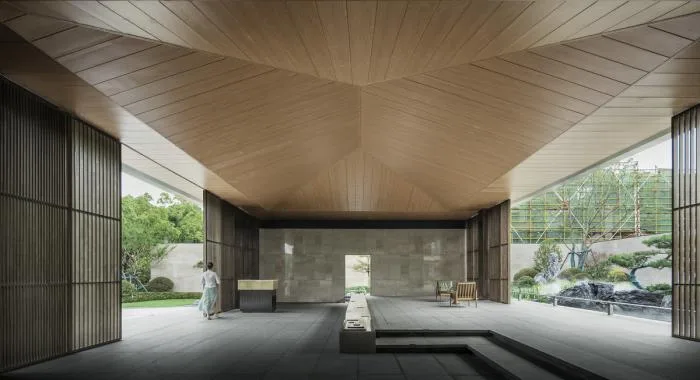
Step Two: Qu Shui Liu Shang — Enjoying Spring Among Pine Trees
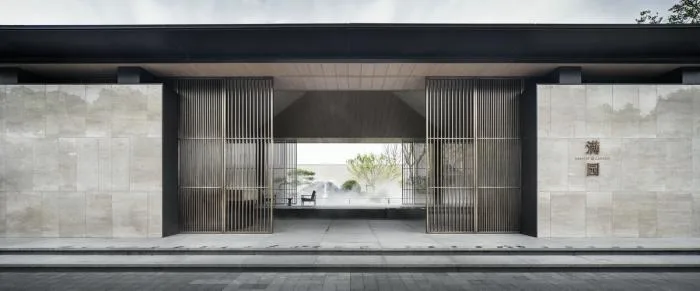
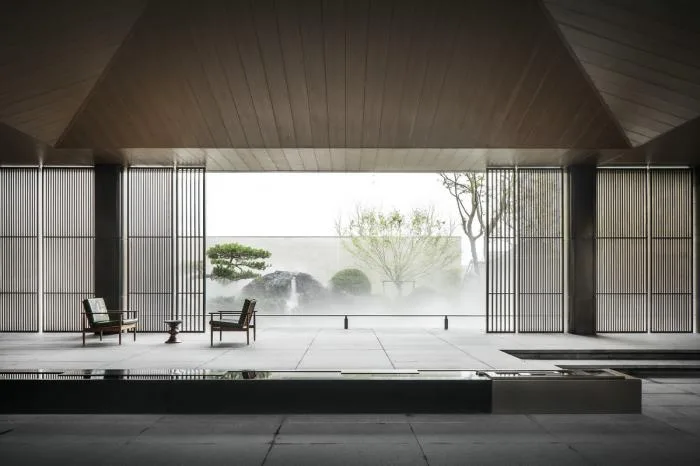
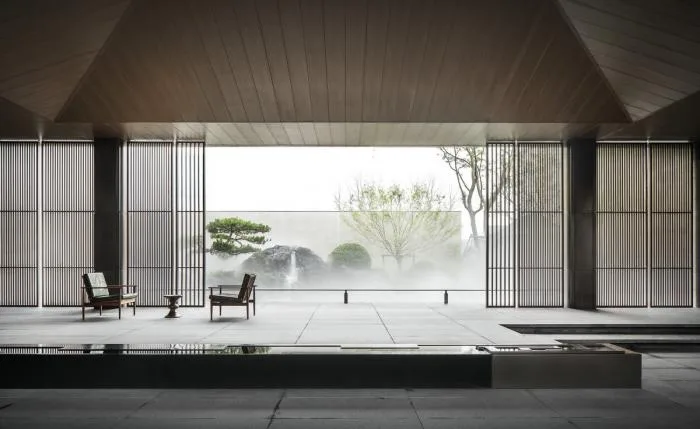
The reception flower hall, situated atop the hill, draws the eye through its lowered eaves and lattice frames. The interior eliminates unnecessary structural elements, creating a spacious and open atmosphere. The wood-grain aluminum ceiling adds warmth and elegance. A 30-centimeter elevation difference between indoors and outdoors, combined with the central “Qu Shui Liu Shang” water axis feature, divides this 154-square-meter space into two zones: a stopping area and a passageway.
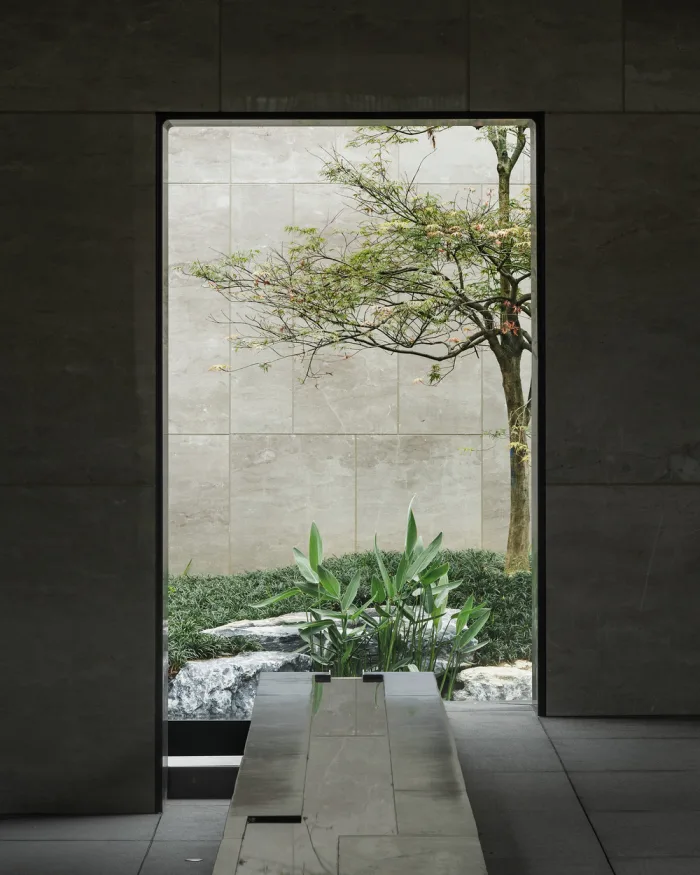
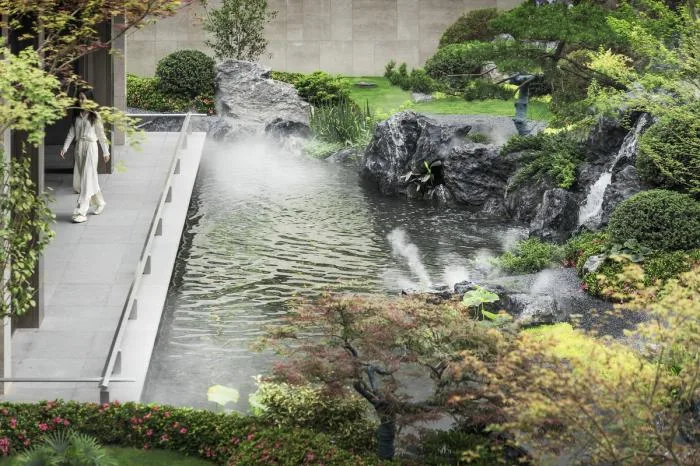
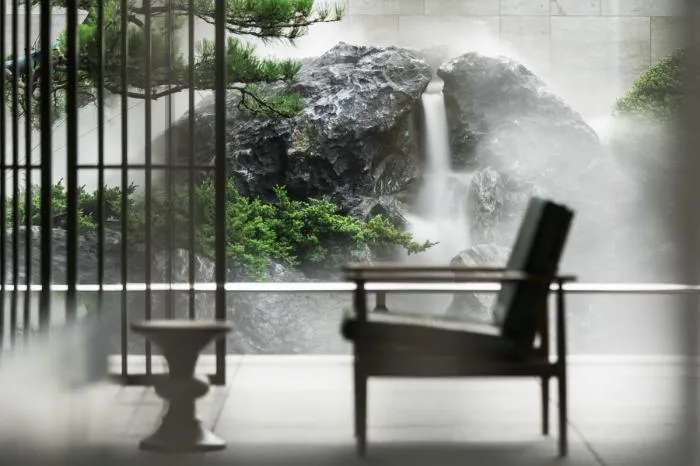
The “Qu Shui Liu Shang” elegant collection, first celebrated after Eastern Jin literati retreated to mountains and forests, inspired the design of this second entry space. A winding watercourse is simulated on rock features, evoking the carefree and refined drinking and poetry gatherings of ancient scholars. The shadowless water axis is regarded as the project’s water source, extending beyond the entrance and linking with mountain springs and waterfalls, creating a dynamic interplay of high and low, movement and stillness. The mountain stream flows downward, accompanied by the melodious sound of “Asking for Spring Among Pine Trees.”
Step Three: Smooth Yet Winding, Building Momentum
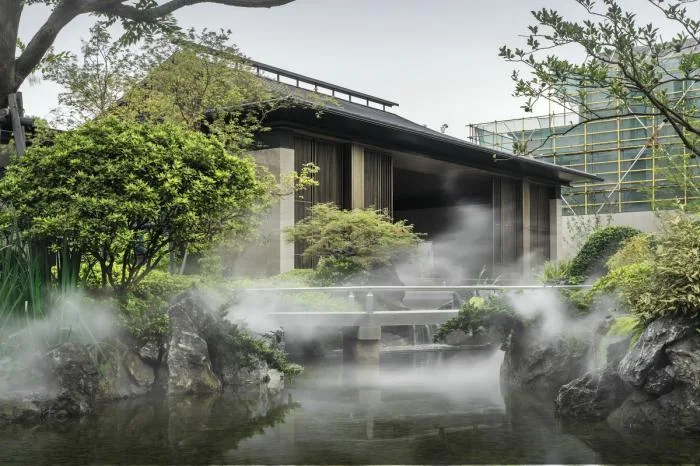
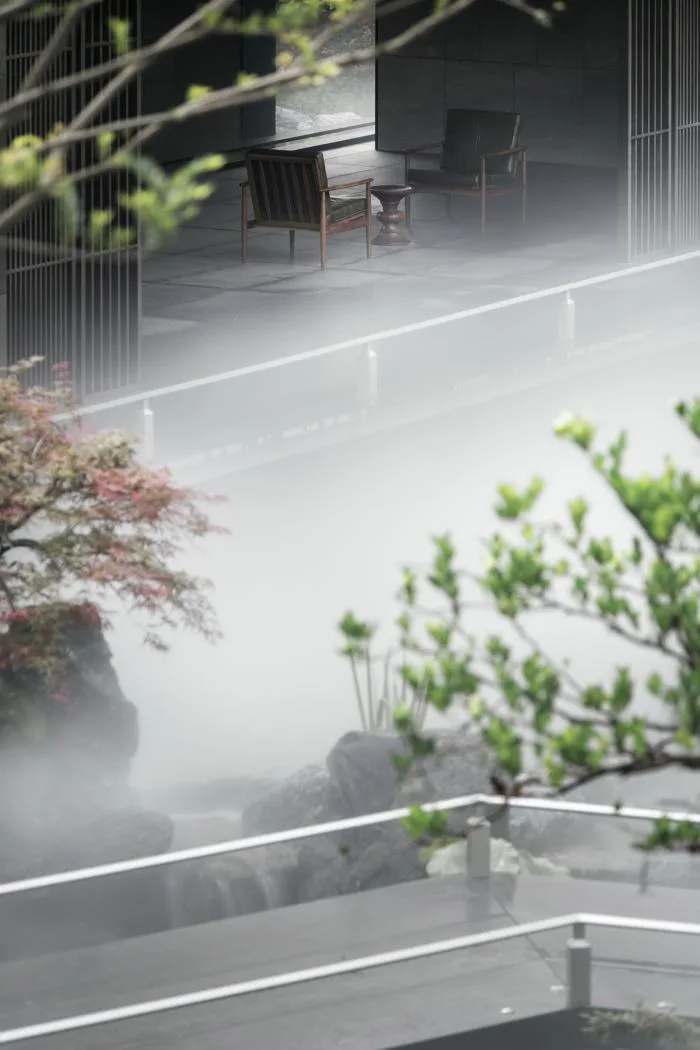
Along the park’s west side, a narrow, winding path leads to the inner courtyard’s wooden gate. This nearly 100-meter-long twisting route enriches the park experience.
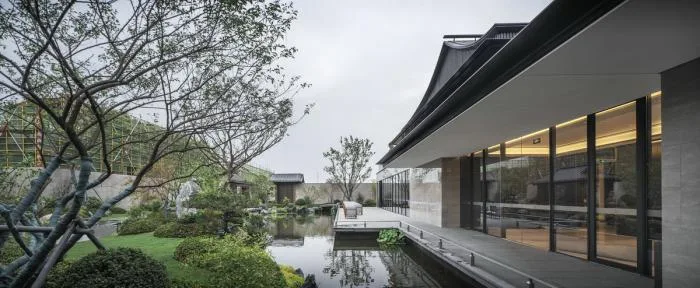
Large trees provide a backdrop, with smaller shrubs adding detail along the path. The landscape features gently rolling, sparse mountain scenery and a meandering, sandy waterfront. Seasonal plantings include red plum blossoms in spring, apricot and Chinese tallow trees in summer, red and green maples, southern bamboo, and cypress in autumn, creating a natural poetic vitality throughout the year. Two bridges and a pavilion are placed strategically: a small bridge crosses a water bend, and the tranquil pavilion offers a resting spot, continuing the literati garden tradition of elegant gatherings. The interplay of mountains, rocks, flowers, trees, and architecture creates a dynamic sequence of concealed and revealed views, enriching the spatial experience.
Step Four: Reflection on the Realm of One Day
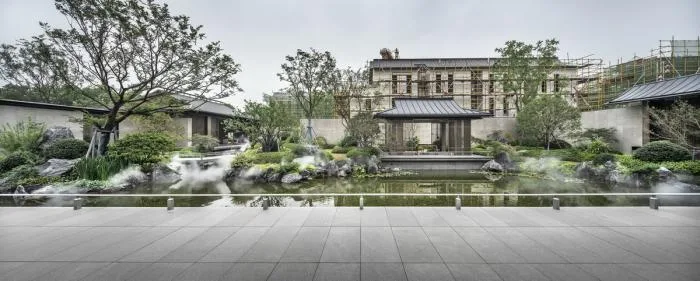
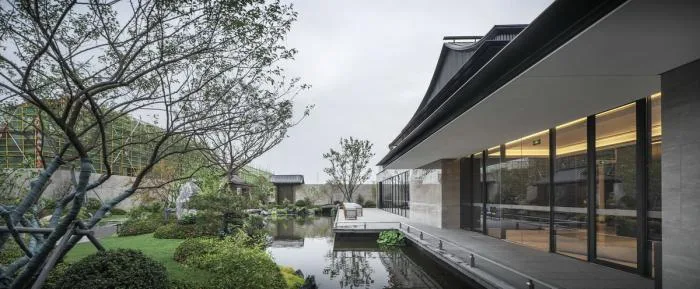
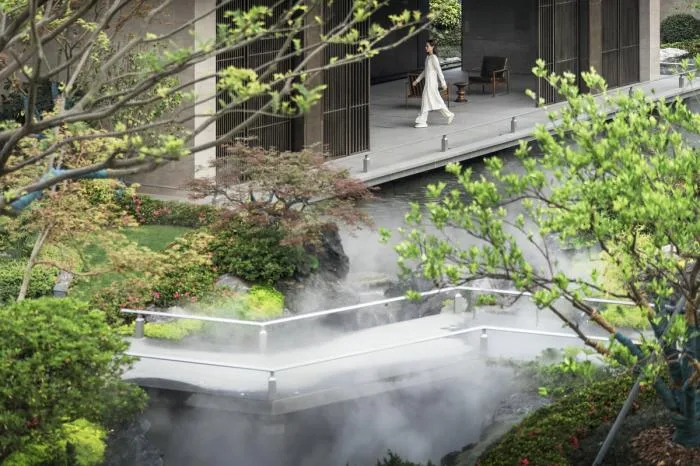
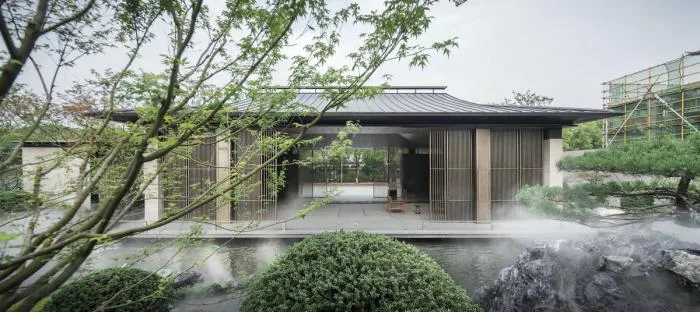
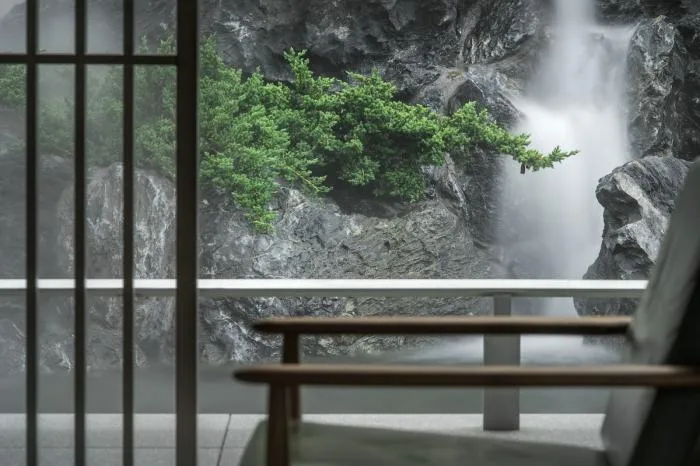
By passing the firewood gate or following the curved corridor outside the flower hall, visitors reach the open-air pool platform on the east side, a waterfront gathering space with strong scale contrasts created by the preceding spaces. The flower-lined paths in front of the pond are arranged horizontally, creating a layered panoramic composition that resembles a three-dimensional painting. Kuaiji Mountain serves as the distant backdrop, with the flower hall and firewood gate as central focal points.
A central flat pool reflects the sky, with water extending just over 8 meters on each side, blending seamlessly with the horizon. Horizontal and diagonal shadows scatter across the water, generating a sense of vastness beyond physical boundaries and offering a feeling of freedom. Sitting by the shore, one can chat and recite poetry leisurely, experiencing vitality and tranquility in harmony with nature. This pool naturally separates the residents’ return path from external visitors, while visually connecting the two flows.
05 Material Details
Manyuan draws inspiration from traditional gardens and architecture in terms of artistic conception and form, while adopting a fully modern language in materials and craftsmanship. Caesar grey stone walls and dark metal tile roofs set a calm, elegant tone, complemented by detailed craftsmanship in wood-grain metal ceilings, metal grilles, and railings. For the garden design, Heishan stone was chosen to harmonize with the overall atmosphere.
During construction, multiple sample tests and on-site adjustments ensured the highest quality results.
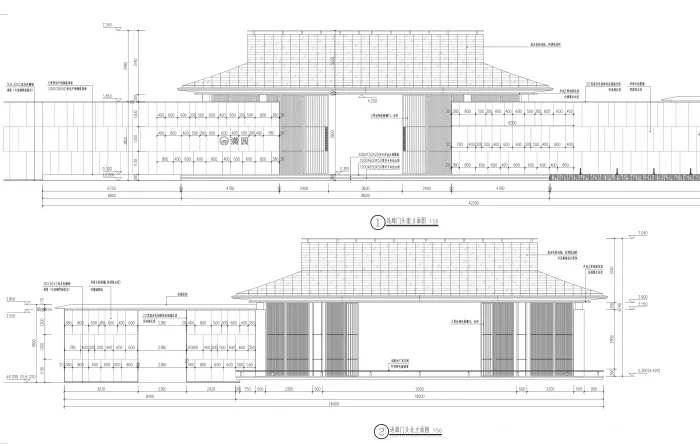
△ Door Head Detail Drawing
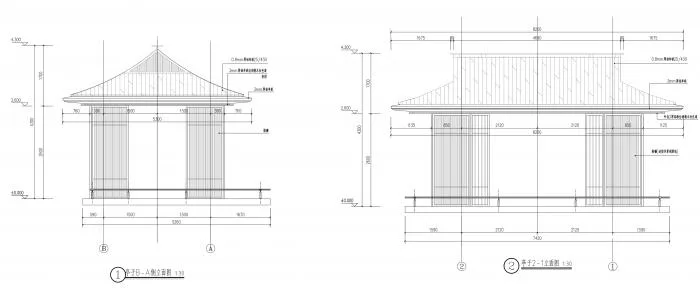
△ Water Pavilion Drawing
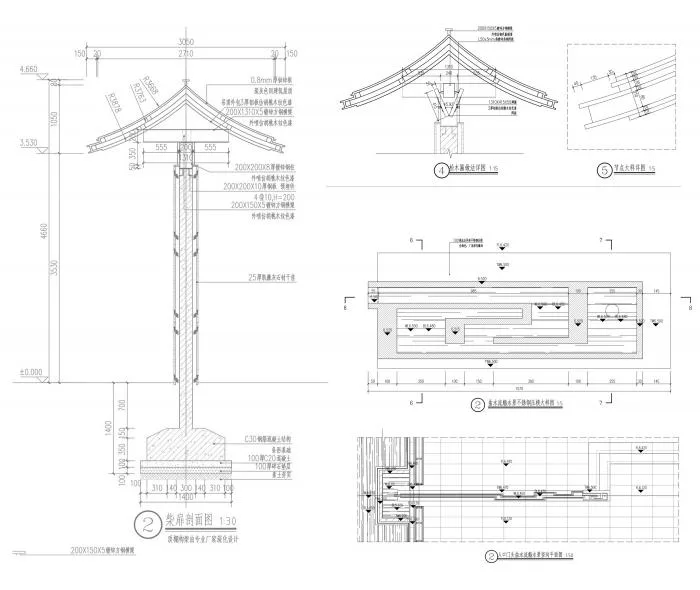
△ Diagram of Chai Fen and “Qu Shui Liu Shang” Water Axis
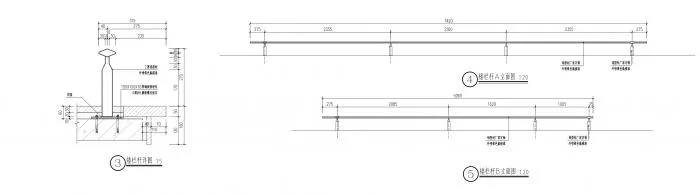
△ Railing Detail Drawing
06 Conclusion
Traditional Chinese gardens embody an Eastern ideal of living, reflecting not only a longing for nature but also a deep love and appreciation for life. Beyond stylistic expressions, these principles remain timeless. Shaoxing Manyuan represents another endeavor by Zhuoshi ZSD to learn from tradition and create contemporary gardens that honor heritage while embracing modernity.
Project Information
Project Name: Everyone · Zhanjing Manyuan
Project Type: Low-density Residential Development
Project Owner: Shaoxing Yulin Real Estate Co., Ltd
Location: Shaoxing, Zhejiang
Design / Completion: August 2019 / May 2020
Project Area: 134,000 square meters
Demonstration Area: 3,200 square meters
Landscape Design: ZSD Zhuoshi
Design Guidance: Yuan Xiaoyu
Landscape Team: Yu Yujun, Wang Licheng, Dou Longfei, Huang Zhichao, Wu Ting, Wang Anyuan, He Jiabin, Jiang Yao, Cheng Yajing, Lin Xiaoye
Project Photography: Xue Yutao












Must log in before commenting!
Sign Up