
Location
Andasen Trading Company is situated in Nan’an District, Chongqing, overlooking the river and mountains. The site borders Ciyun Temple to the west and lies within Chongqing’s protected historical core area.
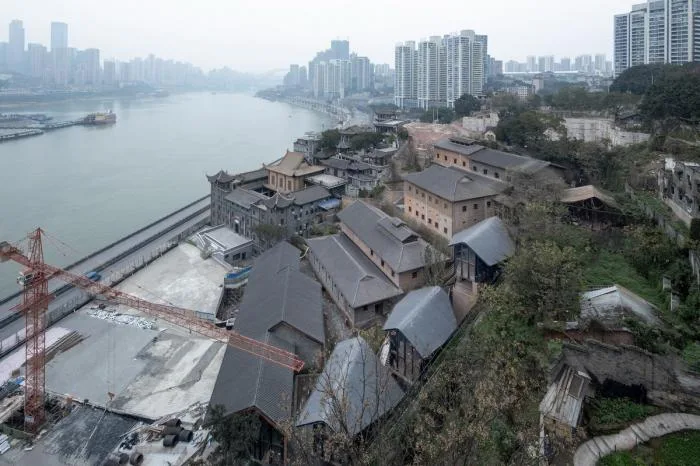
△ Location adjacent to the Yangtze River. Photography: DID-STUDIO
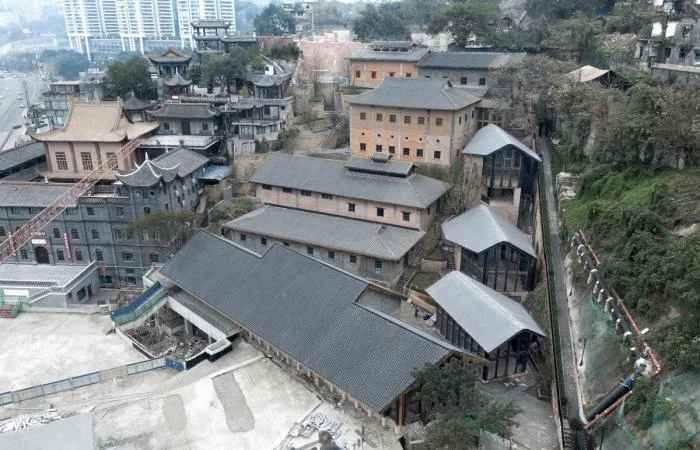
△ Architectural complex built along the mountain. Photography: DID-STUDIO
Original Condition and Challenges
Founded in 1891, Andasen Trading Company was developed in multiple phases. Originally, it served as the office and warehouse of a Swedish trading company. During the War of Resistance Against Japan, cultural relics from the Forbidden City were relocated here for safekeeping. Although the buildings had deteriorated over time, their original architectural features remain mostly intact.
The site currently consists of eight individual buildings categorized into three heritage levels. Four of these are recognized cultural heritage buildings (#2, #3, #4, #5) that require preservation of their original structure, materials, and craftsmanship. One is an outstanding historical building (#1), and three are traditional-style buildings (#6, #7, #8) that must retain their original appearance. The primary challenge was balancing the relationship between old and new elements throughout the project.
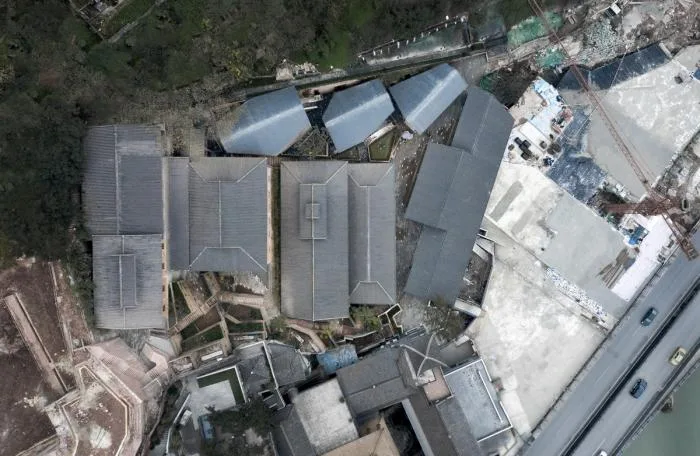
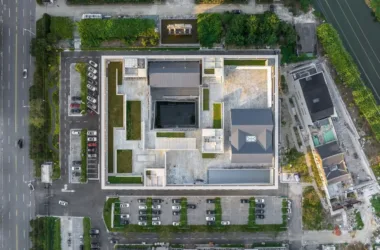
△ Aerial view of the site. Photography: DID-STUDIO
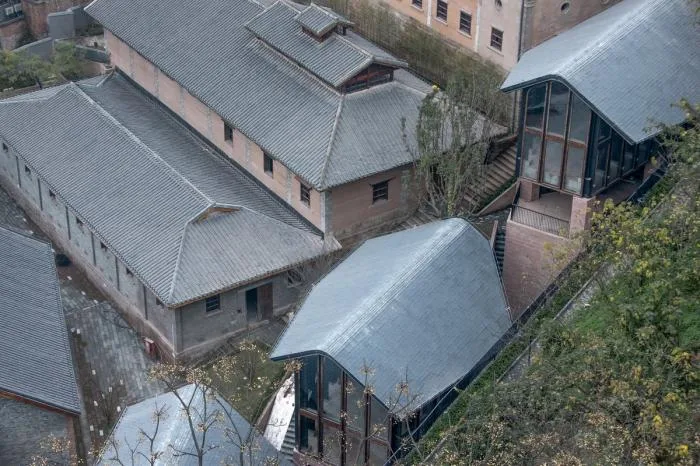
Roof detail. Photography: DID-STUDIO
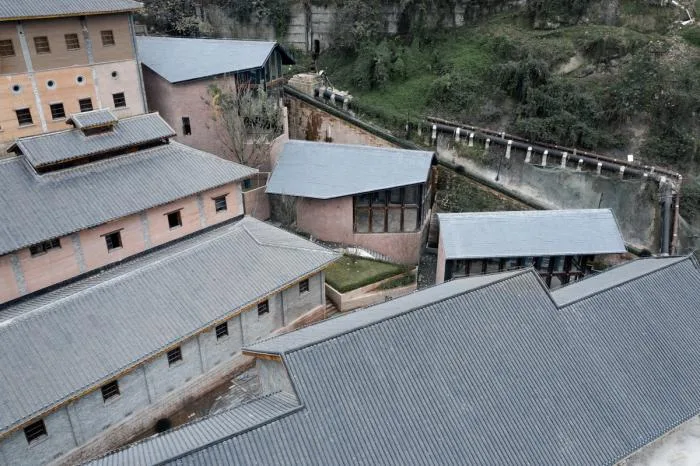
Aerial photography. Photography: DID-STUDIO
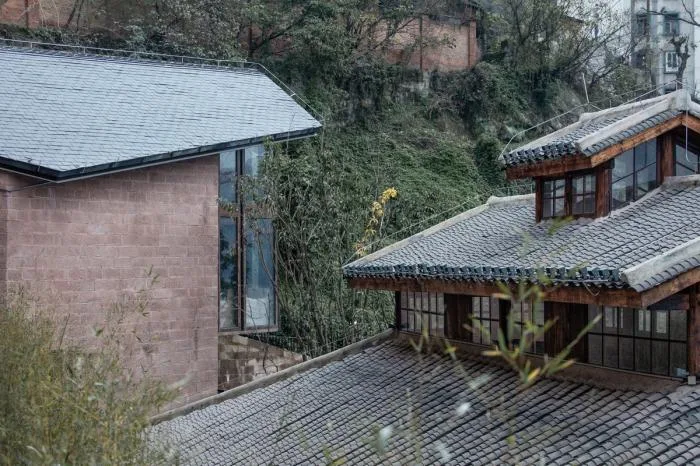
△ Contrast of new and old roofs. Photography: DID-STUDIO
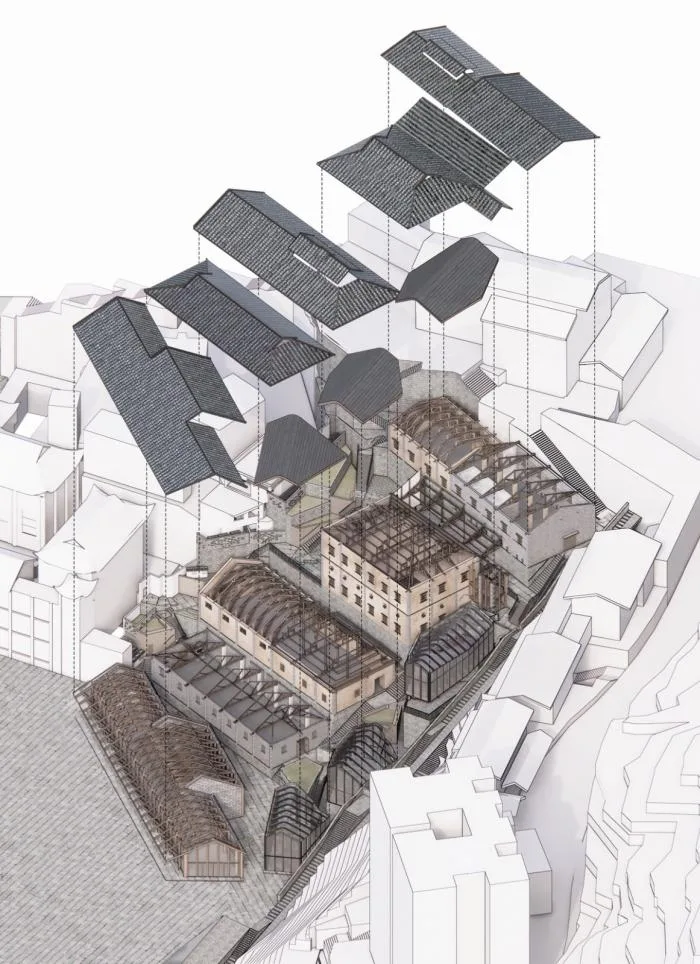
△ Analysis diagram
Preservation and Modernization
The original buildings feature diverse materials and construction techniques, including mixed wood and brick structures, blue brick plain walls, hollow brick walls, rammed earth walls, wooden doors and windows, roofs with small blue tiles, and stone foundations. Our design respects and continues the use of these varied materials.
For the heritage-protected buildings (#2, #3, #4, #5), blue brick walls and tile roofs were carefully restored, and rammed earth walls were reconstructed using modern technology. The historically significant building (#1) saw restoration of its small blue tile roof, preservation of blue brick hollow walls and red brick columns, and transformation of walls facing the square and entrance into transparent floor-to-ceiling glass doors.
Traditional-style buildings (#6, #7, #8) received new round ridge roofs with flat tiles and glass curtain walls, maintaining their historical character while increasing openness.
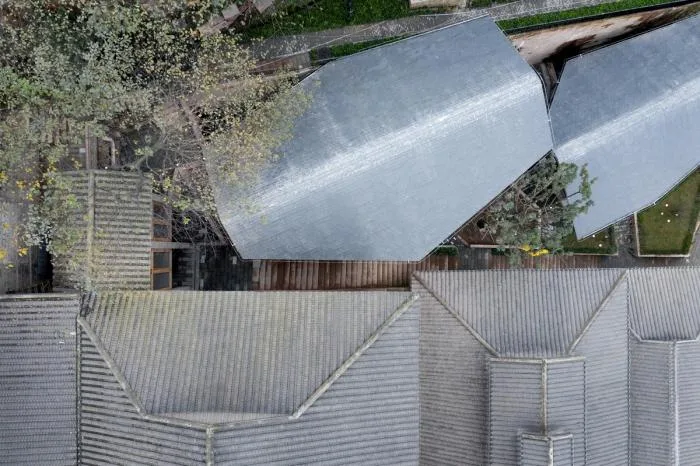
New buildings feature slate roof tiles. Photography: DID-STUDIO
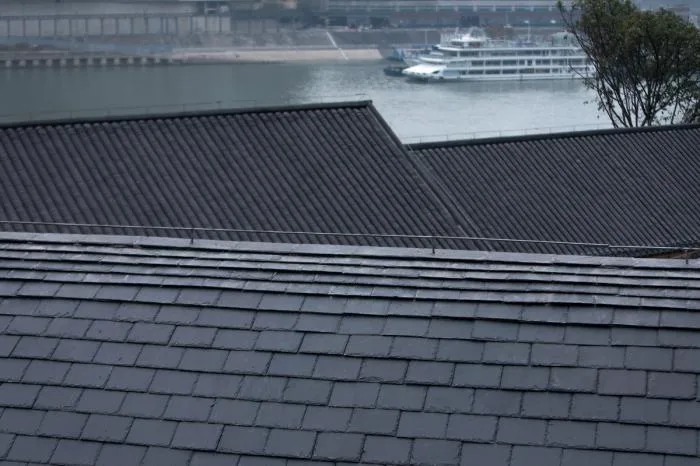
△ Slate roof detail. Photography: DID-STUDIO
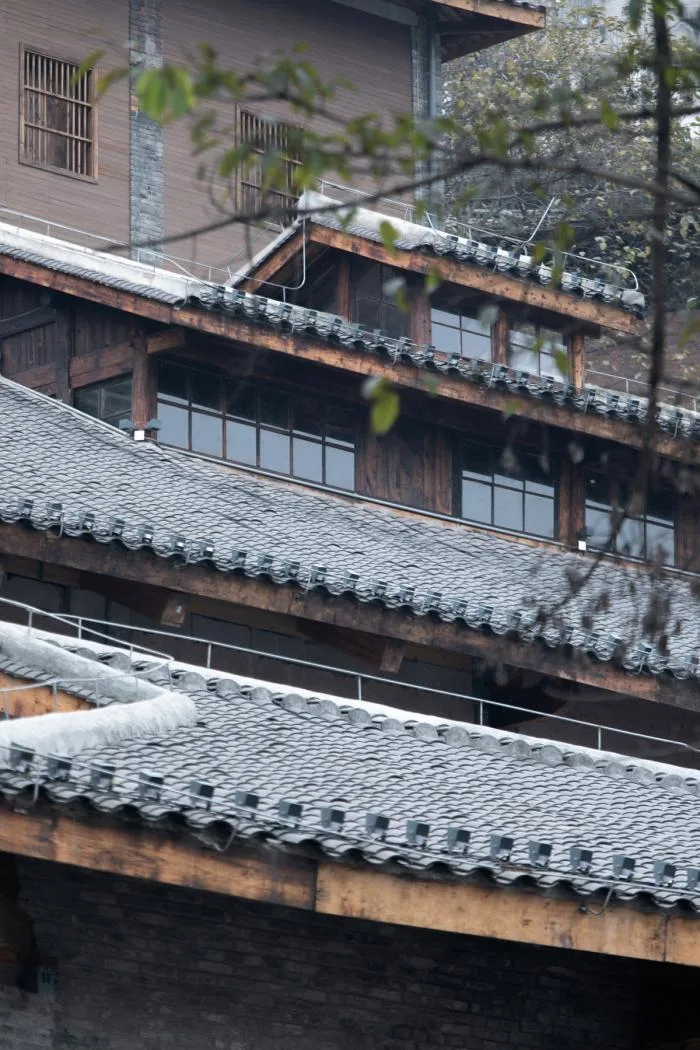
△ Roof stacking technique. Photography: DID-STUDIO
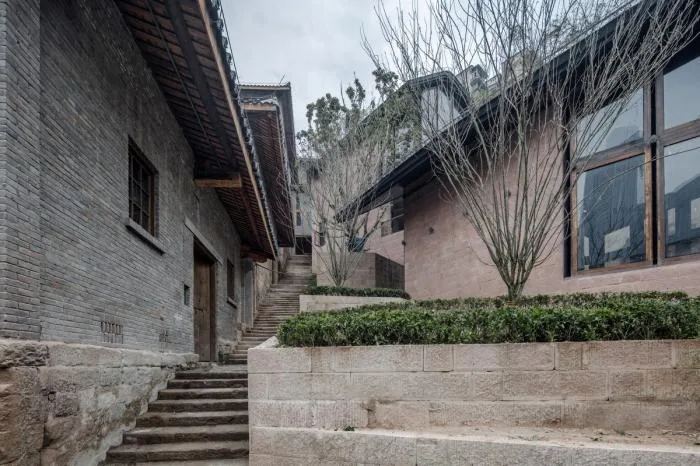
△ Preservation of large bluestone steps and spatial distribution of old and new buildings. Photography: DID-STUDIO
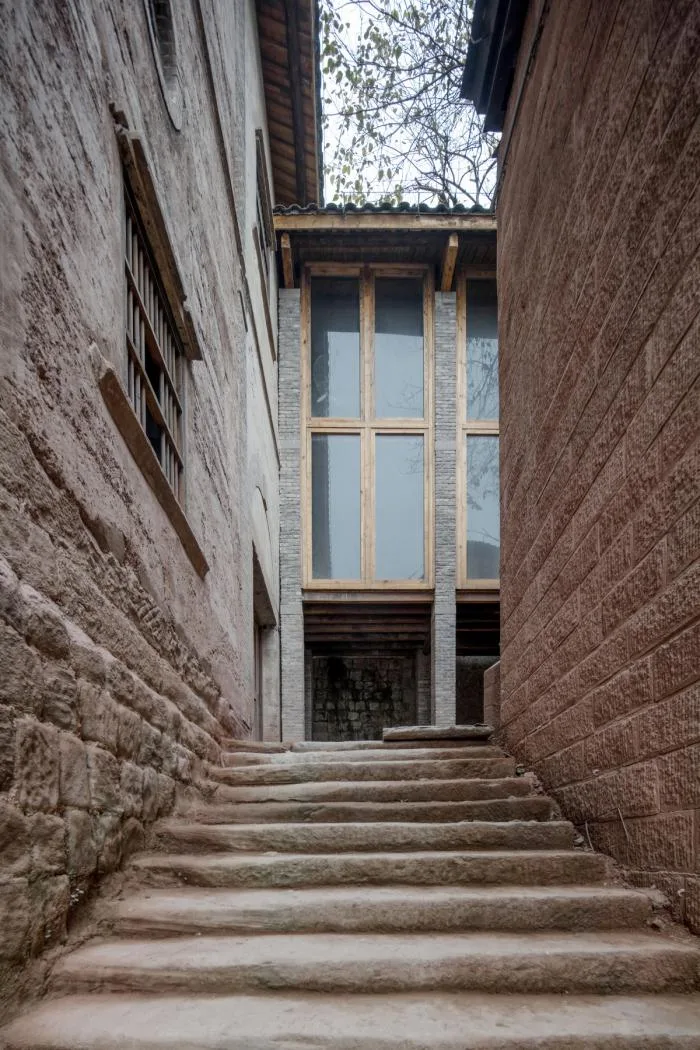
△ Bluestone steps detail. Photography: DID-STUDIO
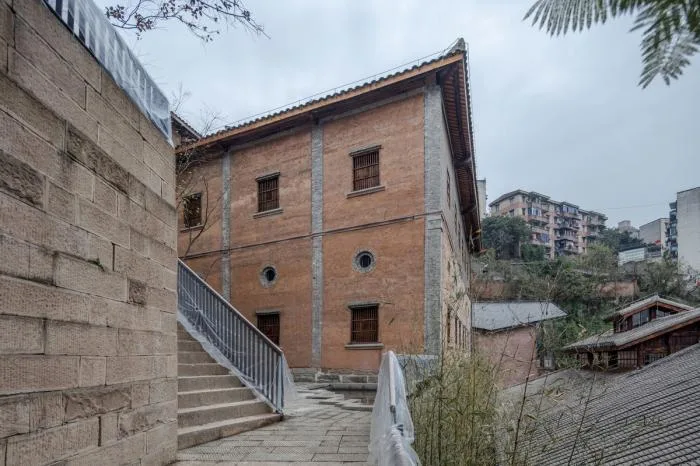
△ Blue brick wall detail (#4). Photography: DID-STUDIO
New Structural Elements
A new laminated timber truss system was introduced, featuring multi-level bracing to ensure uniform load distribution while allowing for smaller component sizes. This system was applied inside Building #1 and to restore collapsed sections of Buildings #3 and #5, preserving their original appearances.
Within Buildings #3 and #5, the new timber structures contrast with the traditional wooden frameworks, highlighting the blend of old and new. Buildings #6, #7, and #8 utilize steel curved columns and beams to support their round ridge roofs.
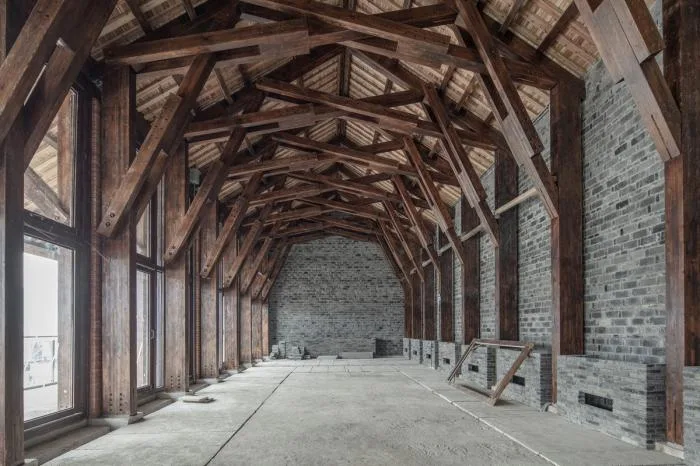
△ Building #1 renovation featuring wooden trusses. Photography: DID-STUDIO
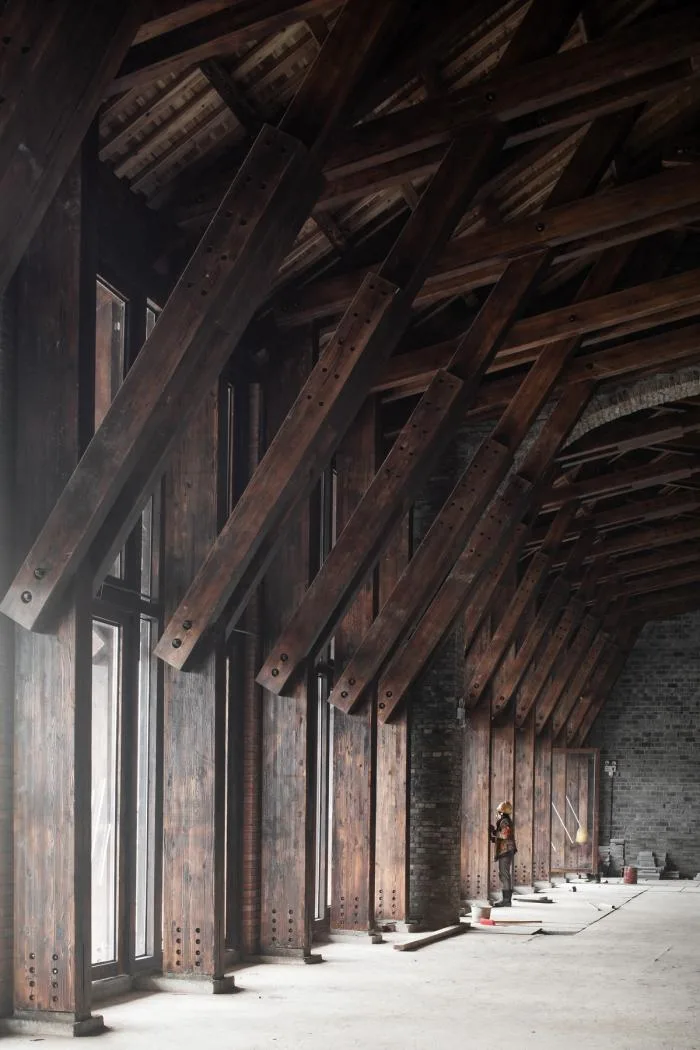
△ Building #1 renovation wooden truss detail. Photography: DID-STUDIO
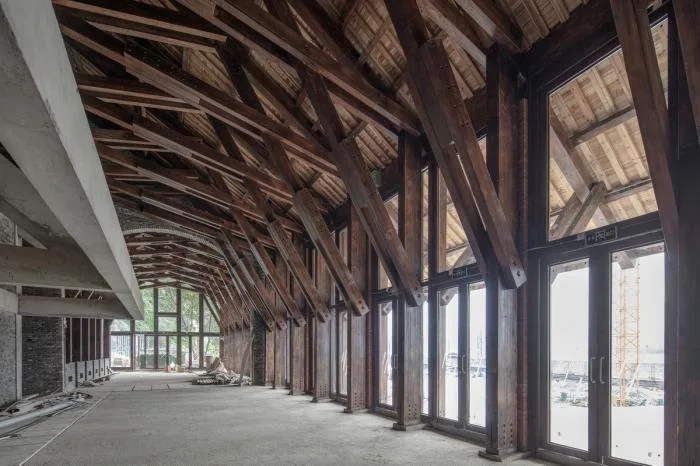
△ Building #1 wooden truss system. Photography: DID-STUDIO
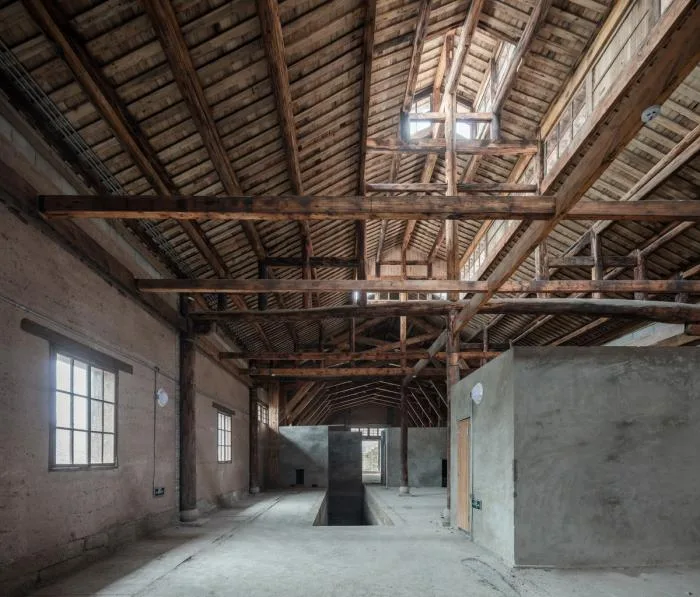
△ Building #3 showing juxtaposition of new and old structures. Photography: DID-STUDIO
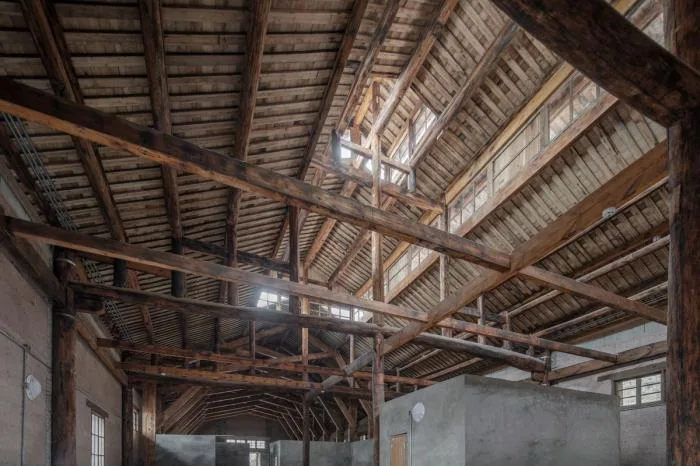
△ Coexistence of new and old structures in Building #3 — new structures for damaged and reconstructed areas. Photography: DID-STUDIO
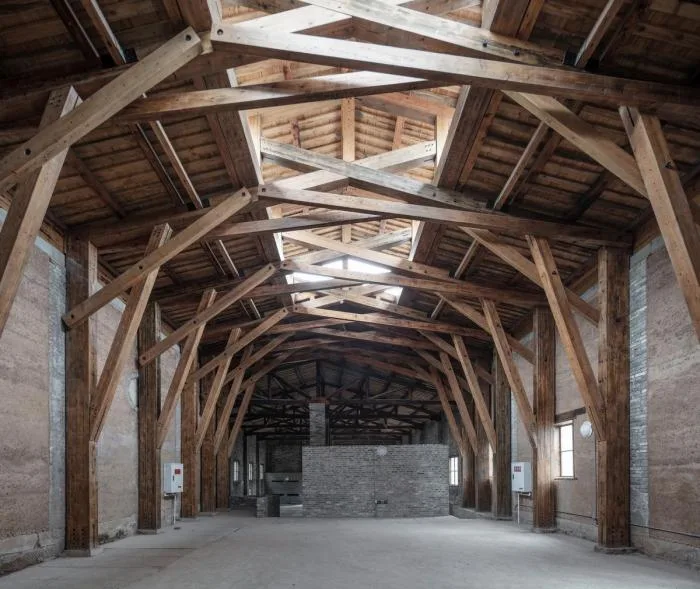
△ Building #5 damaged and reconstructed sections with wooden truss structures. Photography: DID-STUDIO
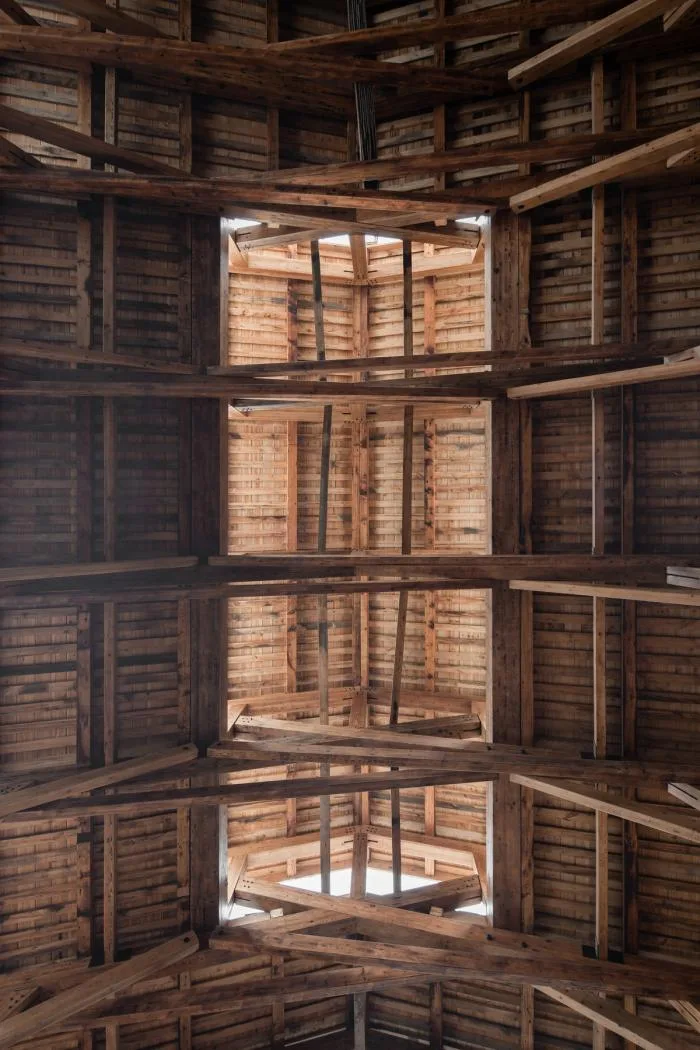
△ Roof detail of Building #5. Photography: FCJZ
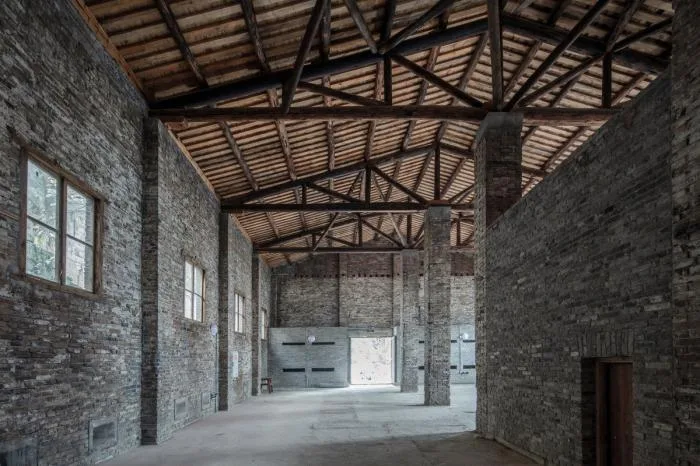
△ Preservation of architectural details in Building #5. Photography: DID-STUDIO
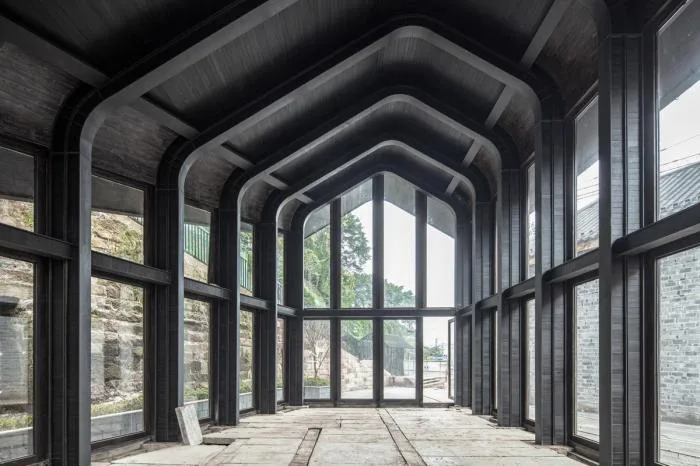
△ New building featuring steel curved beam and column. Photography: DID-STUDIO
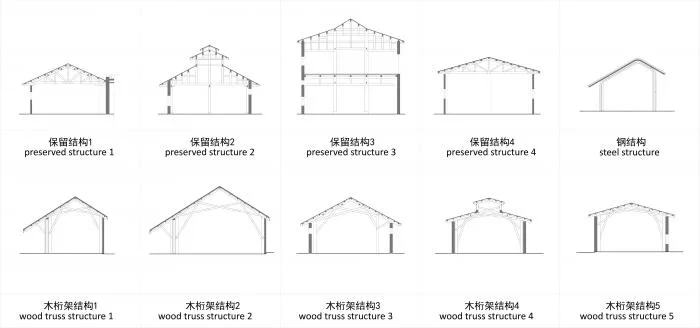
△ Structural system overview
Function and Layout
Thanks to historical circumstances, the Chongqing branch of the Palace Museum Academy and the Nanqian Cultural Relics Memorial Hall have been established on this site. It hosts a variety of activities including exhibitions, cultural lectures, children’s educational programs, cultural and creative product displays, and workshop experiences.
The old buildings themselves serve as exhibits due to their cultural significance and architectural style. The site design includes a viewing platform that allows visitors to appreciate the buildings from various perspectives. The buildings’ wide eaves create multiple semi-outdoor spaces providing shelter for pathways and outdoor events.
Original site elements such as cable car tracks, stone steps, and vegetation have been preserved to maintain the site’s historical memory.
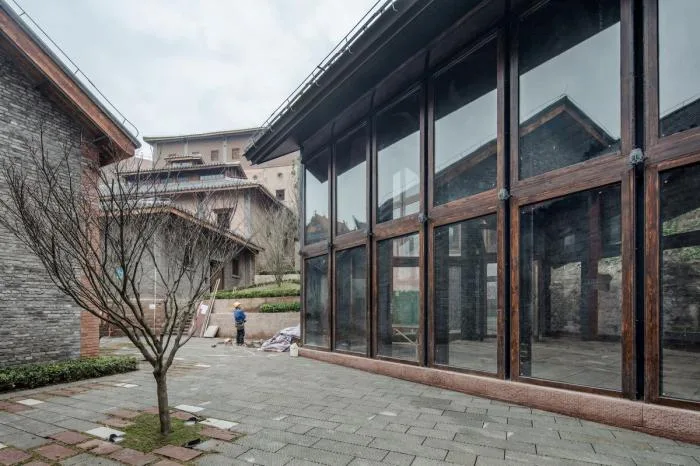
△ Entrance view. Photography: DID-STUDIO
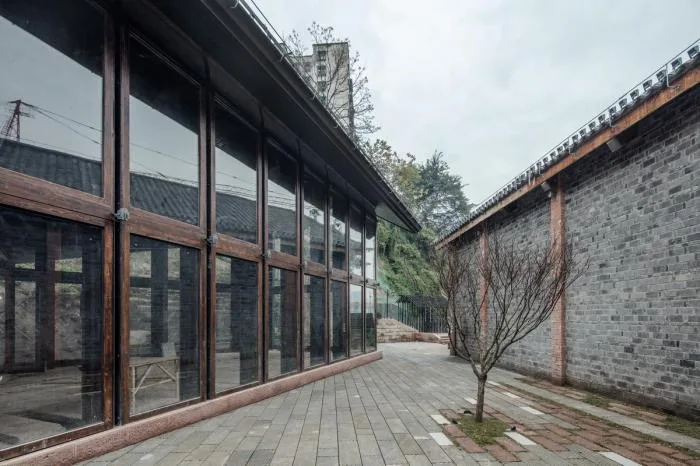
View looking back toward the entrance. Photography: DID-STUDIO
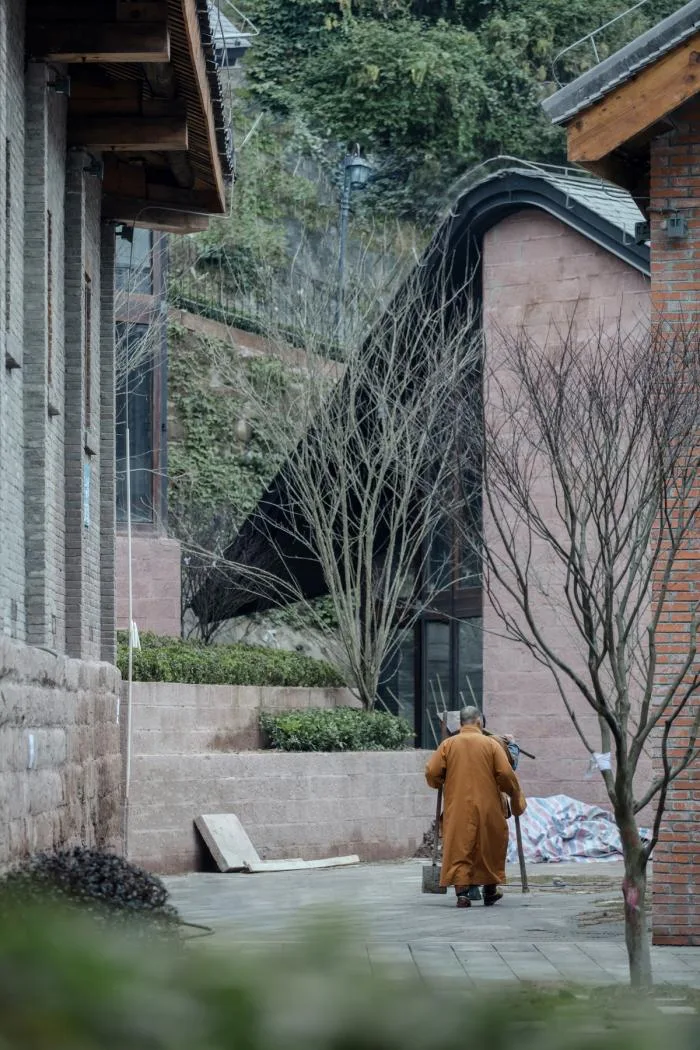
△ View between buildings. Photography: DID-STUDIO
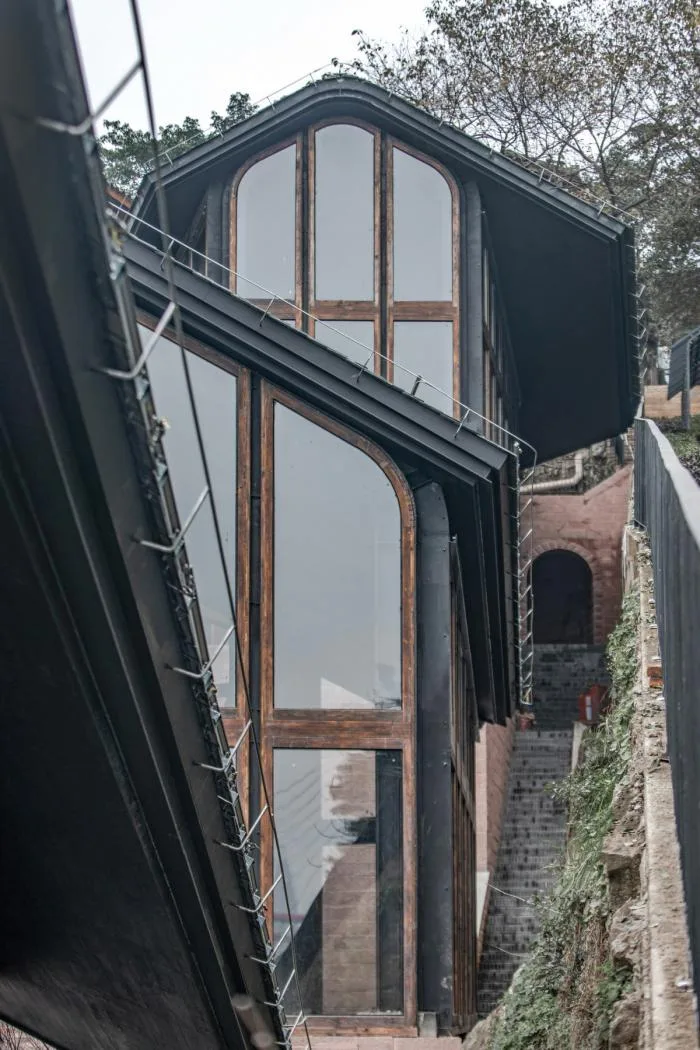
△ Roof eaves detail. Photography: DID-STUDIO
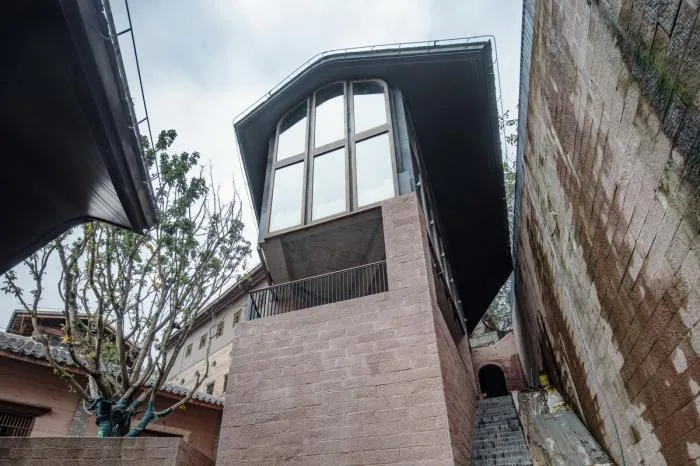
△ Roof eaves detail. Photography: DID-STUDIO
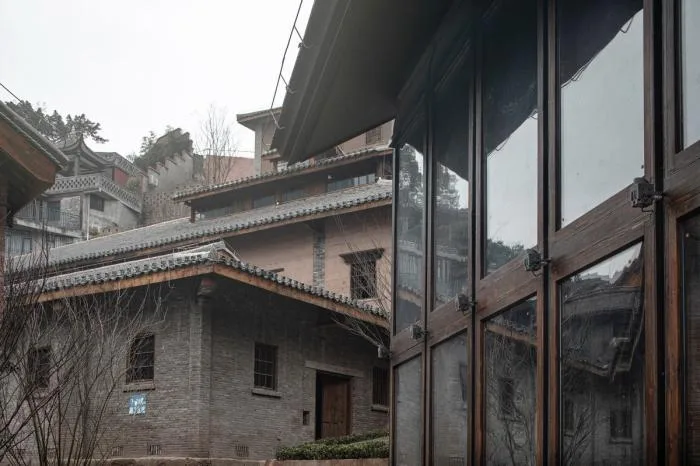
△ Roof detail. Photography: DID-STUDIO
Design Drawings
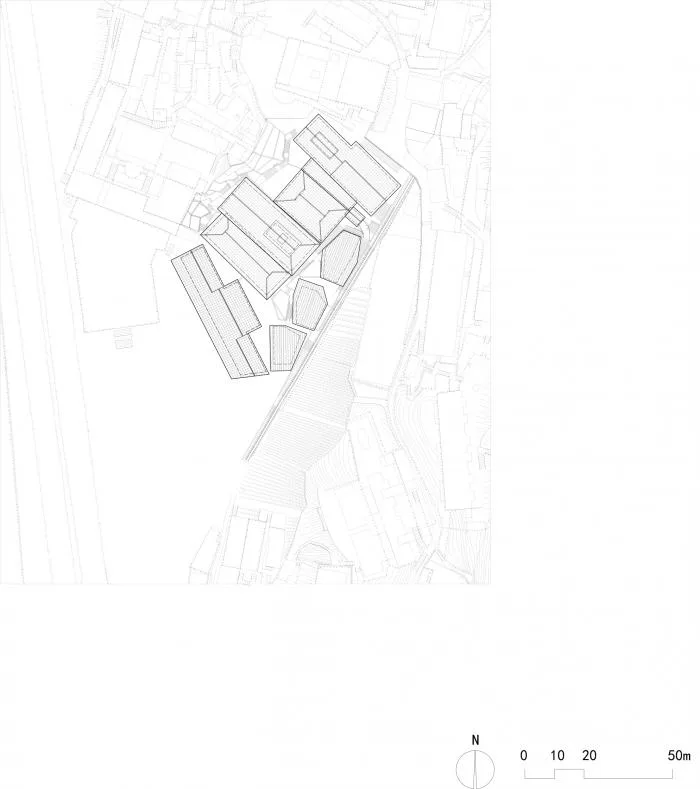
△ Overall site layout
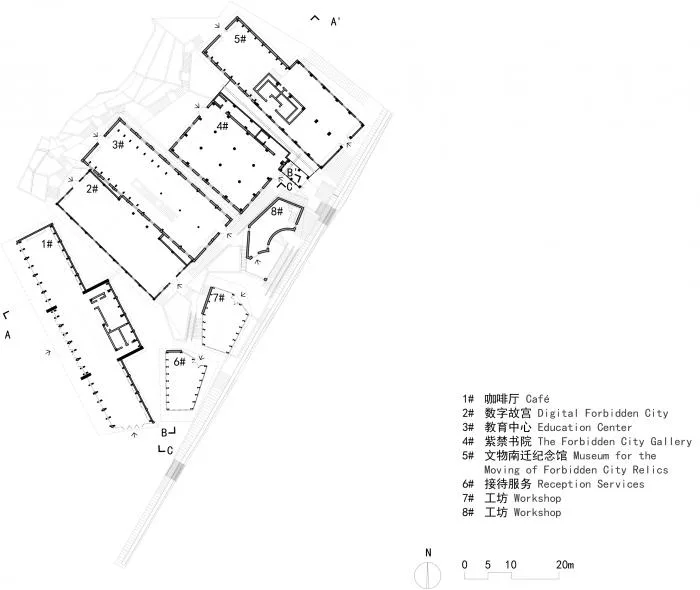
△ First floor plan
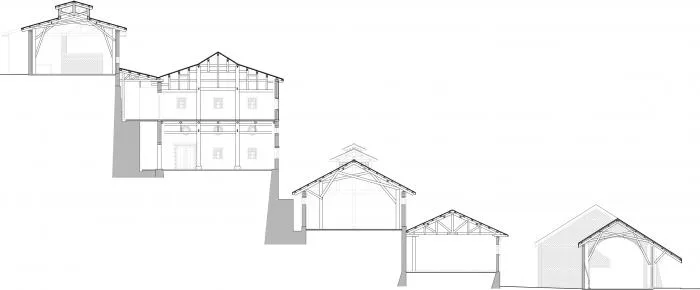
△ Section AA
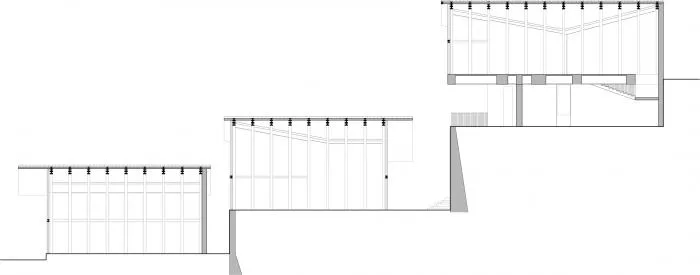
△ Section BB
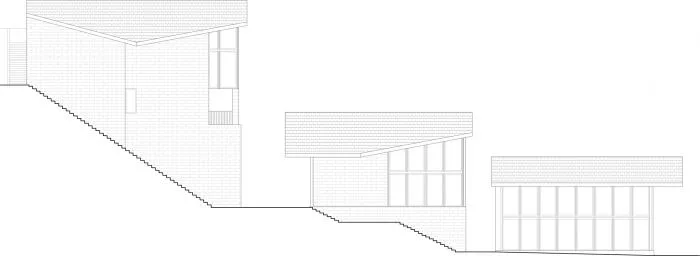
△ Elevation CC
Project Information
Client: Sunac China
Location: Nanbin Road, Nan’an District, Chongqing
Lead Designers: Zhang Yonghe, Lu Lijia
Project Team: He Zelin, Yu Yue, Long Bin, Pan Chenchao
Design Partner: Chongqing Lianchuang Architectural Planning and Design Co., Ltd.
Building Area: Approximately 2700 square meters
Building Height: 13.7 meters
Structural Materials: Glued laminated timber trusses, steel curved beam columns
Design Period: 2016–2018
Completion Date: March 2020












Must log in before commenting!
Sign Up