
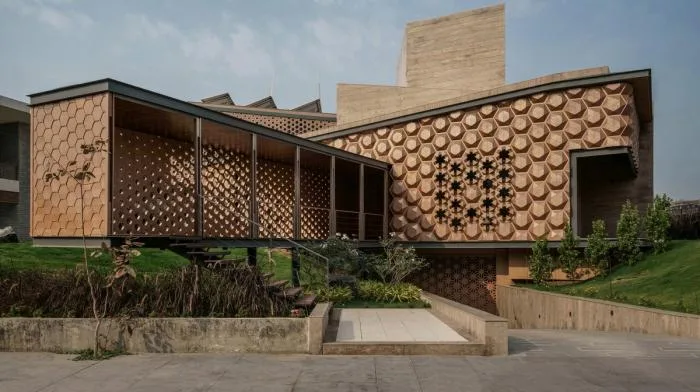
Honeycomb Residence is an intelligent, adaptable, and sustainable home located in Surat, Gujarat. The design of this residence is inspired by the profession of its owner, Kamalbhai Mistry, who runs a successful mechanical manufacturing company in the diamond industry.
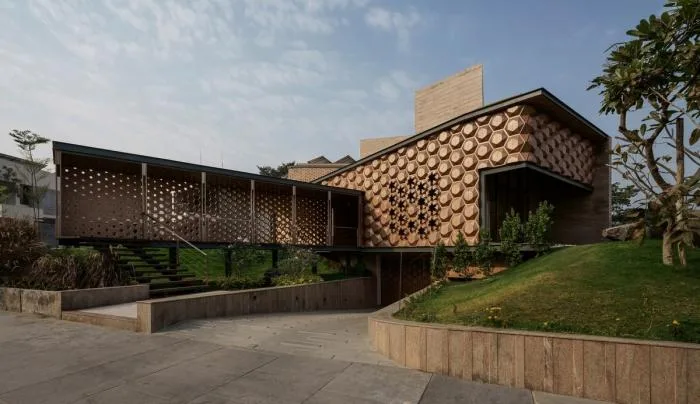
The residence is situated in Vesu, a rapidly developing area of Surat city, surrounded by residential complexes on both sides. This unique project occupies one of four plots owned by the expanding Mistry family. With a solid background in architecture and mechanical engineering, the owner had a clear vision: an intelligent metal structure featuring a “single space” living room. Beyond these foundational concepts, the owner provided nearly 90 detailed requirements covering structure, landscape, planning, materials, sustainability, insulation, HVAC and piping systems, and even a year-round solar trajectory study.
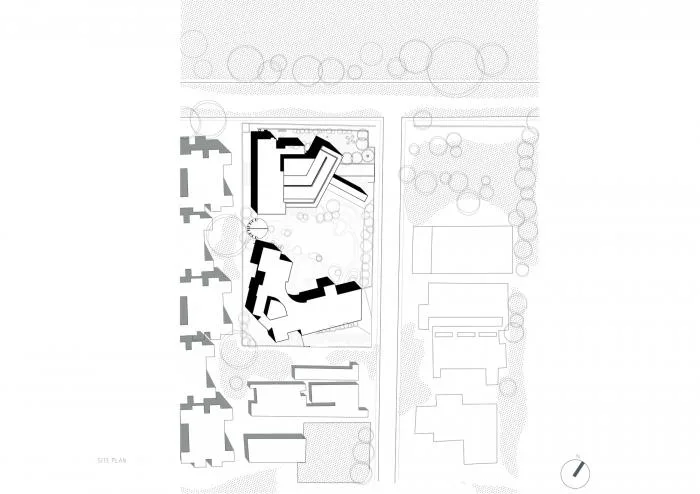
△ General layout plan
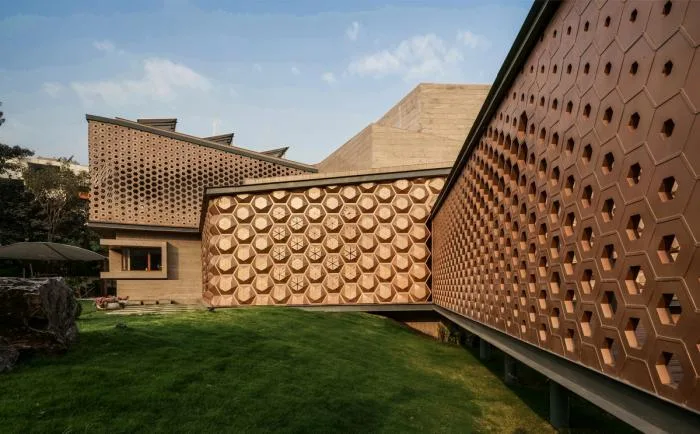
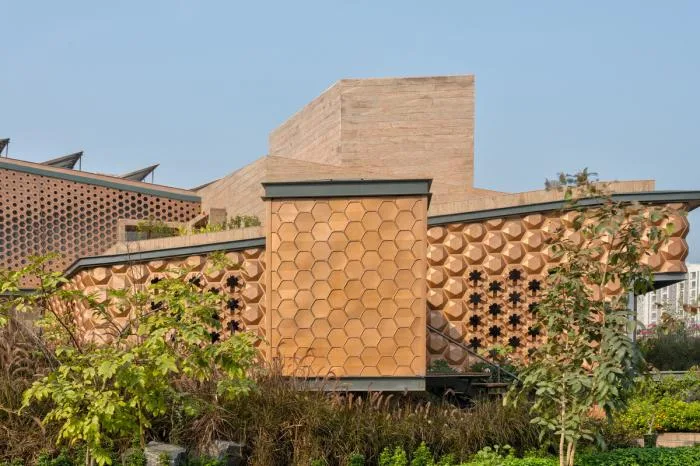
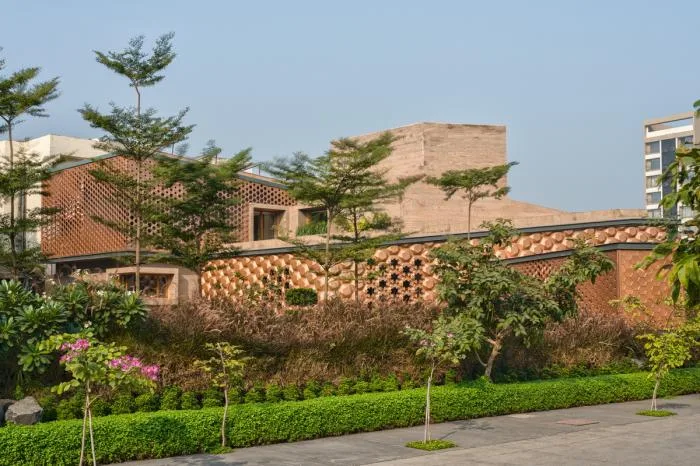
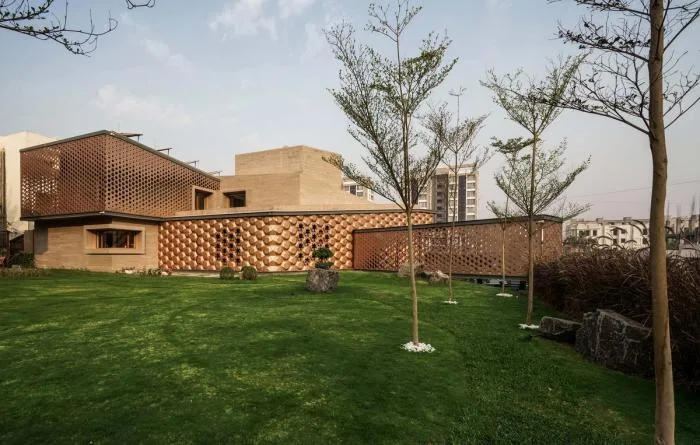
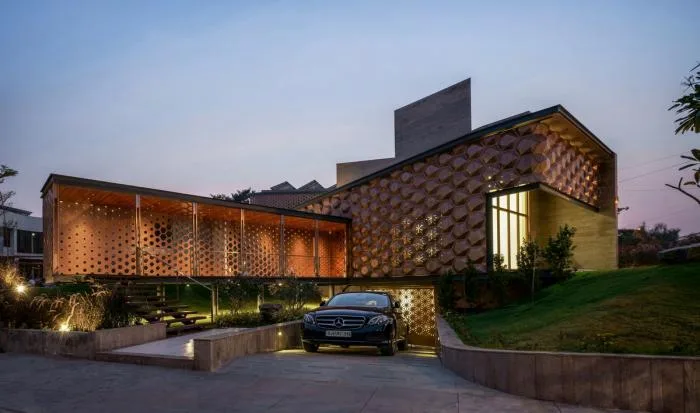
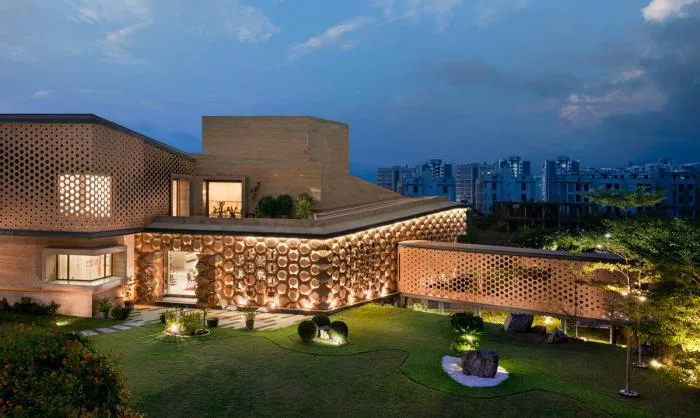
The prominent use of metal led to design concepts focusing on large spans, lightweight construction, complex forms, and rapid assembly. The architectural form was shaped through meticulous analysis of external factors such as temperature, humidity, solar radiation, cloud cover, and wind direction. The building adopts a sharp “V” shape that faces the green pocket gardens scattered throughout the neighborhood. The entrance features sunken courtyards, stepped gardens, linear reception corridors, and green roofs with varying slopes that are walkable, creating a corridor and valley-like experience. These roofs provide insulation, reducing indoor temperatures while serving as social gathering spaces.
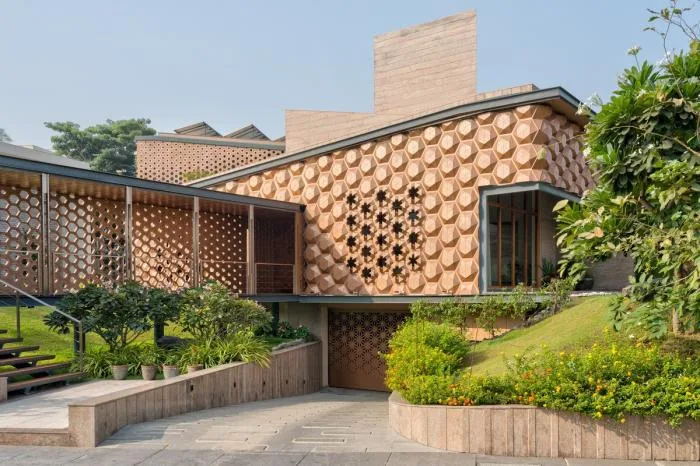
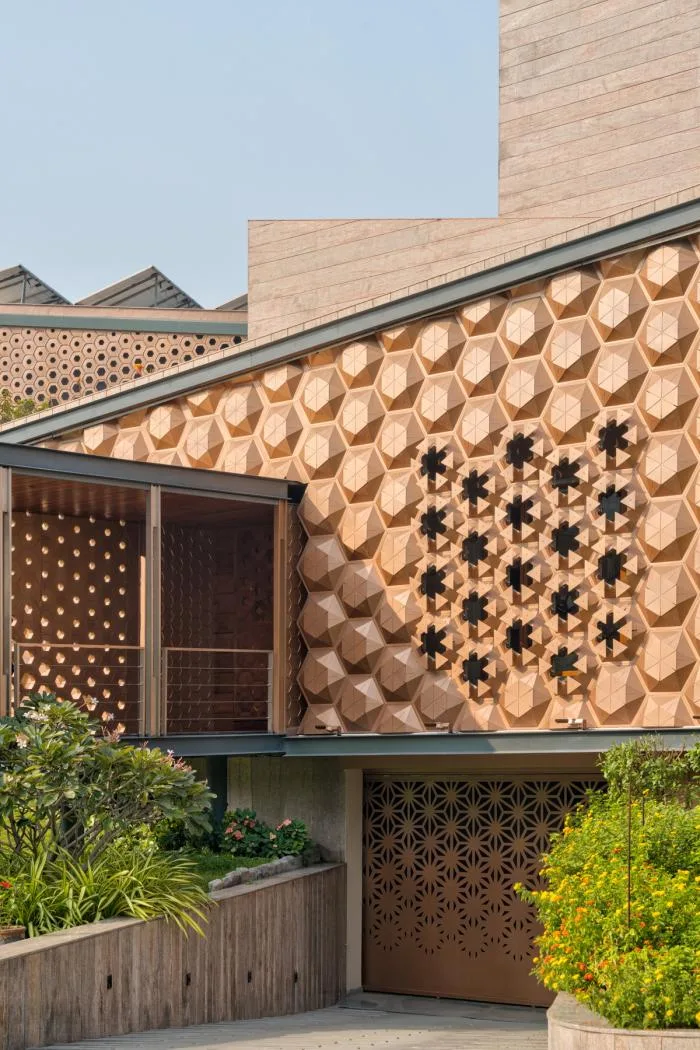
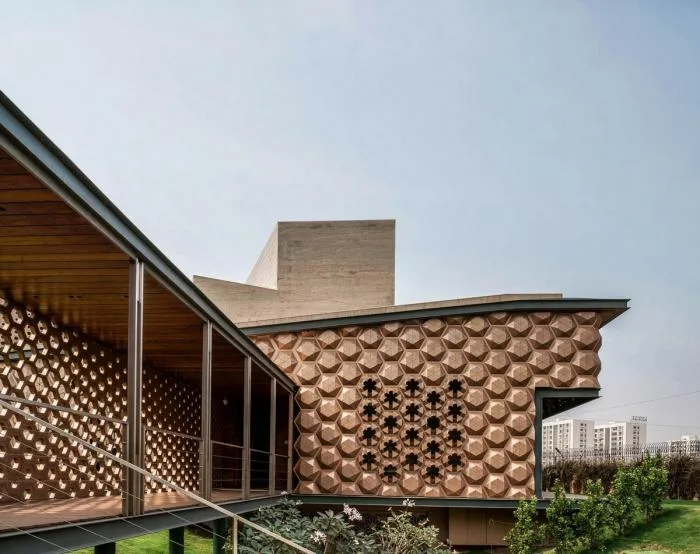
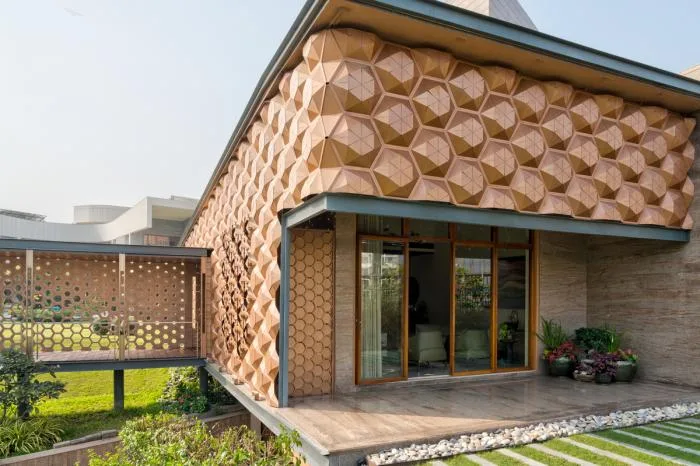
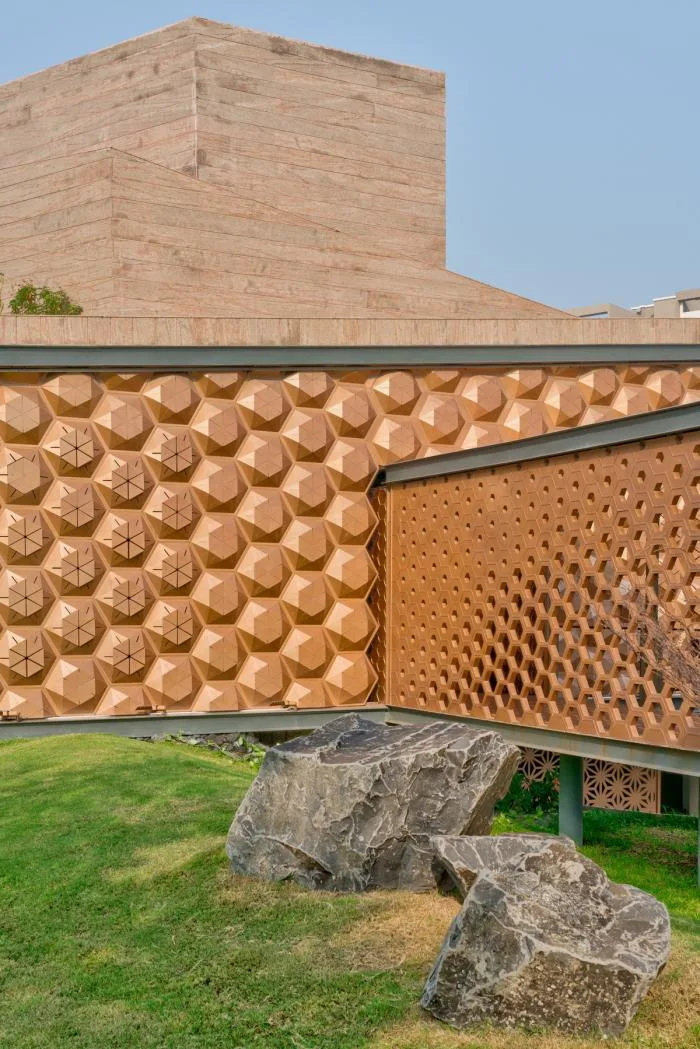
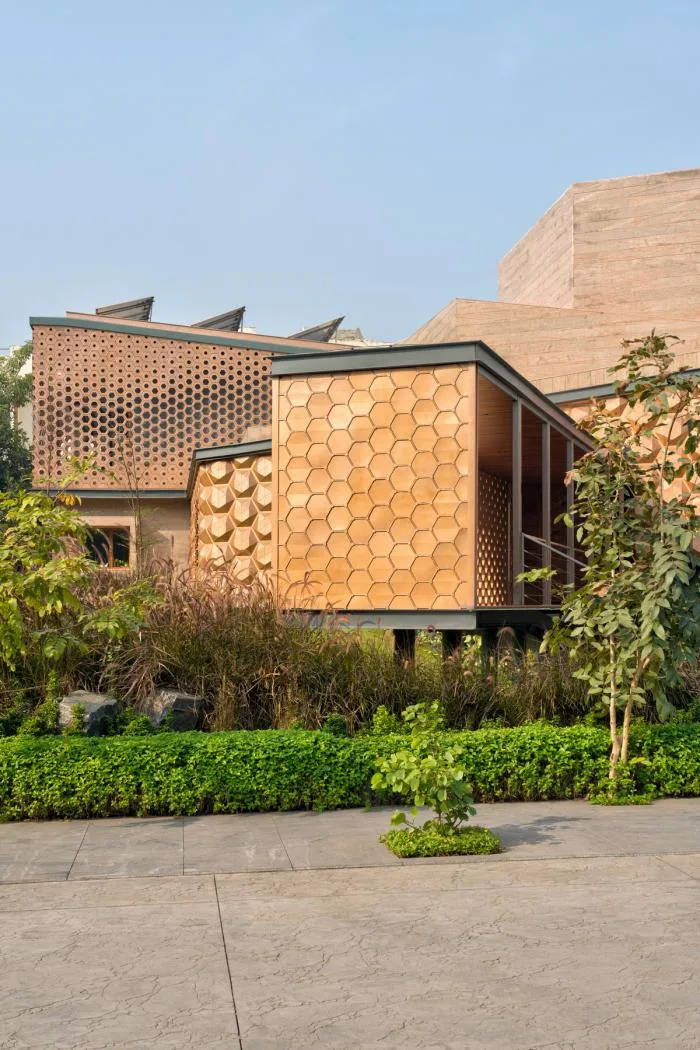
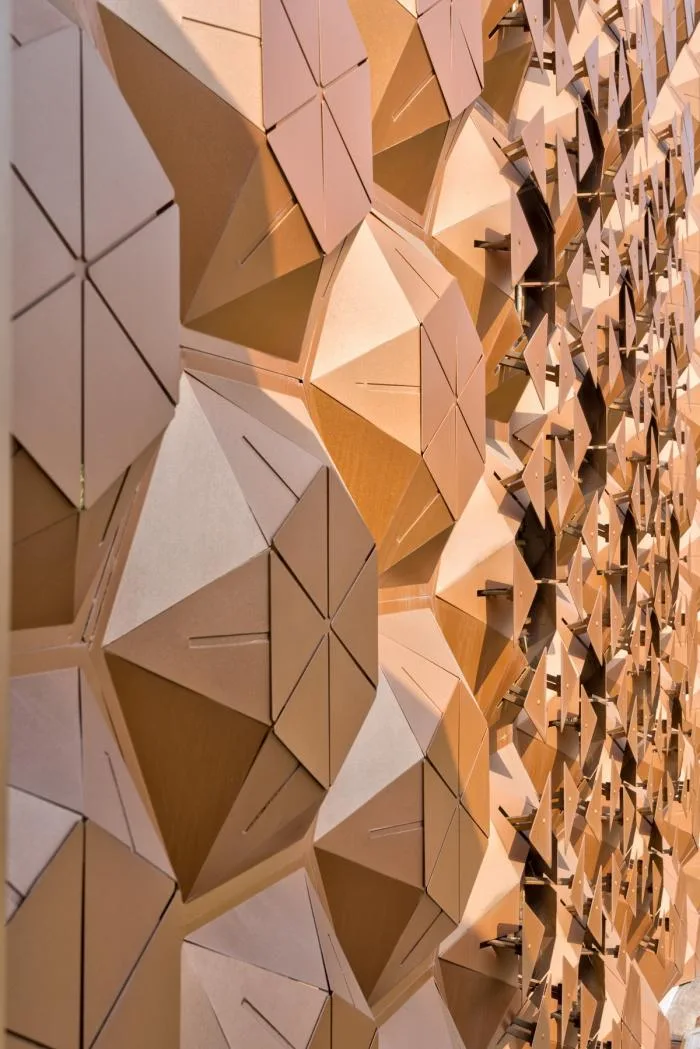
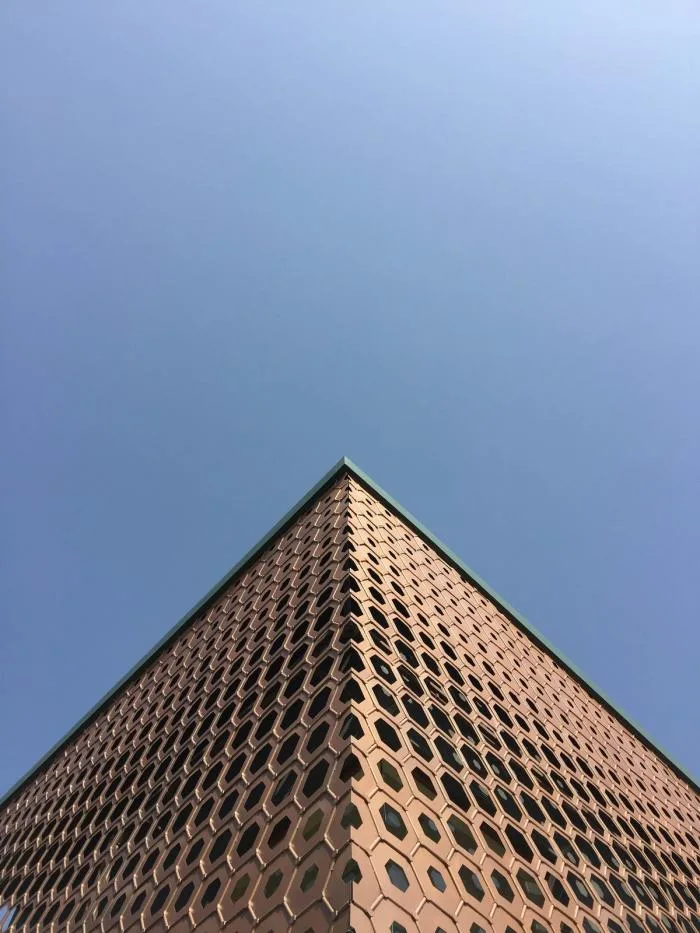
The building’s distinctive facade is based on solar sensors, blending art and science. Its geometric design draws inspiration from natural hexagonal patterns found in honeycombs and carbon crystals, which also inspired the project’s name. The design integrates structural strength, flexibility, and biomimicry. The facade features a unique opening mechanism that adapts to indoor lighting and thermal comfort. During daylight, the modules respond to the sun’s rhythm, producing captivating shadow patterns.
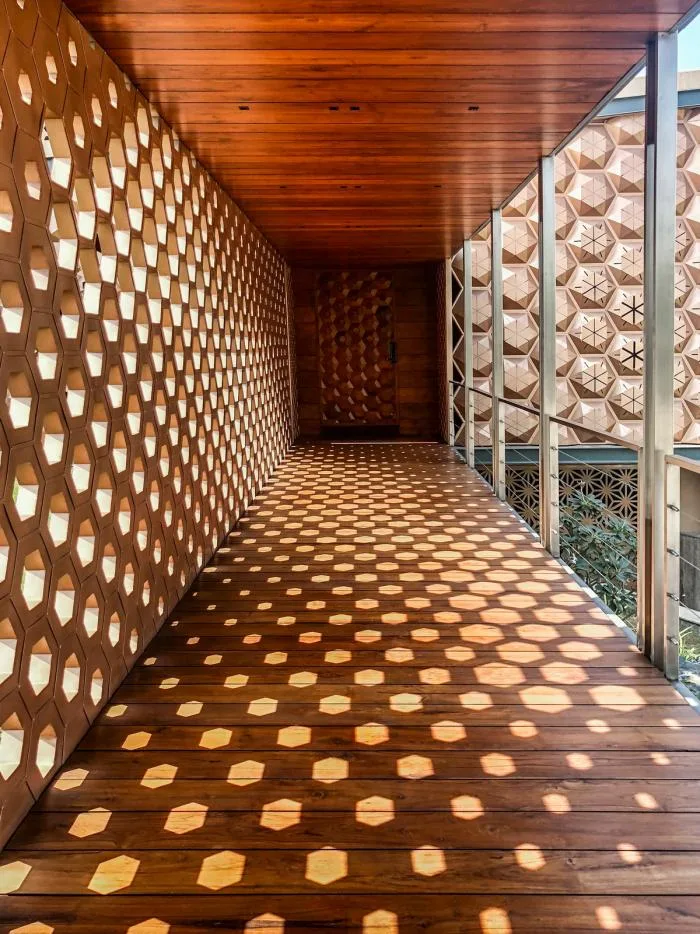
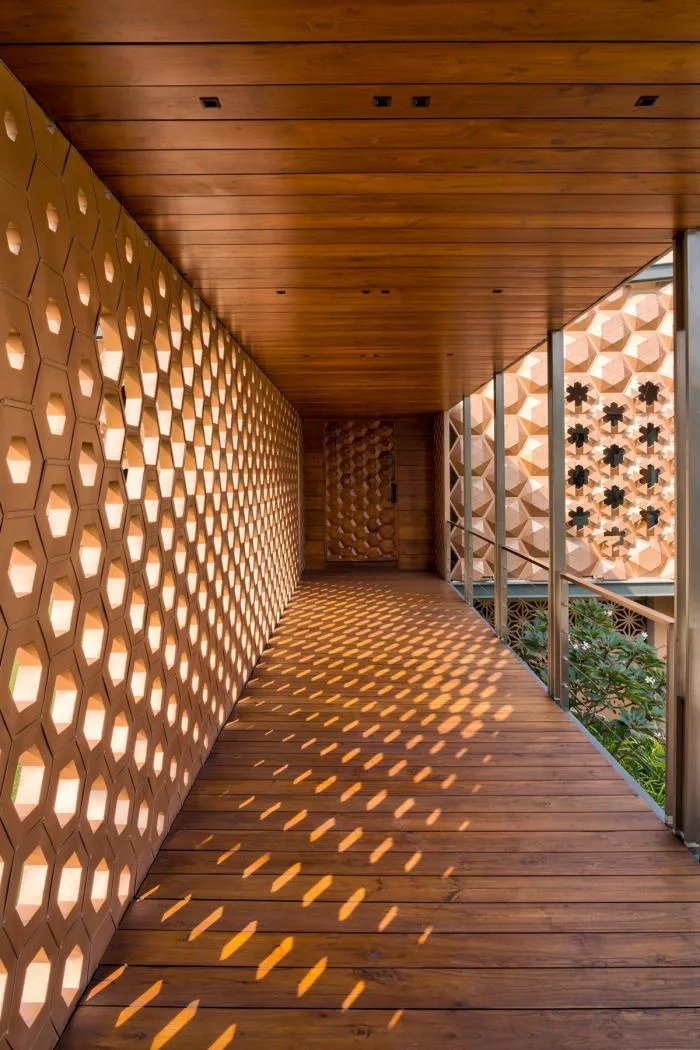
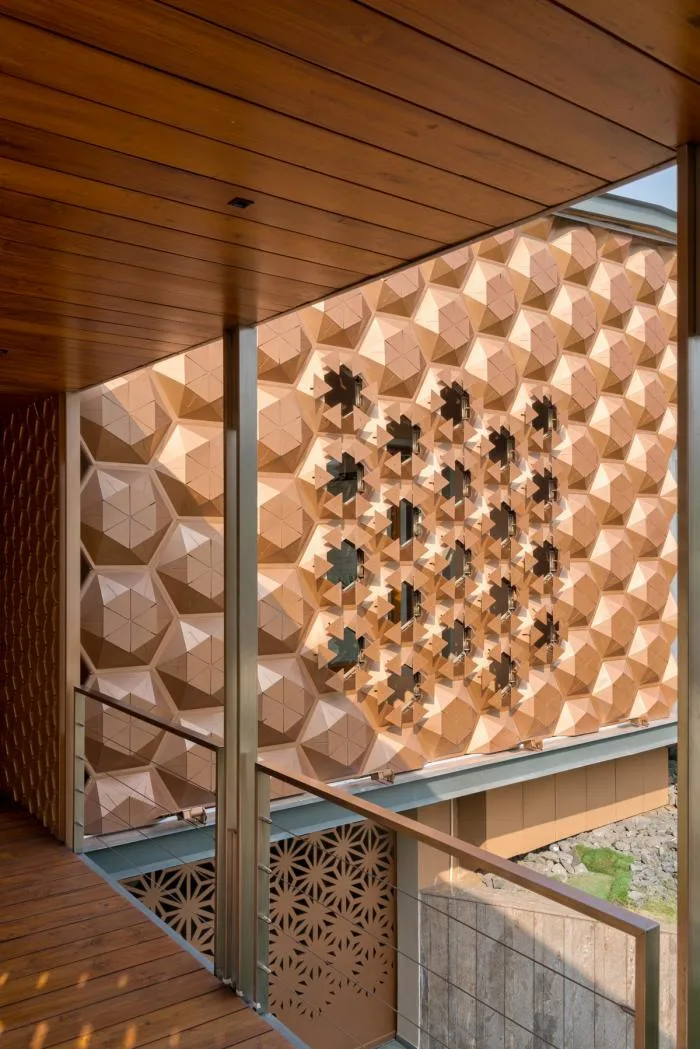
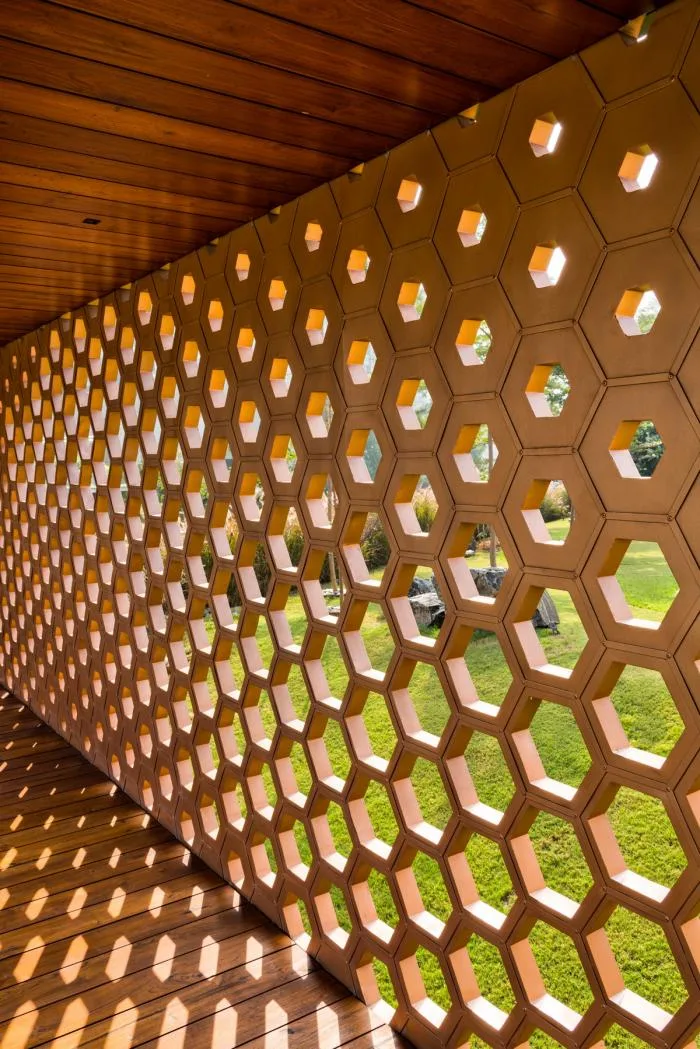
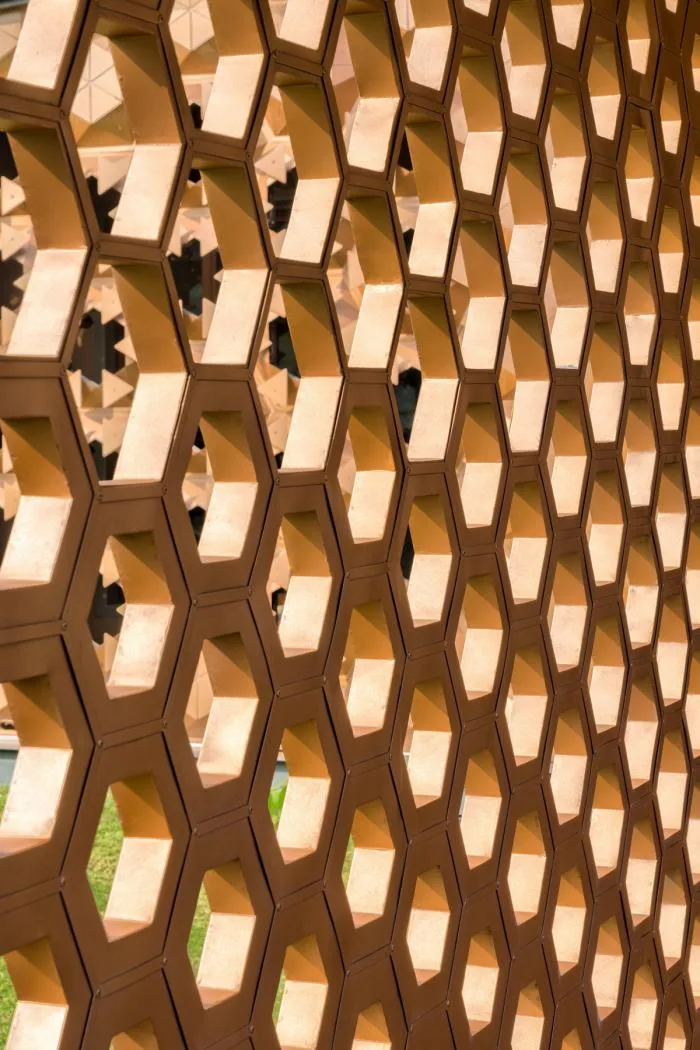
The project is conceived as an open and flowing space in both plan and volume. Without partition walls, the first floor’s spatial flow is subtly divided into public, private, and semi-private zones through an exterior enclosure and a custom-designed sculptural entrance porch. A sculptural staircase leads to the second floor, which houses two bedrooms. Each bedroom includes a small garden, maintaining a strong connection to nature. The building materials feature metal coated with stainless steel powder on the facade, along with wood and stone accents that add warmth to the interior.
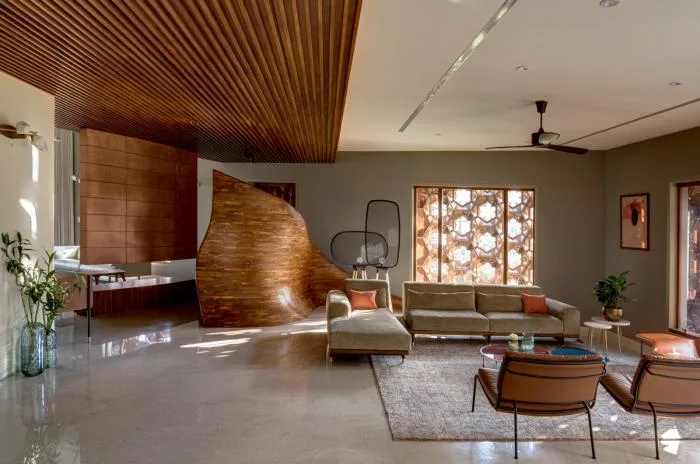
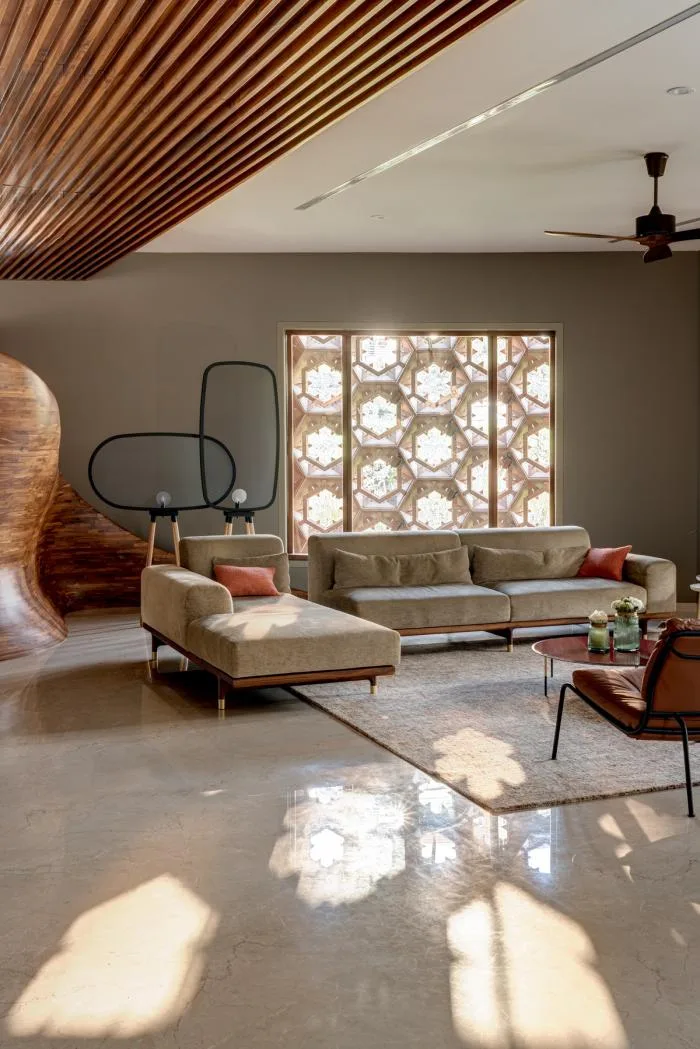
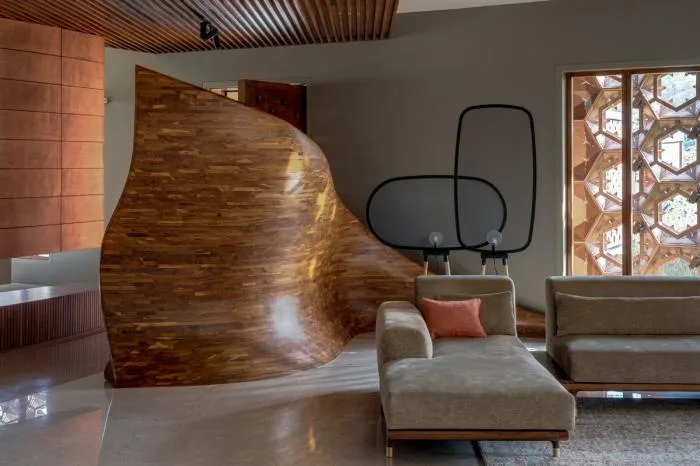
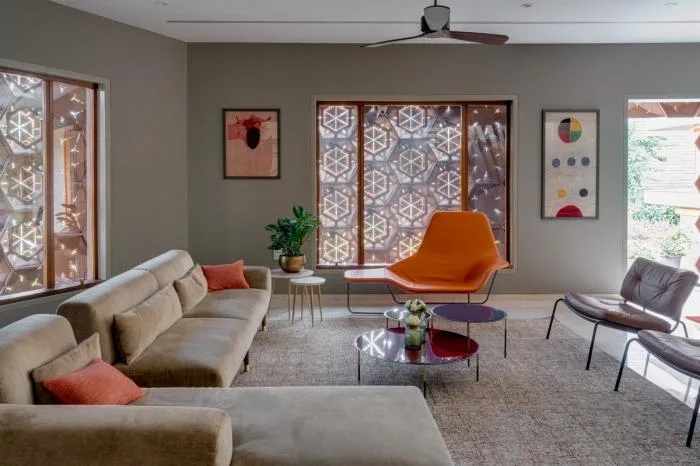
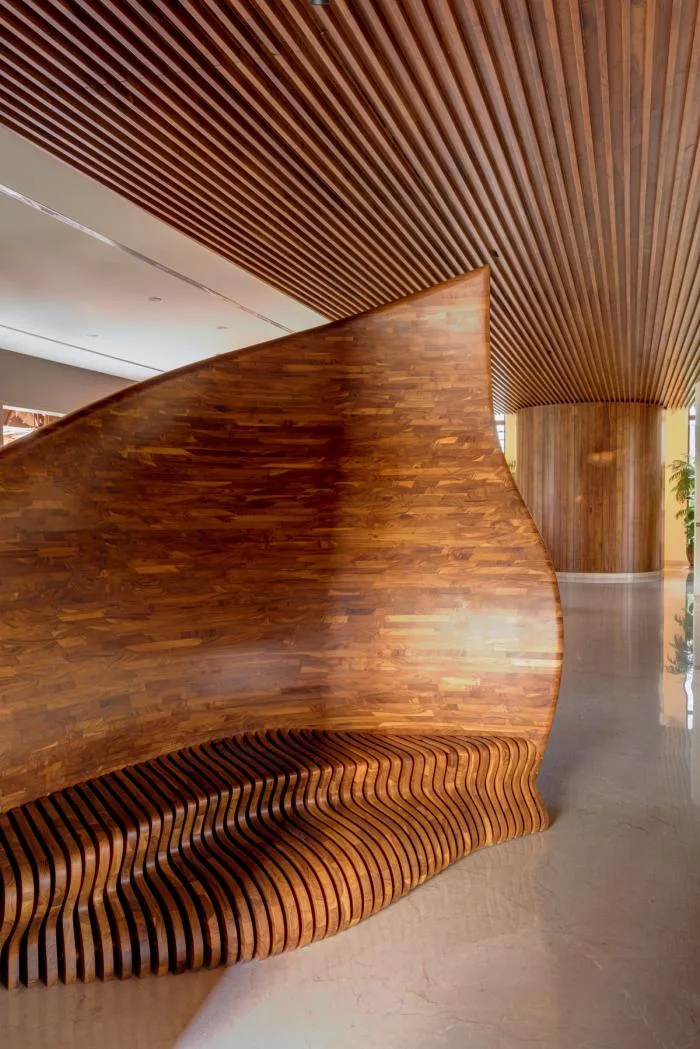
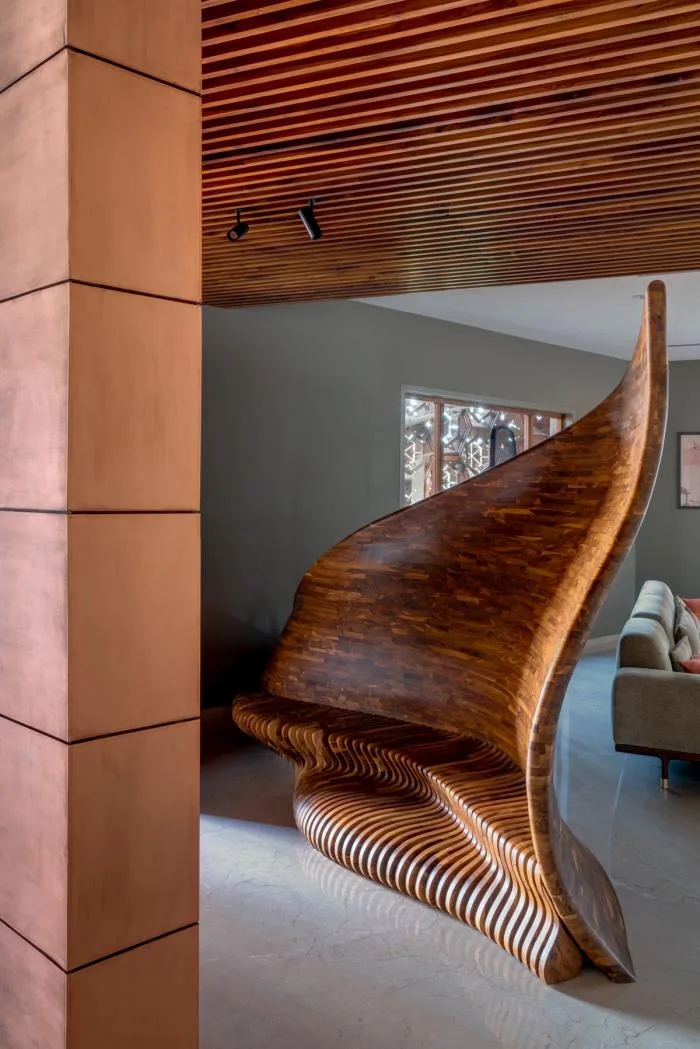
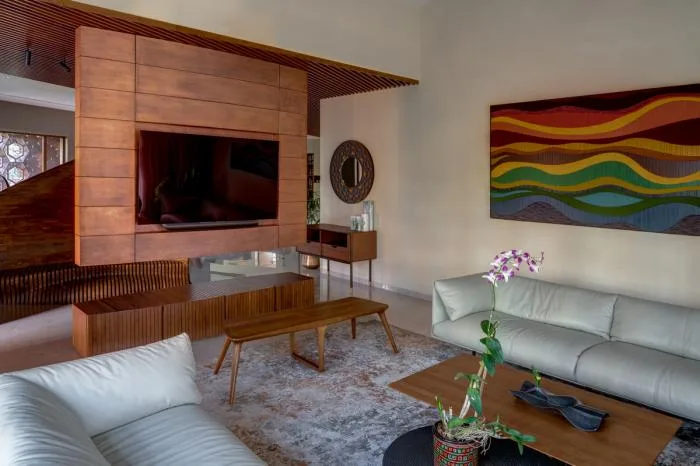
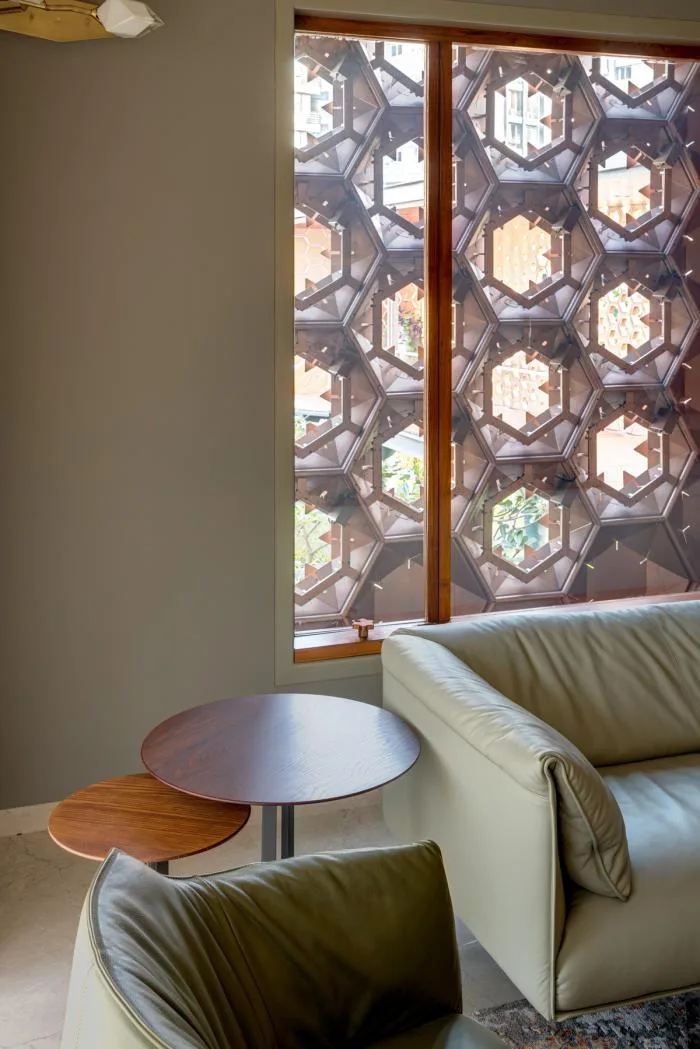
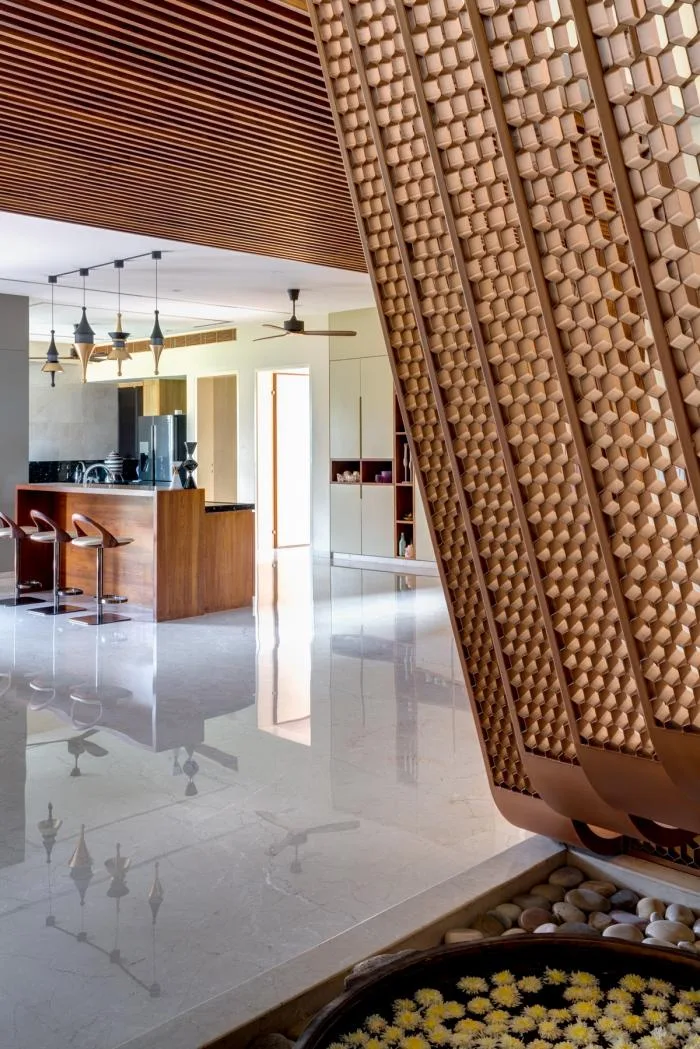
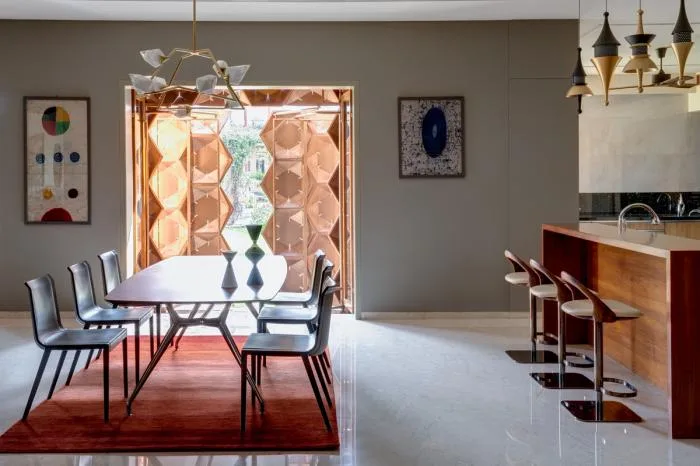
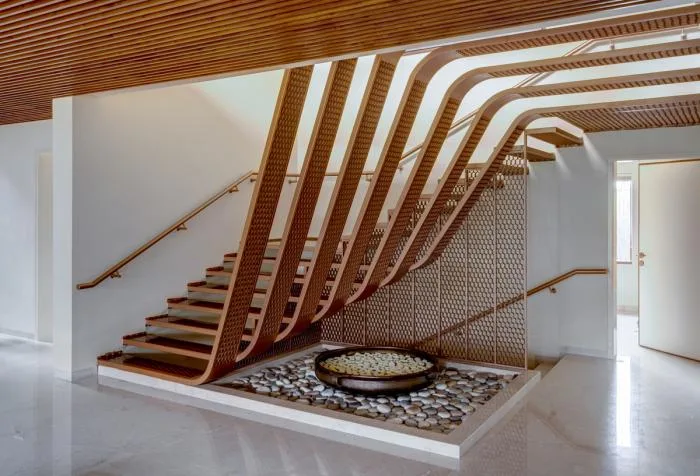
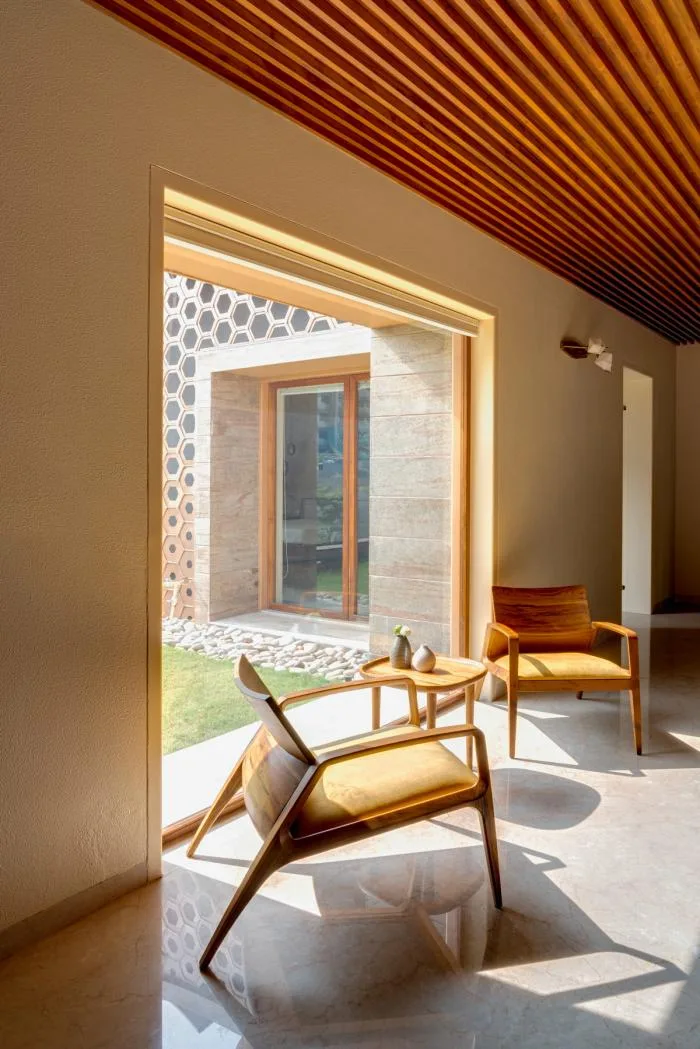
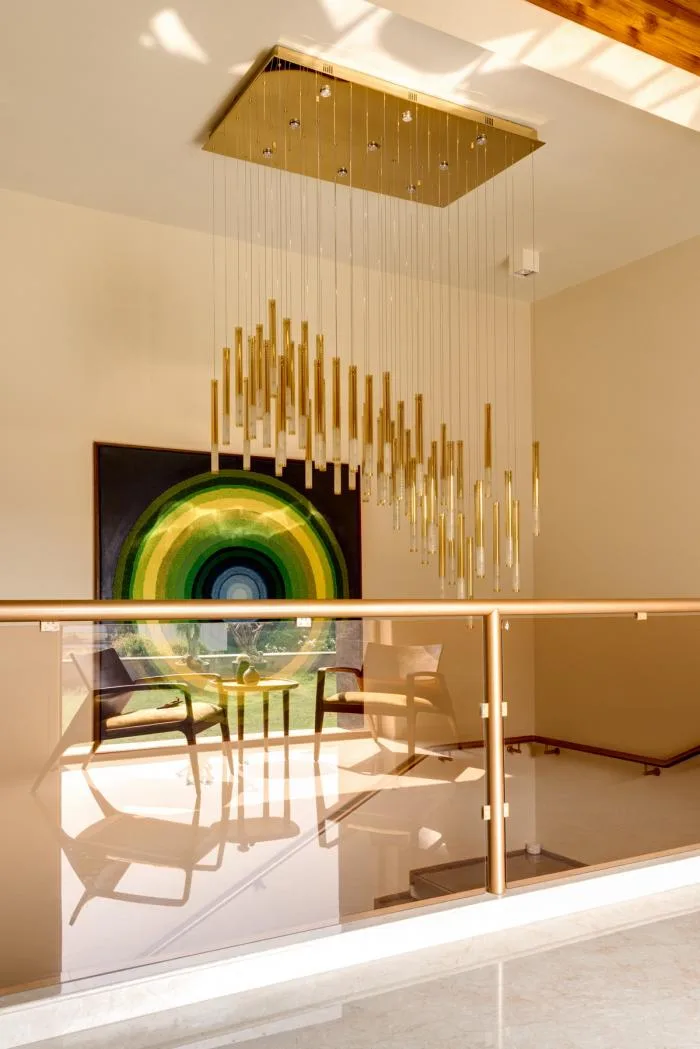
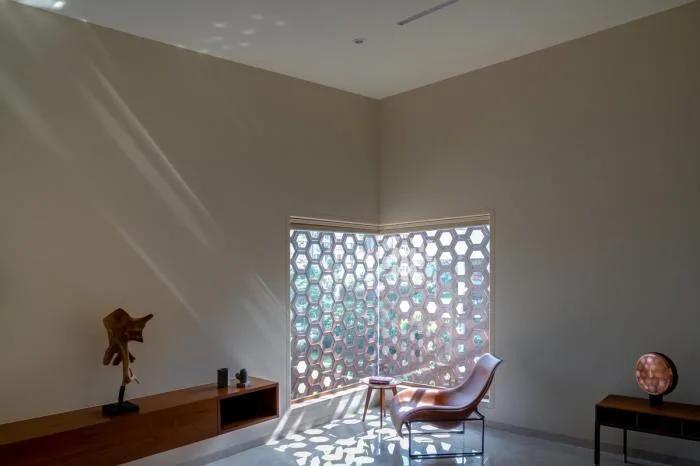
The architects reveal that the inspiration for the enclosure structure and other residential elements is drawn from everyday objects. For example, the facade mechanism is inspired by airport bus doors, while the 7-meter-long, 38-millimeter-thick staircase mimics the hexagonal grid pattern commonly found in IKEA furniture. The radio antenna’s movement inspired the window opening mechanism. Additionally, the “Kadki door” from traditional fortresses is adapted for the entrance.
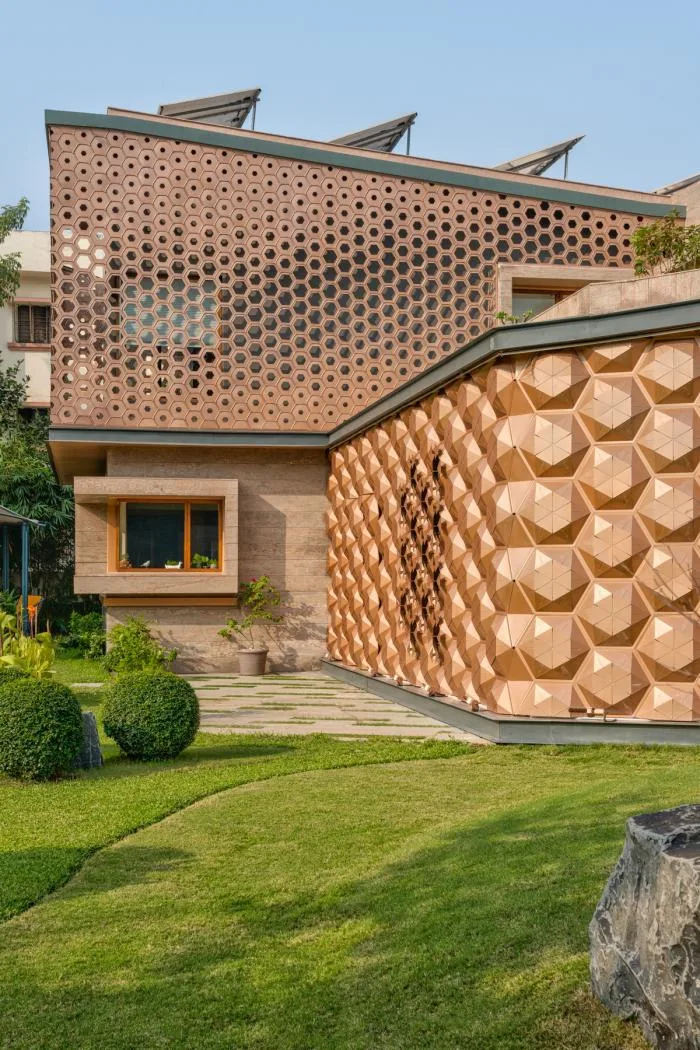
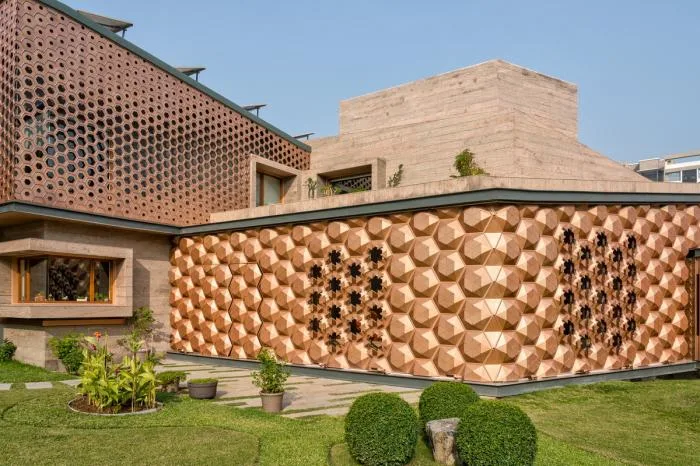
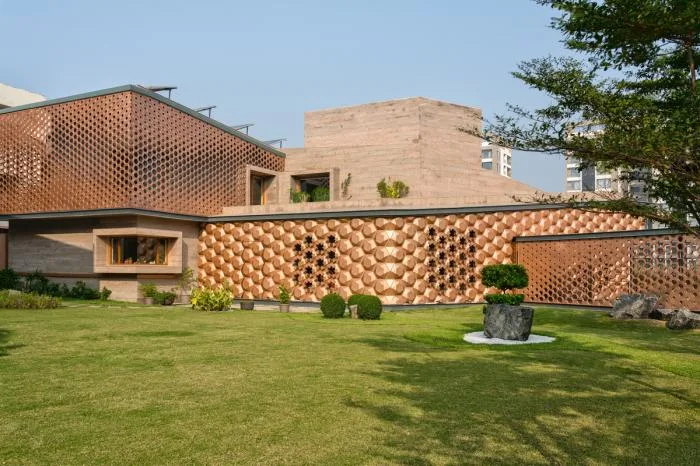
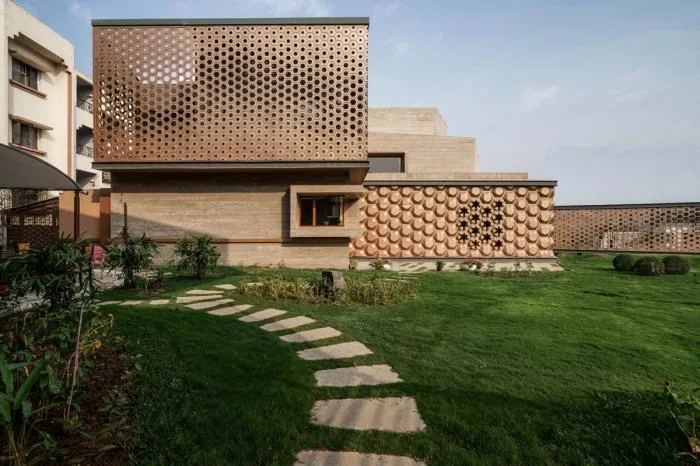
The architects emphasize that the project’s defining feature is the open-minded and fearless owner, who was willing to experiment with unconventional ideas without many precedents. Viewing the building as a product or machine he manages, the owner insisted on perfection and pursued uniqueness in every detail. This high standard placed significant pressure on the design team to deliver a plan that met his expectations. Therefore, every design and construction decision was grounded in detailed research and prototype development. This project empowered the architects to think boldly, embrace originality, and dedicate themselves to meticulous research, ultimately bringing their design vision to life.
Design Drawings
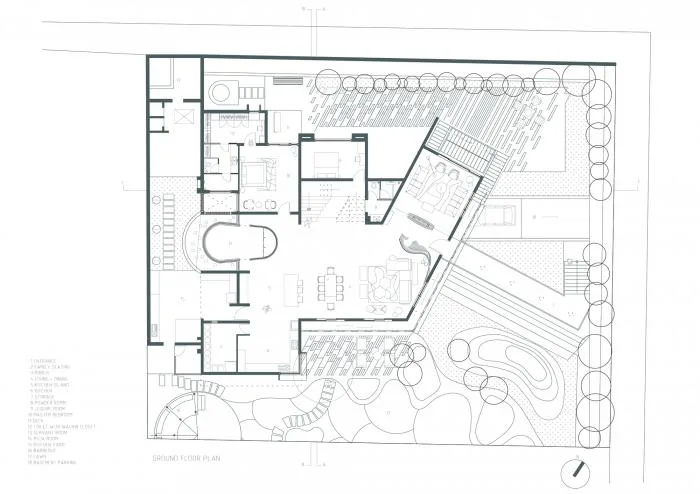
△ First floor plan
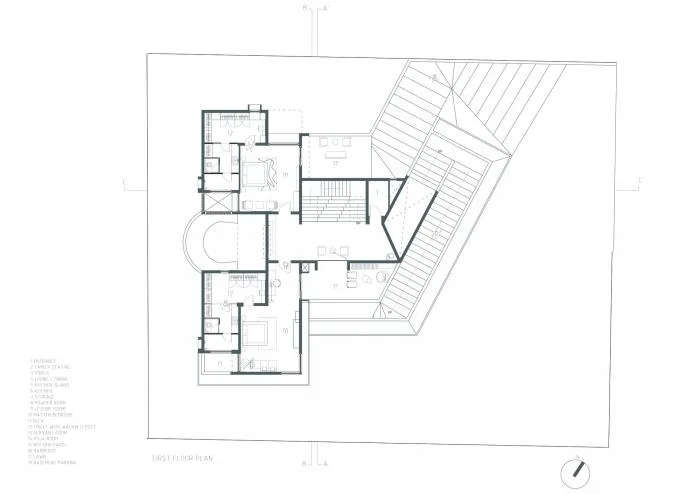
△ Second floor plan
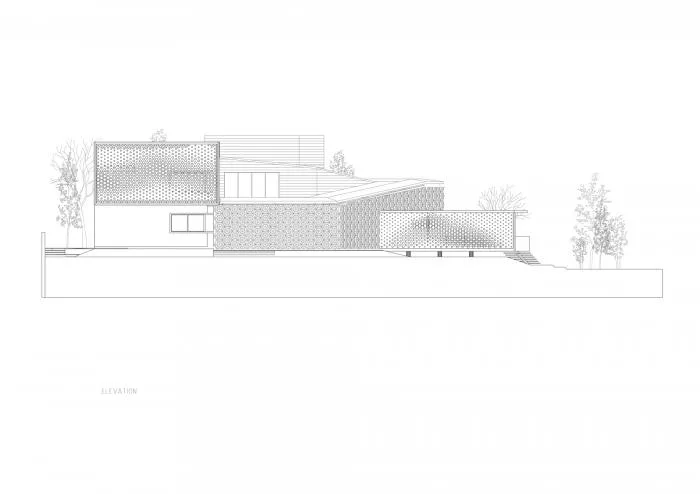
△ Elevation drawing
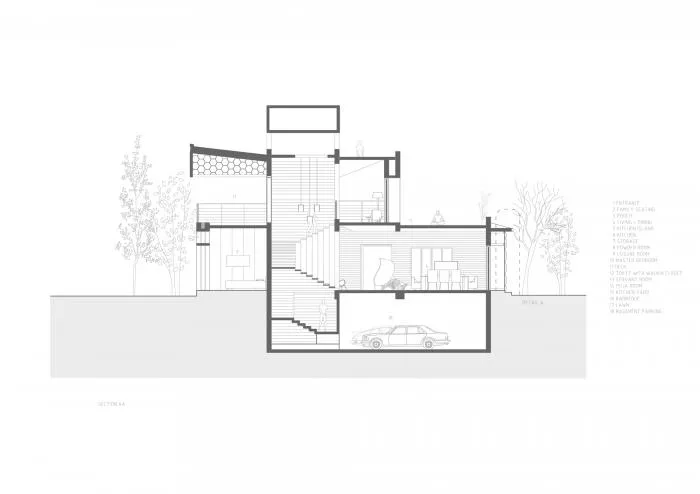
△ Sectional drawing AA’
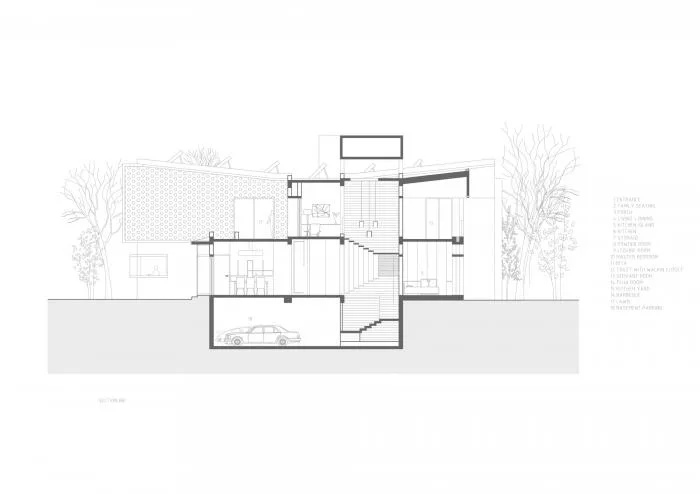
△ Sectional drawing BB’
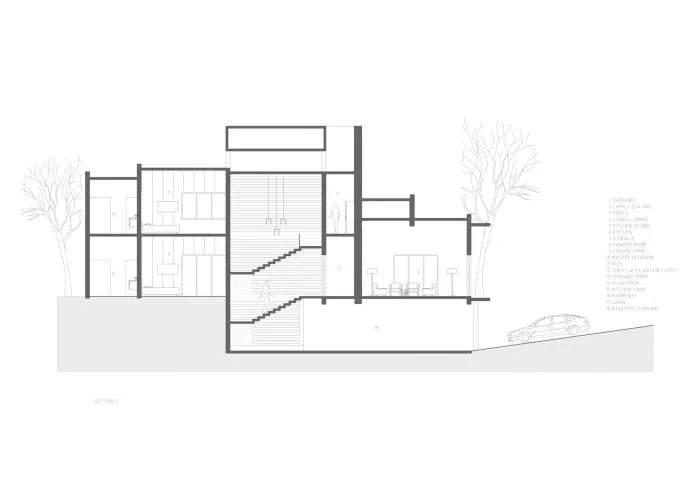
△ Section CC’
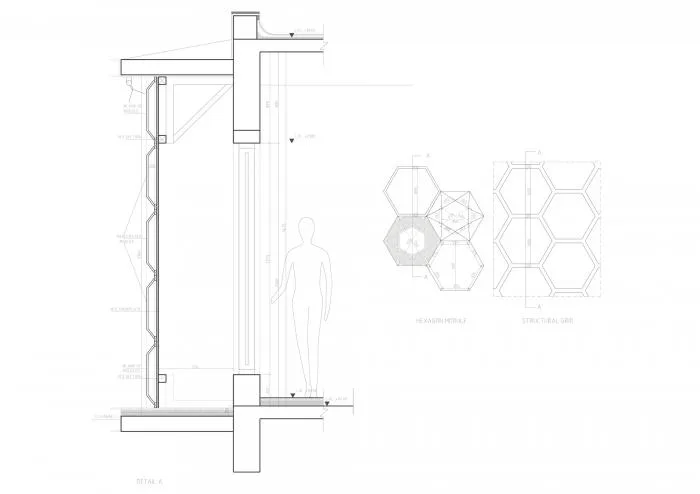
△ Node details
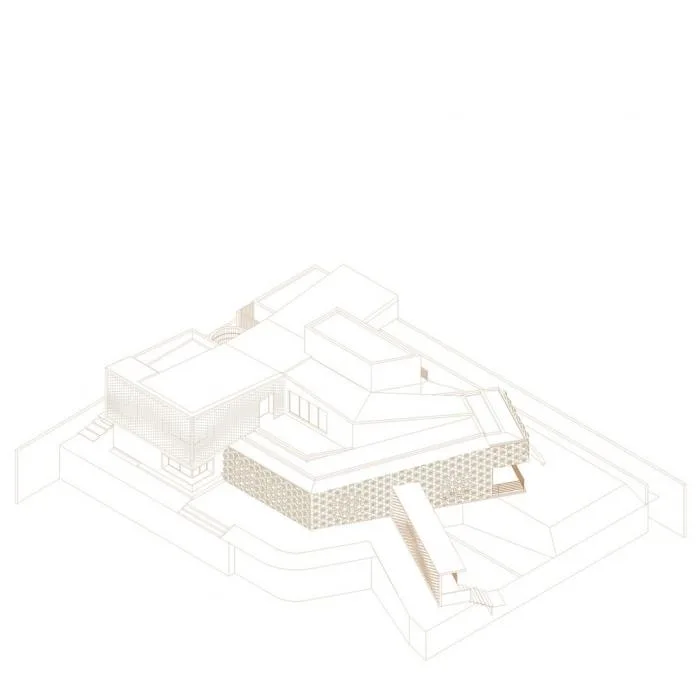
△ Axonometric diagram
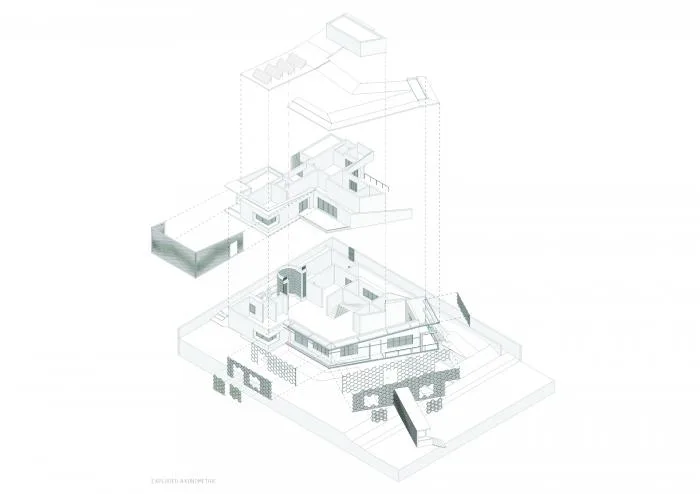
△ Exploded axonometric diagram
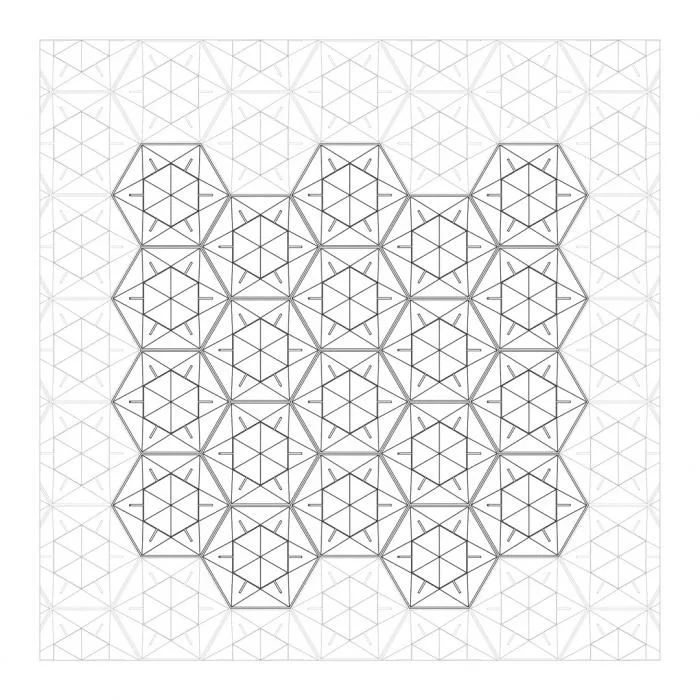
△ Facade detail
Project Information
Project Type: Independent Residential Building
Location: Surat, India
Architectural Design: Openideas Architects
Area: 600 m²
Year: 2019
Photographers: Fabien Charuau, Yash Parekh – Panchkon
Manufacturers: AutoDesk, Poltrona Frau, Porada, Toto, BNB Italia, Flex Form, Hans Grohe, Hunter Douglas, Pocho Living, Remadessio, Robert McNeel & Associates, ZANOTTA
Lead Architects: Monarch Champaneri, Nilesh Gajera, Niralee Champaneri
Design Team: Vishal Patel, Sahil Soni, Nishant Chauhan, Jainika Patel, Manasi Hathiwala, Kashyap Parshala, Zeb Saiyed
Facade Design: Ensemble
Mechanical Engineering: Ensemble
Power Engineering: WNeuro












Must log in before commenting!
Sign Up