
Marshall Blecher and Studio Fokstrot have introduced an innovative floating “archipelago” system for Copenhagen, aiming to transform urban harbors into vibrant public spaces. The Copenhagen Islands are envisioned as park-style islands, open and free for activities such as rowing, fishing, kayaking, stargazing, swimming, or simply enjoying outdoor living.
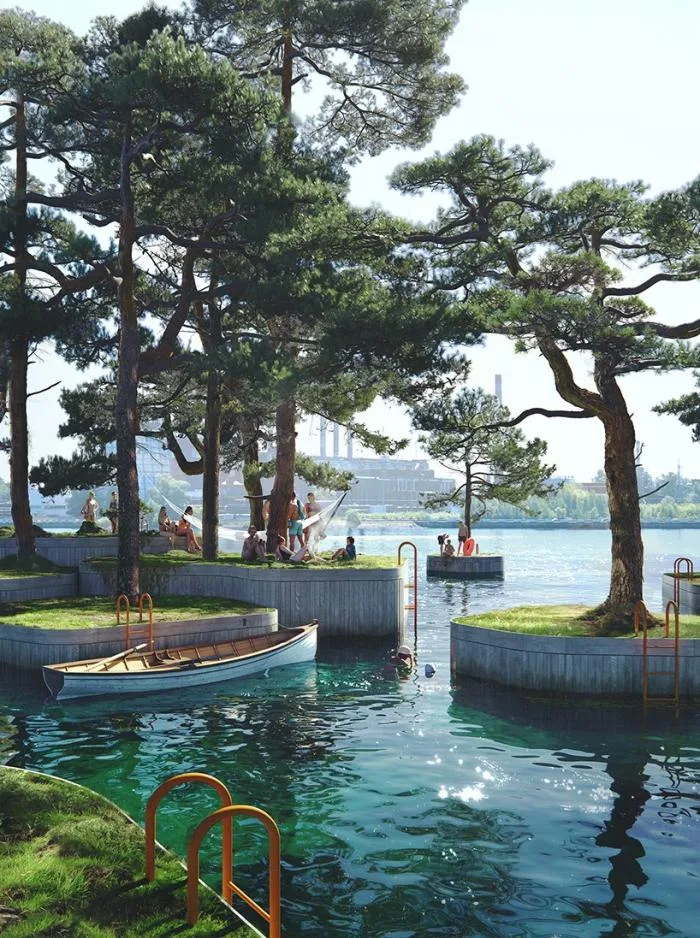
The Copenhagen Islands, designed by Marshall Blecher and Studio Fokstrot, form a self-sustaining ecosystem. Unique vegetation, including trees and grasslands, thrives on the water’s surface, creating habitats for resting, sleeping, and supporting insect life. Beneath the water, fixed anchor points foster new homes for seaweed, fish, and mollusks. This floating archipelago provides dynamic, expansive green spaces in a corner of the city, representing a new approach to climate-adaptive urban planning. The floating structures are inherently flexible in function and are constructed using sustainable, reusable materials.
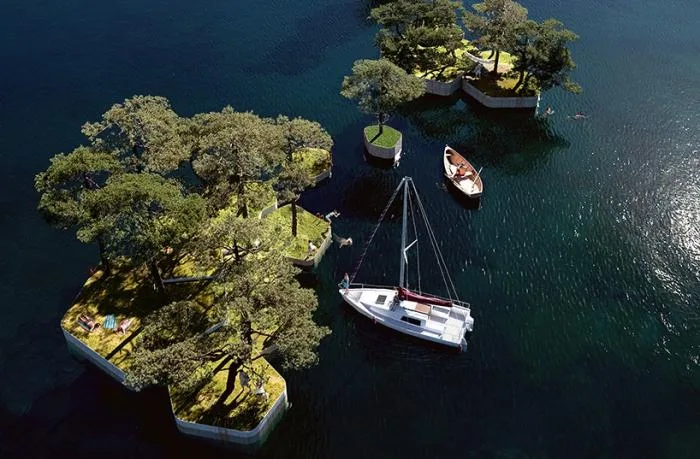
The construction of the Copenhagen Islands utilizes traditional wooden boat-building techniques. These islands are designed to move seasonally between the fully active areas of the port and newly developed zones, encouraging diverse biological and social activities.
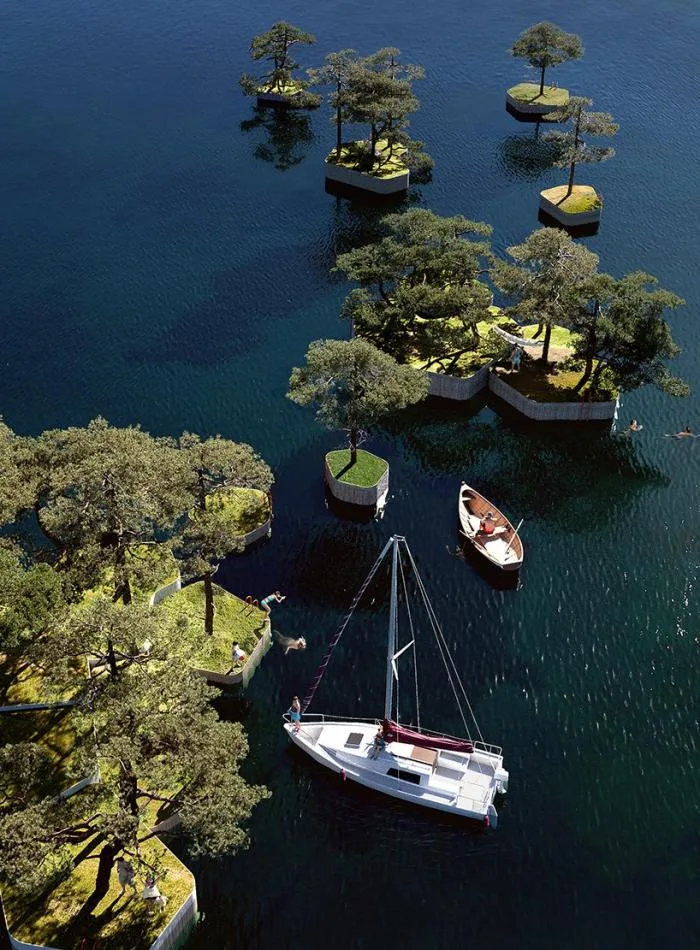
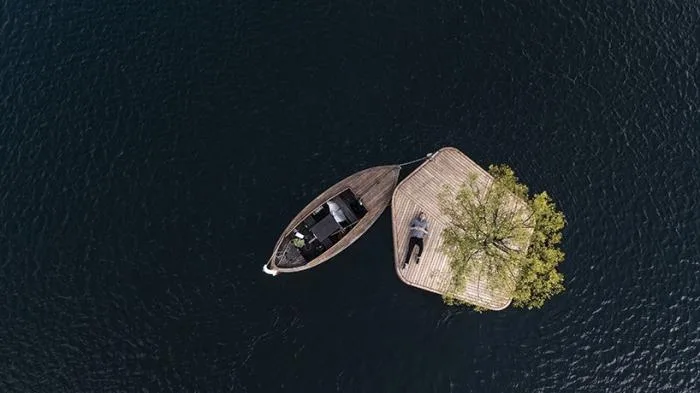
The first prototype, CPH-Ø 1, launched in 2018, quickly gained attention in the harbor community and has won several design awards. At the heart of this 25-square-meter platform stands a 6-meter-high Bodhi tree. The platform was handcrafted in a shipyard located in Copenhagen’s southern harbor using traditional woodworking methods.
The Copenhagen Archipelago project operates on a non-profit basis and is supported by the Copenhagen Municipal Government, OG Havn, and Den Gode Havneliv.
Project Information
Project Name: Copenhagen Islands
Project Designers: Marshall Blecher & Studio Fokstrot
Aerial Image: Airbnb
Rendering: MIR












Must log in before commenting!
Sign Up