
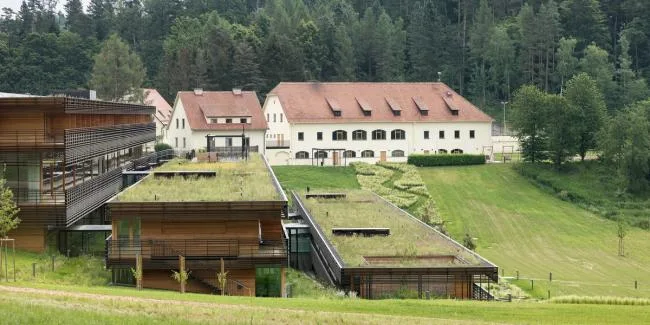
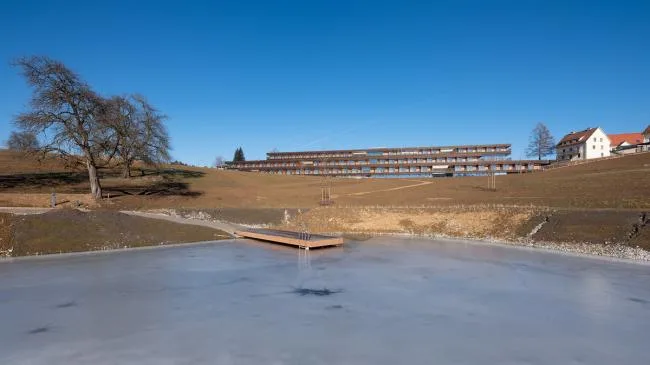
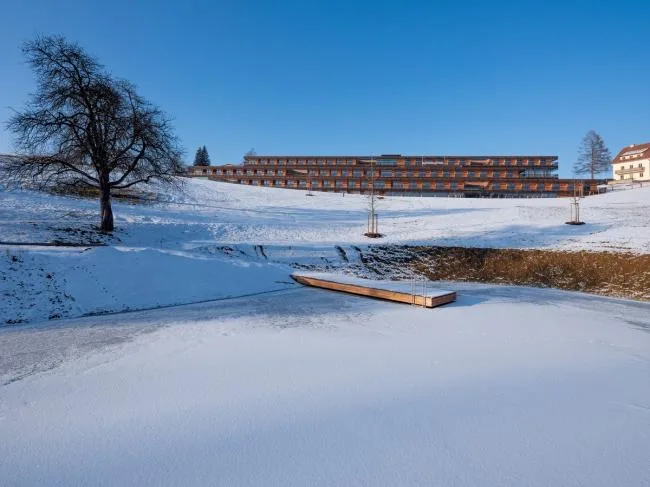
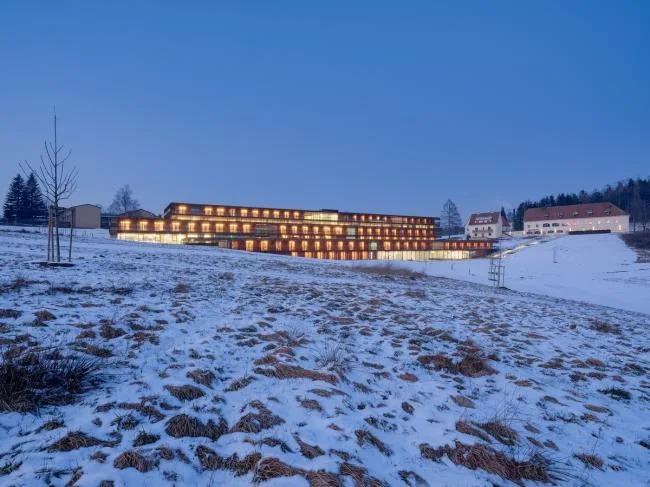
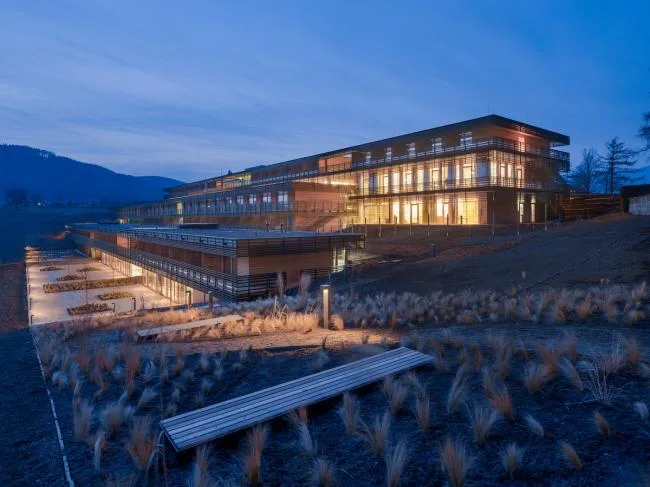
This project seamlessly blends architecture with the surrounding landscape, striving to create a harmonious connection between people and nature. The site is situated within a typical orchard grassland of the region. Three slender structures are arranged in an arena-like setting, giving the impression that the buildings sometimes hover above the ground and at other times nestle into the terrain.
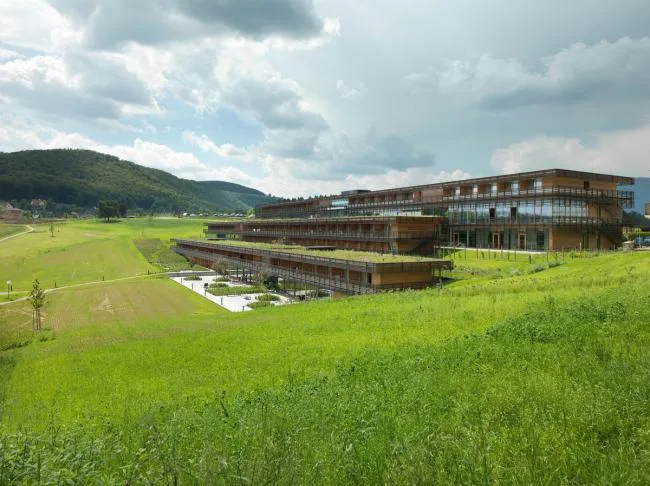
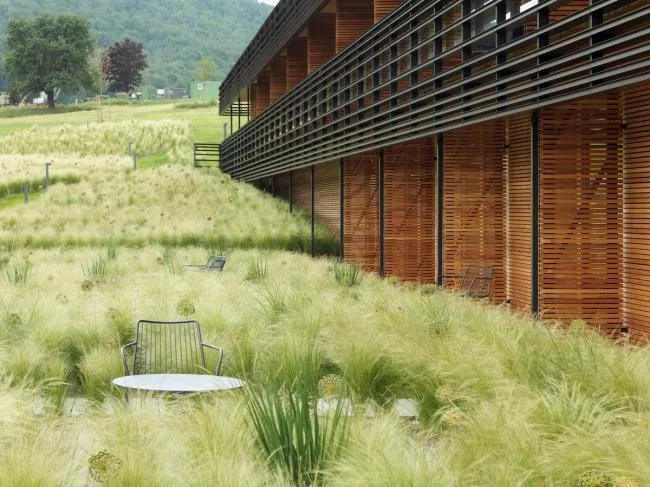
To invite the landscape inside, the architect incorporated a courtyard filled with orchard trees and grasslands. The spatial layout of Josefhof is heavily influenced by the surrounding mountains, hills, forests, and meadows. The entrance, restaurant, and bar offer views facing both south and north. The lower structures are staggered so that their roofs align parallel to the base of the walls of the upper levels.
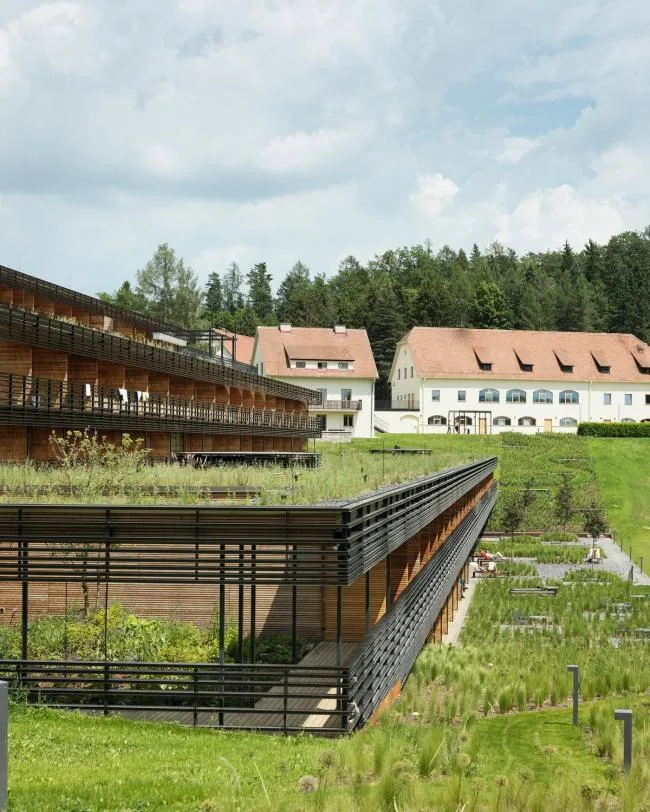
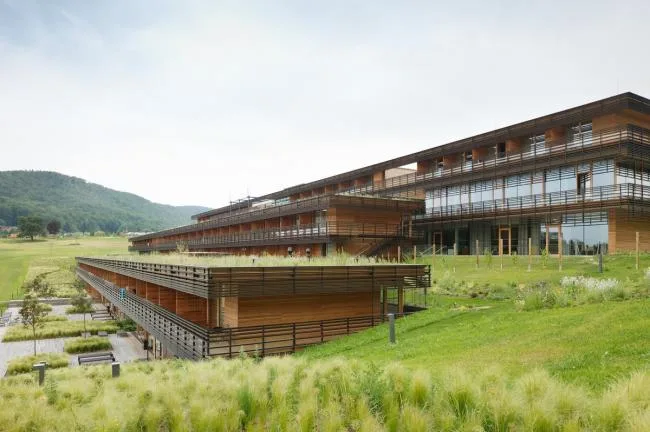
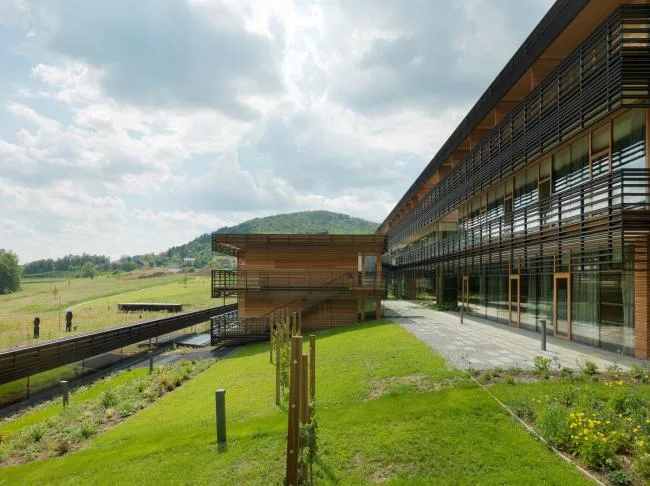
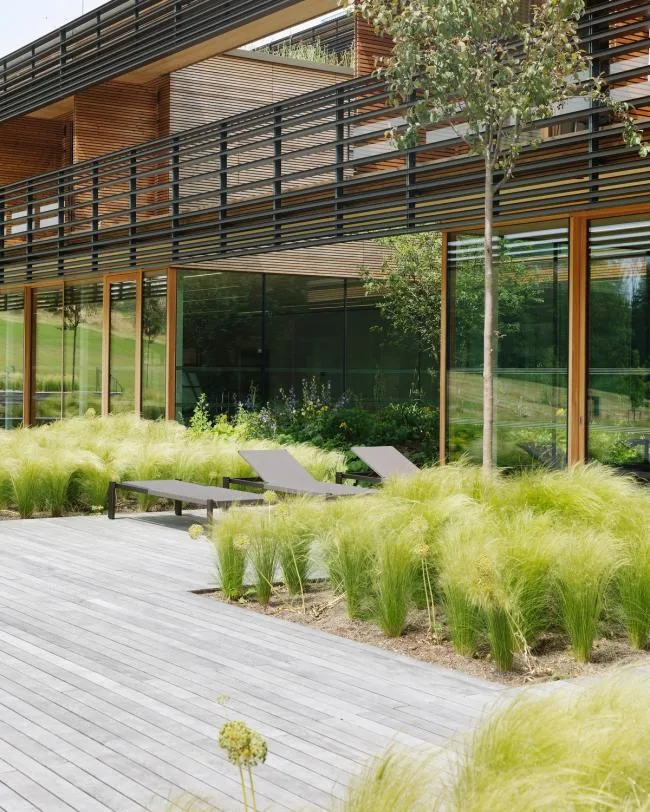
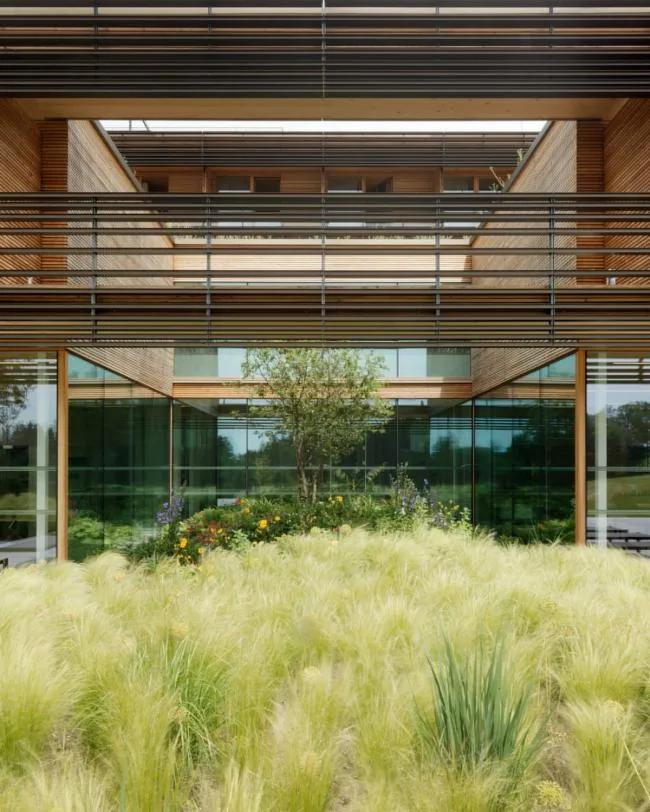
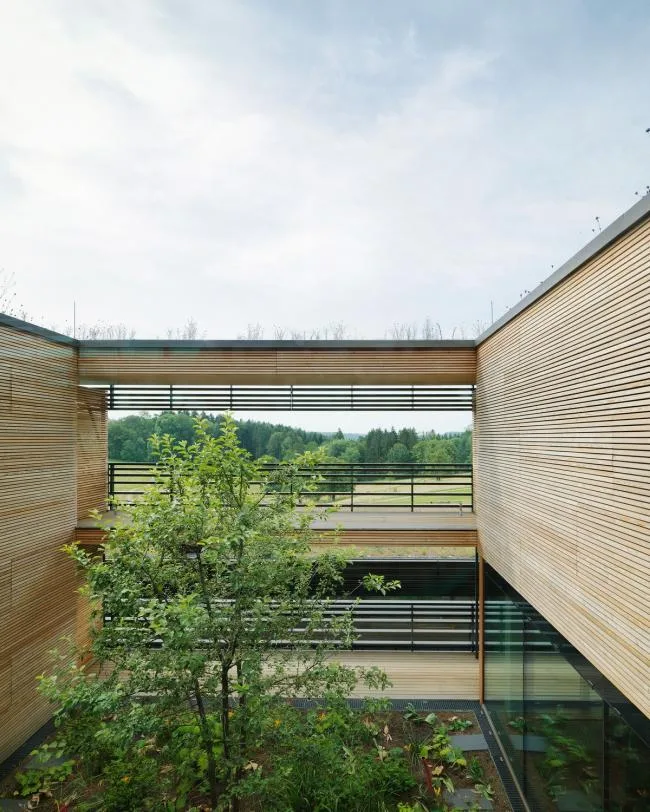
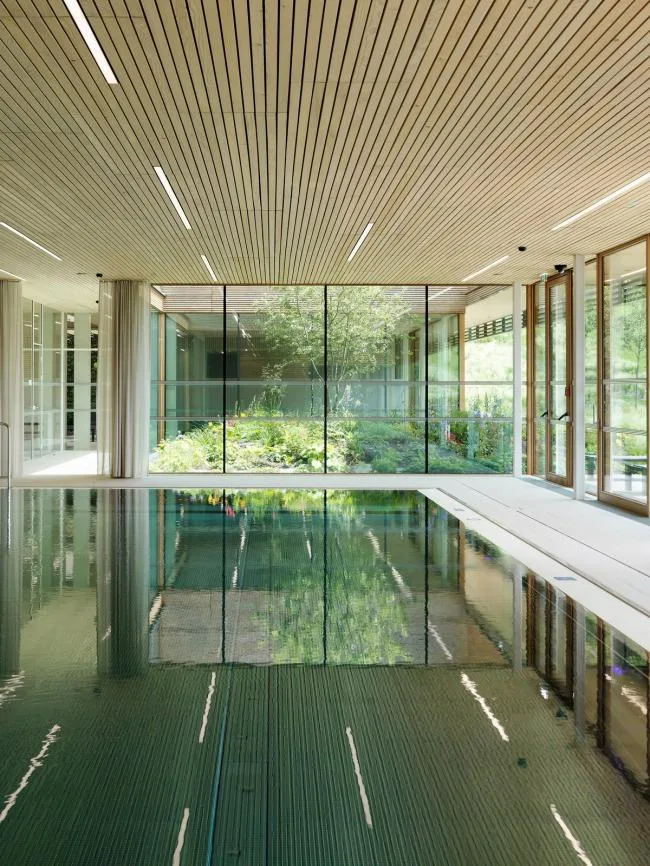
The natural landscape flows continuously between the buildings. Every room offers stunning views of the cultural landscape. The seminar spaces and busy primary healthcare clinics not only enjoy these scenic vistas but also have direct ground-level access to nature. The bathing and sauna facilities are positioned on the southern terrain, offering serene views of a sawdust path and a pond.
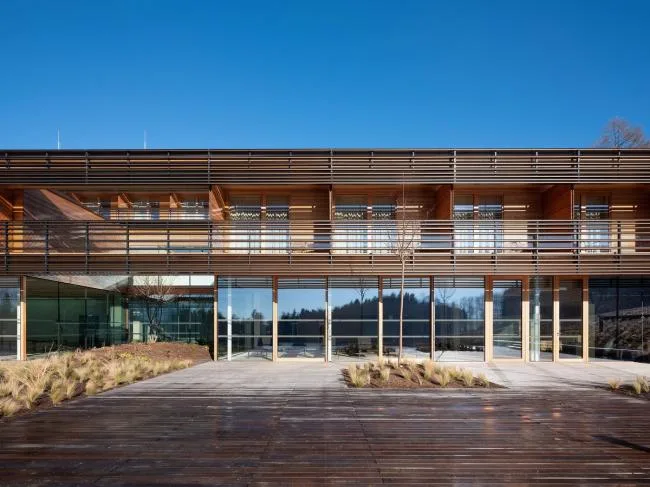
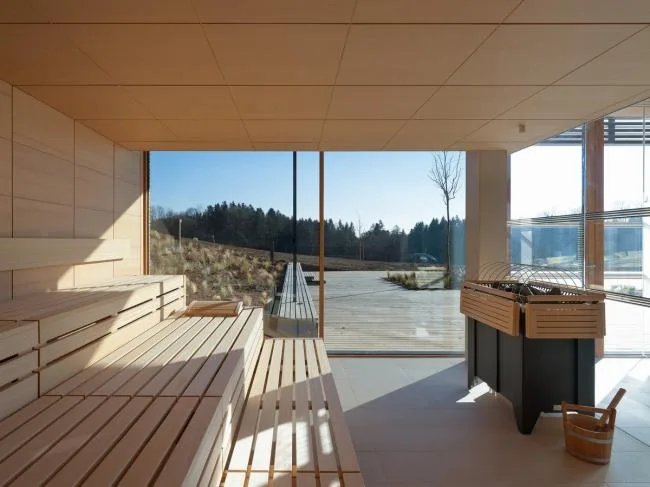
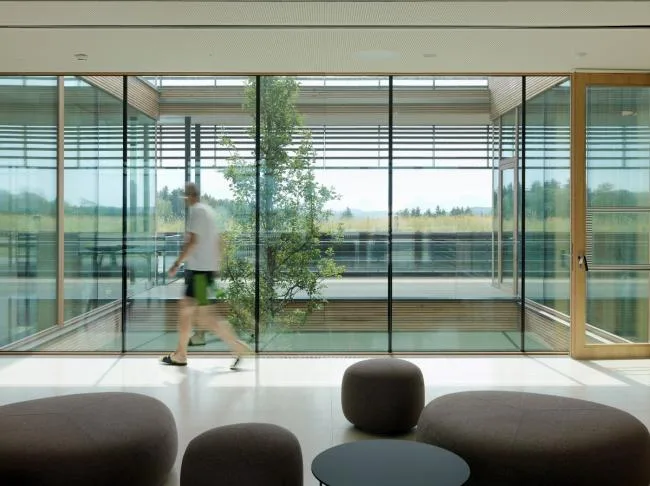
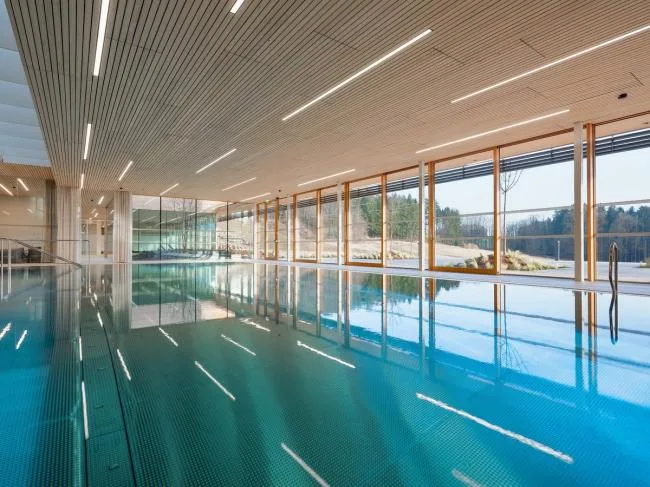
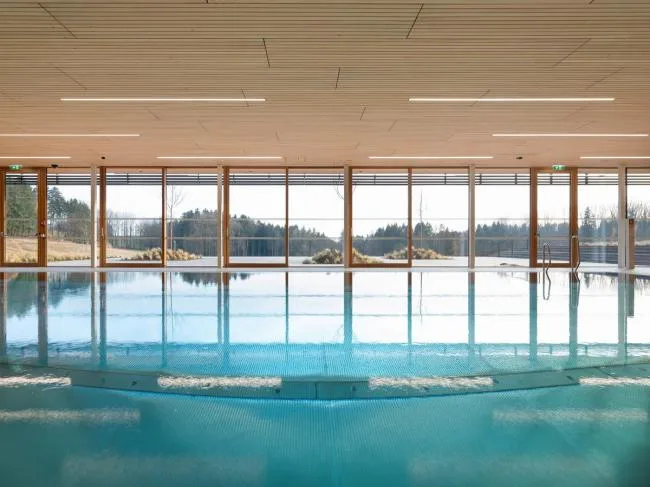
Starting at the reception hall, all areas are easily accessible, allowing quick entry. Unlike the facade, the compact and simple window structures are recessed to avoid direct sunlight. The building features a well-insulated facade and shaded atrium, effectively meeting energy efficiency requirements. Its load-bearing framework employs a highly prefabricated construction method, which is cost-effective.
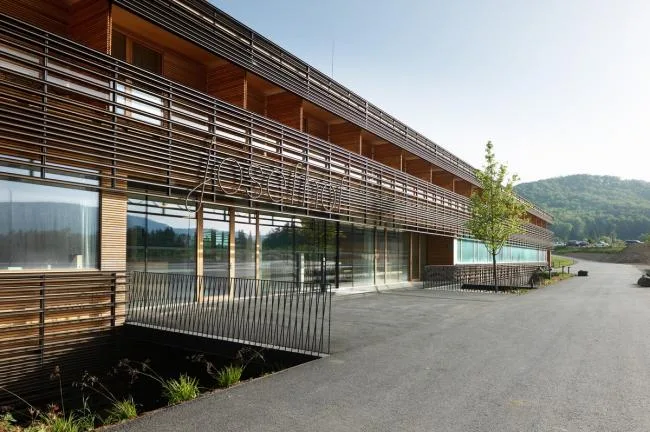
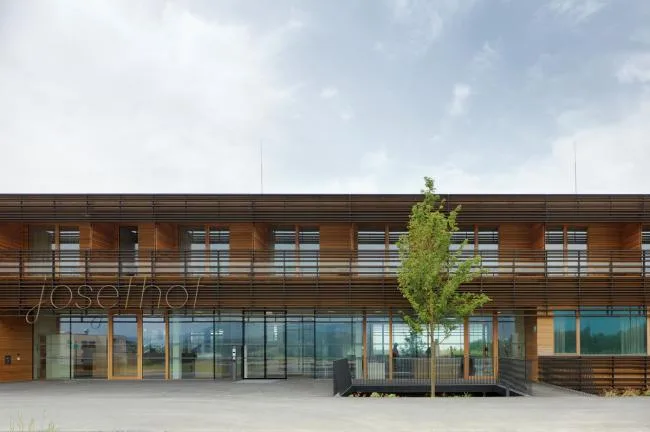
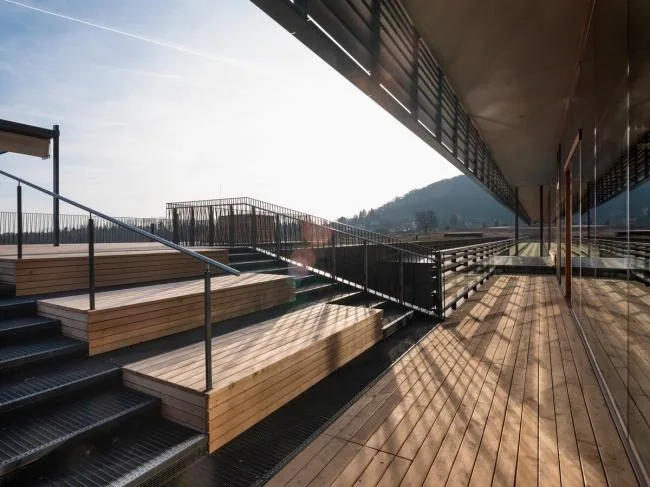
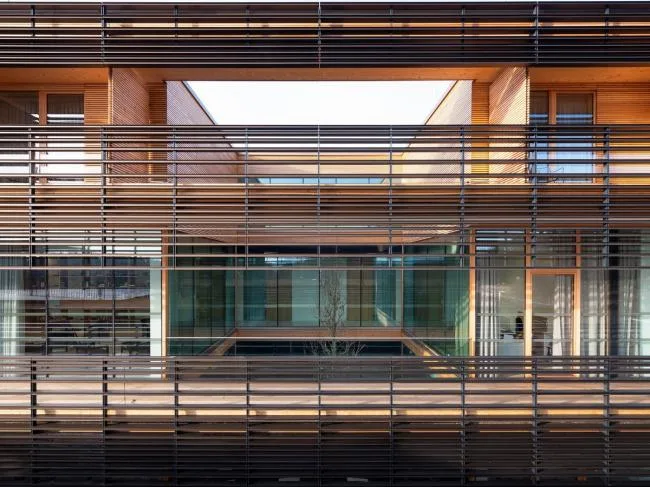
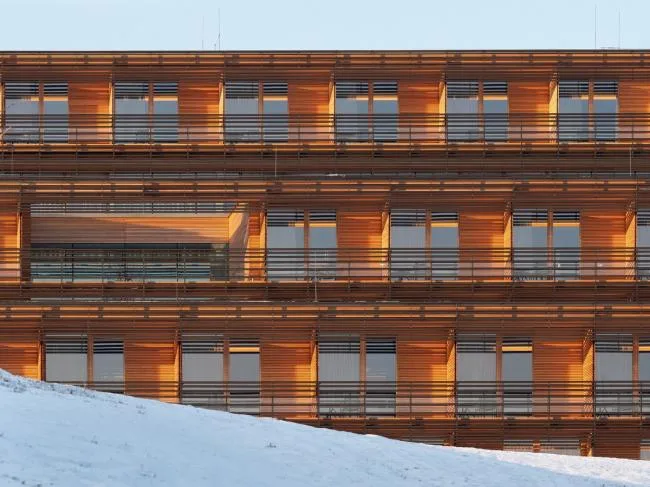
The rooms are constructed from wooden modules, with interior finishes completed before delivery to the site. Natural materials dominate the design, emphasizing the importance of a warm and welcoming environment in the rehabilitation center. The natural landscape extends through the building, and a clear, economical column grid on the ceiling supports the structure.
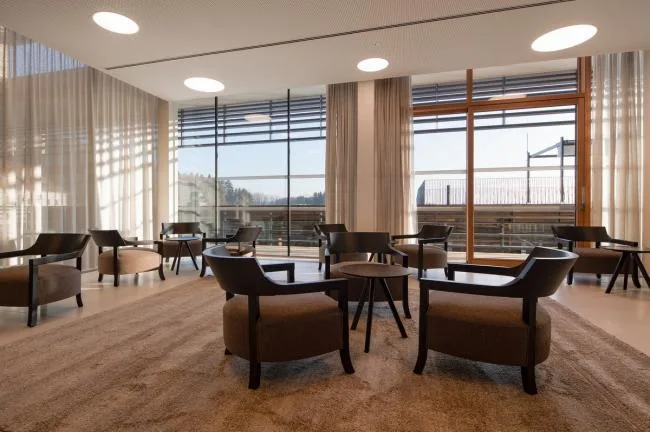
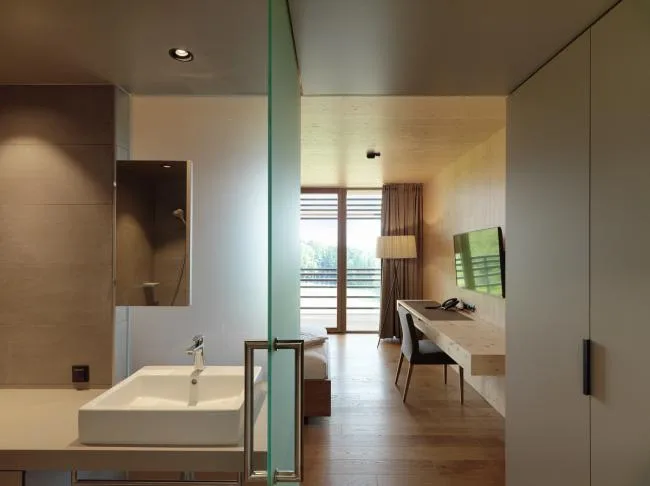
All room partitions, fixtures, and building envelopes are prefabricated, offering flexibility and openness for future renovations. The connections between load-bearing structures, windows, walls, and doors are carefully chosen to use natural, carbon-neutral materials where possible, helping to minimize primary energy consumption.
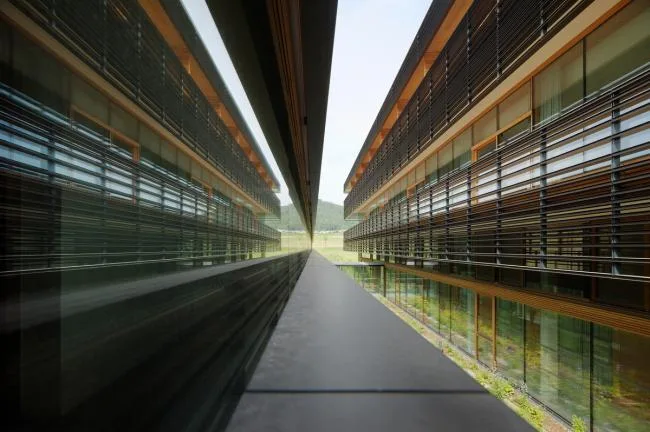
High-quality, carefully selected materials are combined thoughtfully throughout the building. The design favors natural, non-toxic, and renewable resources while limiting the use of cast-in-place concrete and plastic. The architectural approach follows low-tech principles, prioritizing natural shading and ventilation.
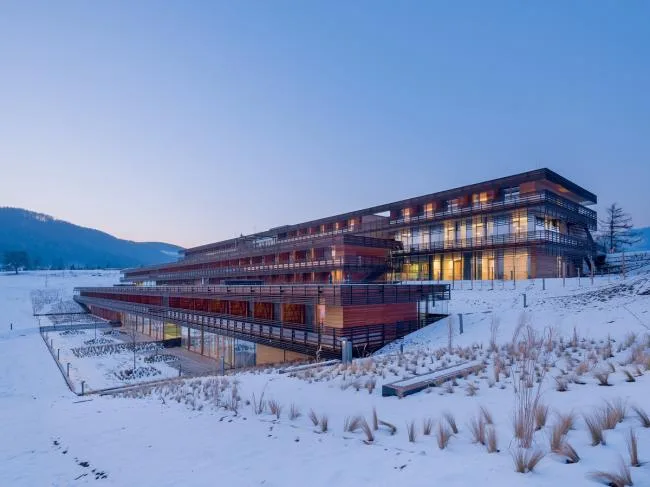
Additionally, clay is used as an eco-friendly building material indoors due to its ability to absorb pollutants and regulate humidity, improving indoor air quality. Interior walls between rooms and bathrooms are coated with clay. From the rooms, green roofs planted with lavender can be seen on the central and southern sections of the building. The facility also undertakes regular large-scale greening efforts.
Greenery enhances the local microclimate by cooling the air in summer, absorbing fine particles and pollutants, providing sound insulation, and extending the lifespan of roof materials. Roof insulation features rock wool for excellent soundproofing and fire resistance, combined with asphalt board waterproofing, a recyclable natural material. This combination is regarded as a highly ecological and practical building solution.
Winter Landscape
Project Drawings
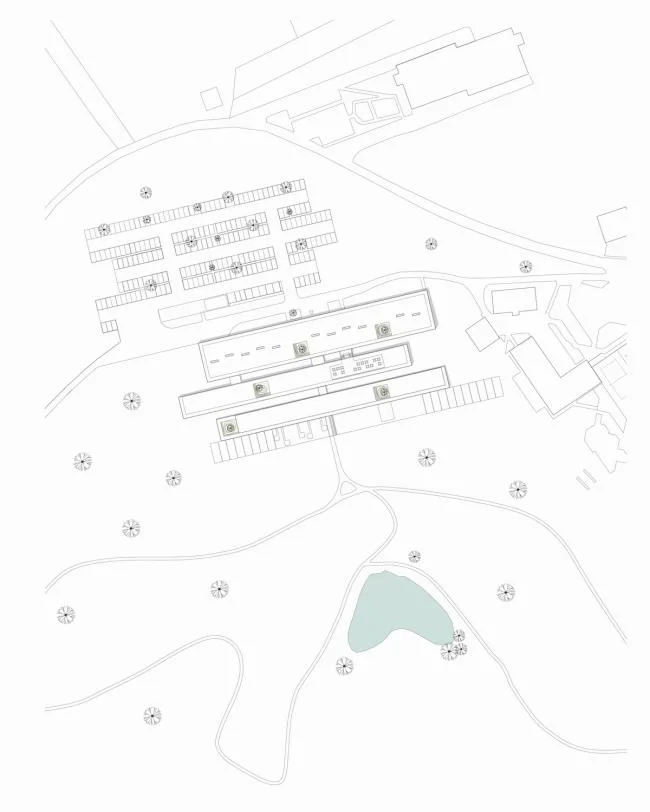
▲ General layout plan
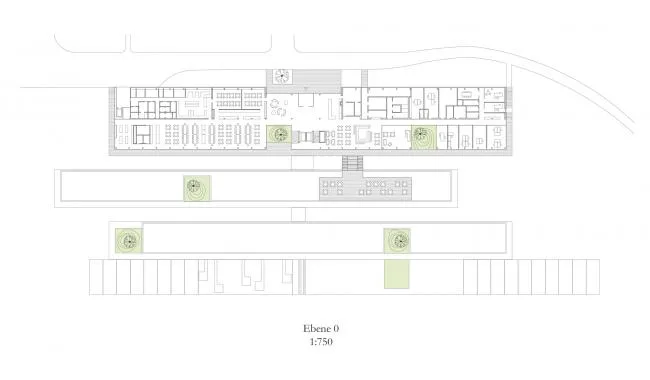
▲ Plan view
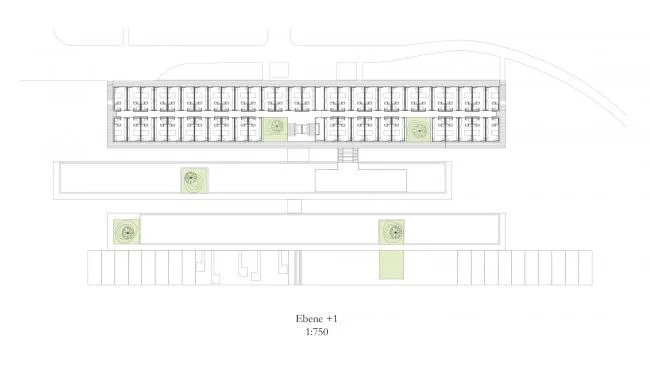
▲ Plan view
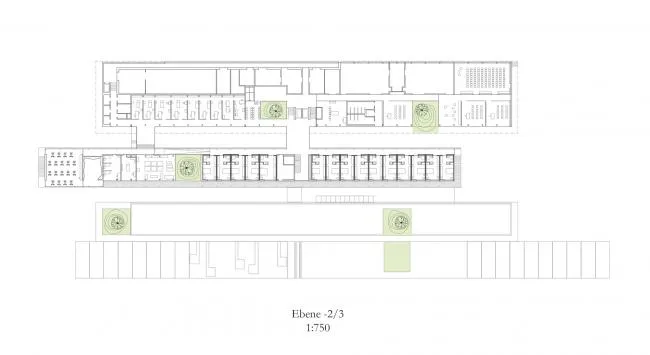
▲ Plan view
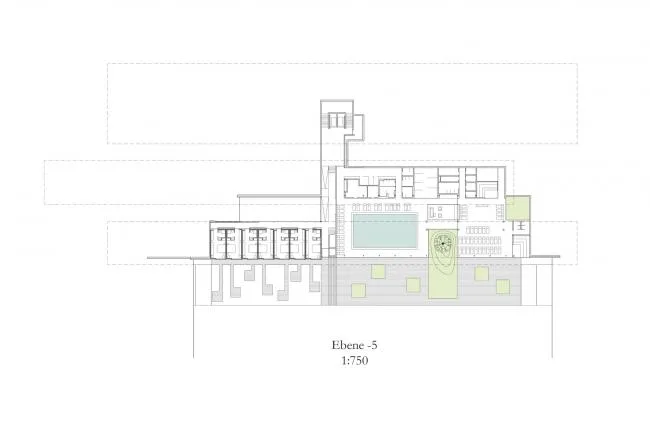
▲ Plan view
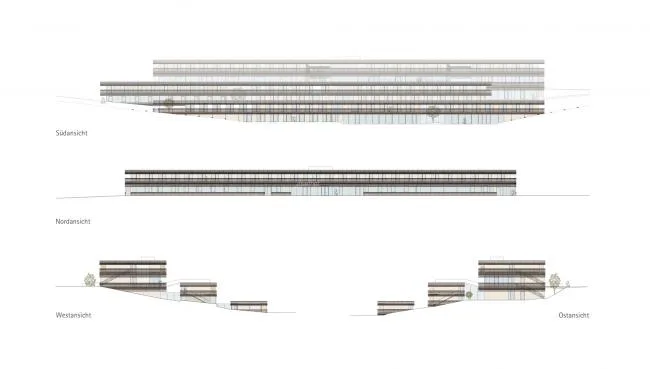
▲ Elevation view
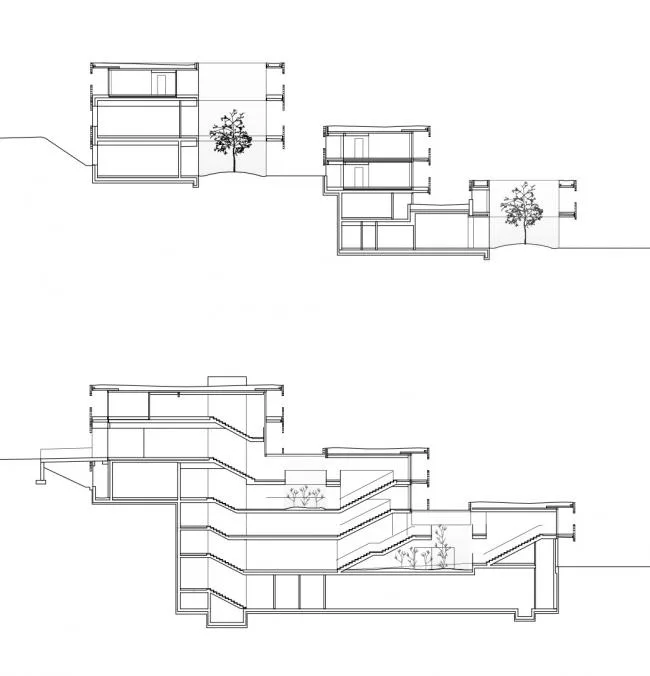
▲ Sectional view
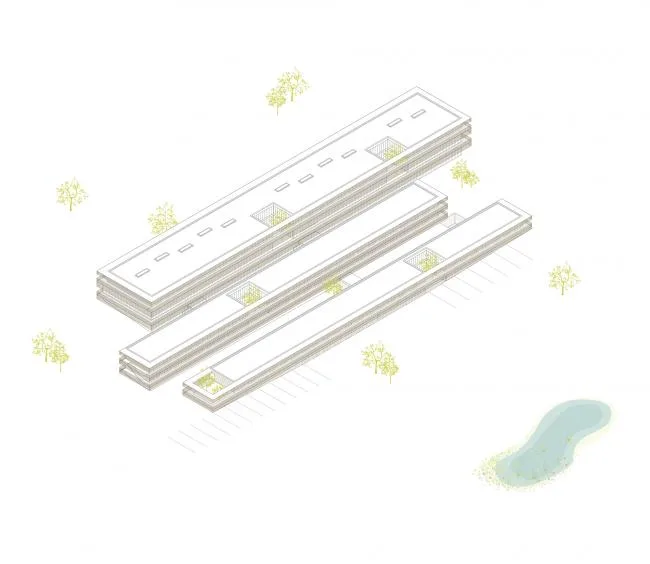
▲ Axonometric diagram
Project Information
Design firm: Dietger Wissounig Architekten (BIM tutorial)
Address: Haideggerweg 38, 8044 Graz, Austria
Category: Health Center
Design team: Dietger Wissounig, Stephan Schmidt, Patrick Steiner, Gernot Moser, Bettina Gossak-Kowalski, Jan Müller, Stephan Brugger, Claudia Pittino, Matthias Holzner
Building area: 13,500 m²
Project year: 2019
Photographers: Paul Ott, Helmut Pierer
Suppliers: Wittmann, Schindler elevators and escalators, Kaufmann Building Systems
Client: Insurance company for railways and mining
Building technology: Pechmann
Project control: FCP Fritsch, Chiari & Partner
Local construction consultant: Dipl.-Ing. Dieter Eigner (BIM architecture)
Electrical engineer: Ogrisek & Knoppe GmbH
Structural planning: Wendl ZT GmbH
Architectural physics: Vatter & Partner ZT
Fire consultant: Norbert Rabl Ziviltechniker
Geological engineer: Insitu Geotechnik ZT
Canteen planning: TB PlanQuadrat Engineering Office for Gastronomy and Refrigeration Technology
Construction company: Bauunternehmung Granit
Horizontal monitoring: Ingenos.Gobiet.ZT












Must log in before commenting!
Sign Up