
A beautiful space embodies two essential qualities: beauty and goodness. According to chief designer Li Yiming, while designers often strive to create beauty, the aspect of goodness is frequently overlooked.
Health—which encompasses three progressive levels: environmental health, physical health, and psychological health—is a critical indicator within the dimension of “goodness.”
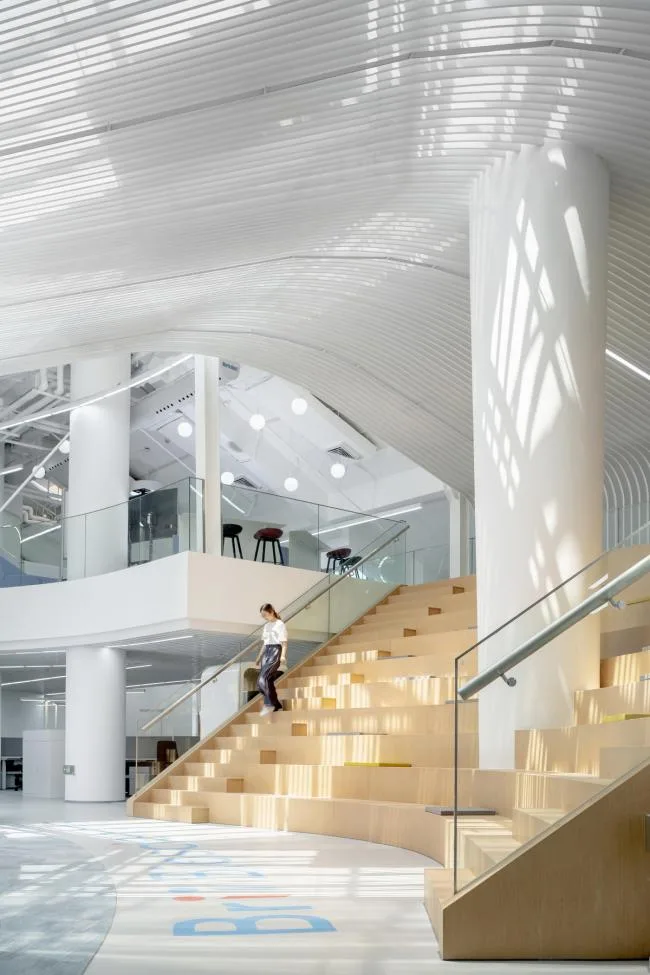
This project is the global research and development center of Tengshengbo Pharmaceutical, located in Beijing. Led by designer Li Yiming, the spatial design draws inspiration from the company’s corporate culture and BIM architecture principles. The design philosophy, centered on the theme of “the goodness of water,” aims to create an office environment that is equal, healthy, open, innovative, and breakthrough-driven. This space also reflects Tengshengbo Pharmaceutical’s mission to meet patient needs and enhance public healthcare in China.
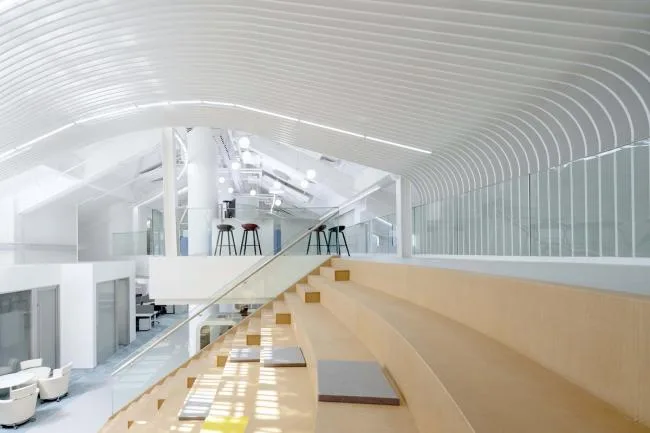
Environmental Health
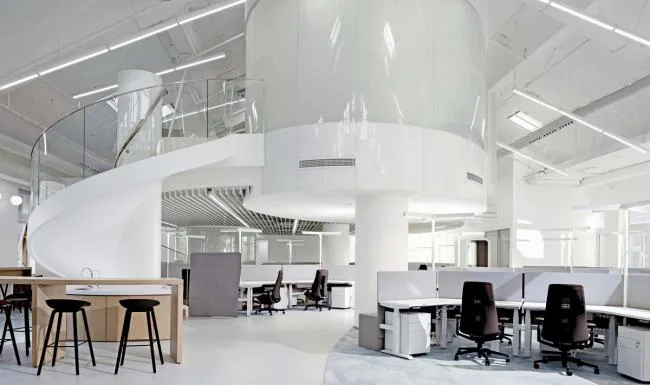
The foundation of environmental health—the first level of health—is built on three essential elements: natural light symbolizing life, fresh and humid air, and pure, clear water. The stepped resting area, named “Hai Na Bai Chuan” by Li Yiming, functions as a versatile gray space within the office where employees can work, relax, and communicate.
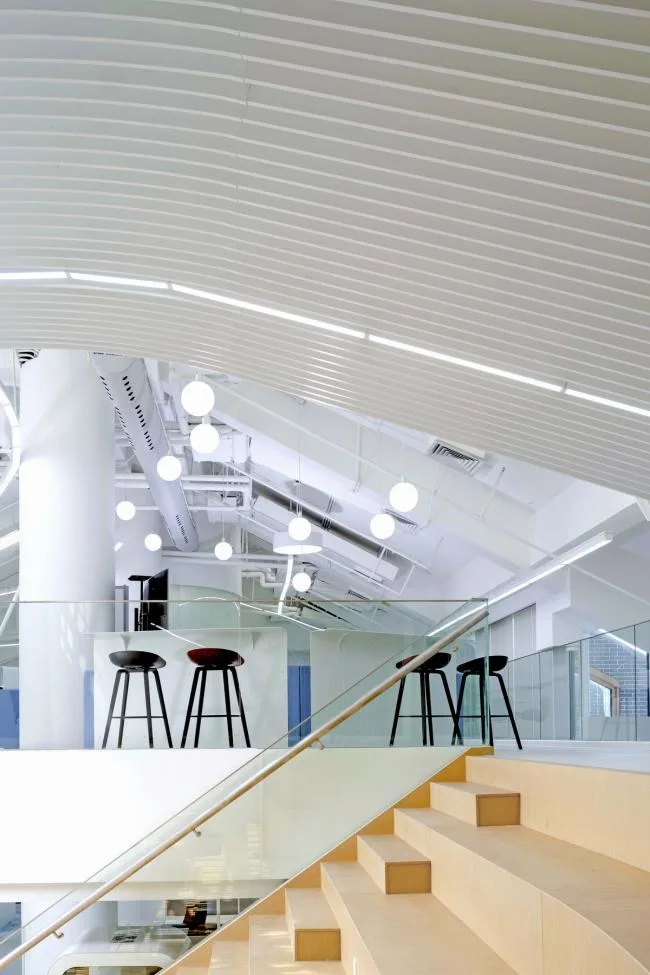
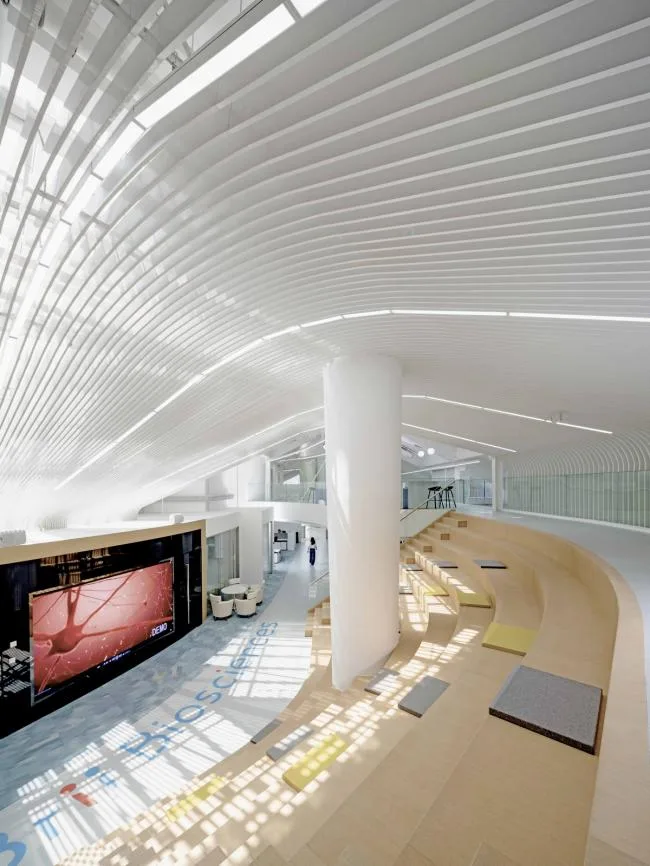
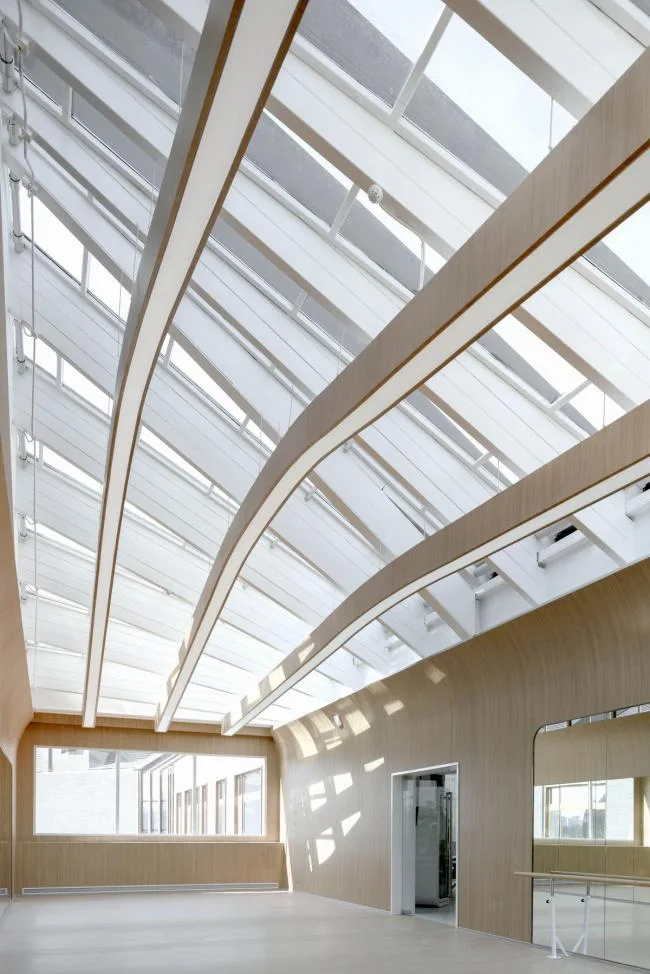
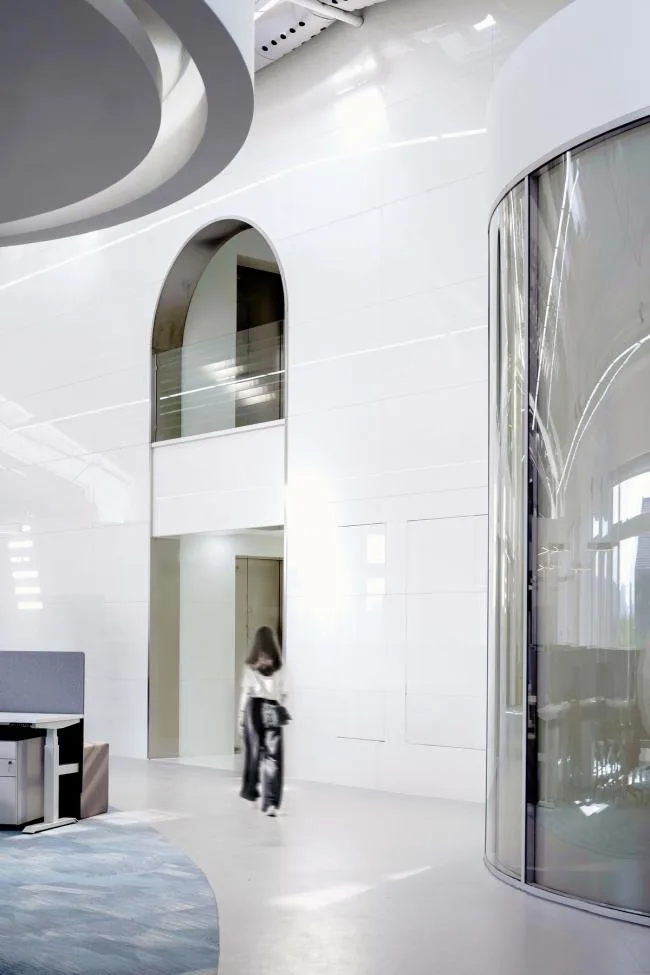
The project adopts the WELL Building Standard from the United States, adapted to China’s unique market conditions. It features an advanced lighting system combining light-sensing curtains, electrically adjustable glass, general ambient lighting, and individual workstation lighting. Natural light streaming through the skylight is diffused by a grille ceiling, maximizing daylight use and bathing the office in warm, comfortable light.
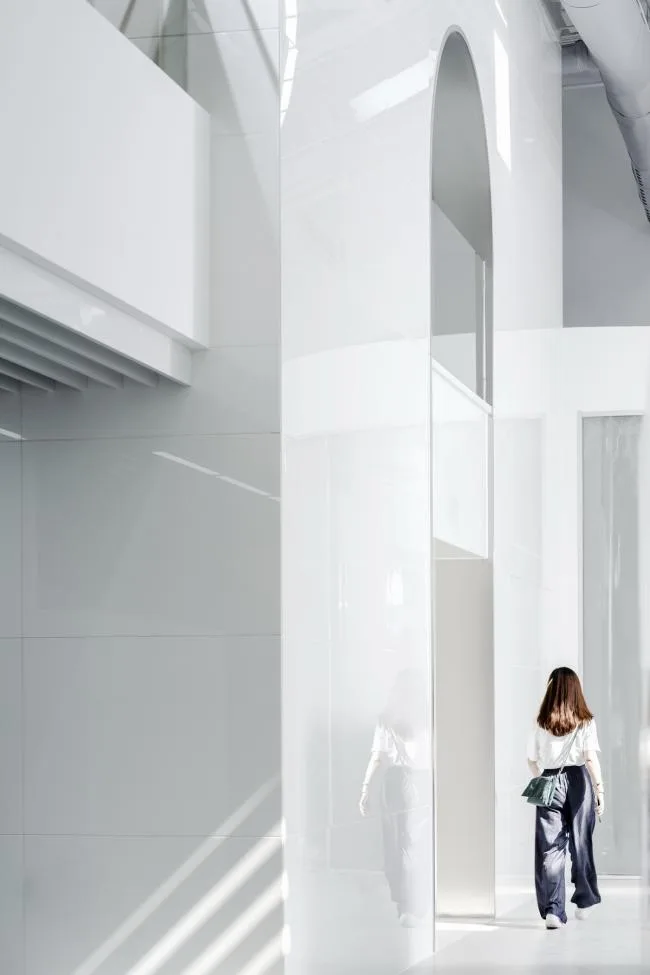
The soft and pure space incorporates the company’s theme colors throughout the design, creating a cohesive atmosphere. Different materials with varying textures are strategically used in distinct areas to enrich visual layers. To maintain spatial transparency, extensive use of electrified glass and fiber fabrics ensures brightness and softness, while diffused reflection light sources prevent harsh direct lighting.
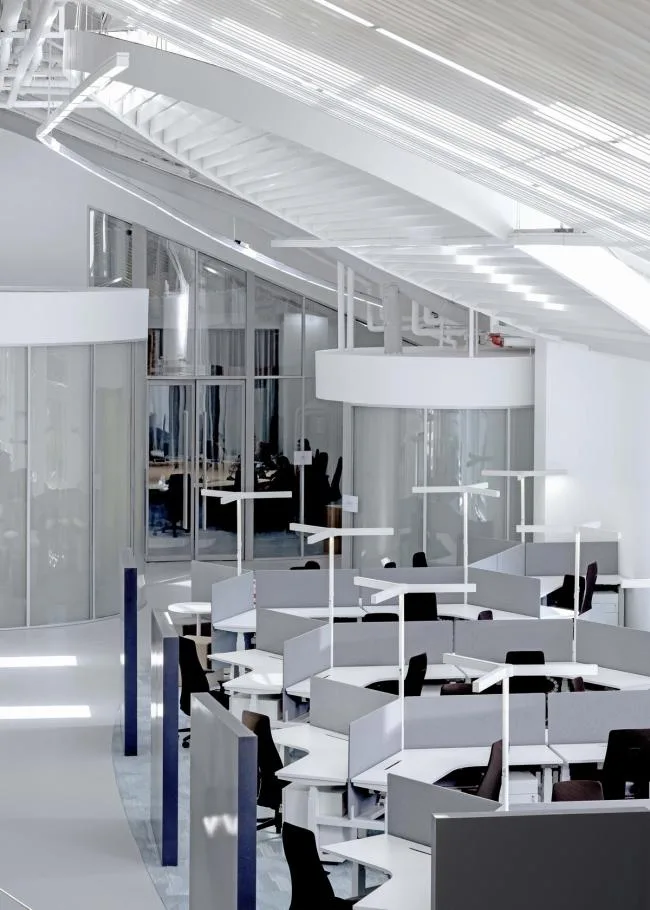
The air conditioning system, primarily a fiber fabric air distribution system (Sos duct), integrates multiple air treatment technologies including fresh air filtration, electrostatic dust removal, haze prevention, photocatalytic sterilization, formaldehyde and VOC removal, and temperature and humidity control. It also features an independent exhaust system for the printing room, ensuring the healthiest indoor air quality.
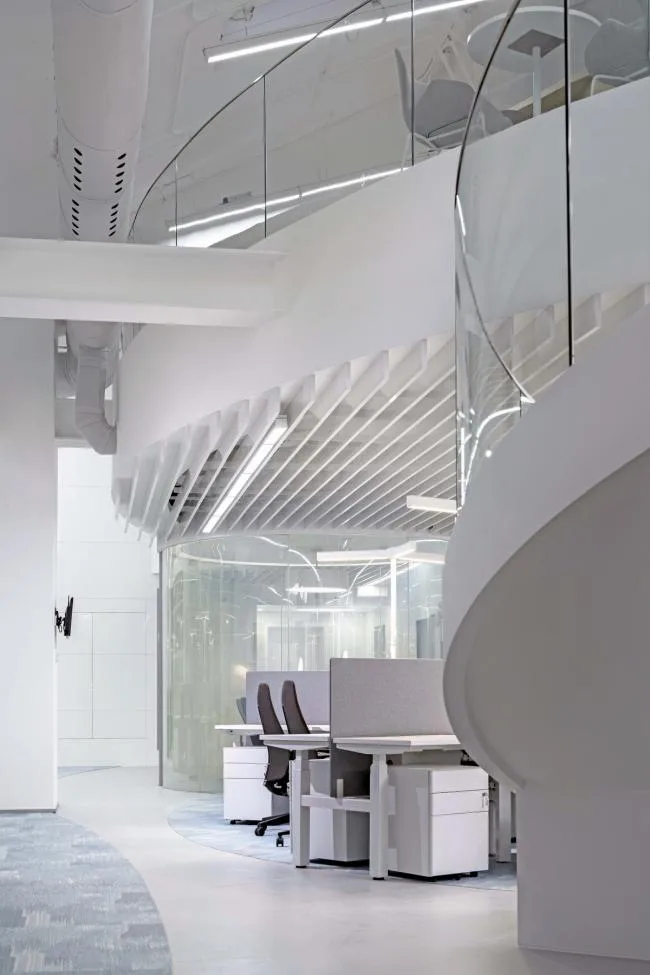
The entire space is designed without physical boundaries or focal points, aiming to extend the interior infinitely and blur the lines between indoor and outdoor environments. This creates a calm and tranquil atmosphere for users. The space is maintained under positive air pressure—similar to an airplane cabin—to completely isolate harmful external atmospheric conditions. Additionally, the tea area is equipped with direct water dispensers and antibacterial copper core pipelines, faucets, and fittings to ensure water purity.
Physical Health
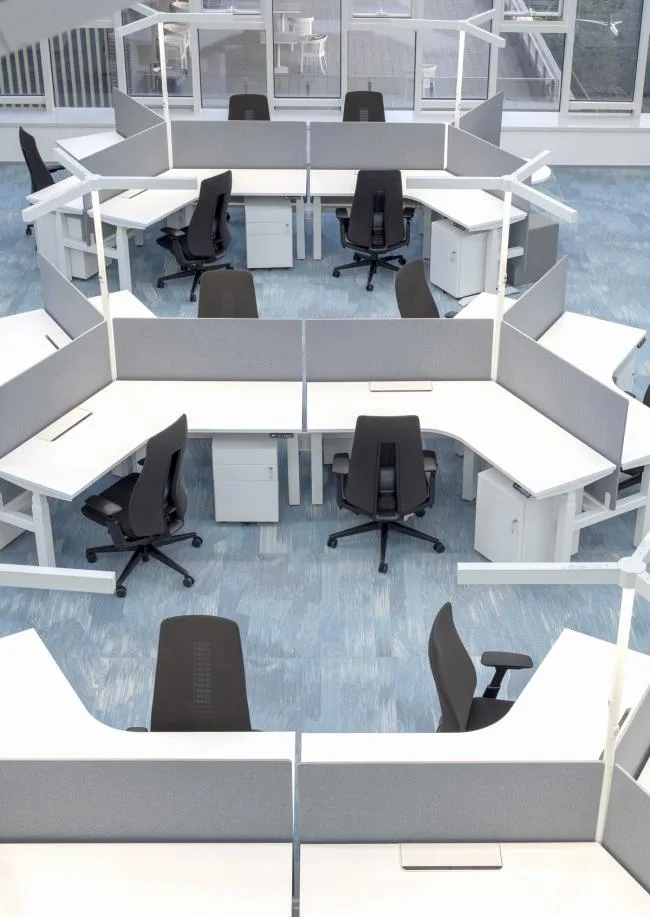
The second focus is physical health. Adjustable office furniture available to all employees, flexible flooring materials, and a sunlit gym help alleviate common office-related physical ailments.
Mental Health
Psychological health is the most important concern for the designer. The office features a fully open layout that fosters equality among employees. Private, soundproof telephone booths combine the functions of phone calls and private offices.
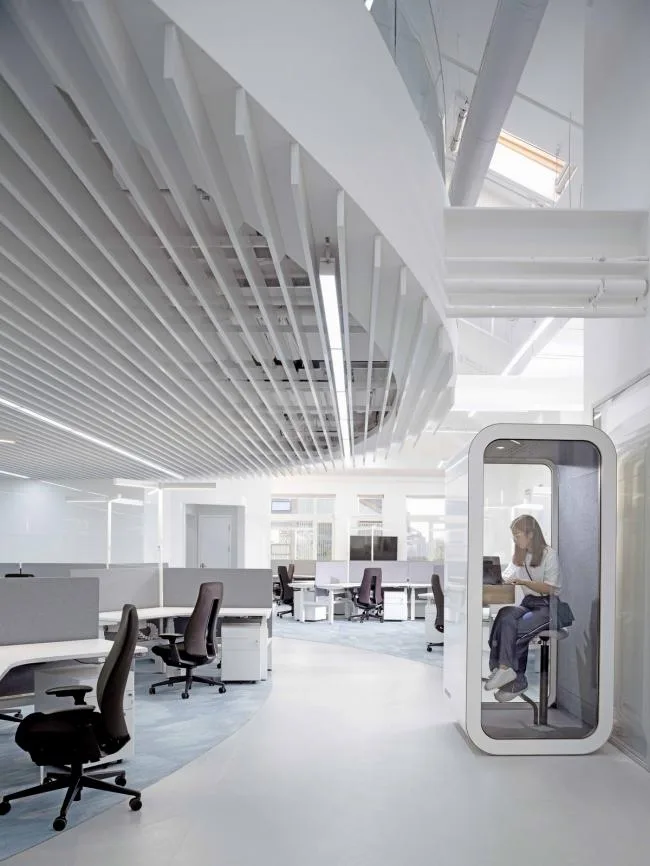
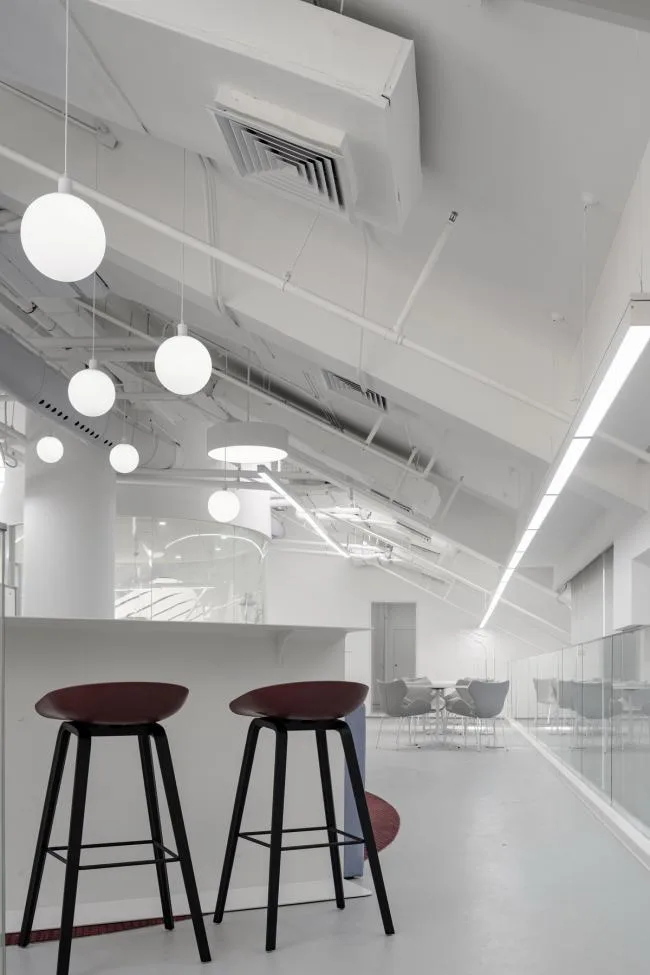
The office area features numerous conference, leisure, and communication spaces of varied shapes to accommodate diverse work scenarios. Facilities such as mother and baby rooms and disabled-accessible restrooms demonstrate the company’s commitment to care and inclusivity.
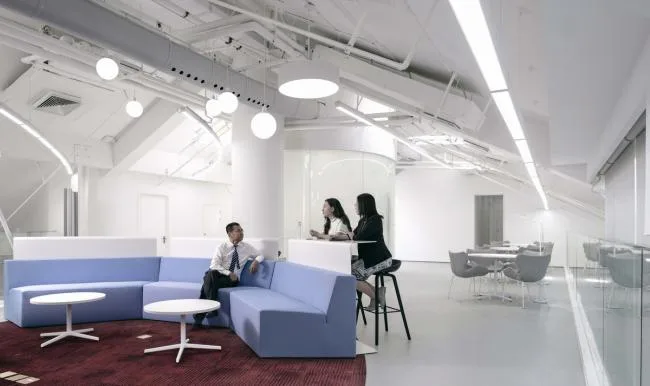
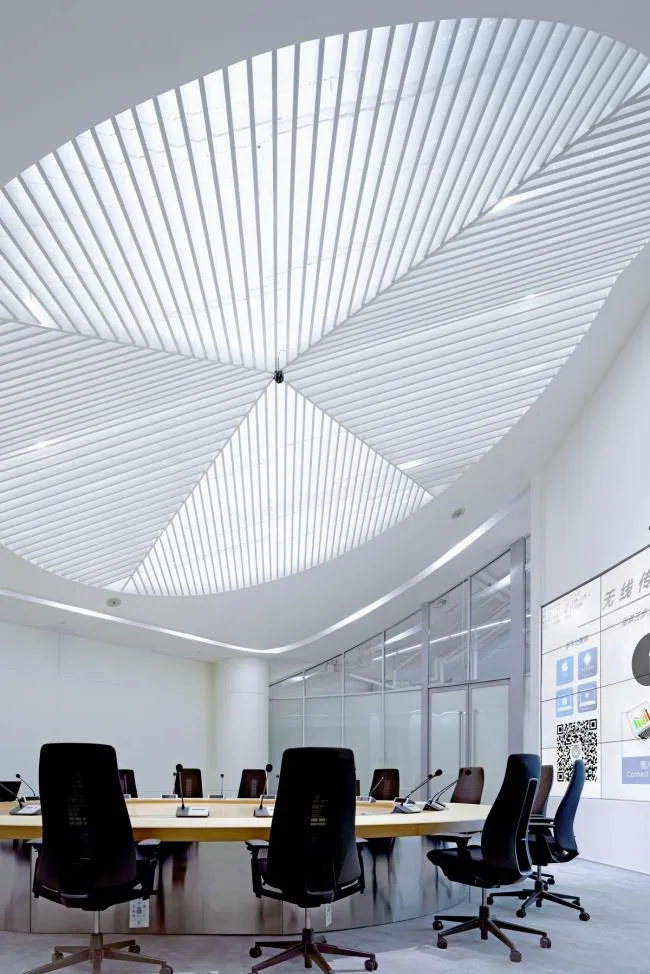
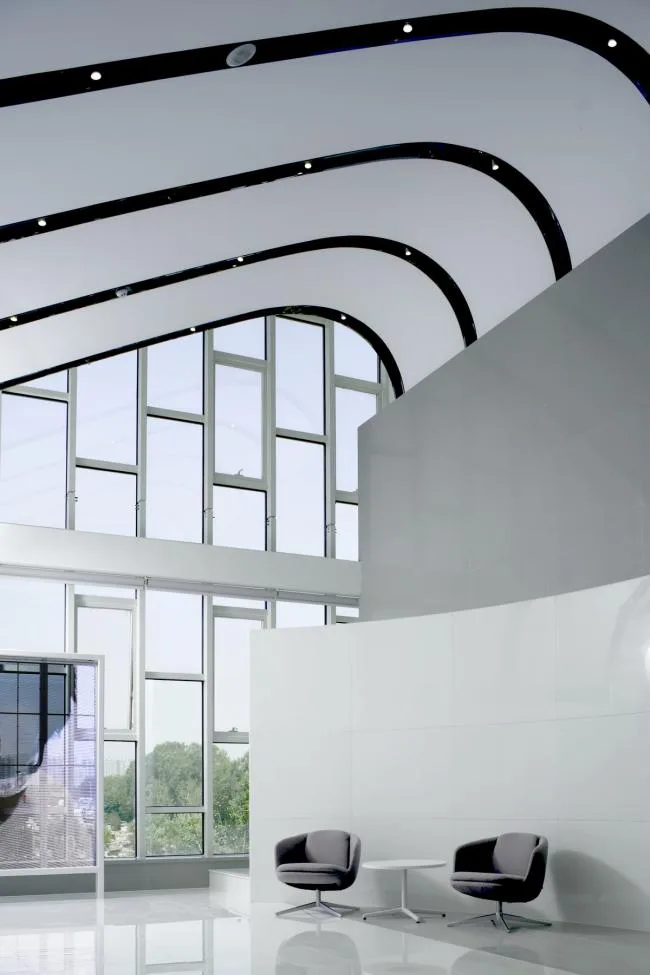
The concept of being “as good as water” is expressed through the use of natural, pure colors, accented with blue and dark red—corporate colors that enliven the space and add strength to an otherwise quiet atmosphere. The design avoids emphasizing any single element or visual focus, instead employing natural spatial transitions to create layered visual flow. Without boundaries or focal points, the space extends infinitely, seamlessly integrating indoor and outdoor environments to offer a serene and peaceful setting.
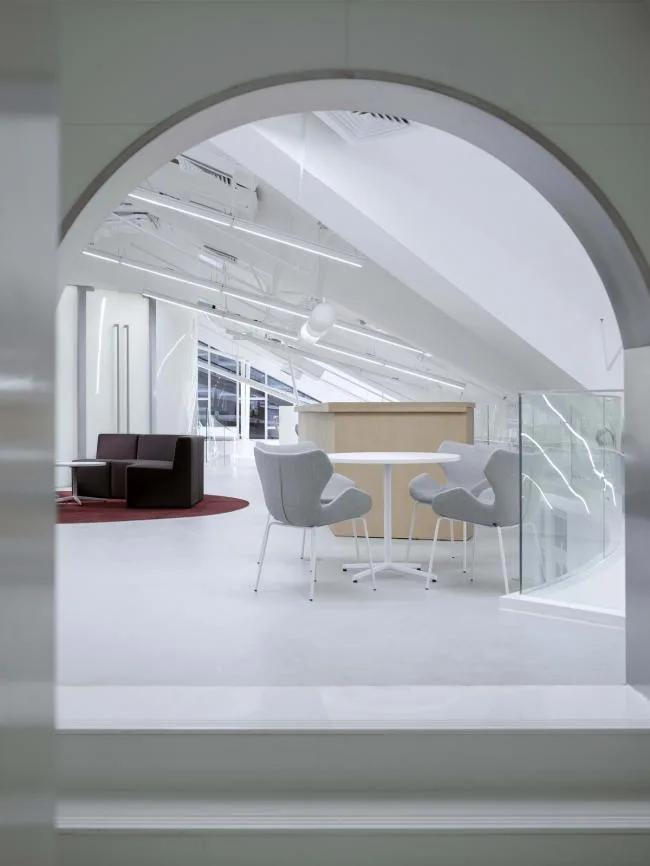
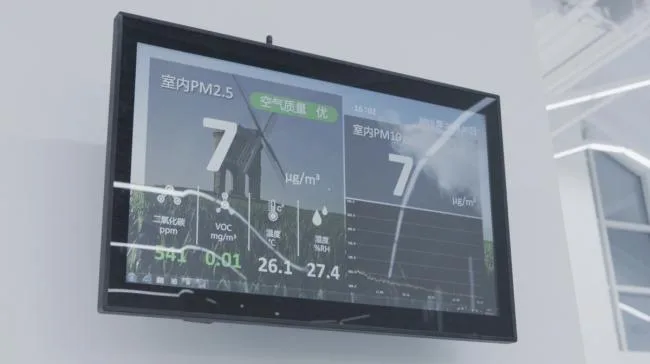
Upon project completion, key air quality indicators such as PM2.5/PM10 and VOC levels were close to zero.
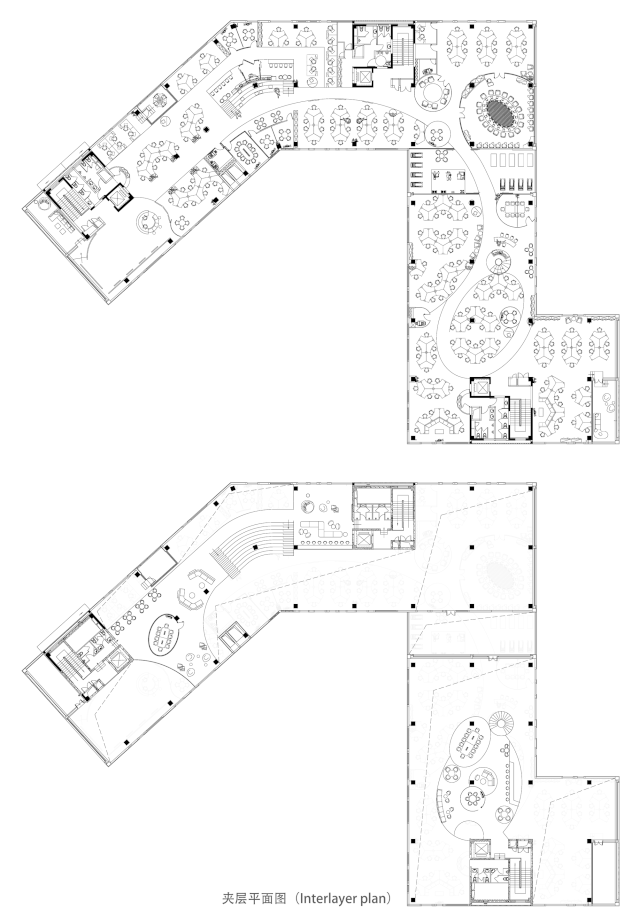
▲ Plan view
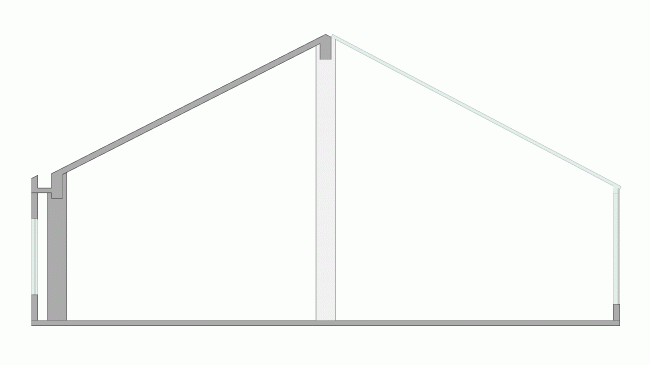
▲ Sectional view
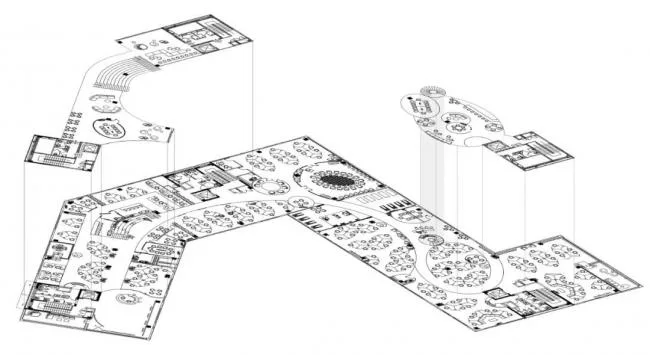
▲ Axonometric diagram
Project Information
Project Name: Tengshengbo Pharmaceutical Global R&D Center
Brii Biosciences Global R&D Center
Lead Designer: Li Yiming
Design Team: Li Yiming, Shi Chaofei, Zhang Shuang, Wang Haishen, Mu Yu
Design Firm: QUCESS Qingshi Design Firm
Official Website: www.qucess.com
WELL System Consultant: George Lin
Project Location: Haidian District, Beijing
Design Period: September 2018
Completion Date: June 2019
Main Materials: Electrically controlled dimming glass, plastic flooring, carpet, aluminum grille, artificial stone
Main Brands: Haworth, Milliken, Durkeesox (BIM)
Project Area: 3,240 square meters
Photography: Shi Yunfeng
Project Planning: Le Brand STDUIO












Must log in before commenting!
Sign Up