
▼ Aerial View of the Project
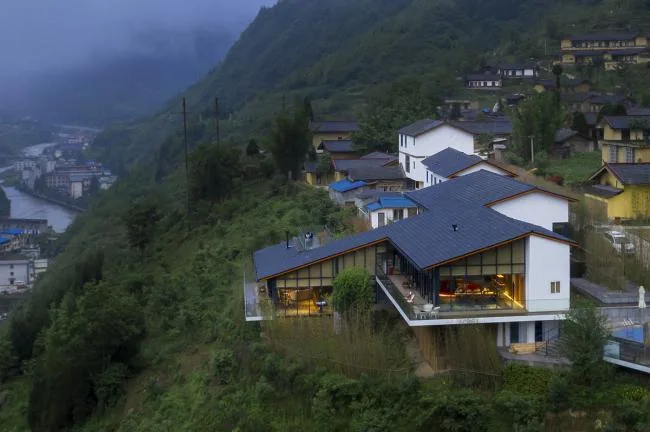
Project Overview
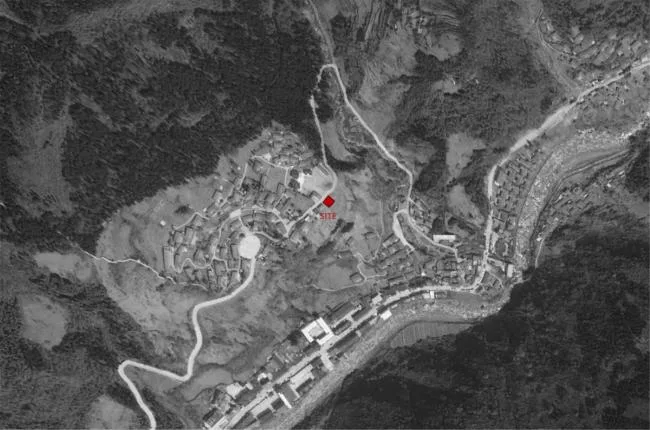
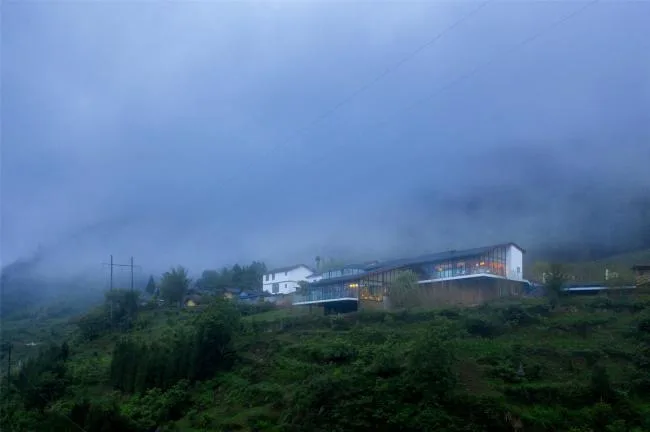
This project is situated in the renowned “Bermuda Triangle of China” — the Heizhugou area of Ebian County. It rests on the hillside of the Yi ethnic settlement in Didi Ancient Village, Heizhugou Town. The geography features typical Xiaoliang Mountain landforms and dramatic canyon scenery.
▼ Natural Environment

Reception Center and Surrounding Environment
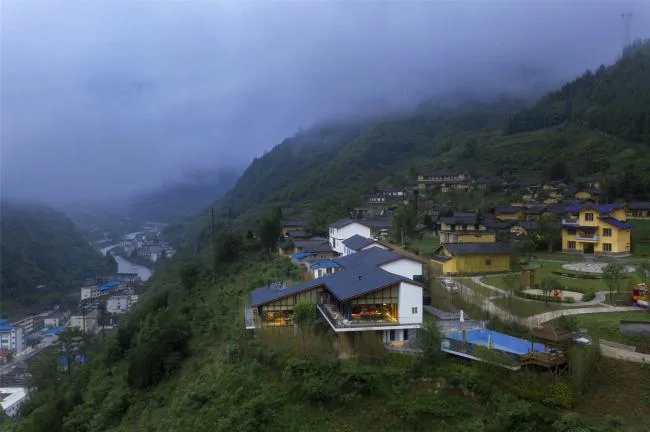
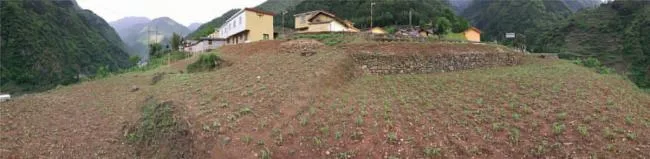
The village is positioned on a gentle slope midway up the mountain, with the reception center located at the village’s edge. This area forms a key public space alongside the activity square, supporting facilities, kindergarten, and public restrooms. The site is bordered by a road to the north and a steep slope to the south, with a height difference of approximately 7.8 meters and an average incline of 25%. The reception center serves the Zen Inn Boutique Hotel and includes a lobby, restaurant, book bar, outdoor pool, and staff offices. The hotel’s guest rooms, converted from existing residential buildings scattered around the village, offer direct views of the stunning canyon landscape.
▼ Aerial View of the Village
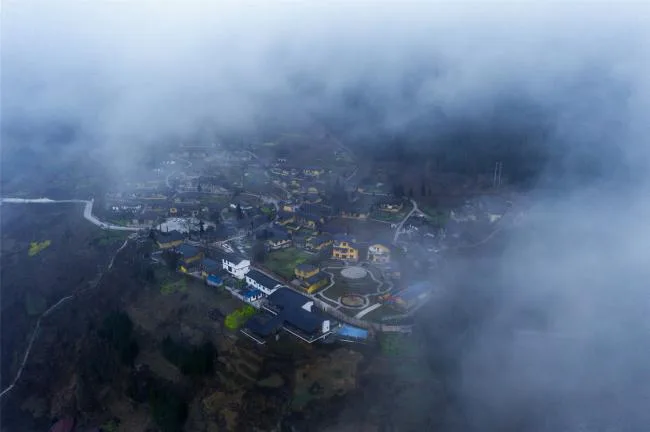
▼ Roadside View
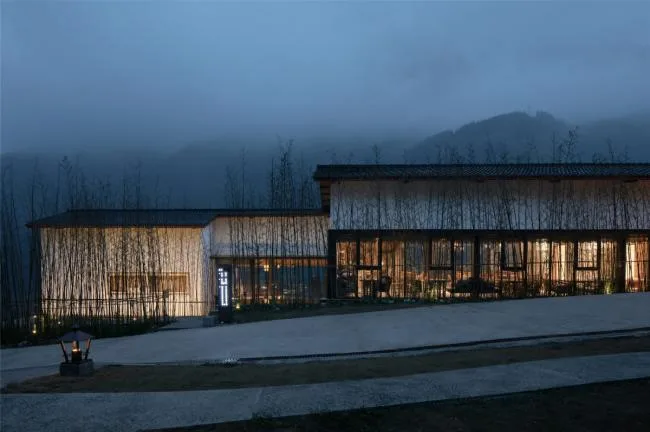
Site and Village Relationship
Design Strategy
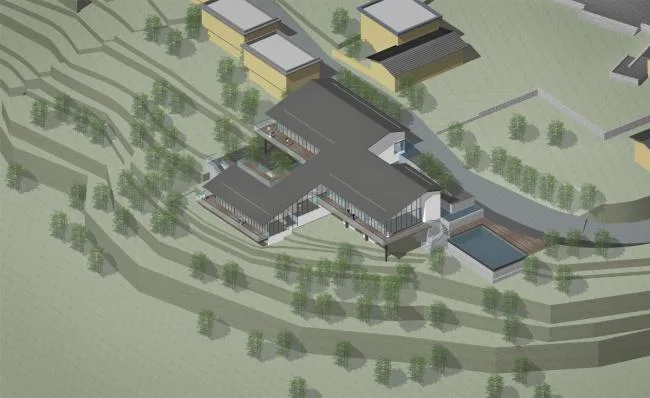
The village is built along the mountainside, featuring primarily one- and two-story courtyard-style buildings. The facades are predominantly yellow, accented with Yi ethnic symbols and motifs. Our design approach focused on “integration” and “humility,” deliberately avoiding overt references to Yi ethnic styles. Spatially, we embraced courtyard layouts that open toward the natural surroundings, using small building volumes and keeping heights low to blend with the land. This approach creates a landscape that subtly differentiates itself while harmonizing respectfully with both the village and natural environment.
▼ Aerial View of the Reception Center
Architecture and Site Integration
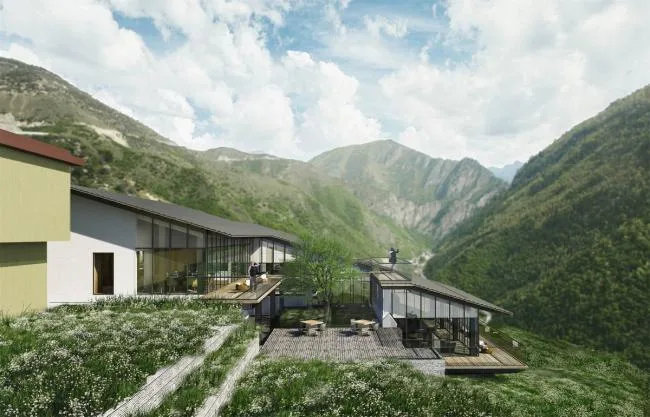
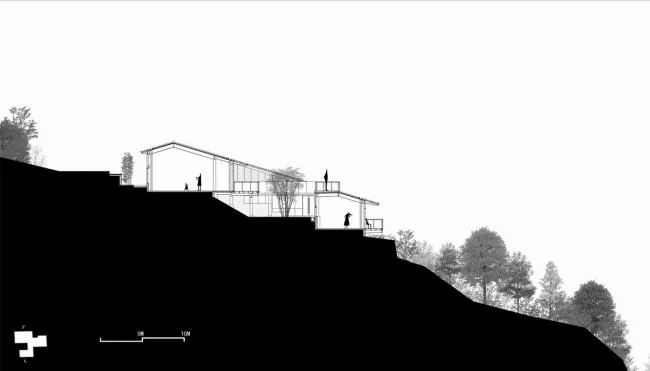
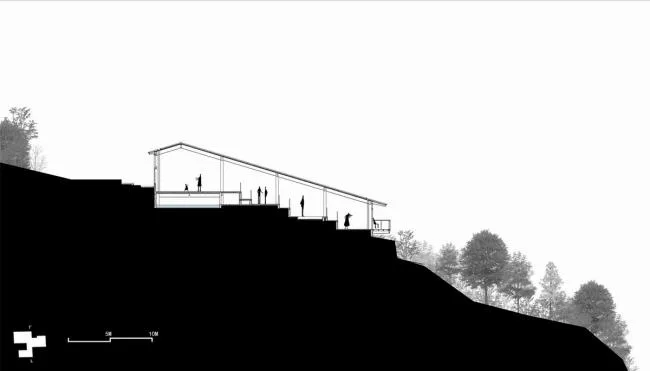
Addressing the steep site elevation was a key design challenge. Our solution was to adapt the buildings to the terrain by placing them on multiple terraces connected by continuous sloping roofs. This arrangement creates a natural downward flow that blends seamlessly with the hillside, capturing the essence of the site’s spirit — a balance of anchoring and floating.
▼ Current Site and Environment
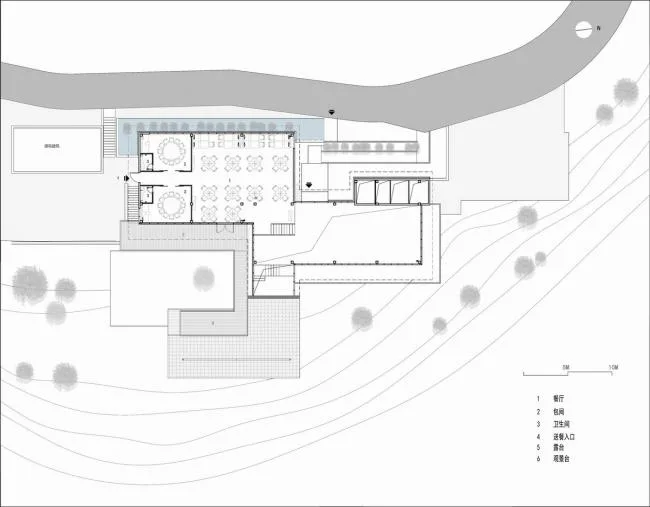
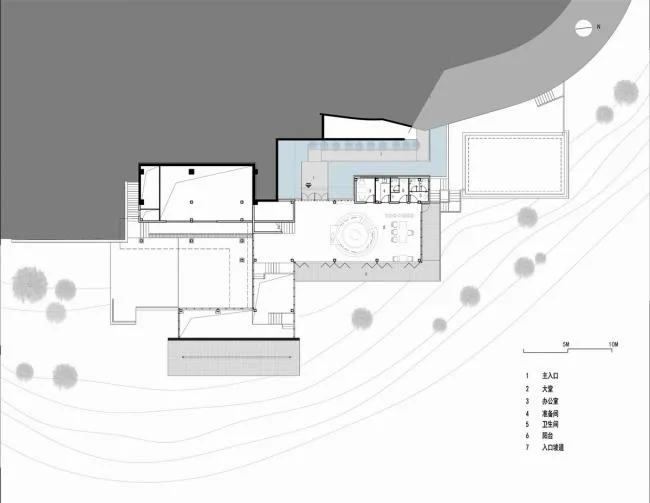
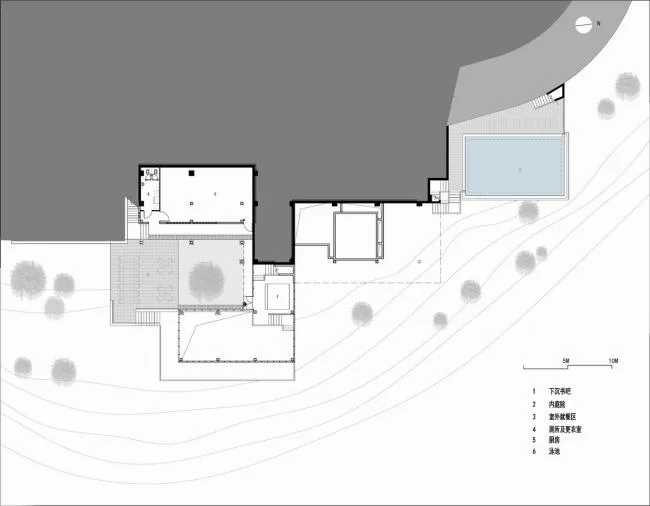
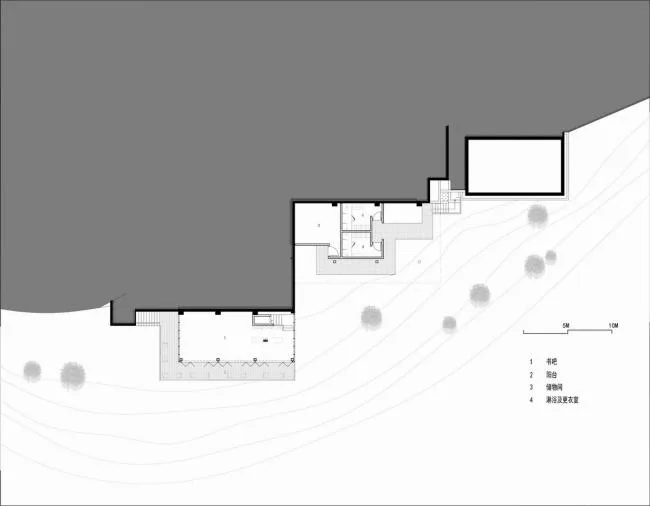
Anchoring: The site is carefully shaped into six main platforms, each with a height difference under 1.5 meters, minimizing disruption to the natural terrain. These terraces cascade through the restaurant, entrance water courtyard, lobby, outdoor pool, tea room, and book bar, starting from the north road. The building appears to grow organically from the ground.
▼ Anchoring and Floating Concept
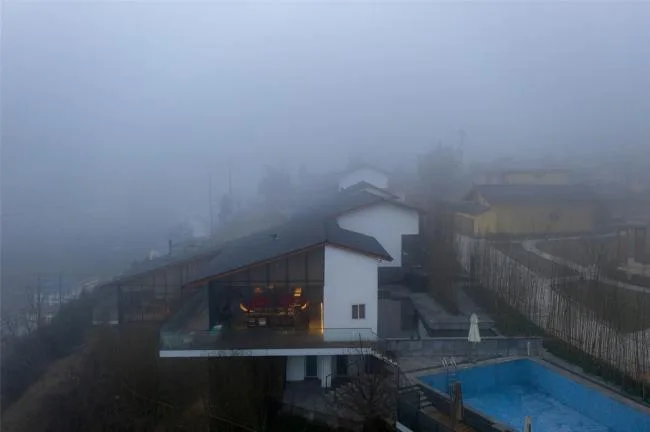
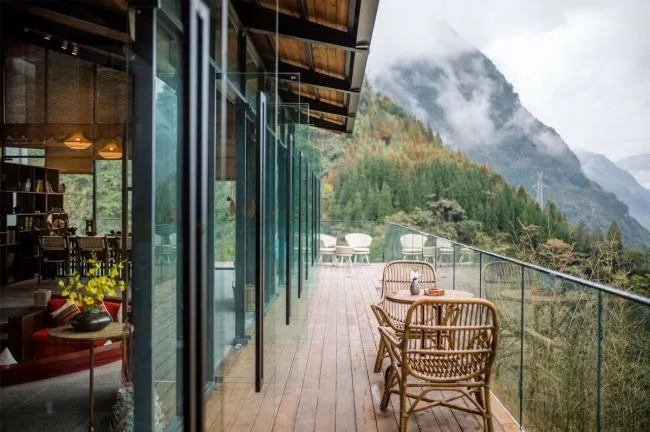
Floating: To maximize views, three cantilevered balconies extend from the restaurant, lobby, and book bar, overlooking the canyon. Suspended above the ground, these elements contrast with the anchored base, lending the building a light, dynamic quality — as if it glides over the landscape.
▼ Additional Views of Anchoring and Floating
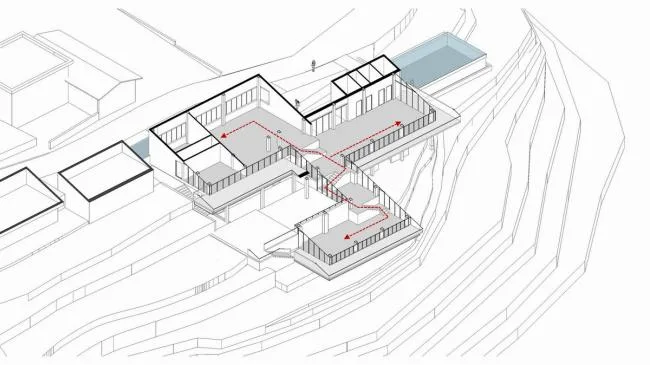
Spatial Organization (BIM Work)
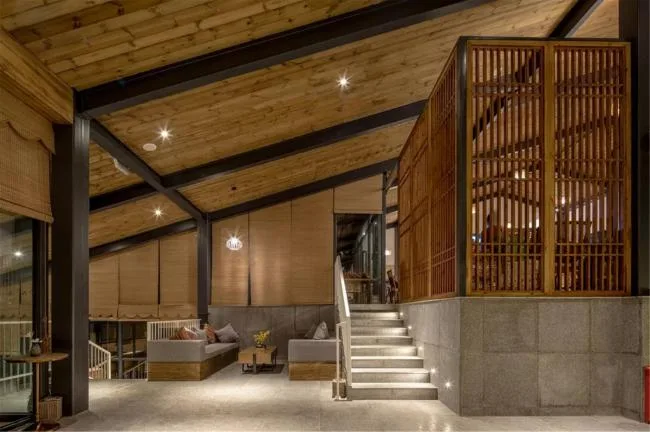
The reception center follows a one-axis, three-wing layout. The central axis connects four interior terraces, maintaining spatial continuity and creating a mountain-path, zigzagging experience through stairs between levels. The three wings—lobby, restaurant, and book bar—extend at different heights and directions toward the natural setting.
▼ Spatial Structure
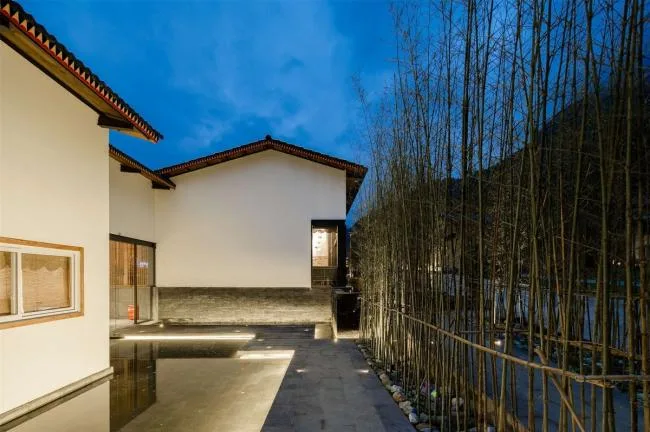
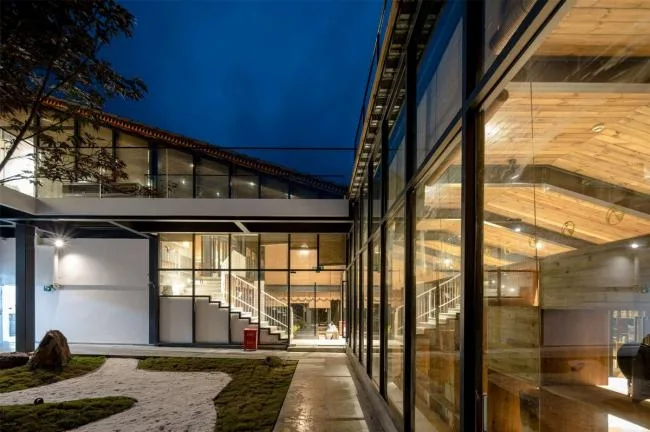
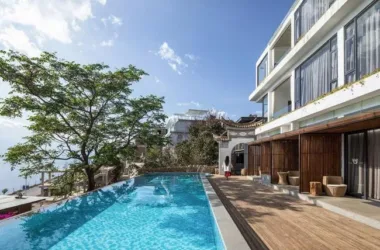
The building contains three semi-enclosed mountain courtyards designed with BIM: the entrance leads gradually into a water courtyard along the slope, framed by bamboo groves that alternately conceal and reveal, evoking a Zen-like atmosphere. The central Zen courtyard is enclosed on three sides, suitable for small outdoor gatherings. The natural sloping courtyard opens the building to nature, fostering a harmonious dialogue with the surrounding mountains. Each courtyard’s elevation and spatial character respond uniquely to the environment.
▼ Main Entrance Water Courtyard
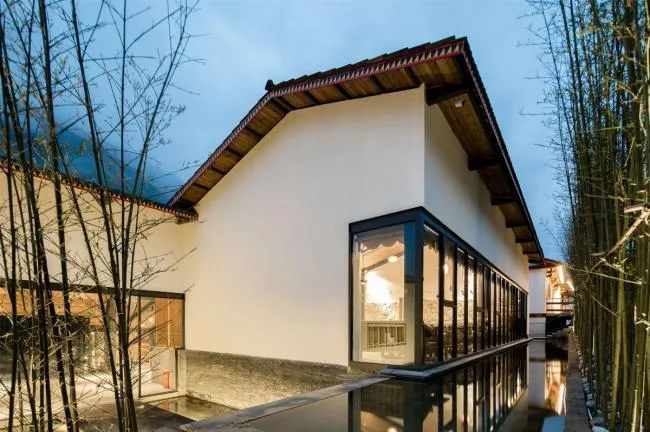
▼ Middle Zen Garden
Viewing Perspectives
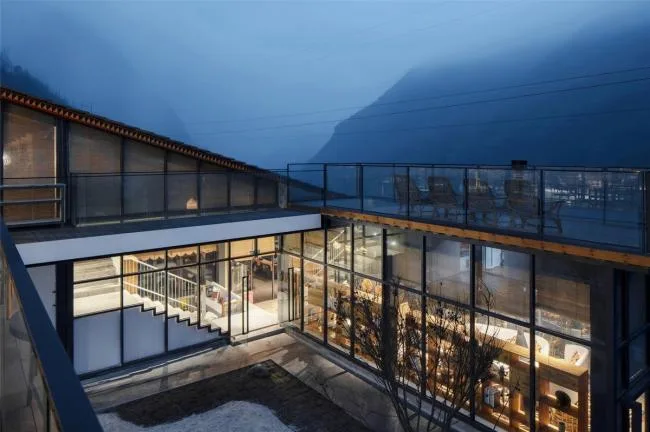
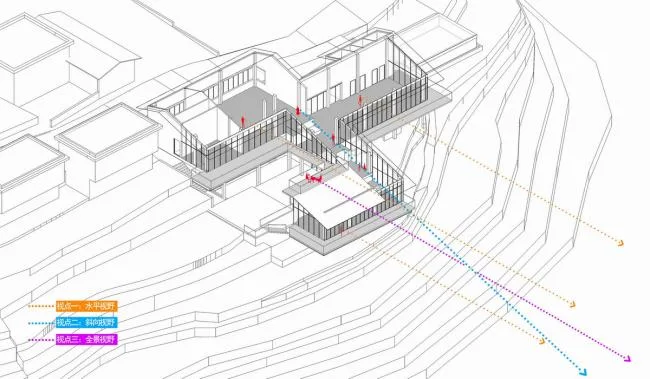
The architectural space offers three distinct viewing experiences: along the central axis, visitors enjoy deep, oblique views descending the mountain slope, with a vantage point from the restaurant revealing the valley town below. From the lobby, restaurant, and book bar, transparent glass doors open expansive, panoramic views of the canyon landscape. Additionally, the bookstore’s rooftop terrace provides an open, 360-degree viewing experience.
Central Courtyard and Environment
▼ Visual Analysis
▼ Lobby Balcony
Interior View Along the Main Axis of the Reception Center
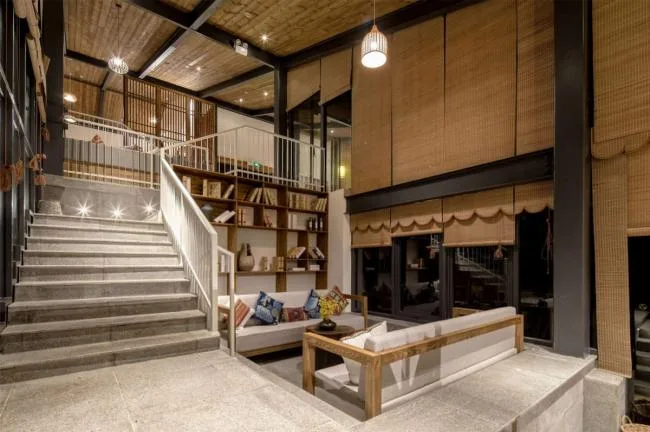
Interior View of the Reception Center’s Main Entrance
Design Philosophy
The introduction of a Zen-style boutique hotel in Didi Ancient Village exemplifies how tourism can drive rural development. While many rural resettlement sites have improved living conditions, challenges like community hollowing remain. Bringing in quality social capital activates idle resources, creates local employment, and reinforces cultural identity. Our design approach avoids colonial imposition and staged regionalism. Instead, it embraces respect for the land, local culture, and natural environment through moderation, appropriateness, and genuine integration.
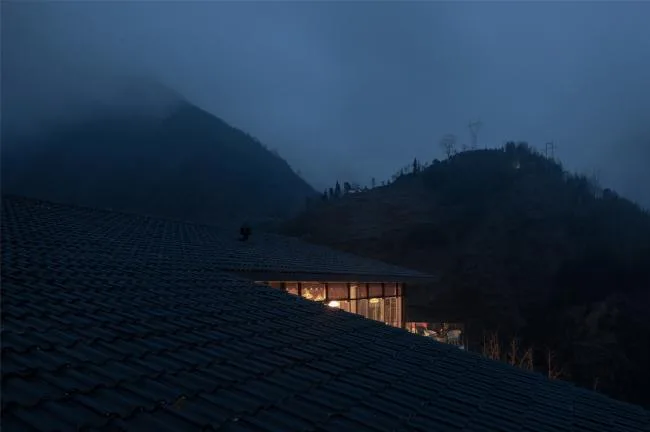
▼ Roof Landscape
▼ 1.50 Elevation Plan
▼ 0.00 Elevation Plan
▼ -1.50 Elevation Plan
▼ -3.00 Elevation Plan
▼ Section 1-1
▼ Section 2-2
Project Information:
Architectural Firm: Research and Construction Building Design
Location: Heizhugou Town, Ebian County, Leshan City, Sichuan Province, China
Category: Hotel
Design Team: Pan Hua
Structural Consultant: Han Keliang
Building Area: 900.0 m2
Project Year: 2018
Architects: Existing buildings, sourced online
Interior Design: Chengdu Kuanlan Yulian Architectural Design Co., Ltd.
Client: Leshan Baoshang Investment Development Co., Ltd.












Must log in before commenting!
Sign Up