
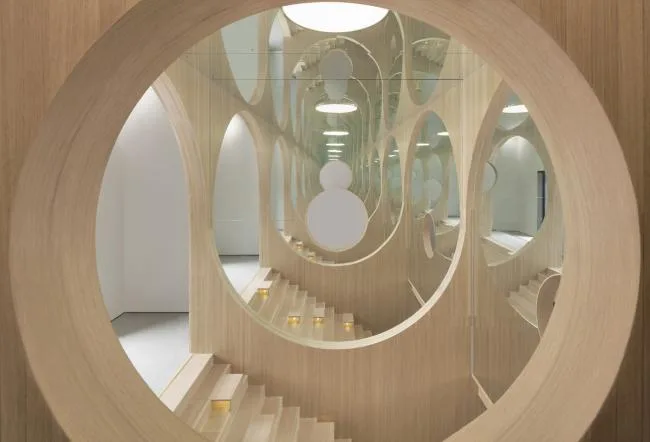
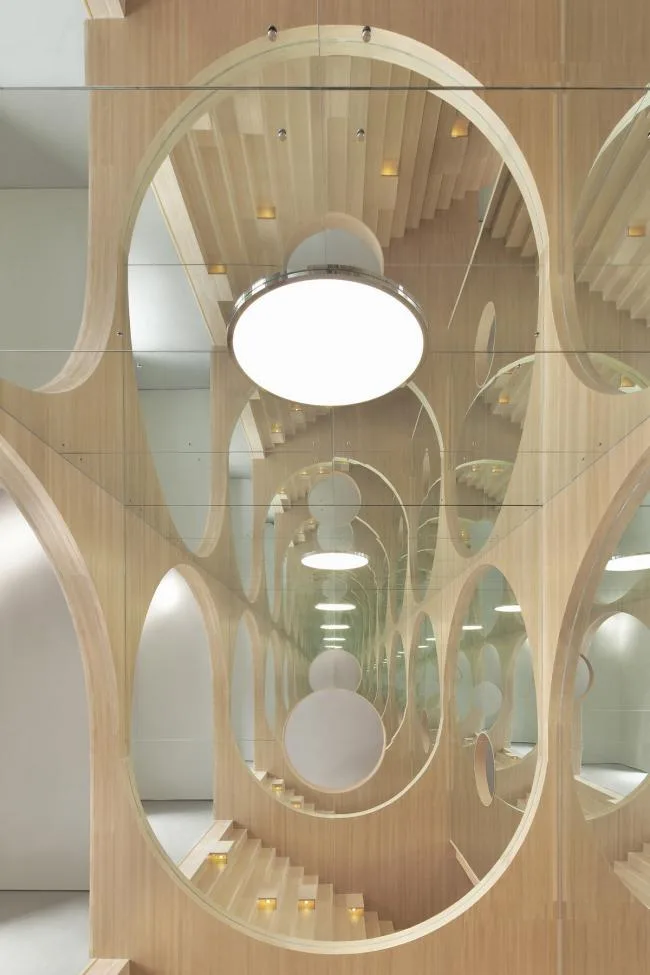
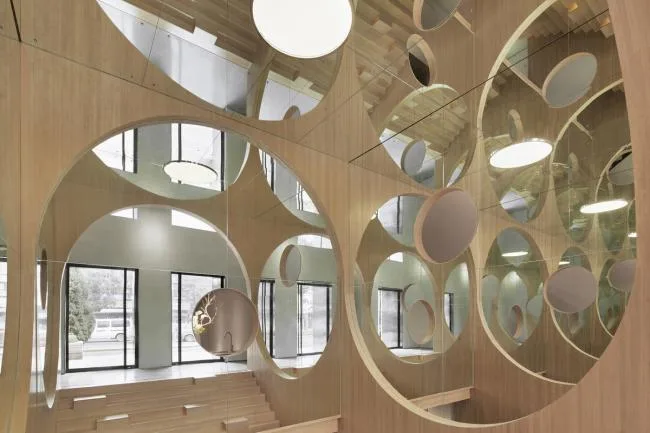
The newly completed Hongkun Art Activity Center, designed by Panda Architectural Firm, introduces an “Escher-style” artistic environment to Beijing by integrating arches, steps, and mirrors. This design creates a surreal space where visitors can immerse themselves in a magical world of spatial illusions and visual interactions. Located on Xidawang Road, the center is surrounded by numerous galleries and art museums. Adjacent to it is the Hongkun Art Museum, also designed by Panda Architectural Firm in 2013.
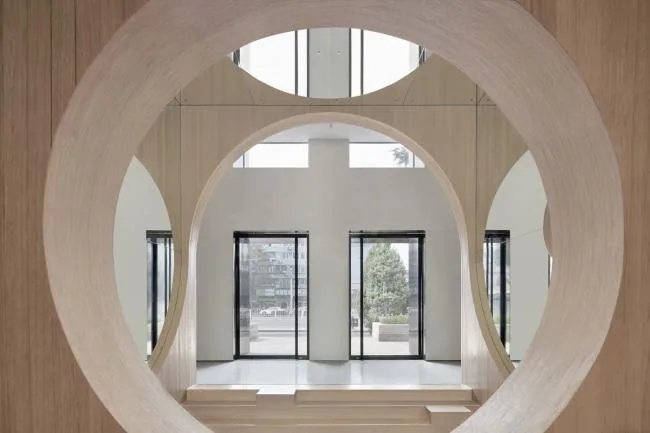
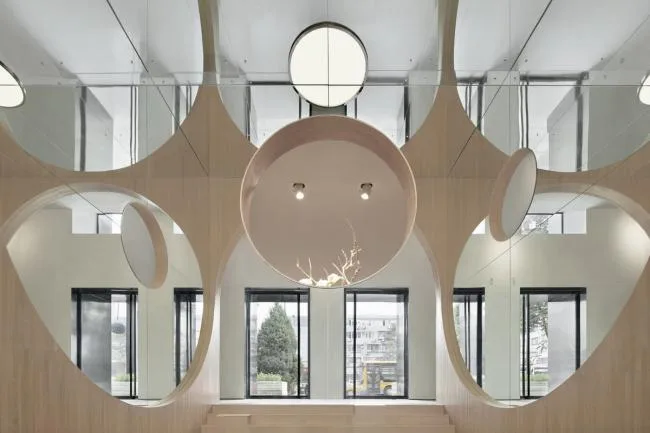
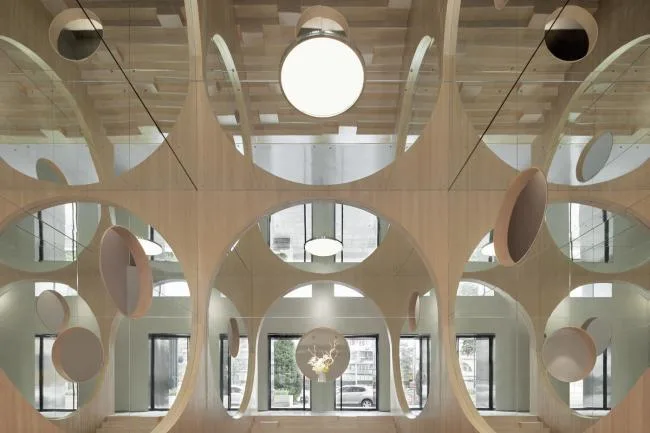
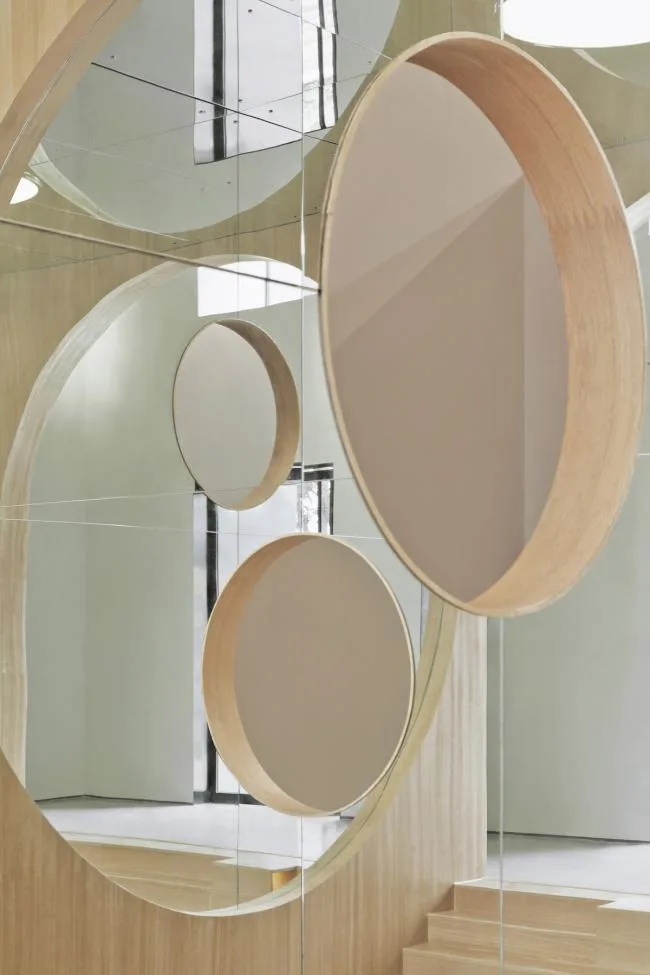
Panda was commissioned to design a multifunctional space suited for lectures, reading sessions, small exhibitions, and art transactions. The owner’s vision was to foster closer connections between artists and the public, thus facilitating direct interaction with art. Visitors enter through a new entrance aligned with the nearby art museum’s entryway. The building’s exterior reflects the classic symmetry of the Hongkun Art Museum, featuring balanced door and window designs on either side.
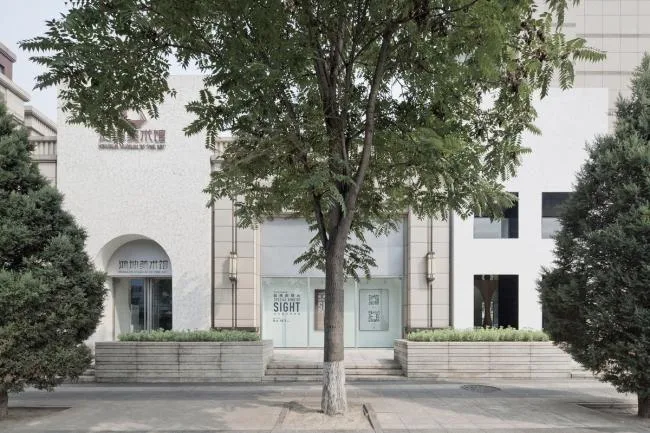
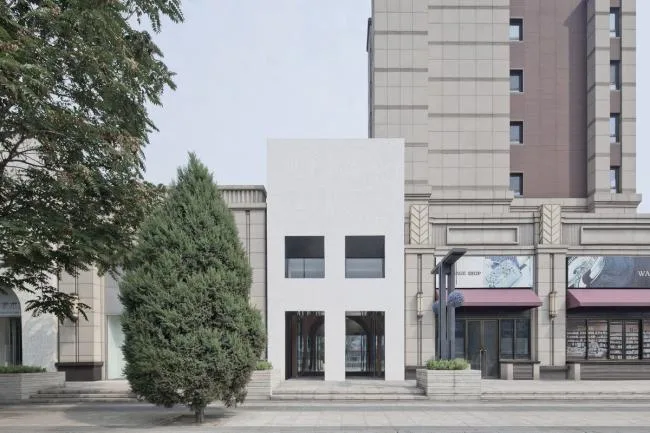
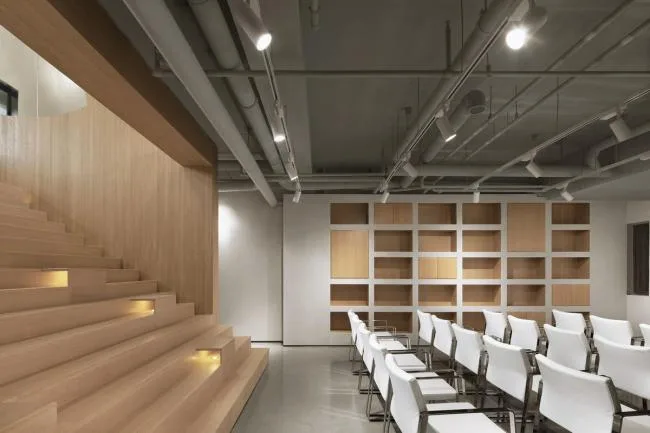
This central symmetry extends seamlessly into the interior. Panda removed the original floor slab between the ground floor and basement to create a vibrant square space at the heart of the building. This area, featuring arches, steps, and mirrors, acts as both an artistic installation and a welcoming entrance leading visitors underground. The square serves as a flexible venue for lectures and exhibitions.
To the left of this square, visitors access the first-floor art sales area, designed for BIM design presentations, art transactions, or casual conversations at a small bar counter. On the right, stairs lead to the second-floor office space for staff.
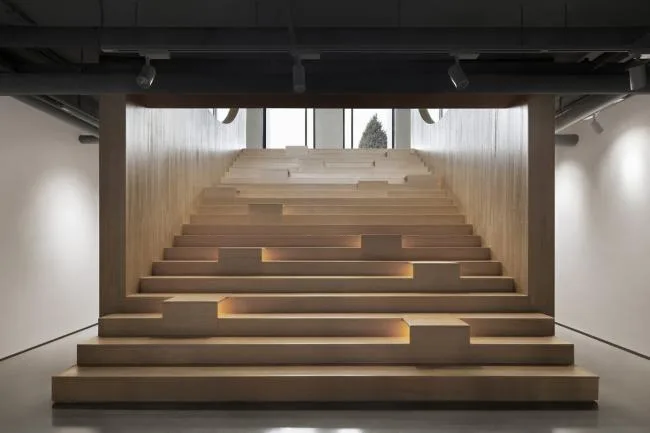
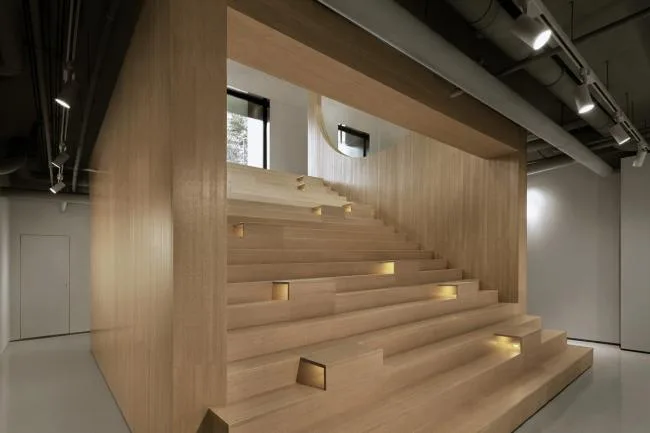
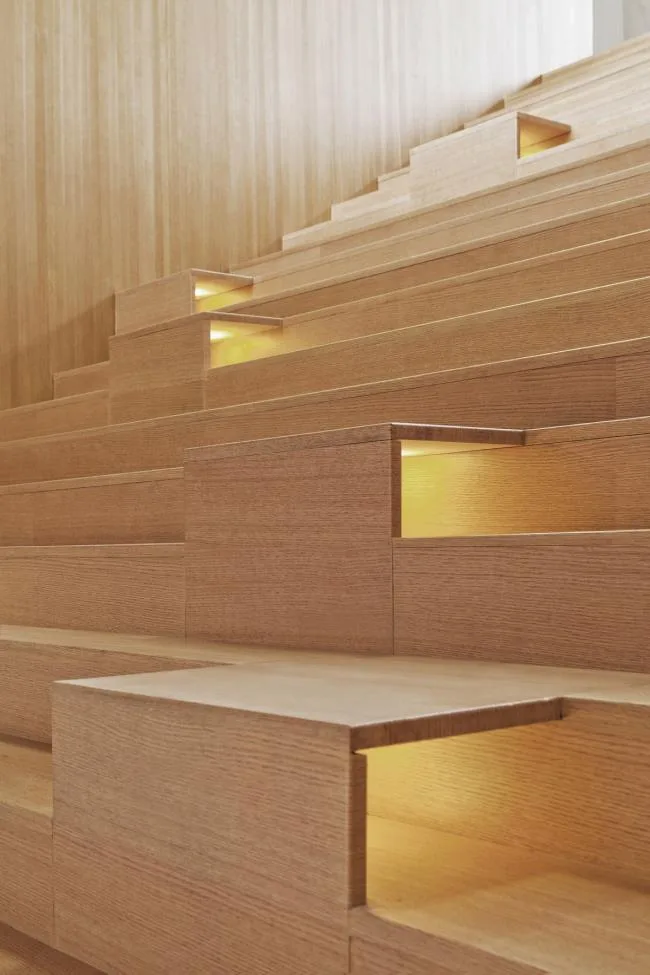
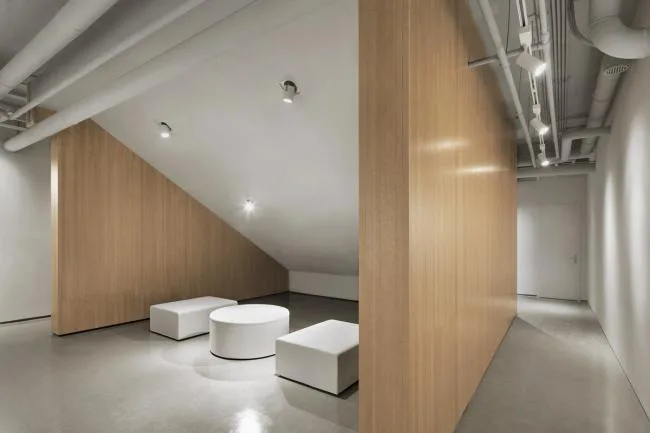
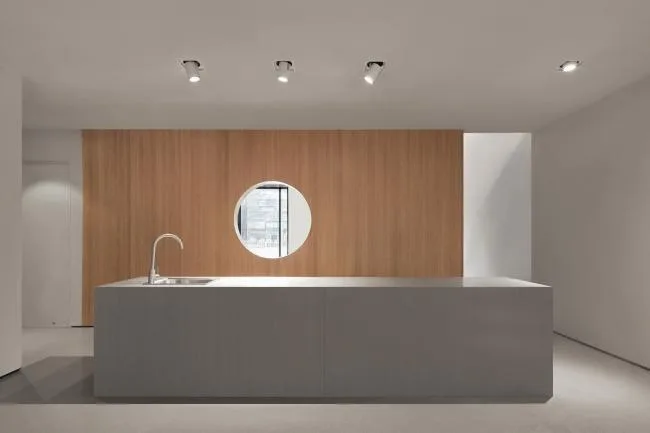
At the center of the building lies a solid cubic structure crafted from warm wood, contrasting beautifully with the surrounding gray concrete-textured walls. This wooden cube is visible from nearly every part of the interior. A circular opening on one side offers a glimpse into its interior.
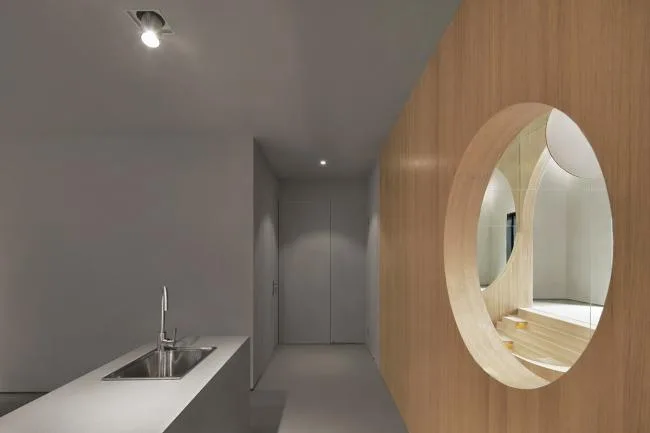
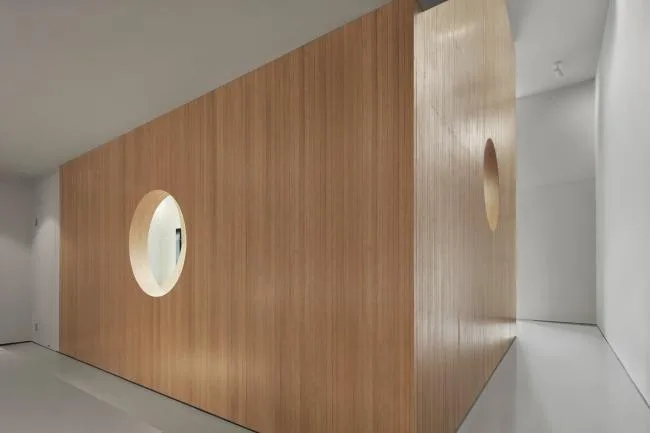
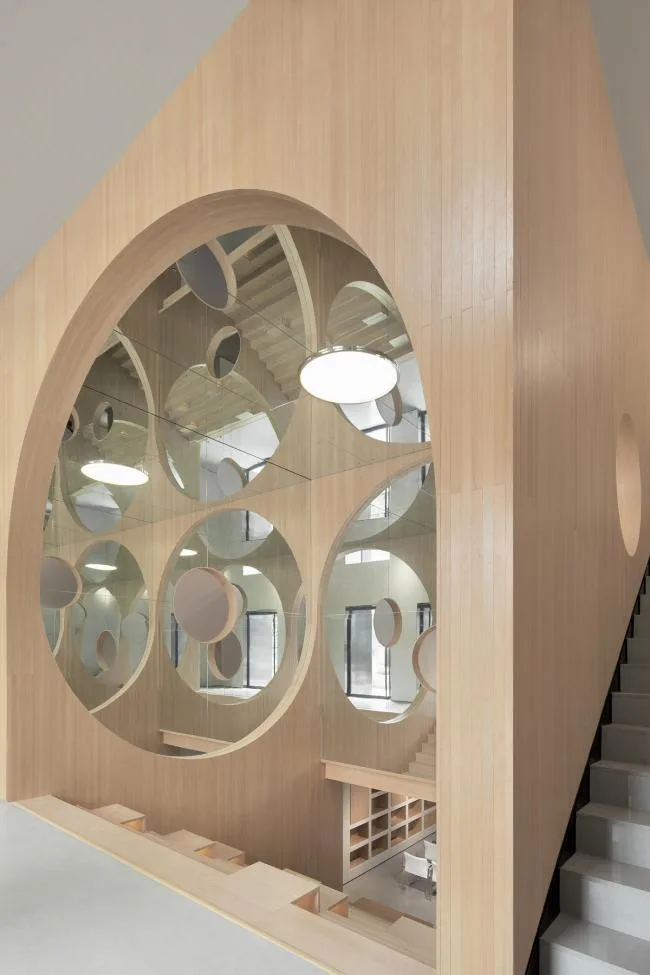
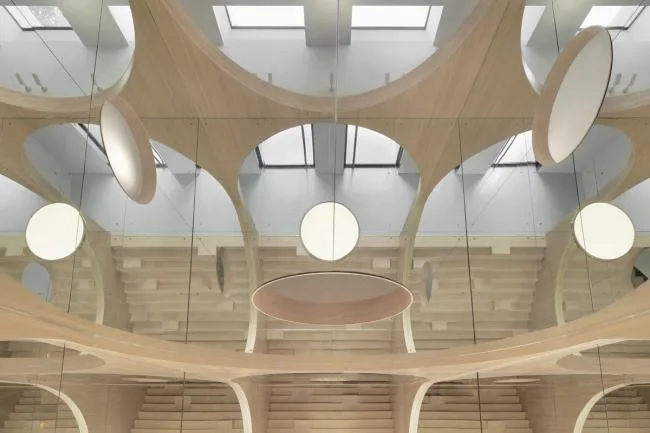
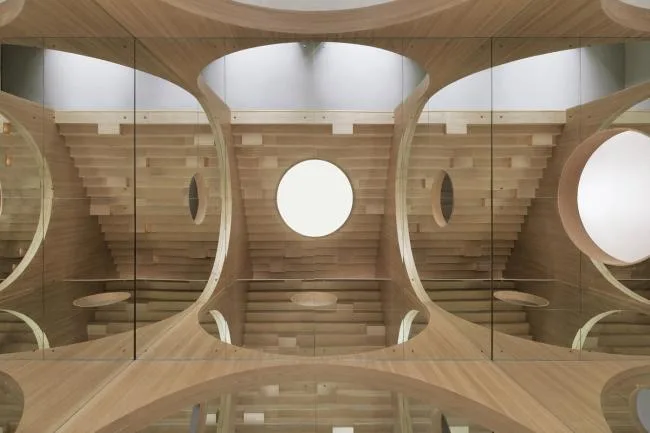
Inside this cubic space, visitors find themselves in what appears to be an infinite corridor, created by the mirrors lining the arched walls and ceilings. This endless reflection draws inspiration from surrealist artists Salvador Dalí and M.C. Escher, blending reality and illusion to craft a unique spatial experience. Unlike traditional art, this installation invites visitors to step inside the artwork, interact with it, and expand their imagination beyond the boundaries of reality.
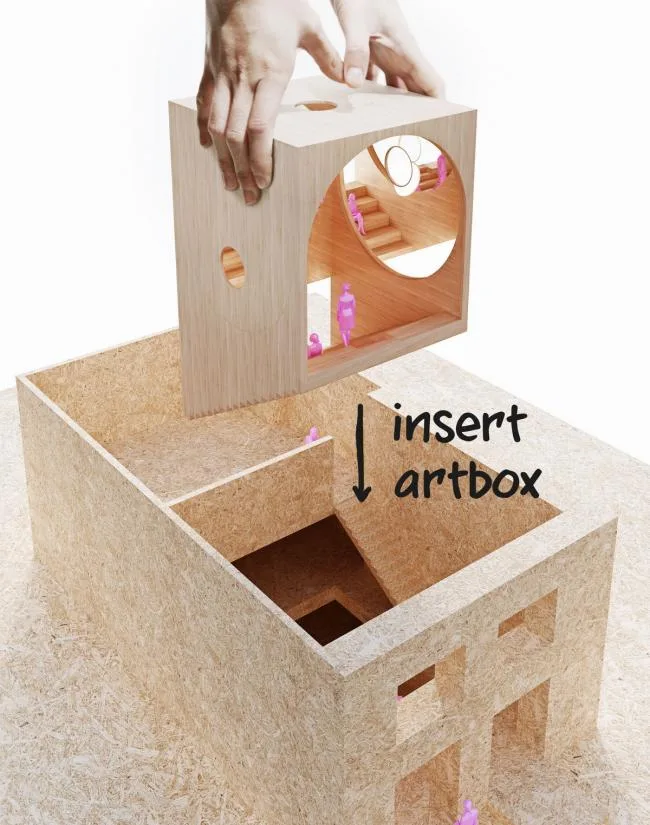
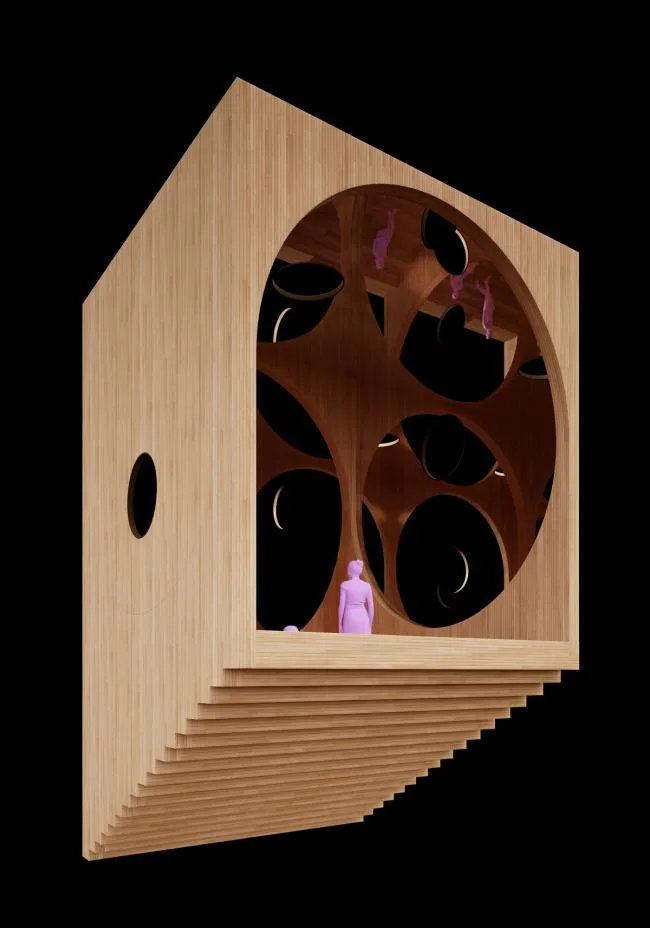
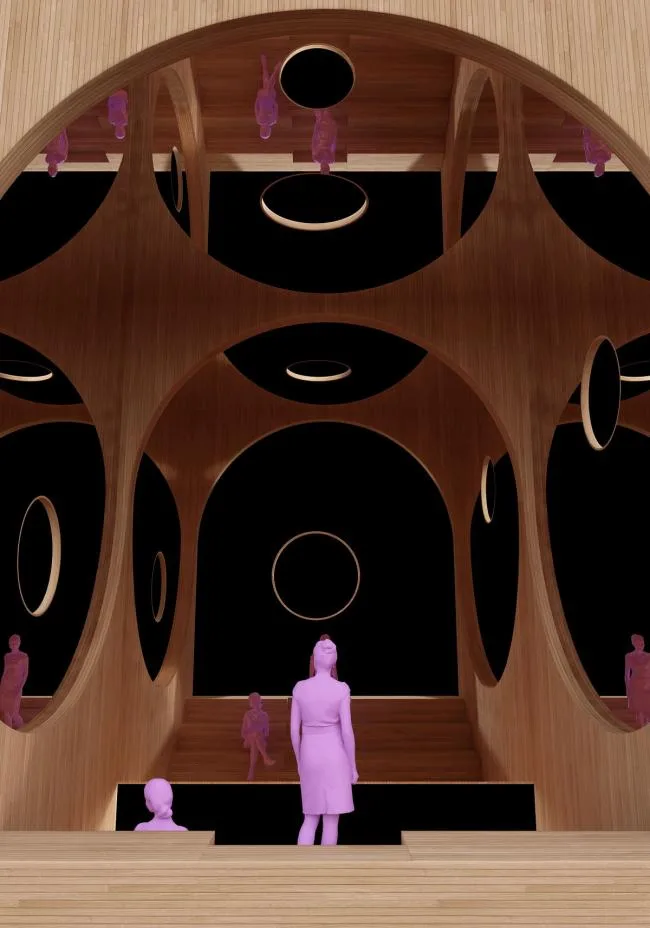
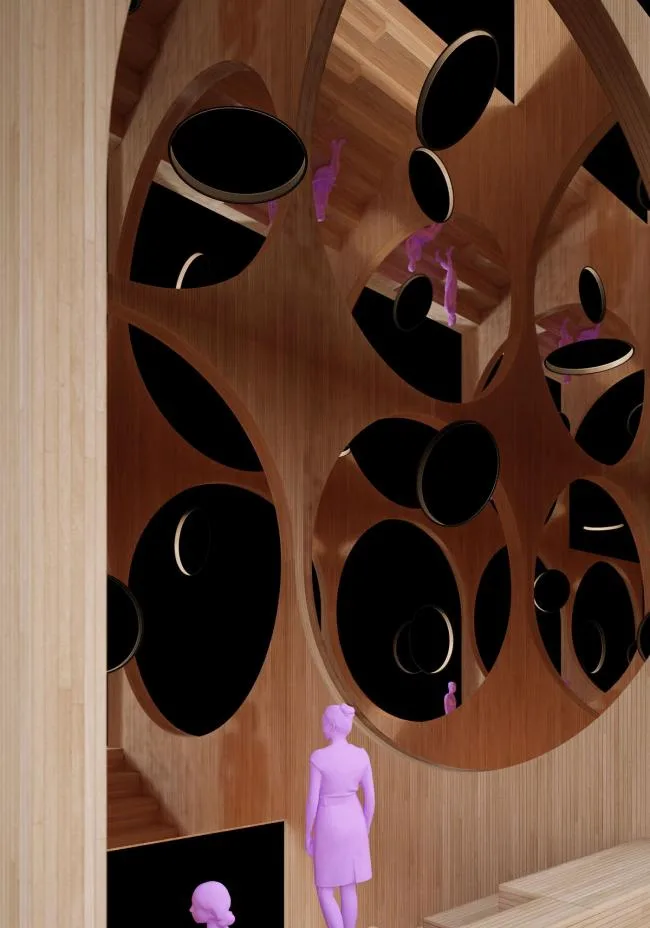
Model
Arches are a signature design element in Panda Architectural Firm’s portfolio. The adjacent Hongkun Art Museum was their first project to feature arches prominently, creating an inviting foyer through the interplay of positive and negative arch forms. To establish a thematic connection between the museum and the Art Activity Center, Panda extended the arch motif into the new space.
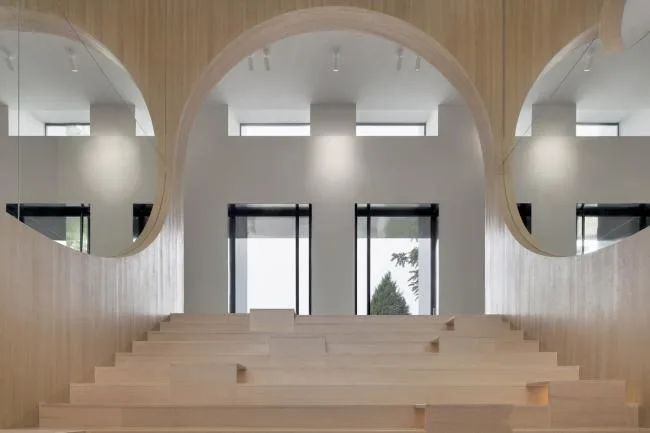
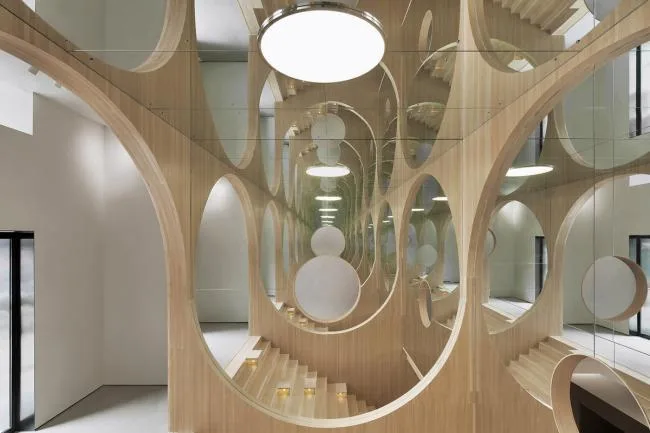
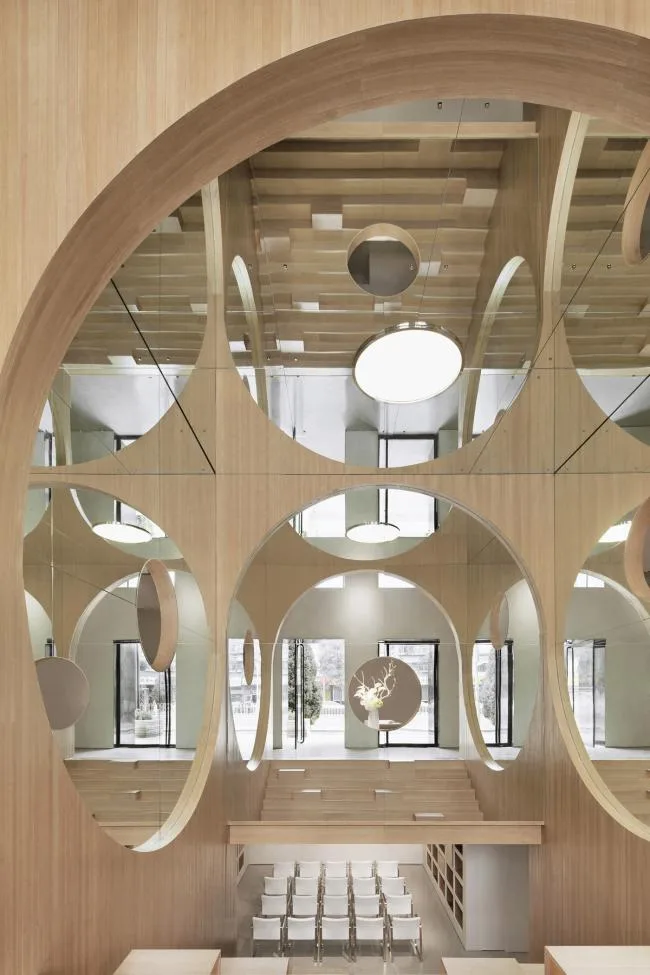
Our passion for arches goes beyond form—they ignite curiosity. Using mirrored walls, the arcade transitions seamlessly from physical to illusory space, connecting the two in a continuous rhythm and crafting an illusion that blurs the line between imagination and reality.
Design Drawings:
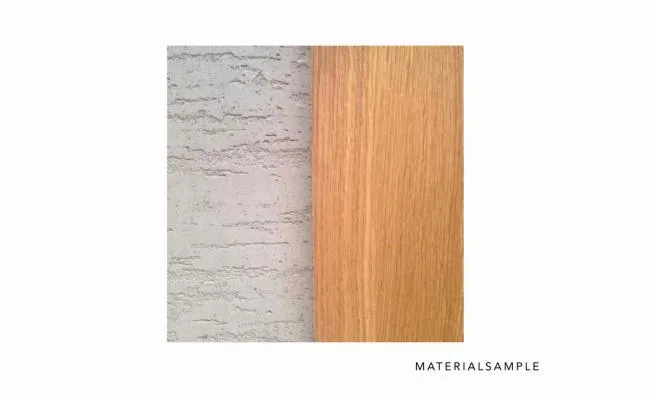
Material Samples
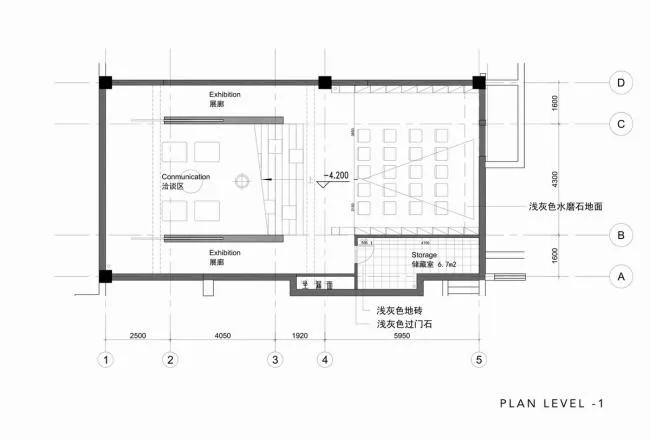
Basement Level Plan
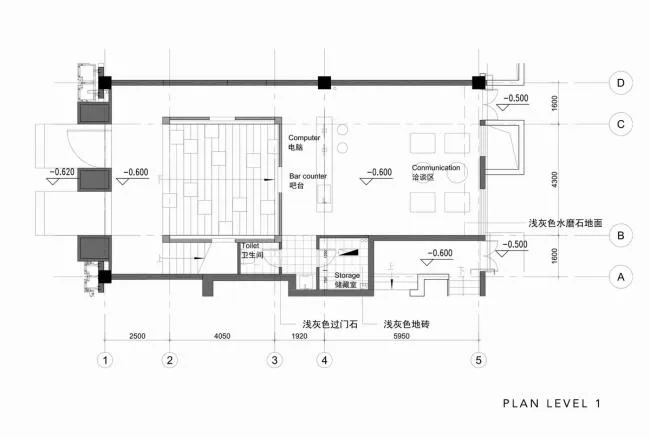
First Floor Plan
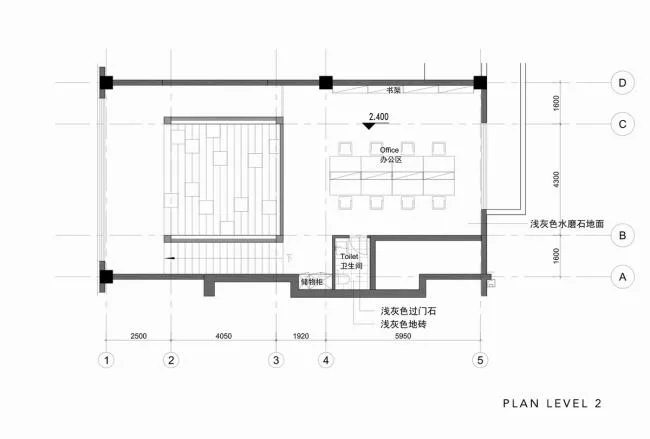
Second Floor Plan
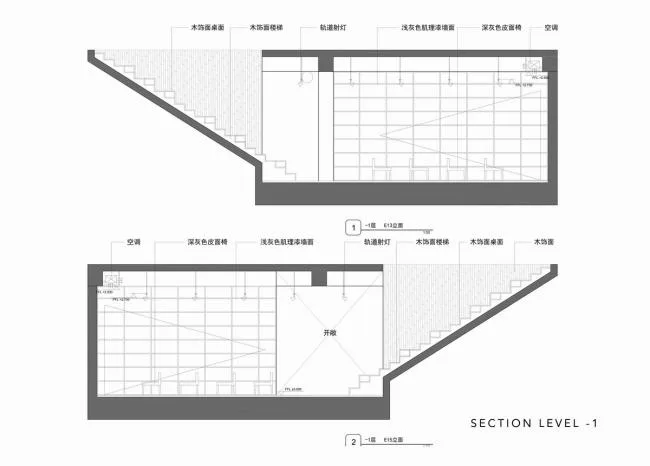
Negative Layer Profile
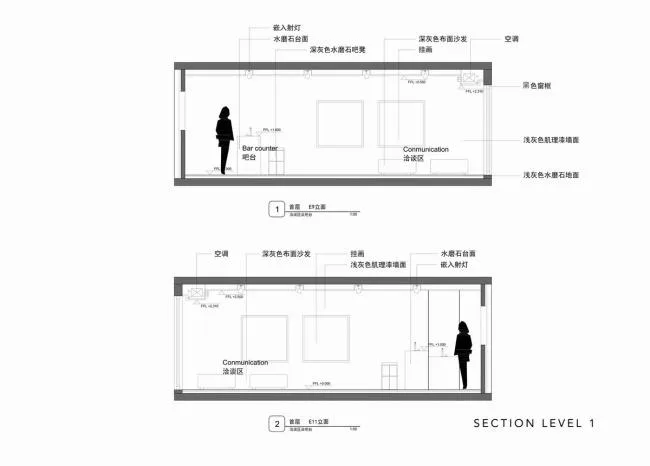
First Layer Profile
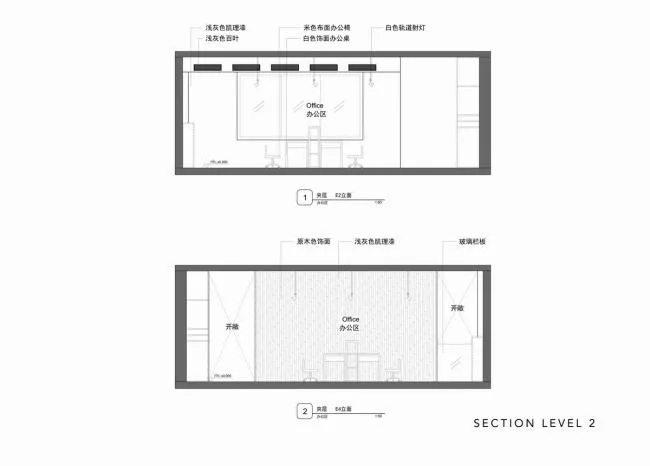
Second Layer Profile
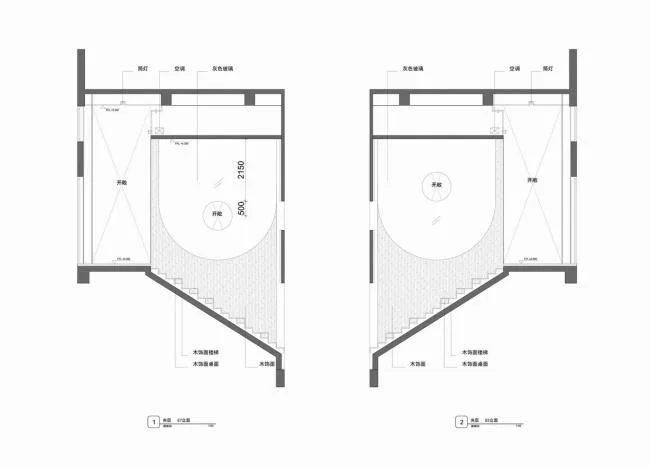
Section
Project Information:
Architect: Panda Architecture
Location: Beijing, China
Category: Interior Design
Design Team: Chris Pu, Sun Dayong, Wang Jing, Li Pengchong, Wen Xu, Bai Xue
Building Area: 270 m2
Project Year: 2016
Photographer: Zhi Xia (Summer Solstice)












Must log in before commenting!
Sign Up