
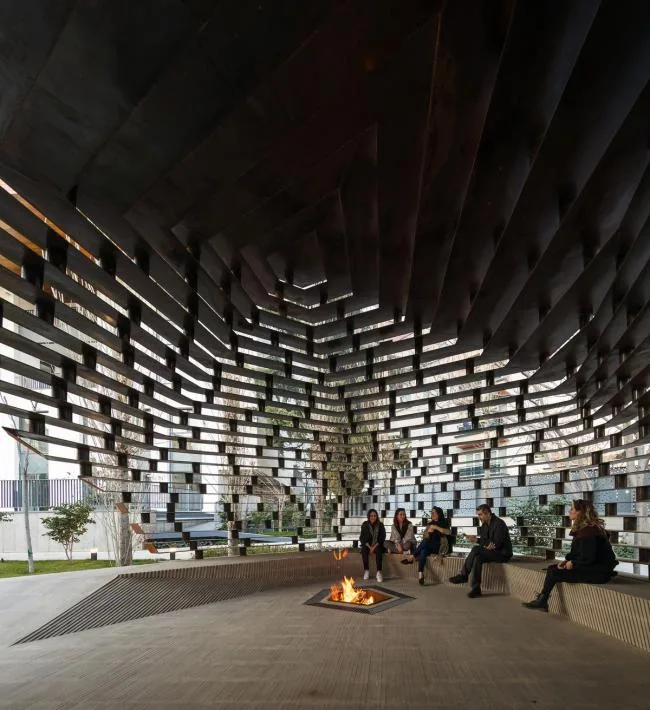
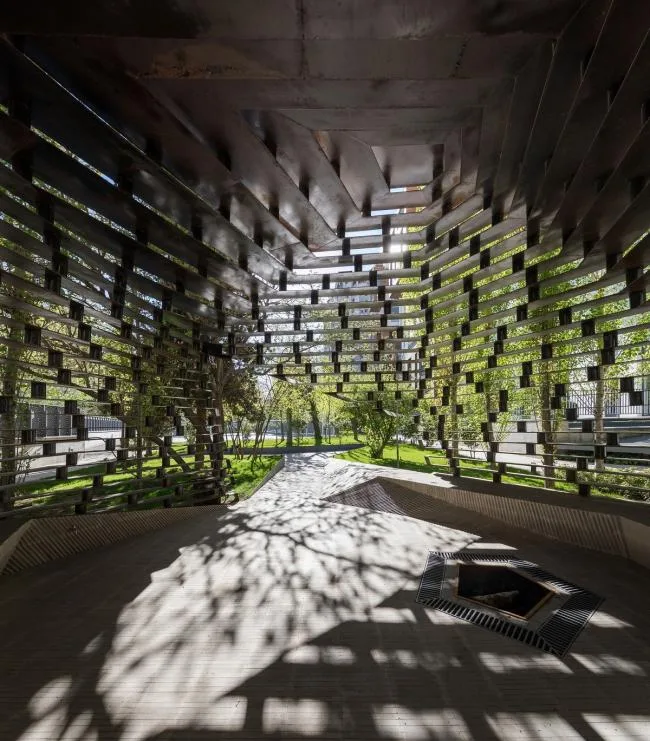
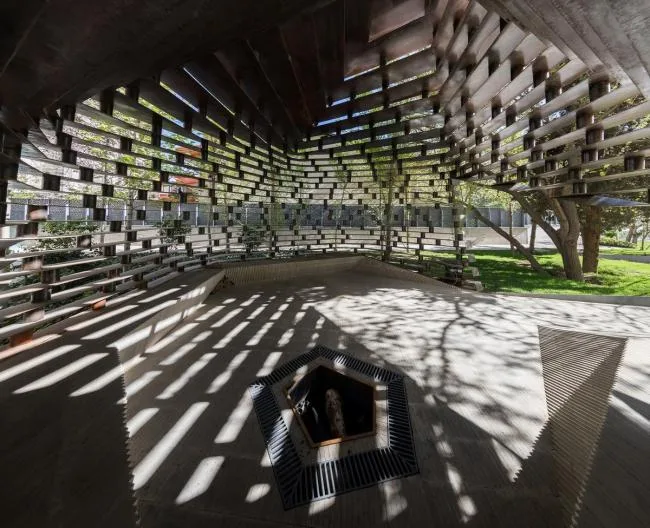
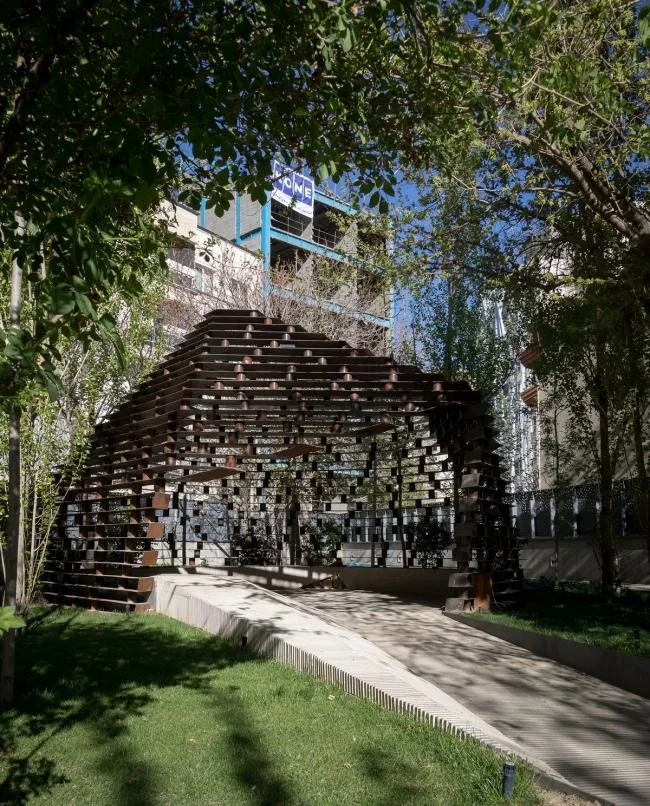
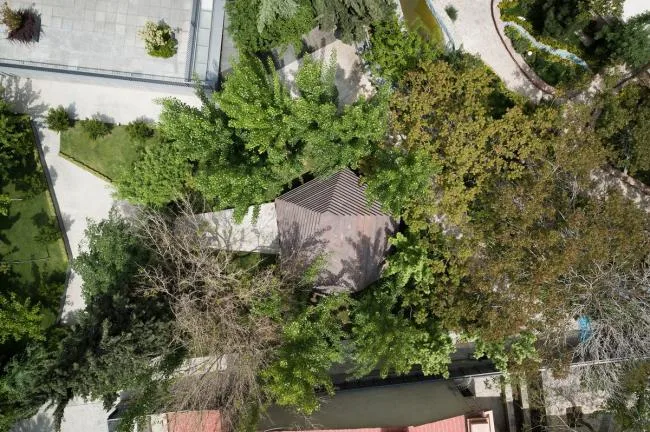
This project is situated in a cozy corner outside an apartment complex, nestled within a garden designed as a communal gathering space for residents. The developers envisioned a place where people could come together to celebrate small holidays, especially during the winter months when the trees lose their leaves.
One of the key intentions was to create a structure that blocks the view of nearby high-rise residential buildings, offering privacy and a sense of enclosure. Additionally, the architects incorporated the ancient element of fire, enhancing the gathering experience for residents.
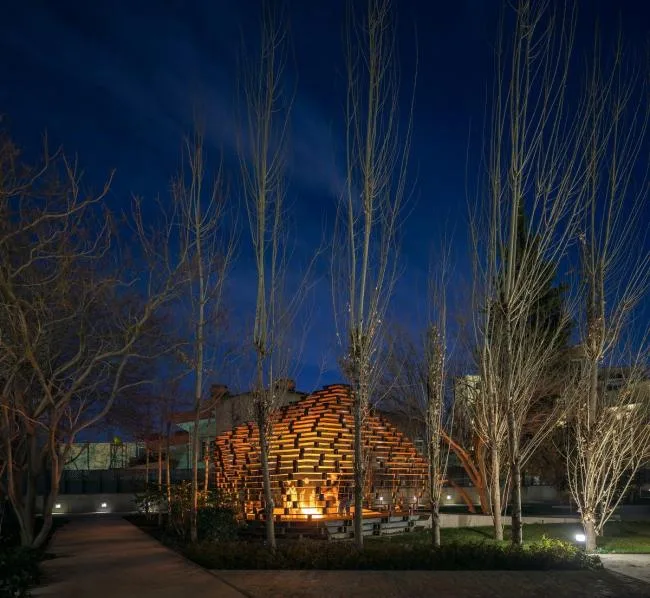
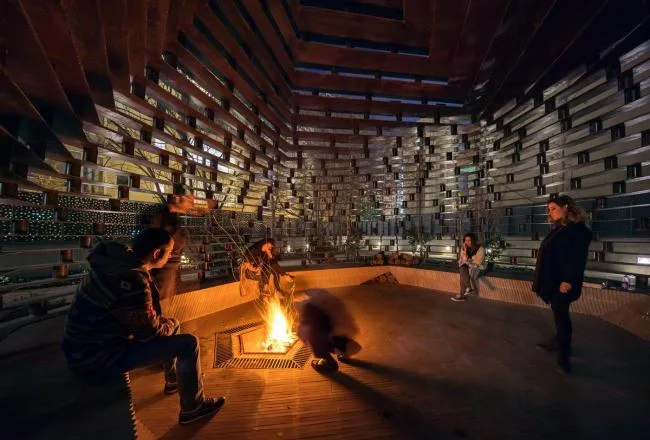
The garden’s landscape is impeccably designed, and any new construction needed to respect and preserve the garden’s view. At the same time, it was necessary to restrict views from surrounding residential buildings. To balance these needs, the architects developed a building with variable density and massing.
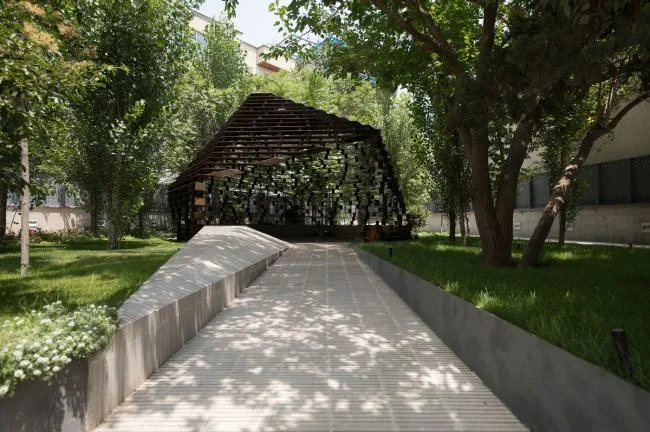
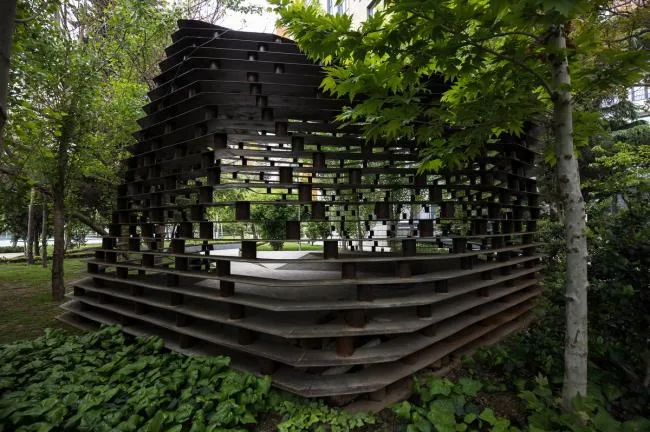
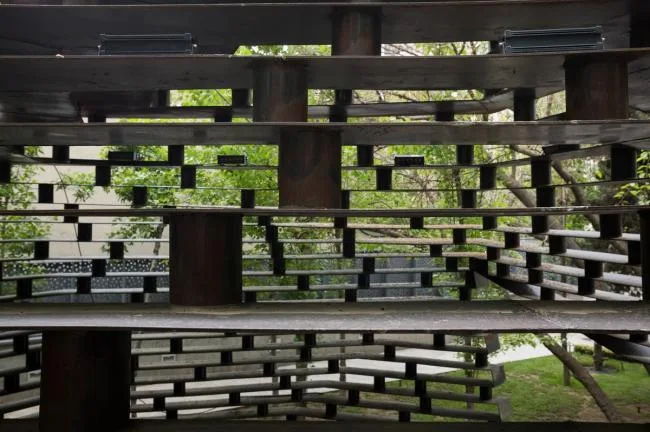
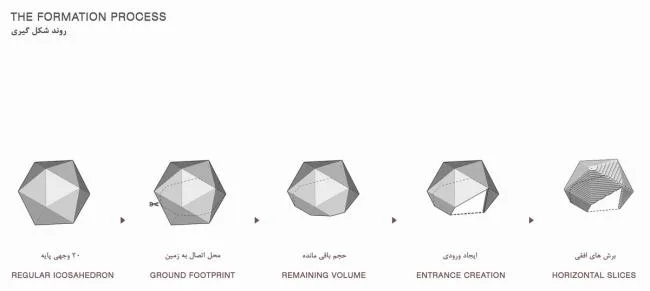
To achieve this effect, the canopy is constructed from seamless, rusted iron sheets, each a regular 20-sided polygon, covering a cross-sectional area of 35 square meters. The architect wanted a strong contrast between this initial volume and the surrounding buildings.
The manufacturing was straightforward and fully compliant with regulations, relying on standard cutting machines without the need for complex equipment.
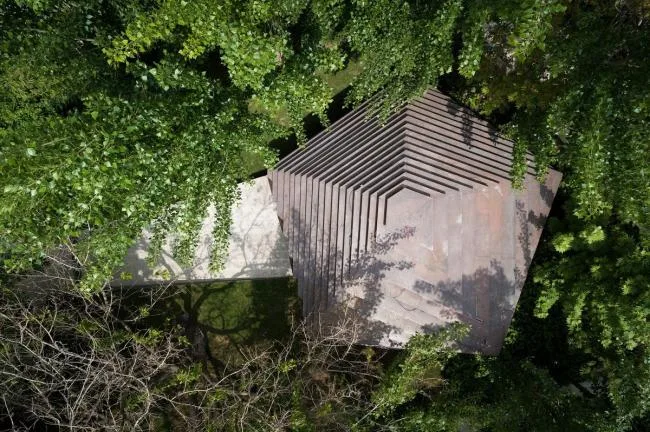
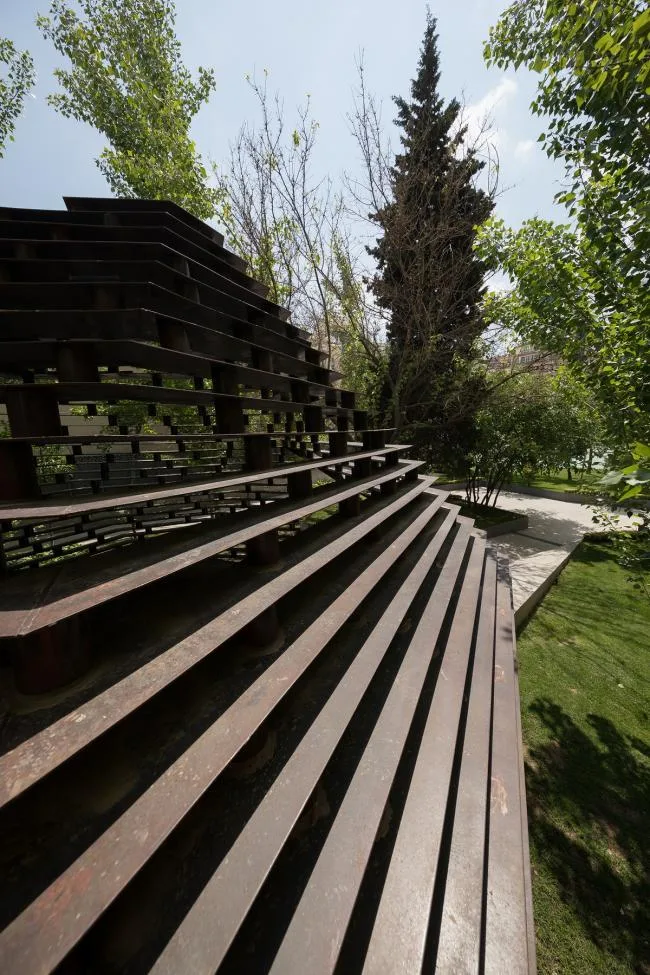
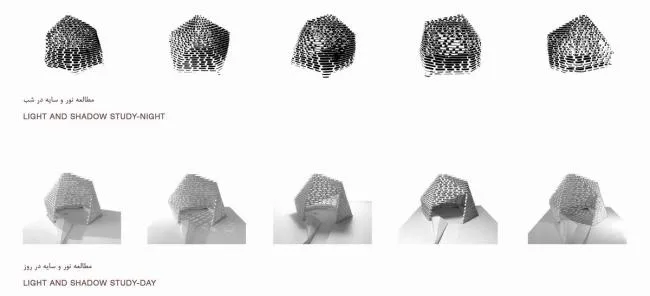
The design opens the initial volume toward the landscape through horizontal slicing. The depth of these horizontal layers frames views of the garden while controlling visibility into the interior from the surrounding residential units.
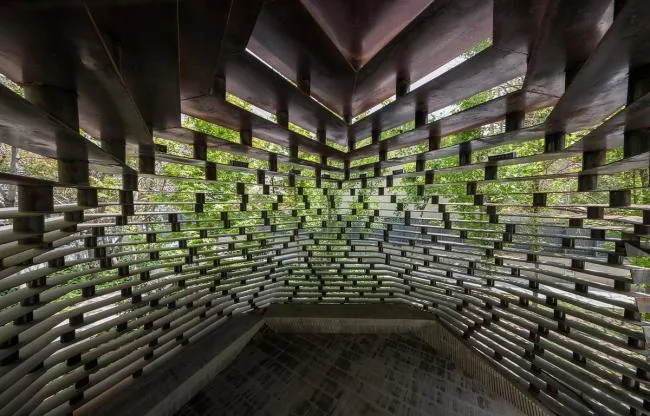
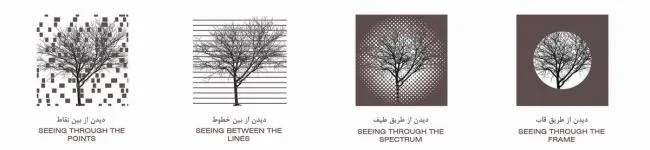
Typology: To reduce visual obstruction, the traditional linear vertical supports were replaced with an organic point-like carrier network. This challenges typical boundaries between inside and outside, open and closed, light and heavy, transparent and opaque.
The experience and perception of these boundaries shift based on the observer’s position, creating a sequence of spatial relationships that function both internally and externally, with the observer at the center. Consequently, the structure’s density varies depending on the observer’s distance and height.
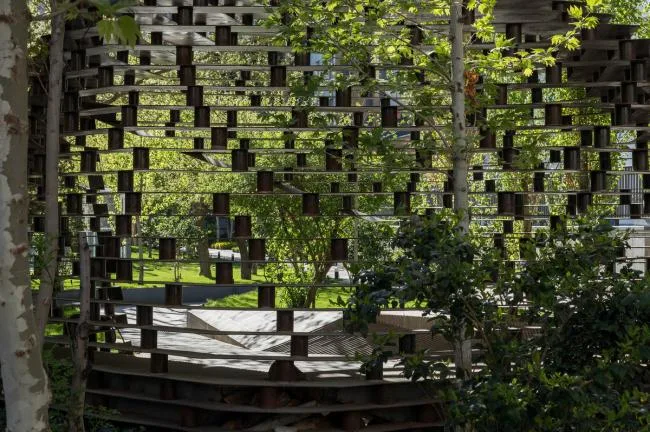
Since the panel structure plays a crucial role in maintaining the overall landscape’s harmony, and considering the abundance of abandoned structures nearby during construction, the canopy is crafted from leftover rusted panels.
This choice allows the building to blend seamlessly with the ever-changing natural environment.
Design Drawings:
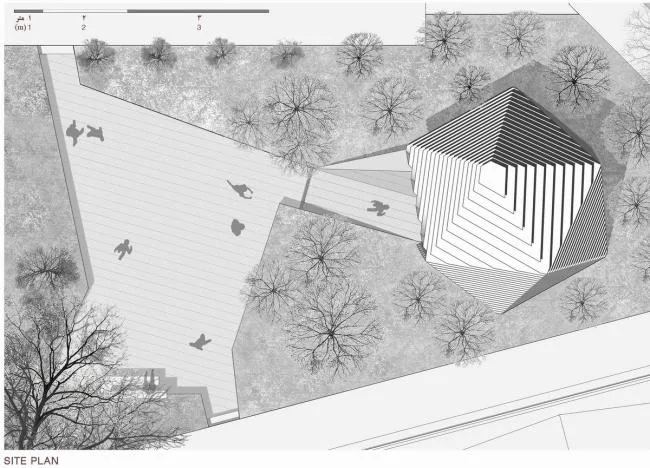
Site Plan
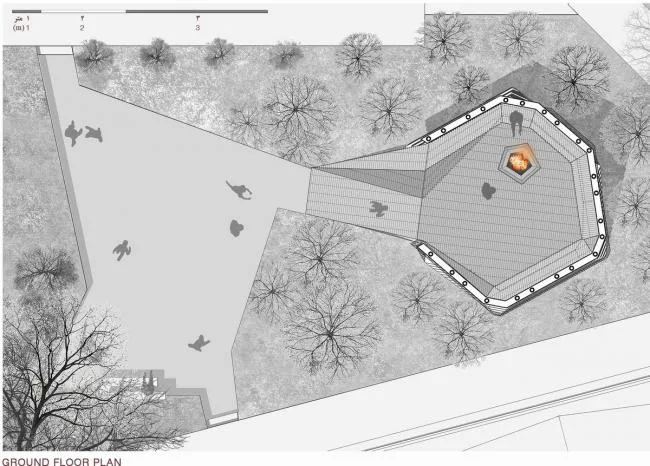
Floor Plan
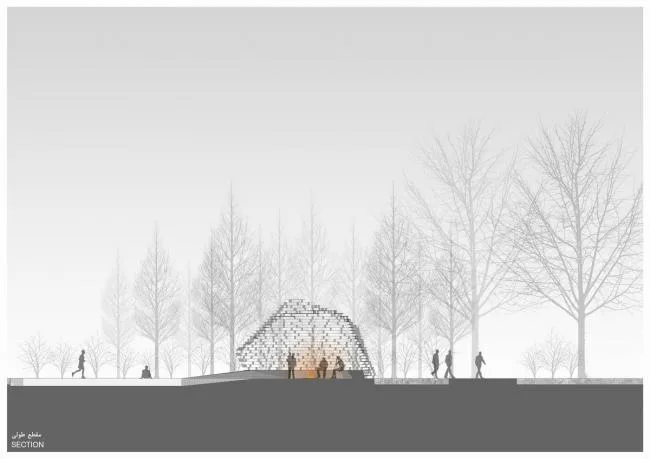
Section 1
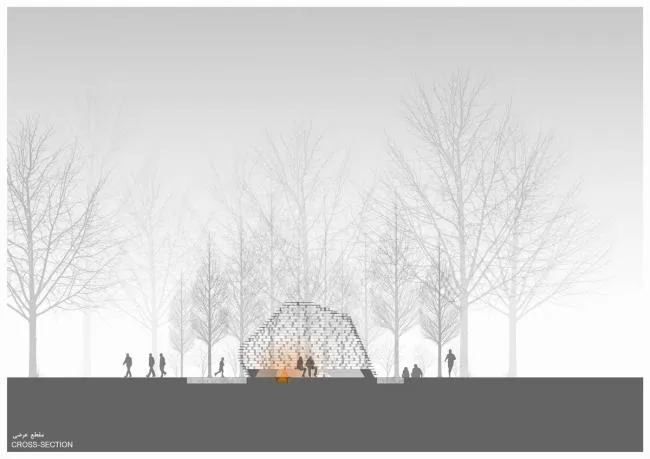
Section 2
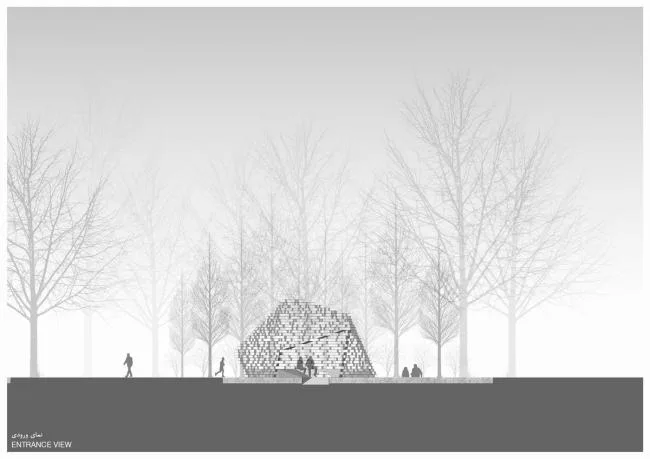
Entrance Perspective
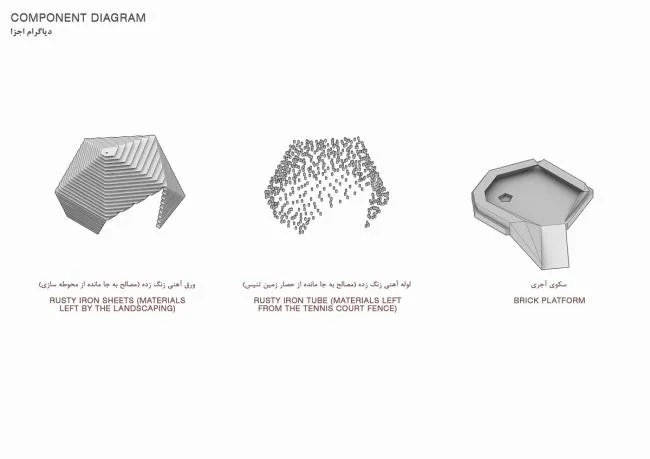
Analysis Figure 1
Analysis Figure 2
Analysis Figure 3
Analysis Figure 4
Project Information:
Architectural Firm: Olgooco
Location: Tehran, Iran
Category: Other Buildings
Lead Architect: Mehran Khoshroo
Design Team: Hossein Shirazian, Niloofar Esmaeili, Reyhane Miraftab, Samin Mosta-faei, Rojin Davoodian, Nastaran Namvar
Building Area: 35.0 m²
Project Year: 2018
Photographer: Mohammad Hassan Ettefagh
Metal Engineering: Farshid Alimi
Municipal Engineer: Farzan Hadad Shargh
Engineering Supervisor: Javad Hadavandi
Client: Sohrab Asadi












Must log in before commenting!
Sign Up