
The new studio is situated on the top floor of an office building, adjacent to the historic districts of Yuyuan Road and Xinhua Road. This location offers a spacious terrace with expansive views, lush greenery, and vibrant red tiles, creating a lively atmosphere. The top floor’s layout is rotated 45 degrees relative to the middle floors, resulting in four-sided terraces complemented by multiple indoor triangles, wells, and diagonal beams. Despite the architectural challenges this rotation presents, we embraced the unique appeal of the terrace and tackled every 45-degree angle with determination.
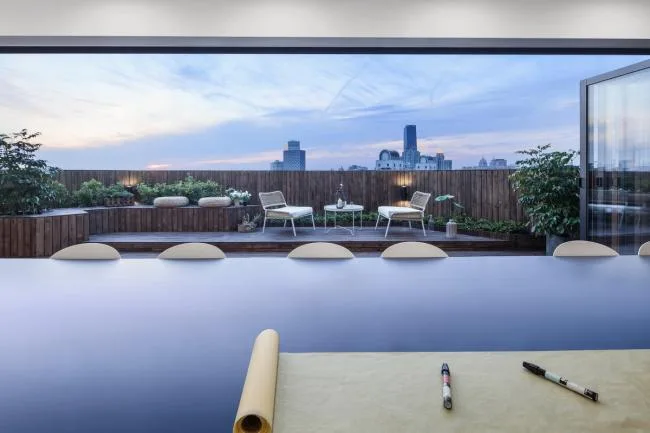
▲ Entrance terrace long table
Rotation
The triangular spaces created by the rotation of the top floor required further adjustment through an additional rotation. We centralized the most frequently used areas—the printing zone, water bar, and database—within the core of the layout. By applying a second rotation, the office space was squared off. Surrounding each office area are the terraces, offering scenic views, while the interior spaces serve functional purposes.
Winding Pathways
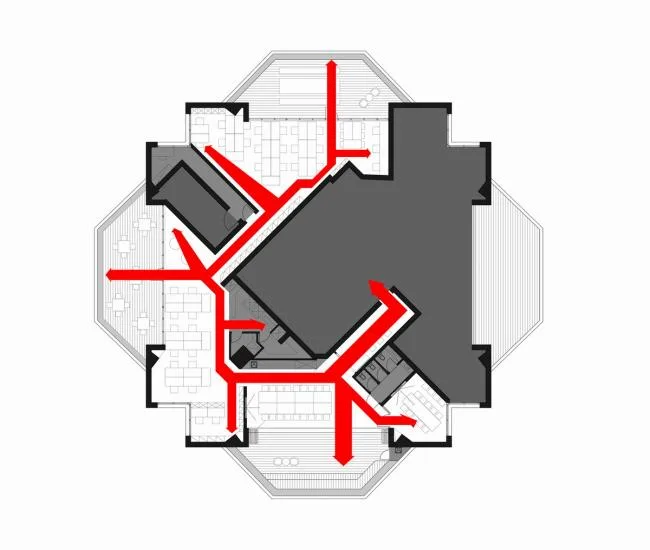
▲ Analysis of winding pathways
The seemingly extended circulation path, characterized by its twists and turns and the ever-changing views outside the windows, evokes a garden-like ambiance.
In this design, the concept of size becomes secondary to the experience created by the winding journey. The spatial depth reaches its peak through a series of carefully planned turns: the first is surrounded by neon lights flickering near Zhongshan Park (BIM training area); the second offers views of the soaring skyscrapers in Lujiazui; and the third overlooks the bustling traffic on the elevated Yan’an Road. Our approach was akin to tending a garden, enhancing the space while respecting its existing layout.
Half Hall
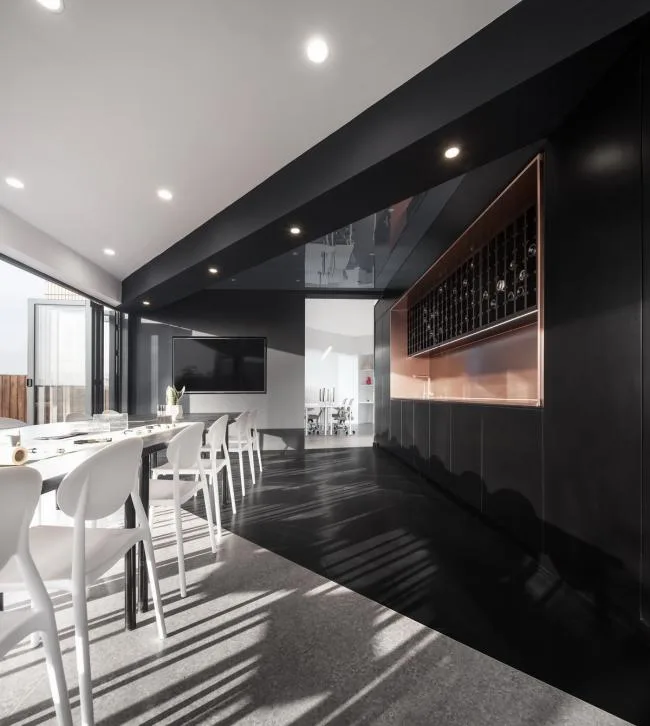
▲ Entrance half hall
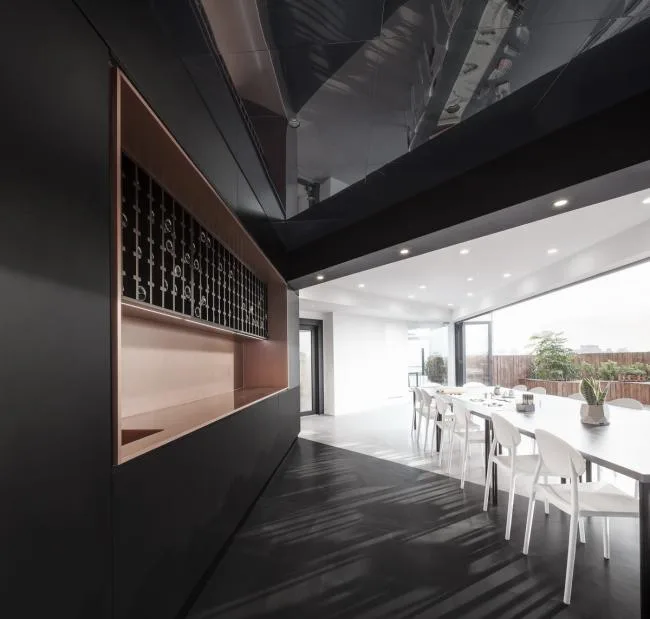
▲ View from the office gatehouse
The large beam at the entrance, which we were initially reluctant to remove, became an important spatial marker. Treating the beam as a boundary, we designated only half of the entrance hall as interior space, while the other half connects seamlessly to the terrace, becoming an exterior extension. When the sliding door opens, the towering cityscape frames the view, marking the first major turn along the circulation path.
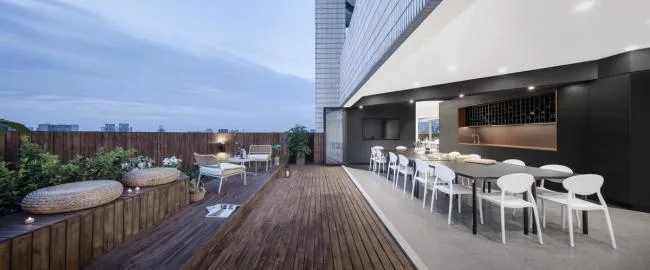
▲ Half entrance hall connecting to the terrace
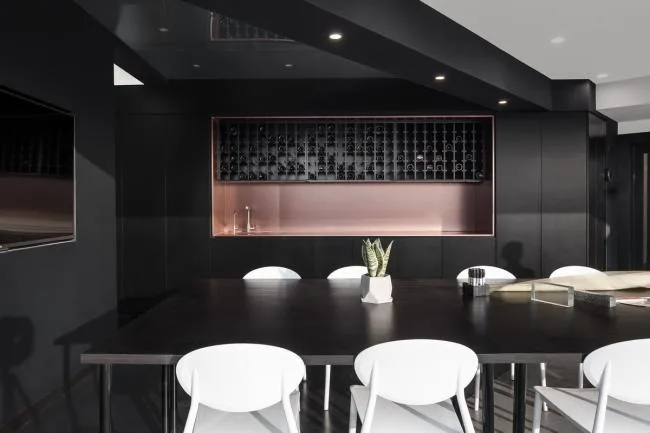
▲ Wine cabinet in the half hall
Amidst the beautiful views, wine is a fitting complement. We incorporated a section of red metal on a black background to serve as a wine cabinet. When clouds reflect across the surface, the ripples resemble nectar gently flowing over a dark canvas.
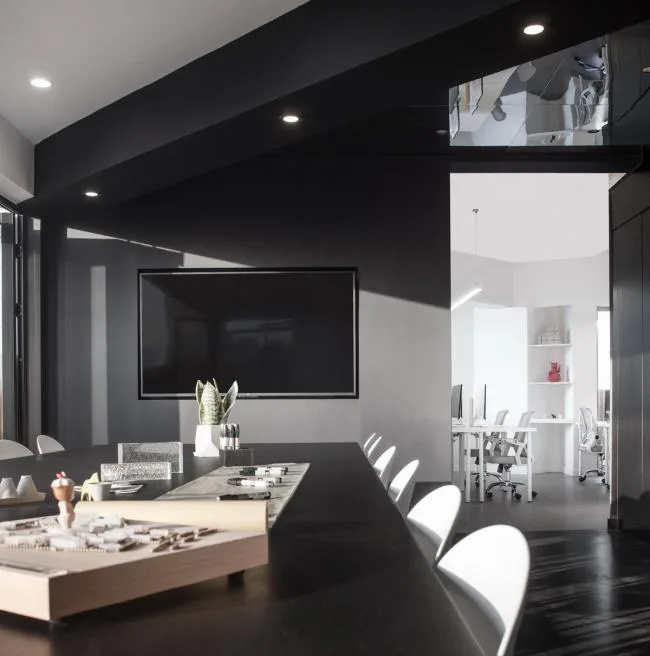
▲ Entrance to the office area from the lobby
The subtlety of the garden-inspired design is reflected in the flexible use of space. We replaced the suspended ceiling in the half entrance hall with mirrored stainless steel, creating a glossy surface that faintly reveals the atrium on the second floor. The open doorway beneath the atrium marks the boundary between the office and entrance areas, acting as a dynamic framing device along the circulation route. The second terrace also captures views of central Shanghai, representing the second major turn in the path.
Flying Corridor
The third turning point on the route is the flying corridor. Here, the corridor’s width is intentionally narrowed with data and material racks, while the length is extended by office desks to simulate a continuous passage. The diagonal beam, originally perpendicular to the path, creates an unexpected spatial dynamic. Its “flying in” introduces a misalignment between the circulation path and the line of sight, symbolizing the expansion and contraction of space.
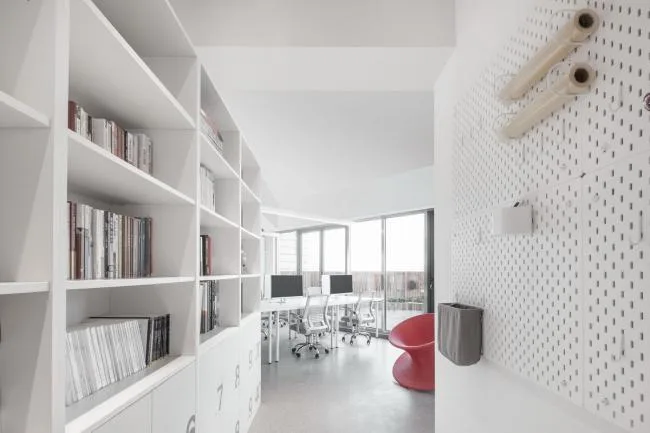
▲ The flying corridor leading to the second terrace
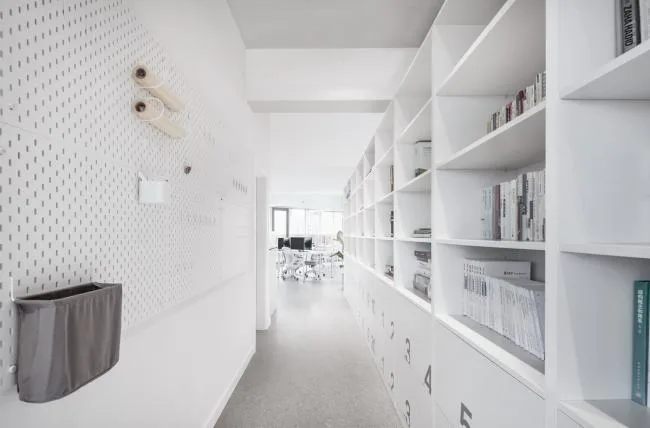
▲ The flying corridor leading to the third terrace
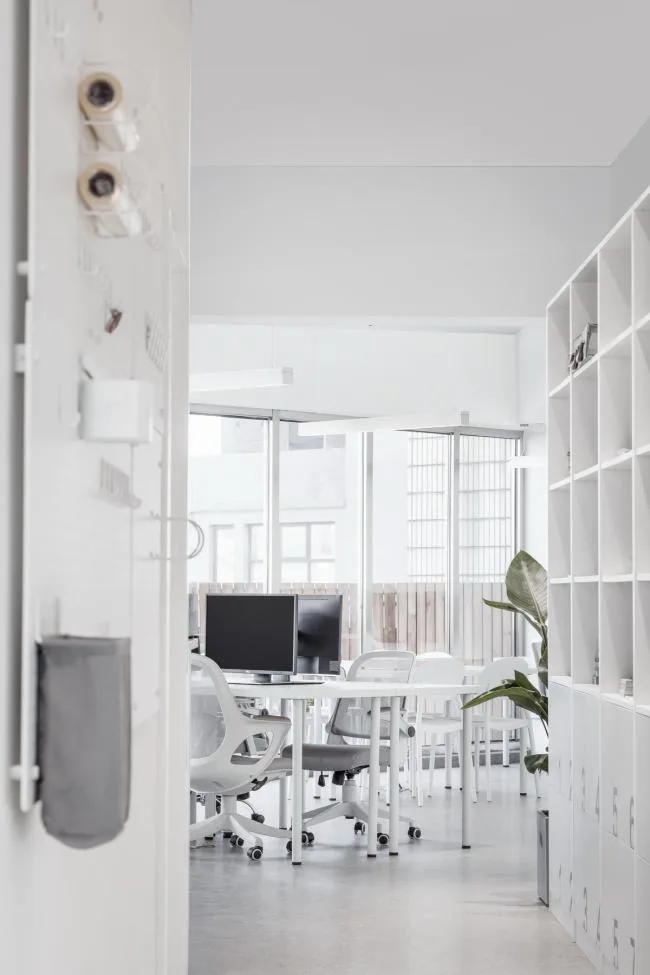
▲ Diagonal beams emphasizing spatial depth
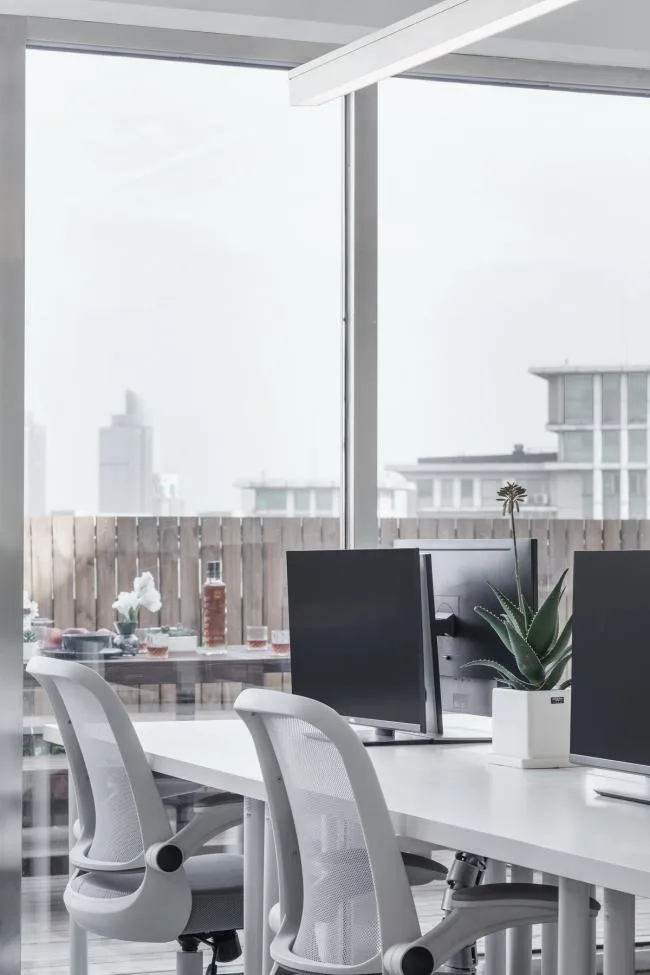
▲ Terrace seamlessly integrates with the office area
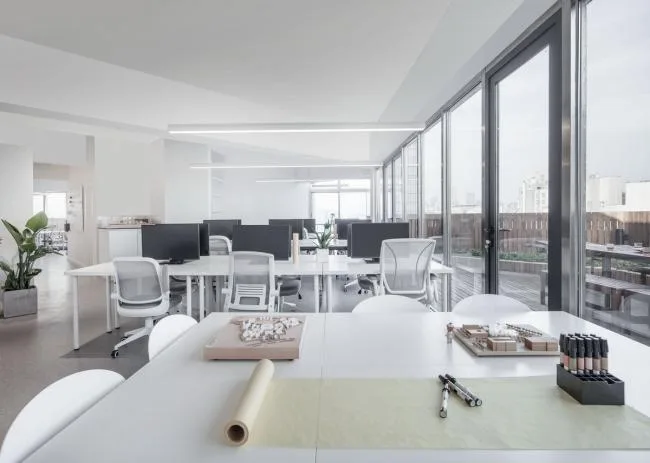
▲ Office and discussion areas
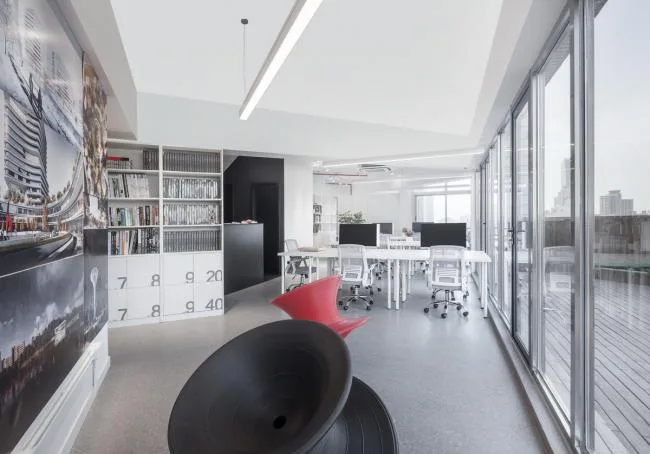
▲ Office and rest areas
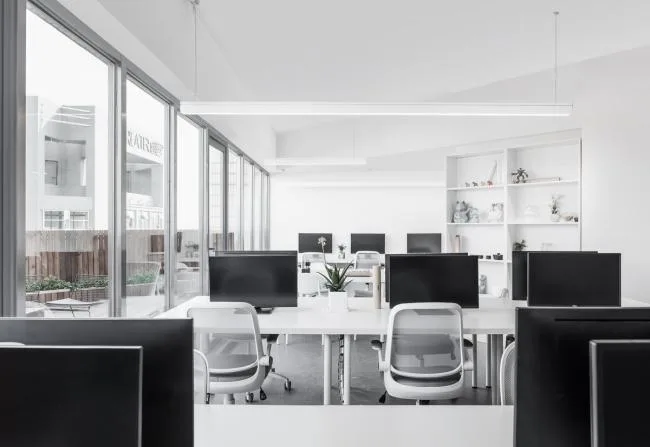
▲ View from the workstation window
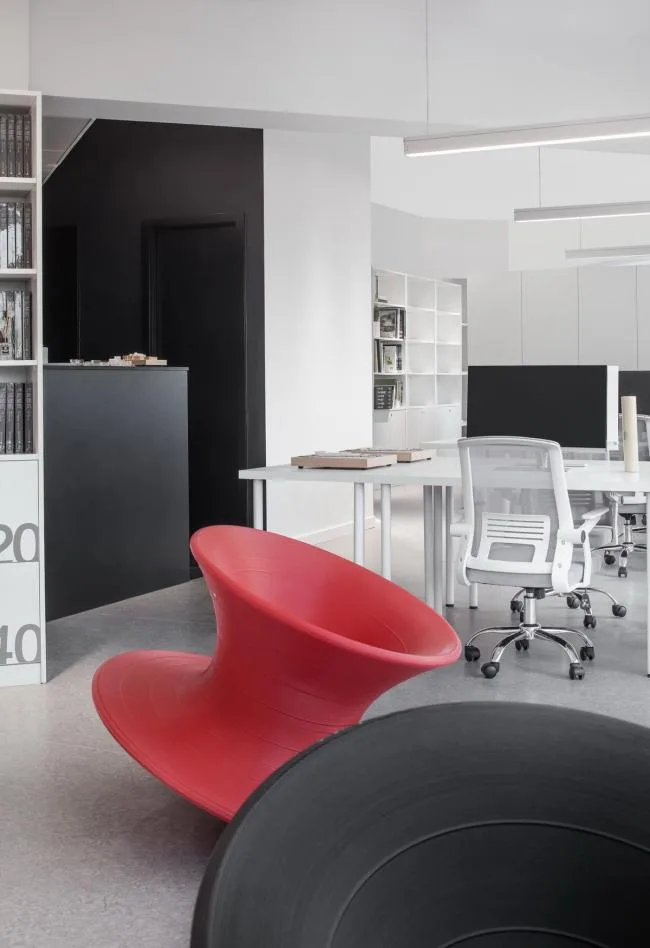
▲ Office and printing areas
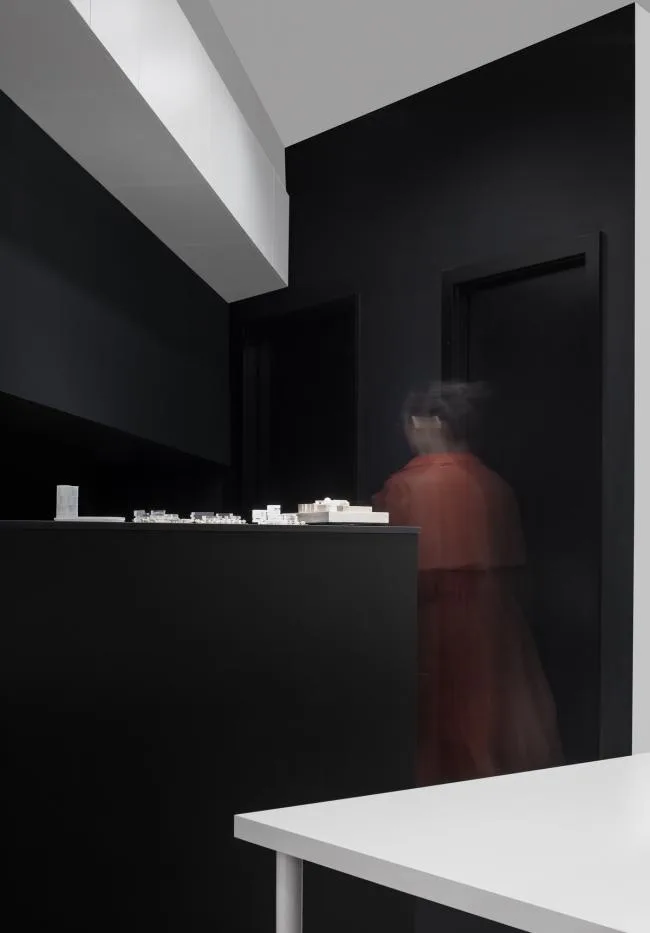
▲ “Black Box” printing area
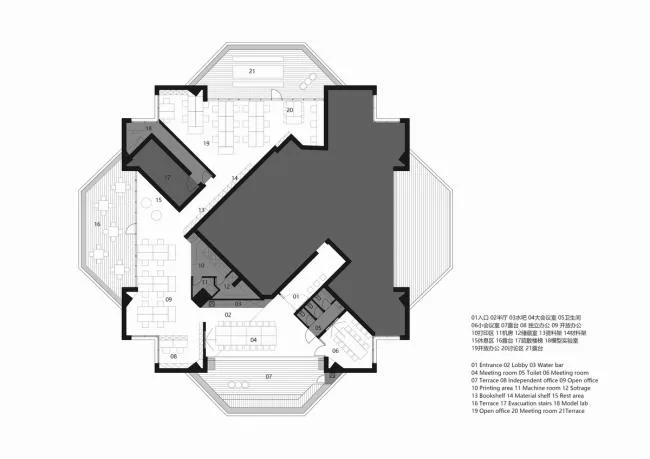
▲ Renovation plan
Project Design
Owner: Standing Wood Design and Research Laboratory
Lead Designers: Liu Jinrui, Feng Qiong
Chief Architect: John
Project Managers: Mr. Guo, Yang Lin
Design Team: Feng Fei, Ming Xiangyi, Xie Shunbing, Zhang Endong, Guo Qian
Logo Design: Zhu Sijun, Zhu Jinwen
Construction Drawing Design: Lai Wuyi, Yang Jingling, Guan Bolong
Landscape Design: Standing Tree Design Research Laboratory (IA)
Construction Manager: Shen Zhou
Furniture Production: Wang Xiaoping
Area: 500 m²
Design Period: February to March 2019
Construction Period: February to March 2019 (BIM building)
Main Materials: PVC flooring (KCC), low-light sunshade roller shutters, writable paint (Yitu), brushed stainless steel, mirror stainless steel, terrazzo
Photography: Hu Yijie












Must log in before commenting!
Sign Up