
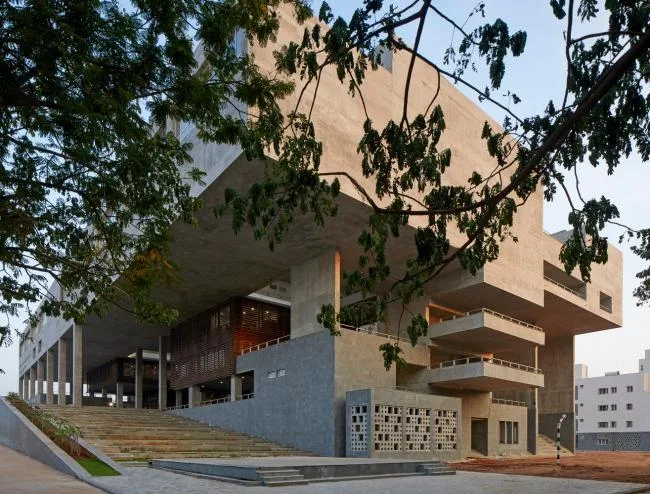
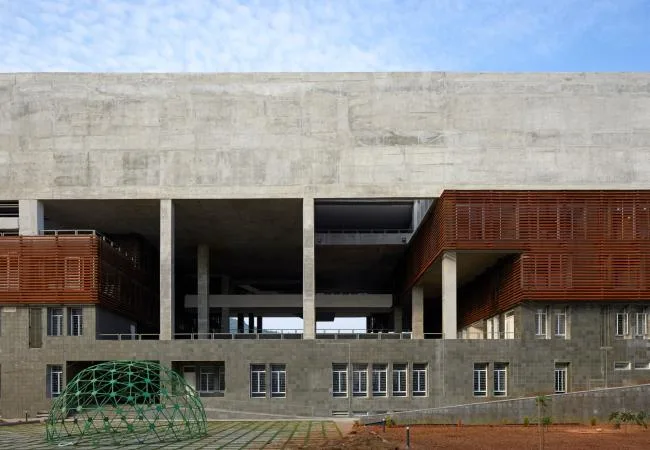
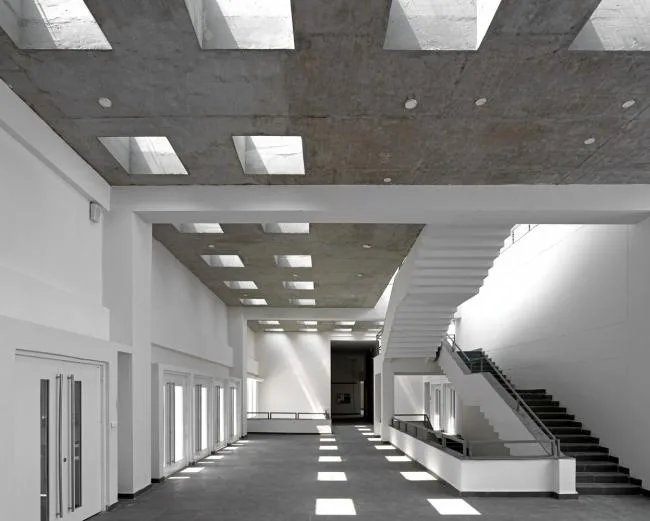
The Vijayawada School of Planning and Architecture is working to transform its campus into a key institutional hub in Vijayawada, a city located in southeastern India. This Institutional Architecture (BIM Tutorial) serves as a platform that integrates debate, communication, and dissemination, acting as a central gateway and interface for the entire campus.
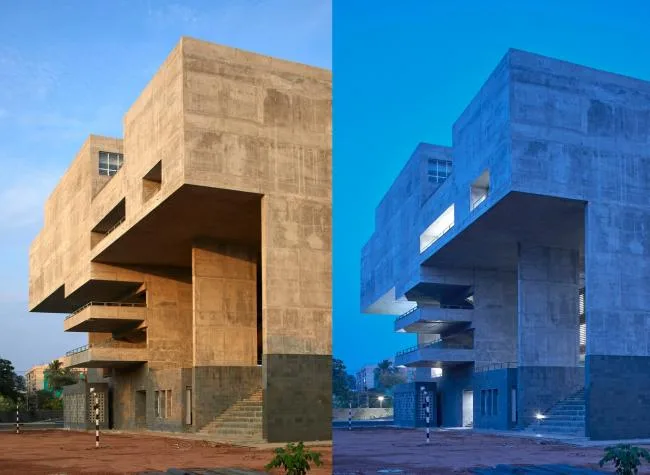
The design draws inspiration from brutalism as an expressive form responding to the region’s extreme climate, incorporating this aesthetic into the urban fabric of Vijayawada.
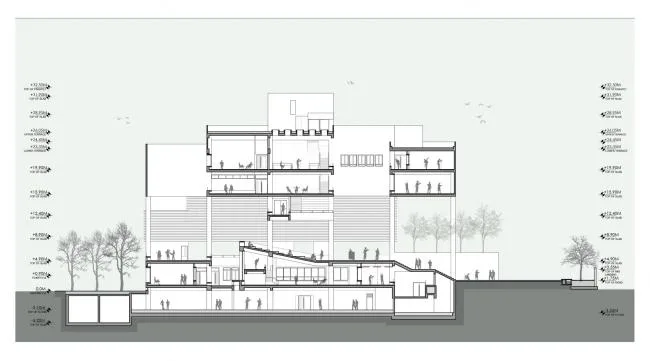
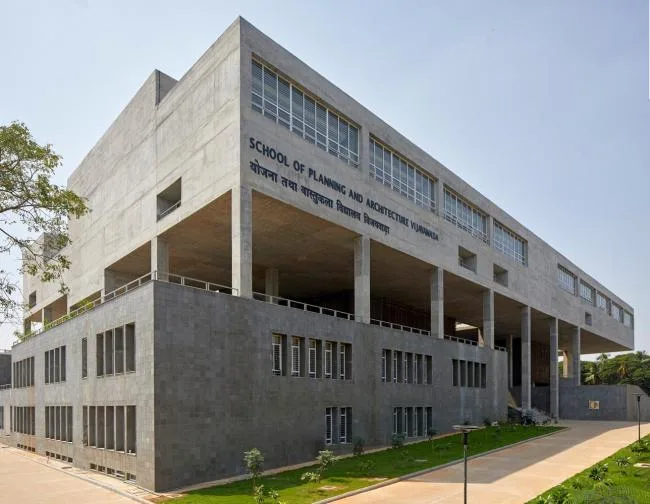
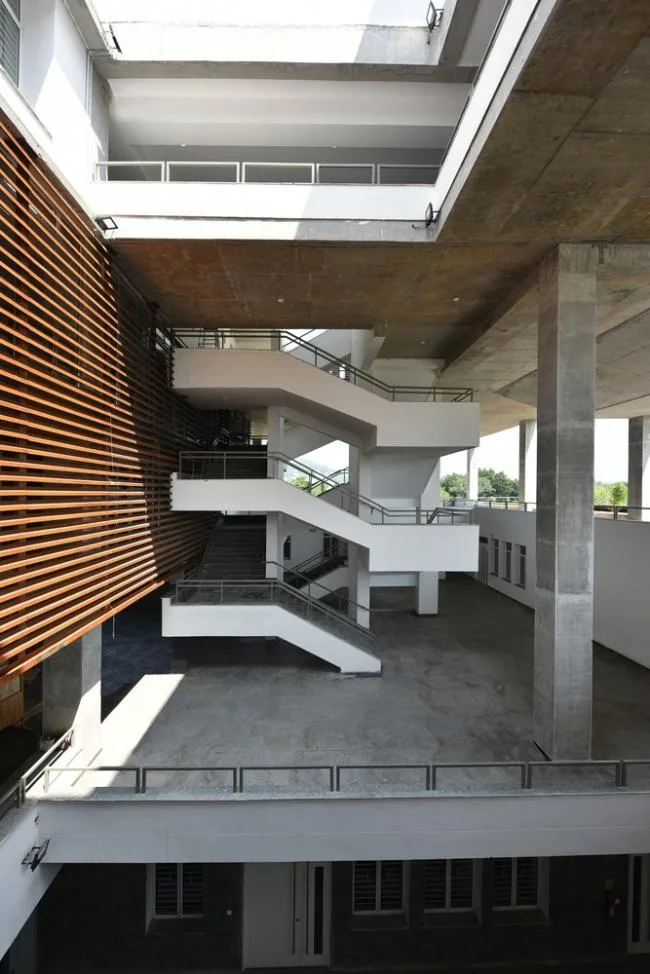
The building’s exterior presents a scale akin to a public structure, while the interior emphasizes the educational essence by creating a human-scale environment tailored to the participating student community.
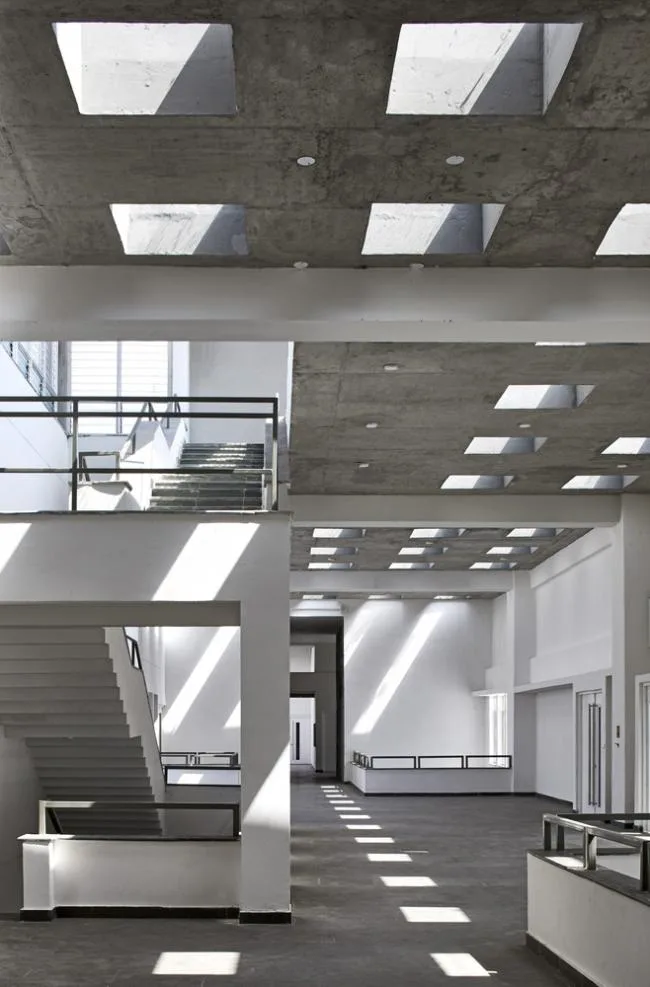
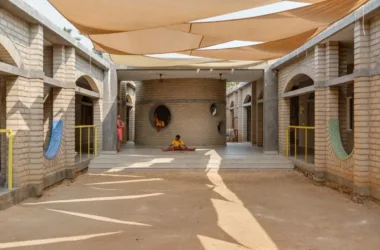
The large building volume is punctuated by openings that create rhythmic patterns of light and shadow, allowing natural ventilation and breathing space. This approach also leaves ample room for future expansion of facilities.
The design prioritizes individual diversity and community scale, fostering interdependent planning and offering a variety of interactive spaces to enhance the communal experience.
Our concept is rooted in fostering interrelationships — encouraging student engagement through non-hierarchical, communicative interactions.
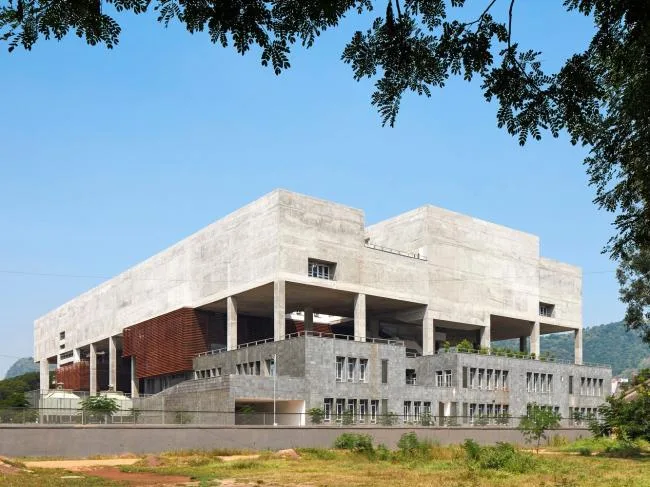
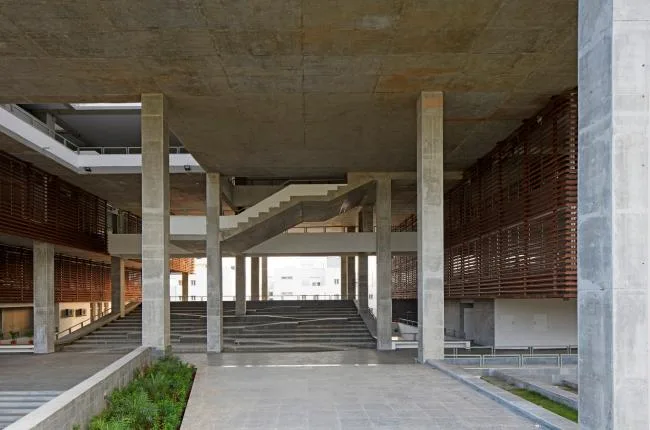
The relationship between the sunshade, lobby, and platform is designed as a three-dimensional constellation, shaped by the flow of various programs and different levels of privacy.
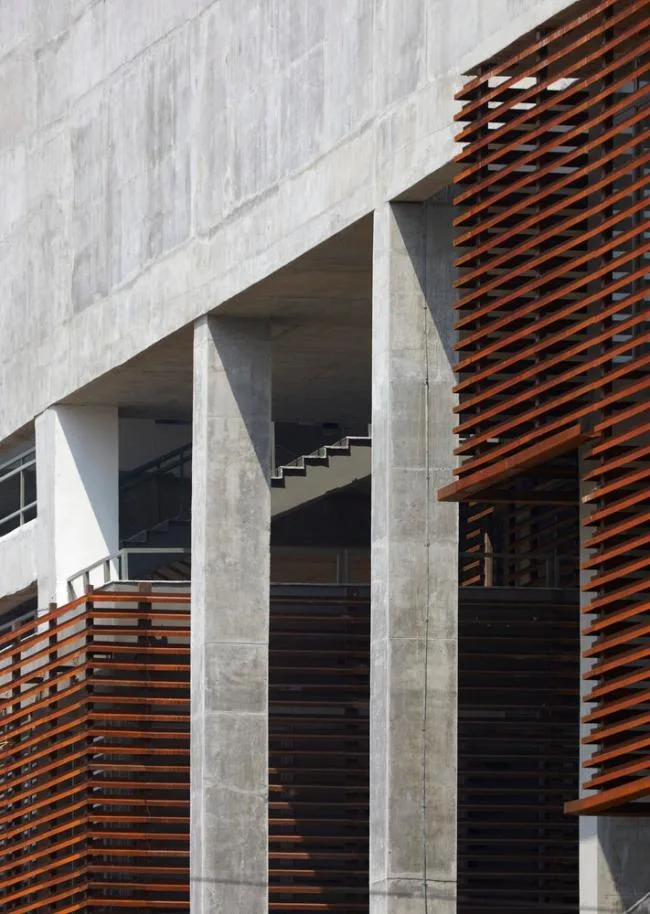
- Sunshade: The uppermost section accommodates morning study sessions, including classrooms and studios. It also functions as a sunshade roof, providing shade for the lower floors.
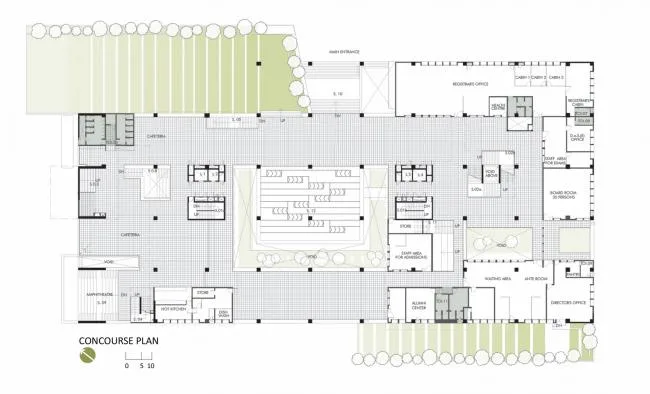
- Lobby: The middle section features a “high foot platform” that facilitates student movement, resembling a traditional courtyard that hosts public and community activities. This area acts as the building’s central hall, regulating and guiding pedestrian flow.
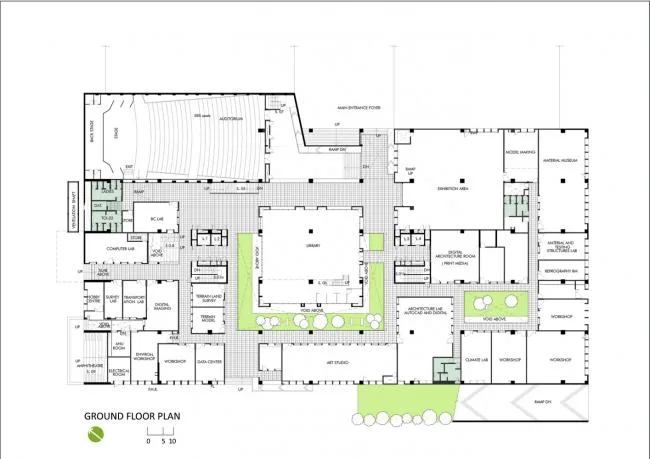
- Platform: The base forms a solid foundation beneath the floating canopy. It houses afternoon learning programs such as studios and laboratories. Constructed with local Tandur stone, the platform helps delay solar heat transfer. Its perforations allow hot air to escape, enhancing natural cooling.
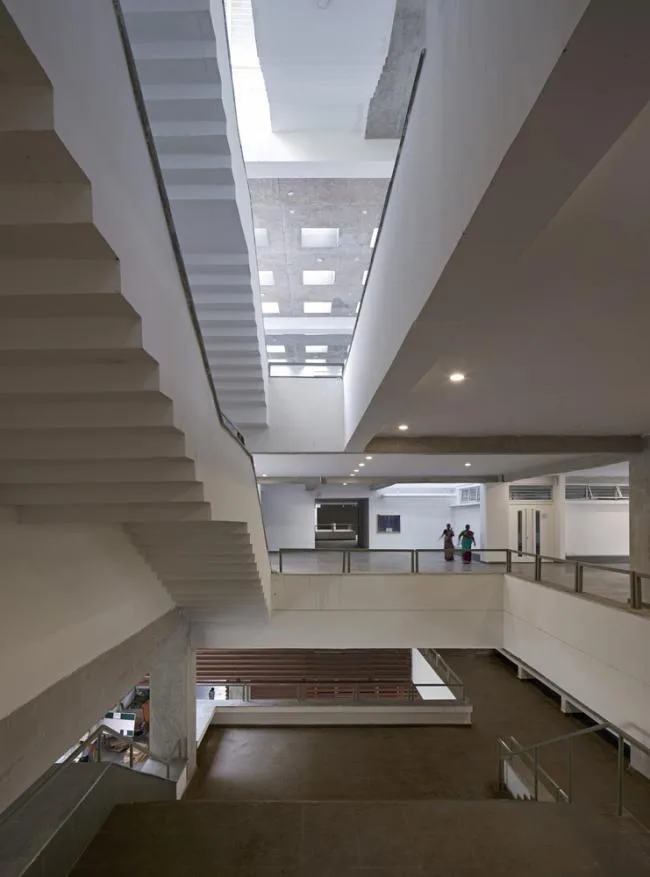
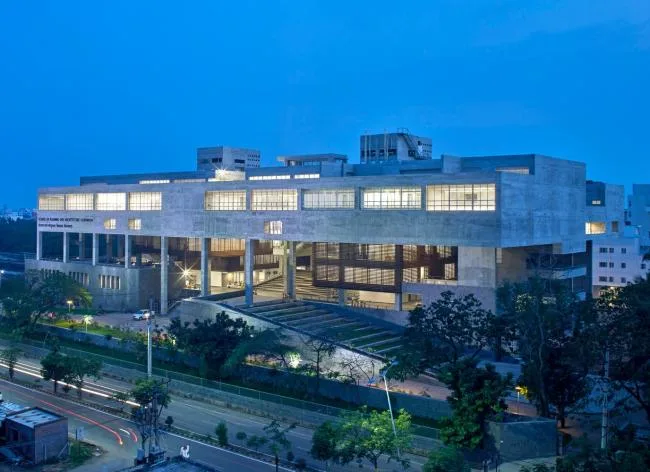
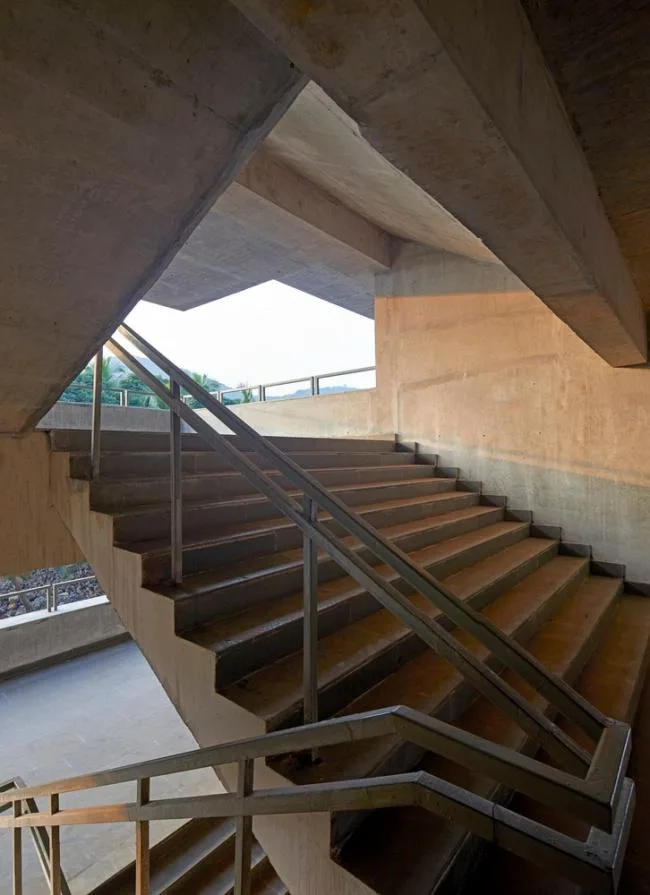
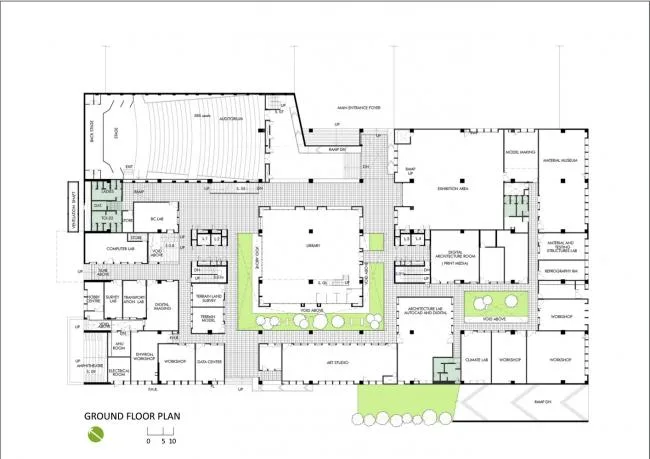
The lobby area embodies a traditional courtyard that integrates public and community functions. It filters and organizes human movement throughout the building.
A smaller courtyard acts as a three-dimensional light well, visually connecting upper and lower levels. This shared space is used by teachers, students, administrators, and visitors alike, promoting informal communication and collaboration, including among BIM engineers.
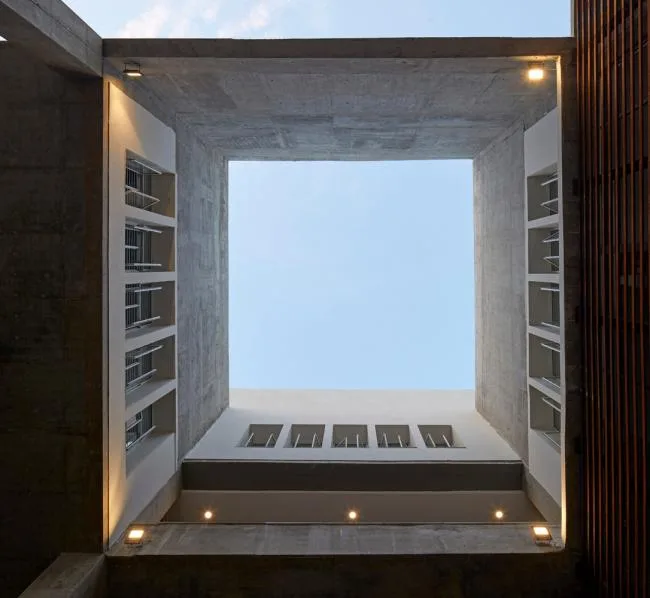
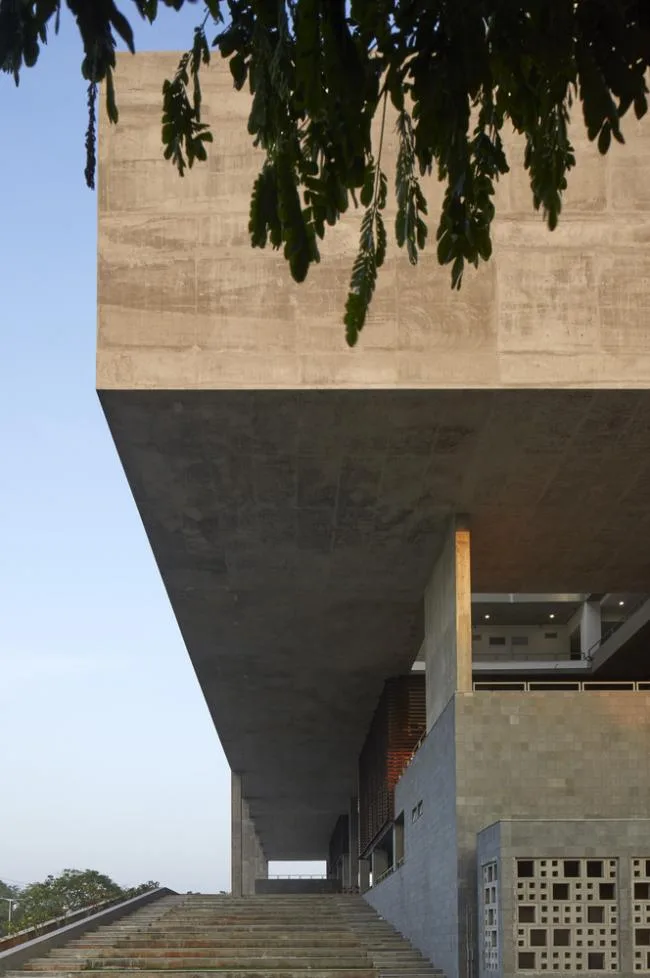
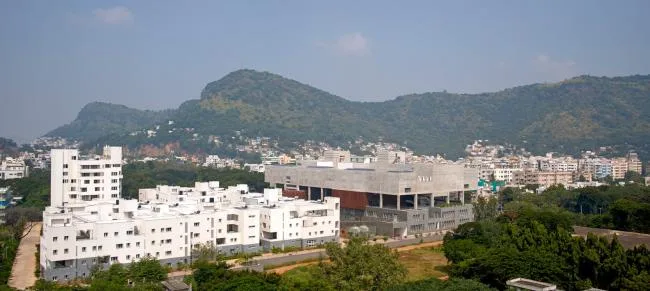
The materials used have been transformed from their original forms into glass and natural finishes, including plain concrete, Tandur stone, weathering steel, and fly ash bricks.
Passive energy strategies are woven into the design through the use of courtyards, which facilitate cross ventilation via building chimneys to balance day and night temperatures.
The volume sunshade provides thermal comfort for spaces below, while design measures minimize active solar heat gain by favoring northern light exposure and blocking intense southern sun.
The building aims to create a culturally rooted, environmentally sensitive interactive learning community.
Drawings
Master Plan
Floor Plan
Floor Plan
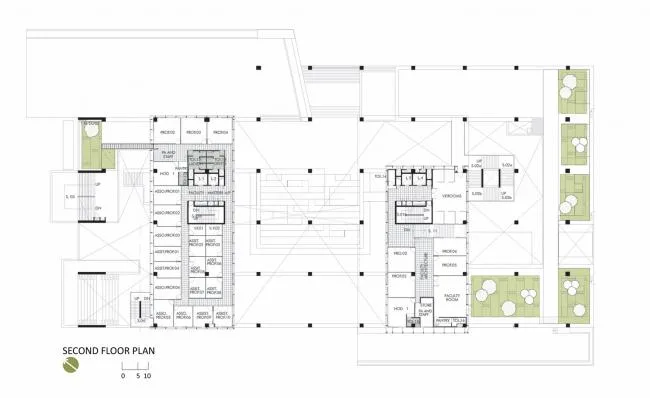
Floor Plan
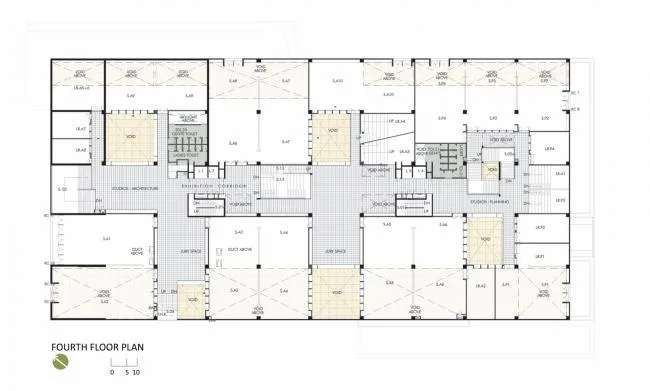
Floor Plan
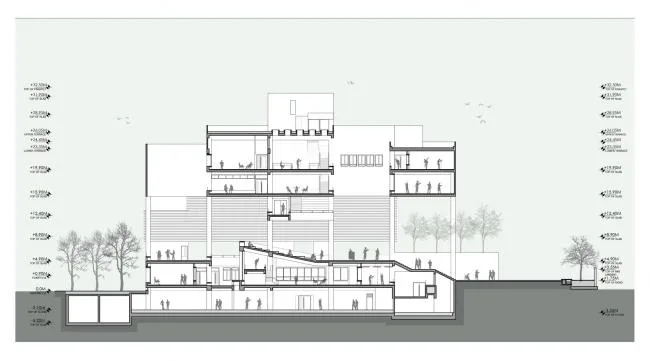
Sectional View
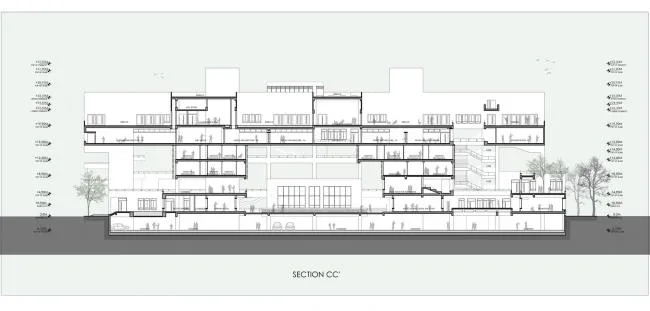
Sectional View
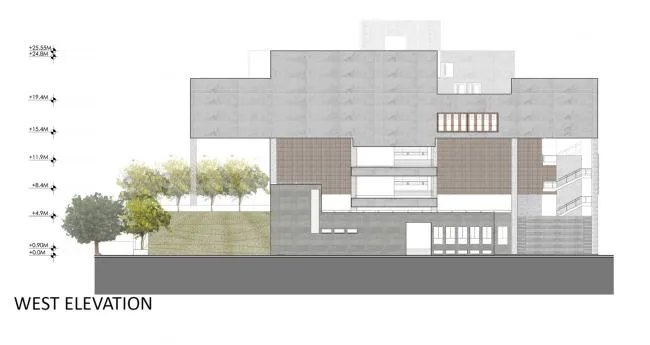
Elevation Drawing
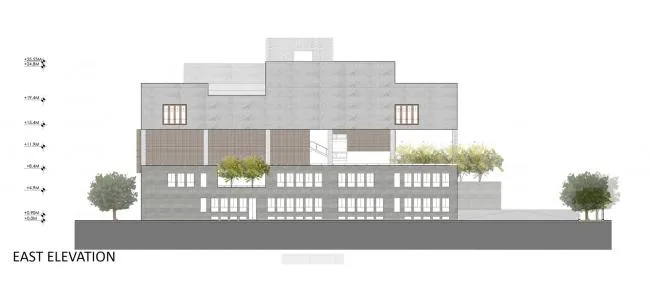
Elevation Drawing
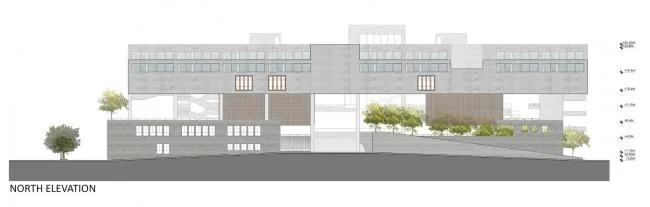
Elevation Drawing
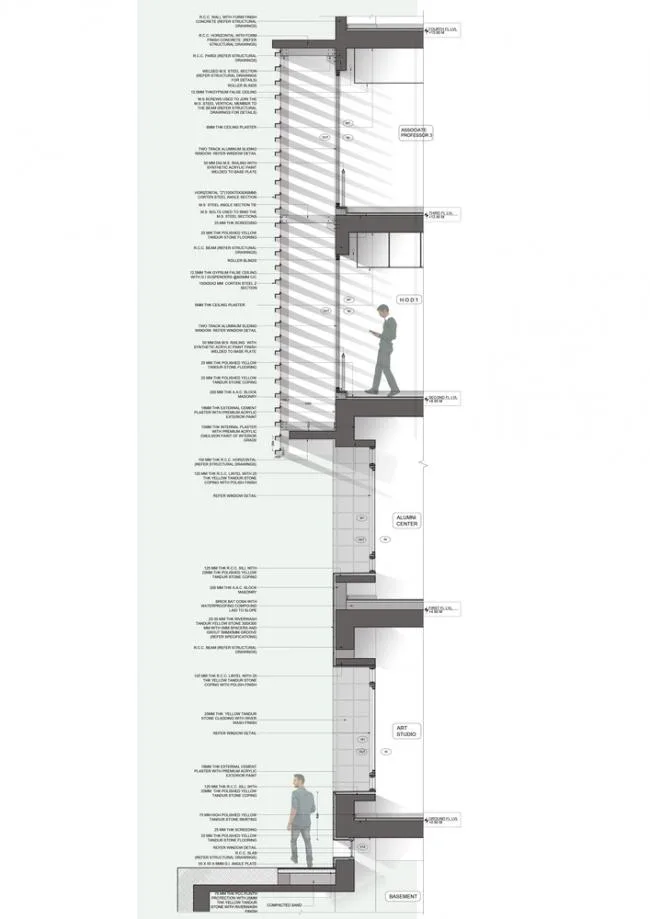
Wall Section Diagram
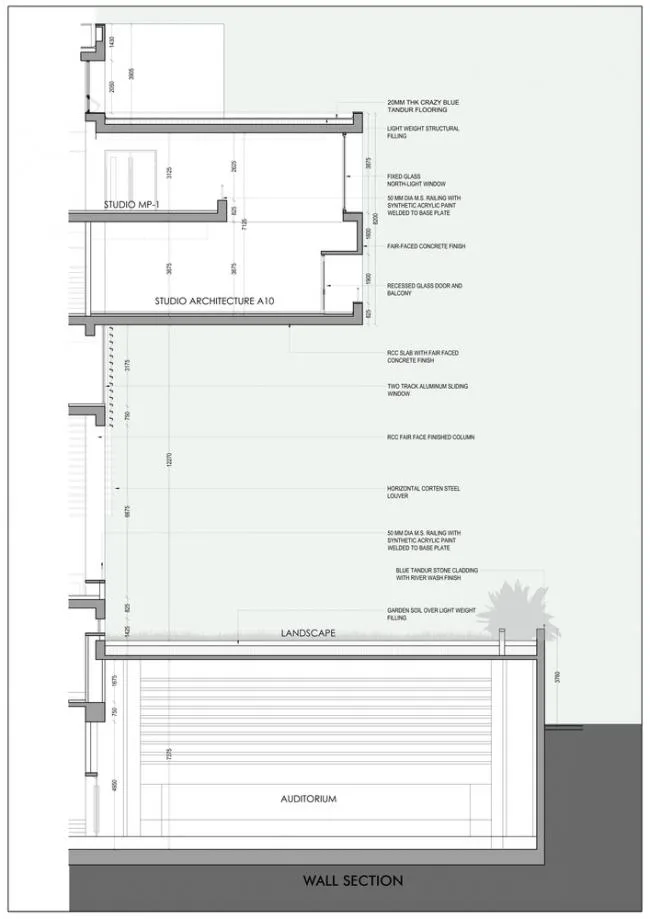
Wall Section Diagram
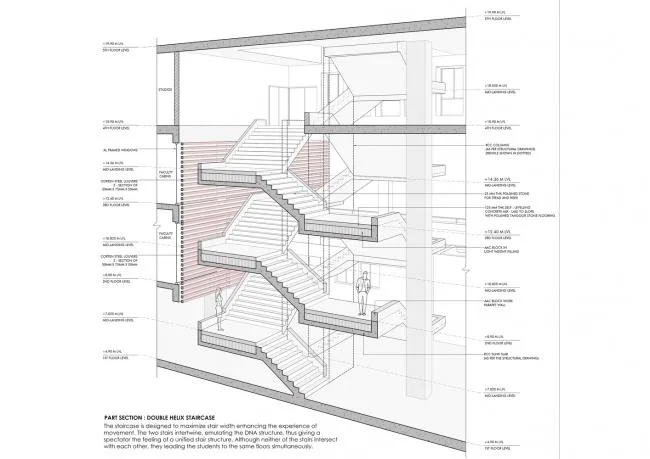
Staircase Sectional View
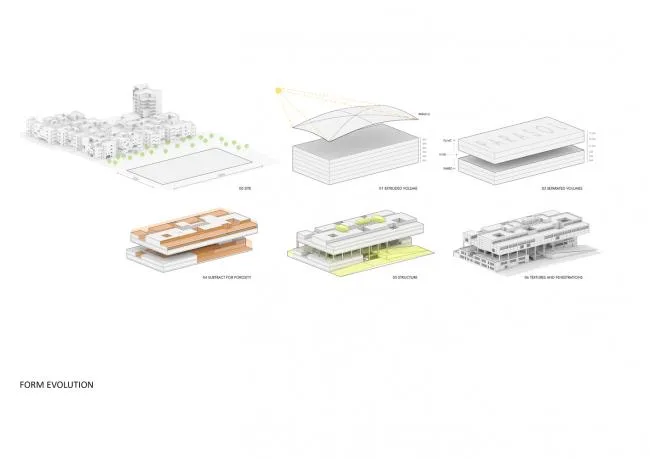
Form Generation
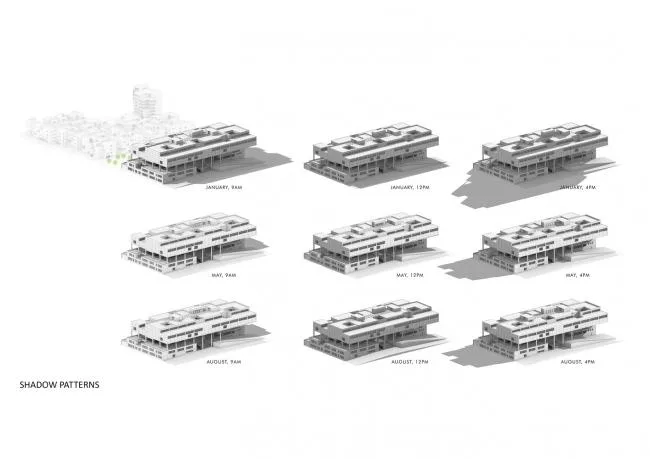
Sunlight Analysis
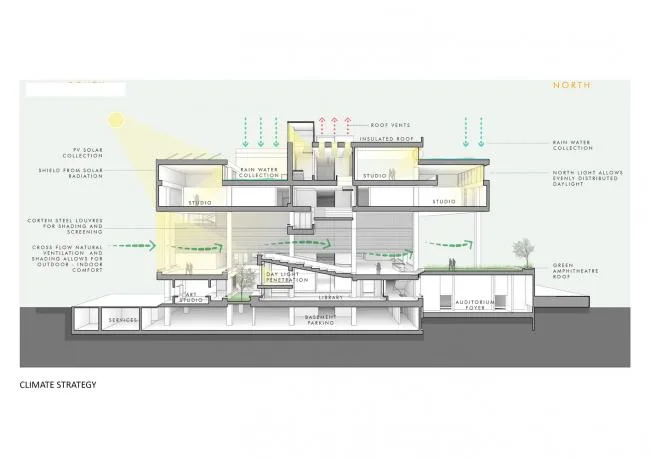
Climate Fractionation
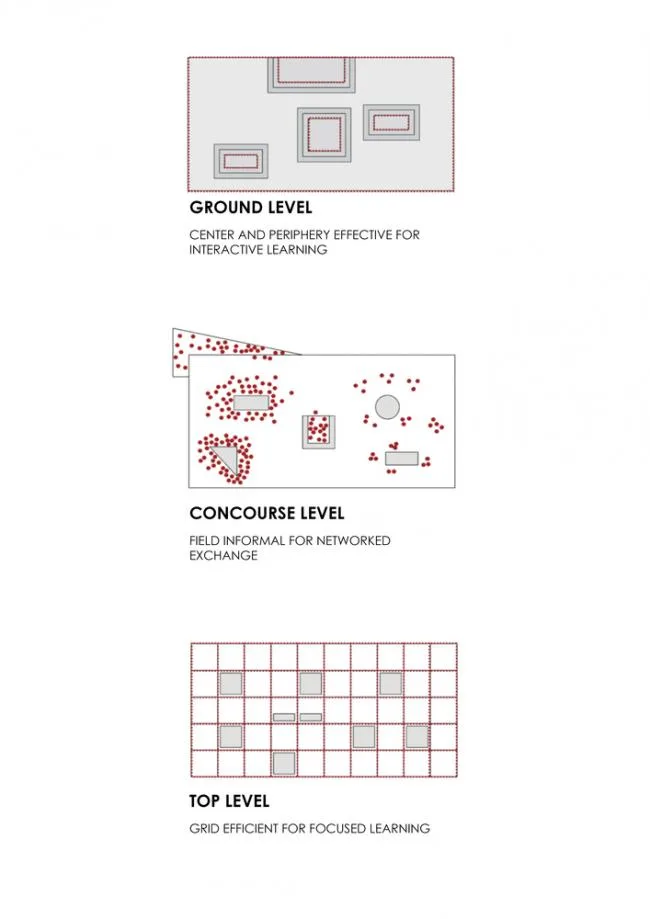
Diagram Illustration
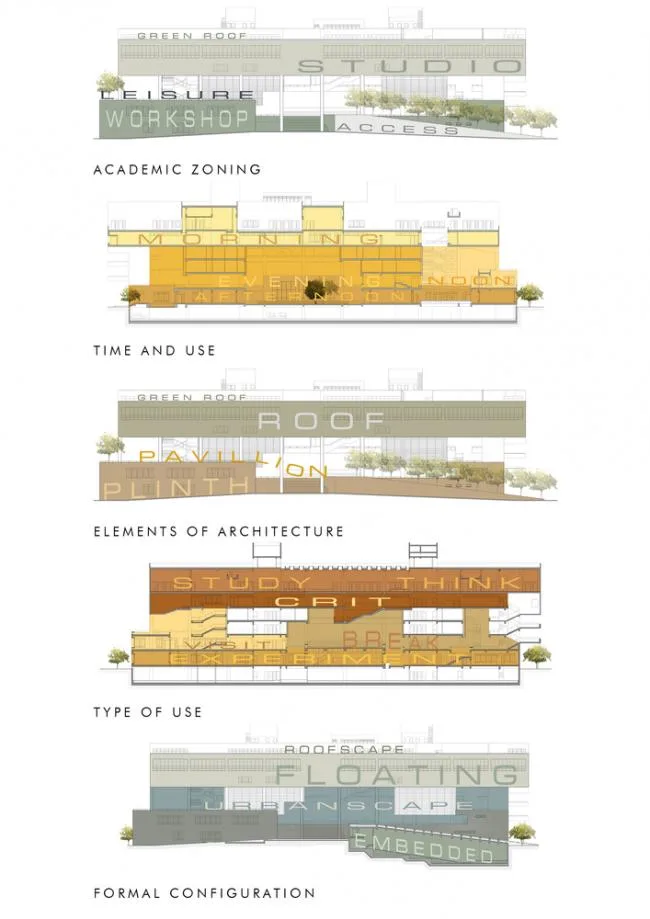
Diagram Illustration
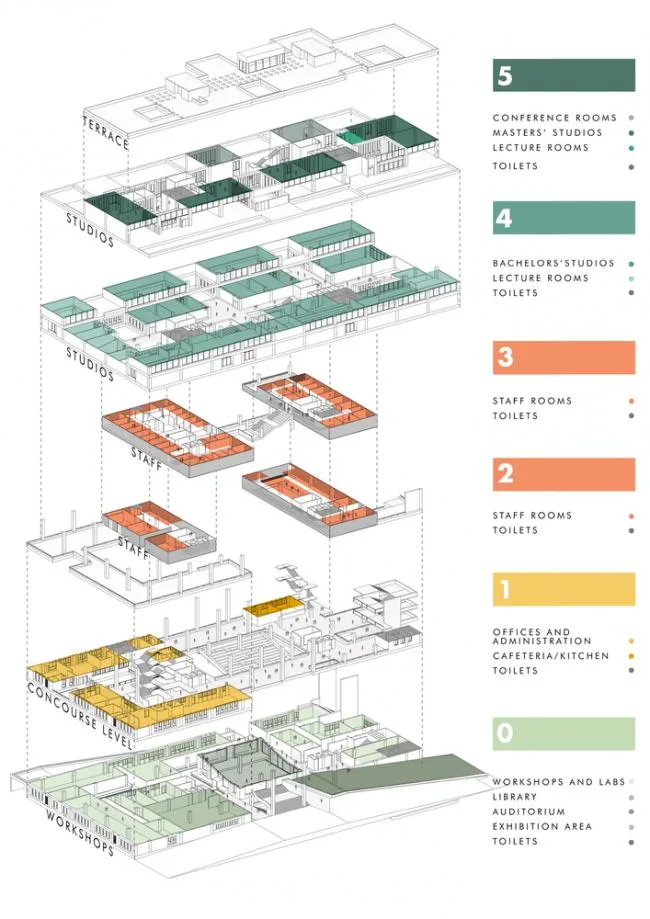
Layered Axonometric Diagram
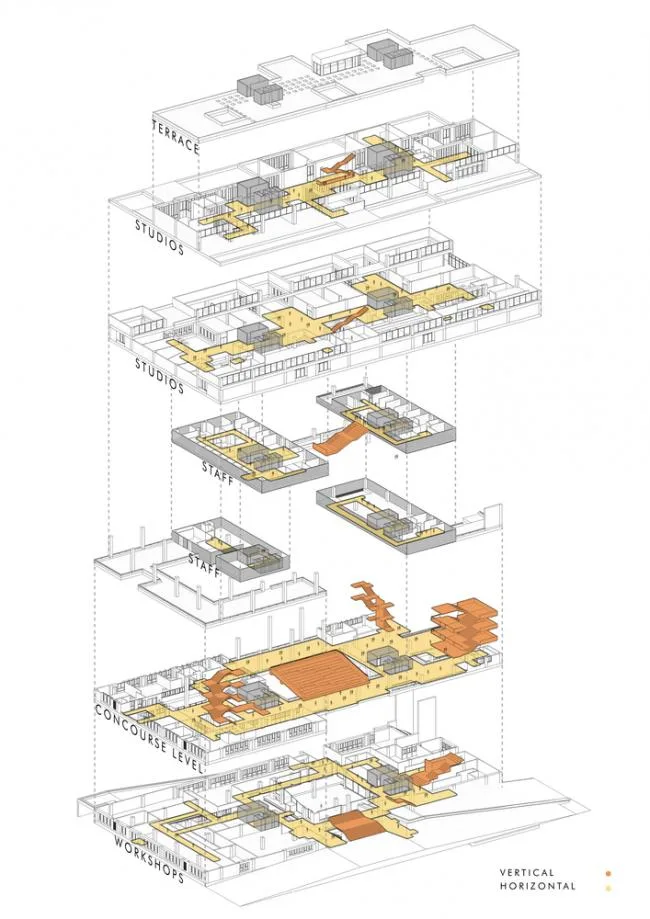
Streamline Analysis
Project Information
Architect: MO-OF
Location: Andhra Pradesh, India
Lead Designers: Shantanu Poredi, Manisha Agarwal
Area: 38,588 square meters
Client: Mino
Project Year: 2018
Architectural Photographer: Edmund Sumner
Engineering Team: Rak Ceramics, NCL Industries, JSW Steel
Structural Engineer: Dr. Kelkar Designs Pvt. Ltd












Must log in before commenting!
Sign Up