
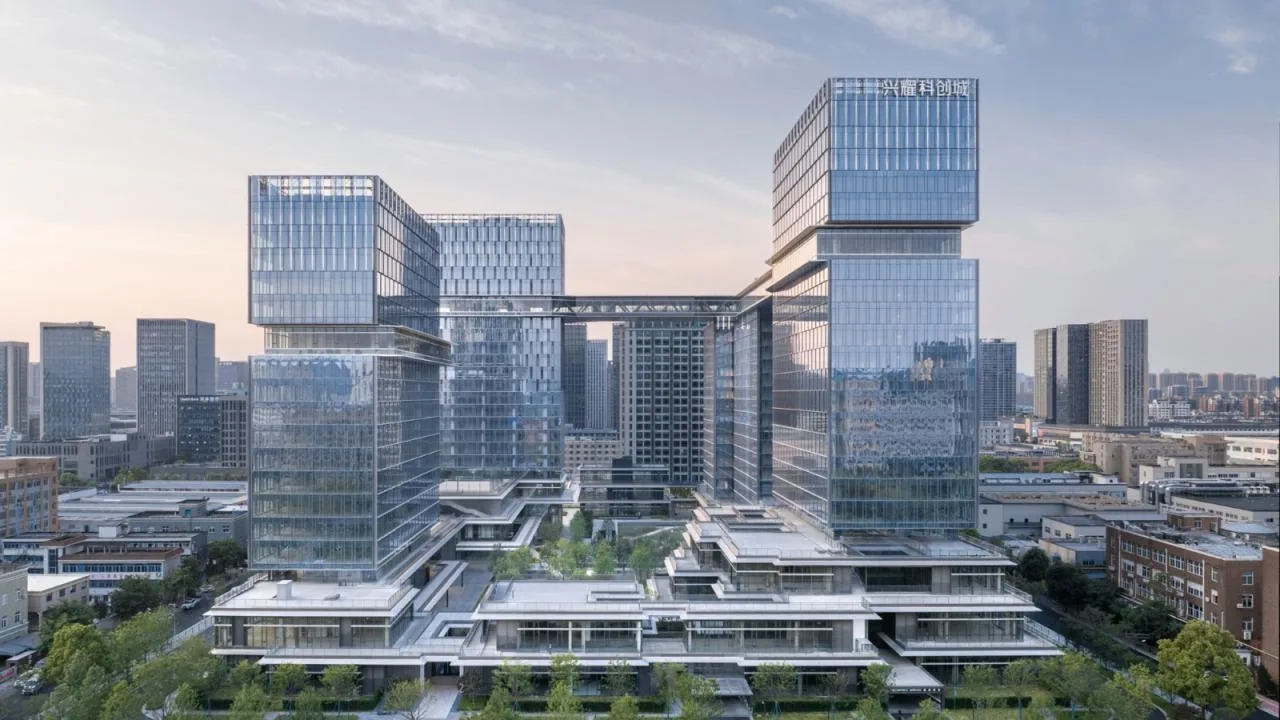
Xingyao Science and Technology Innovation City is situated in Hangzhou’s High-tech Zone, surrounded by numerous science and industrial parks. The site is flanked by aging industrial plants from the late 20th century, alongside a few emerging technology parks. The industrial environment is monotonous and lacks vibrant leisure spaces, resulting in limited urban services. This project’s design not only addresses internal office functionality but also prioritizes the creation of open, engaging urban spaces and interfaces that connect positively with the surrounding area.
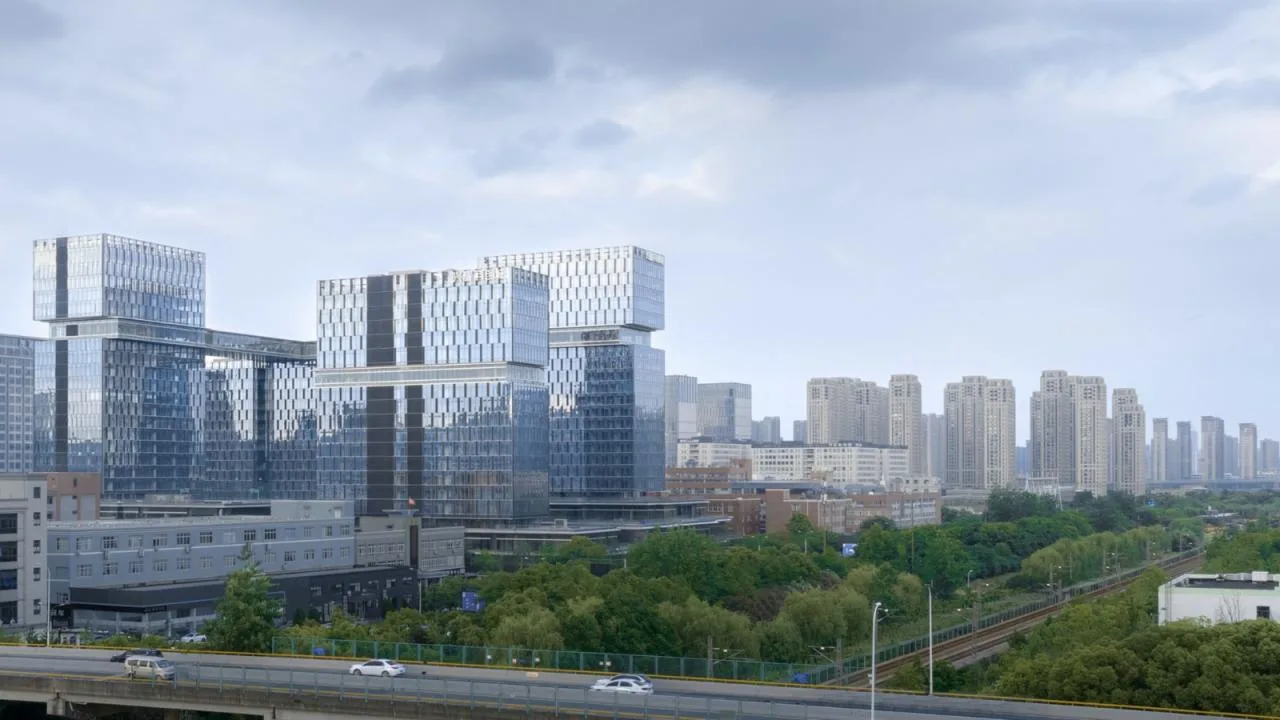
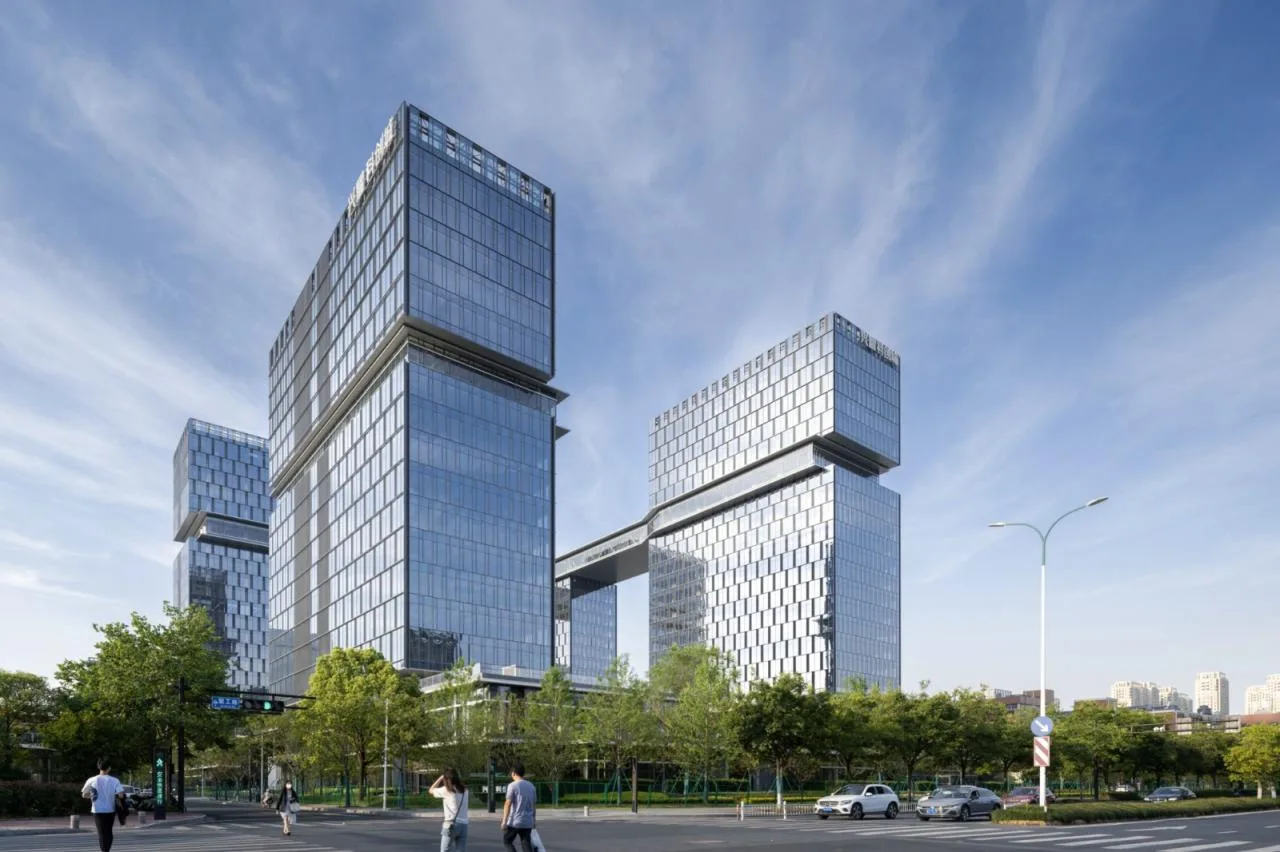
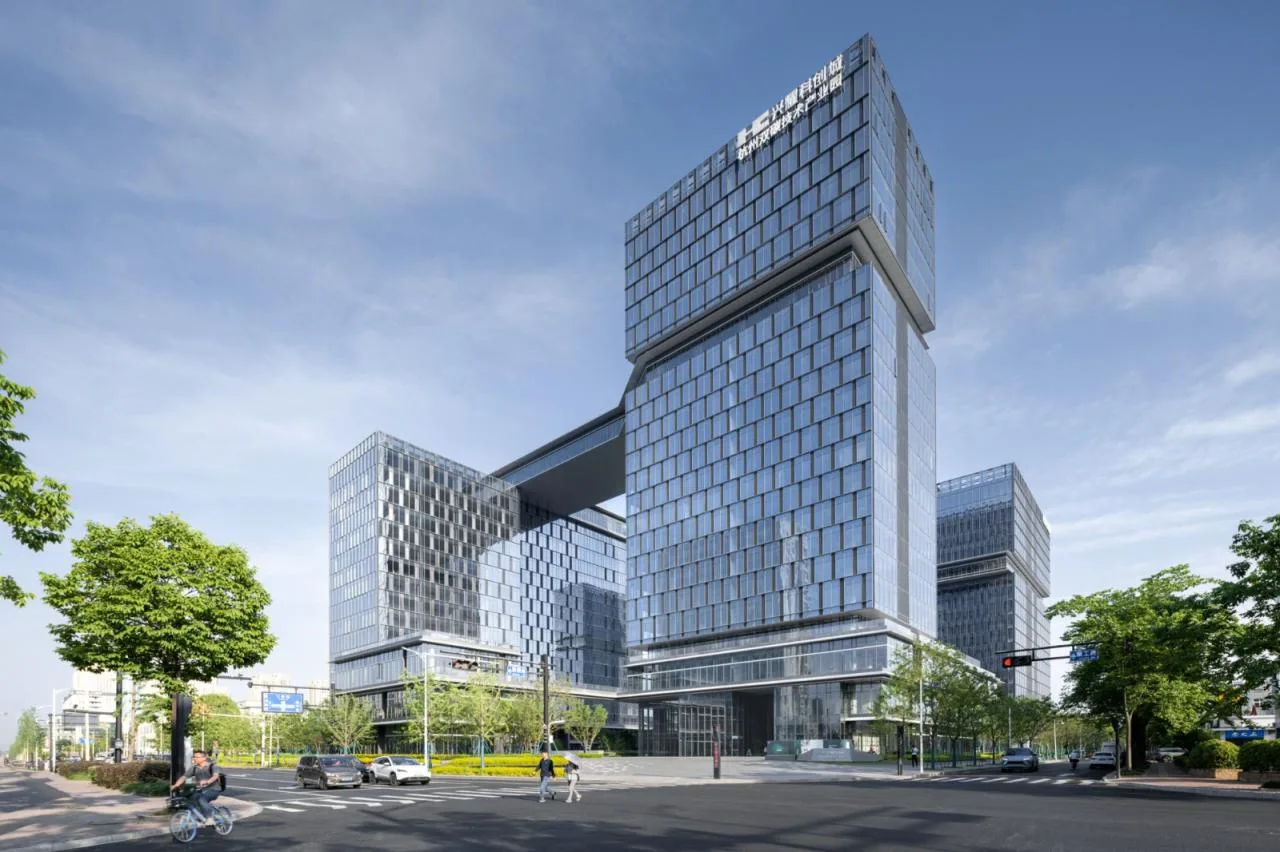
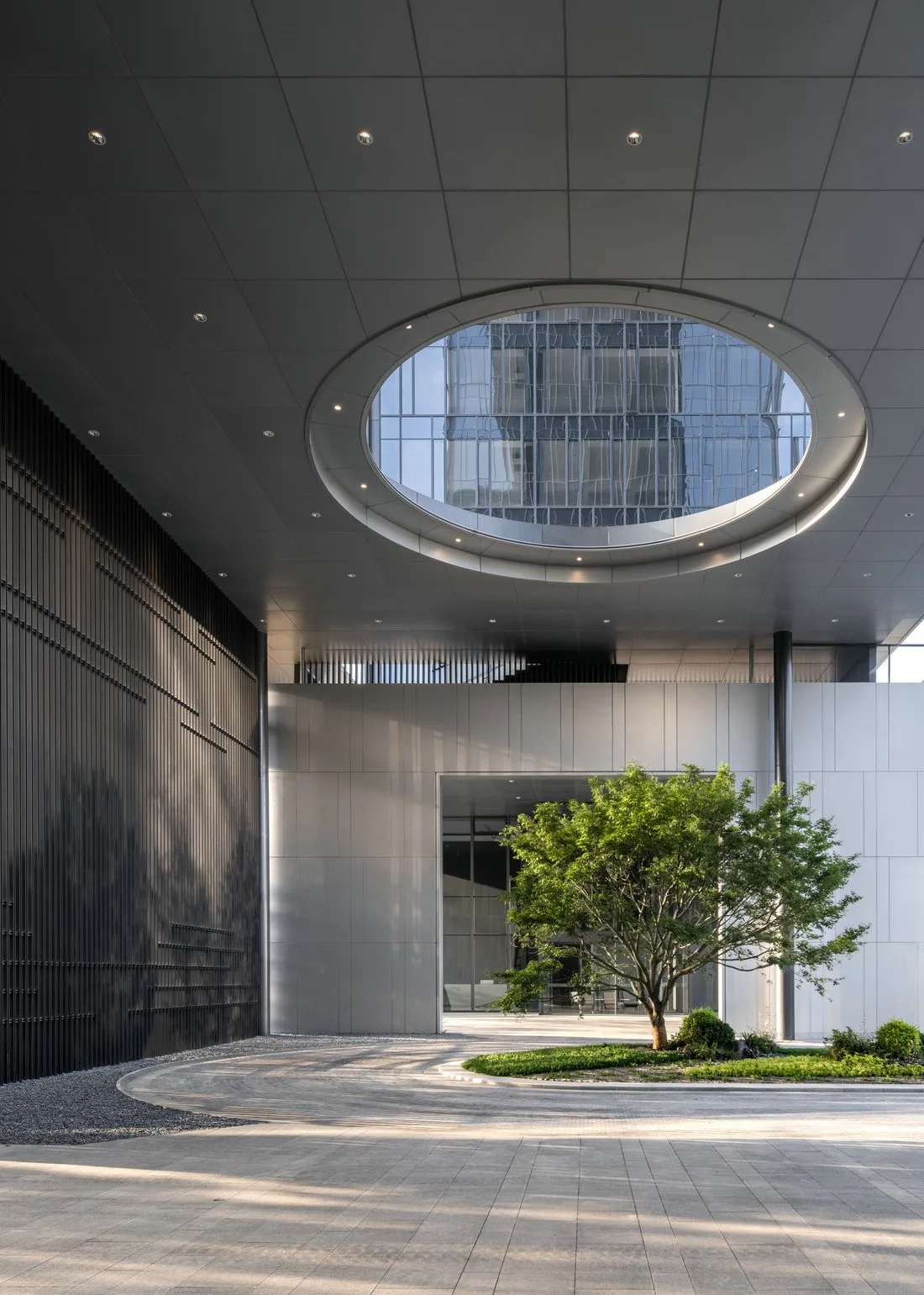
The open urban interface architecture is designed in harmony with the regional environment, showcasing characteristics of openness to the city. A city entrance square is planned on the north side of the site, aligned with the main pedestrian flow from the northwest, serving as the park’s prominent gateway. The south side of the site opens to existing urban strip water systems, vegetation, and landscaping, where a landscape garden is designed to create a visual corridor extending southward.
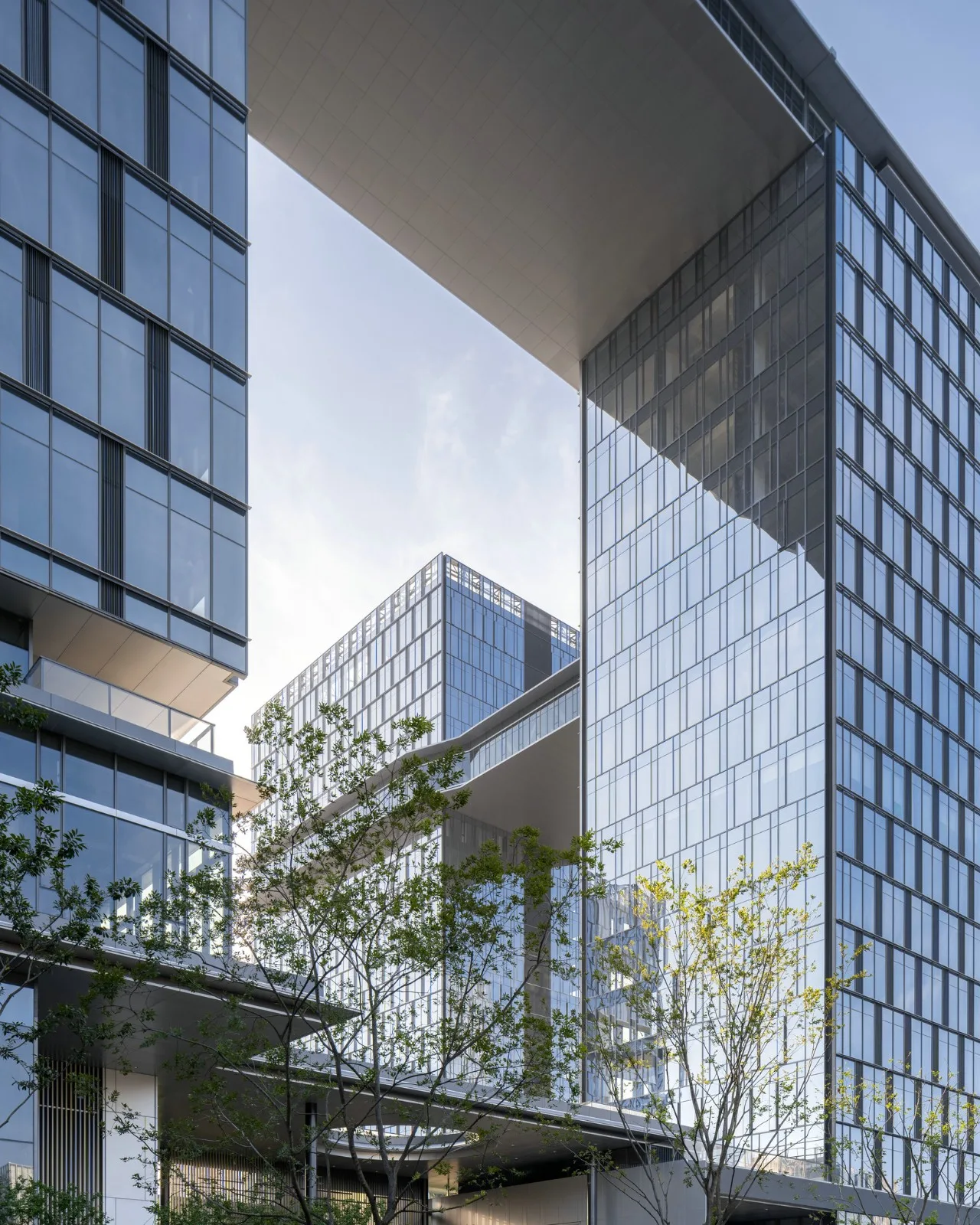
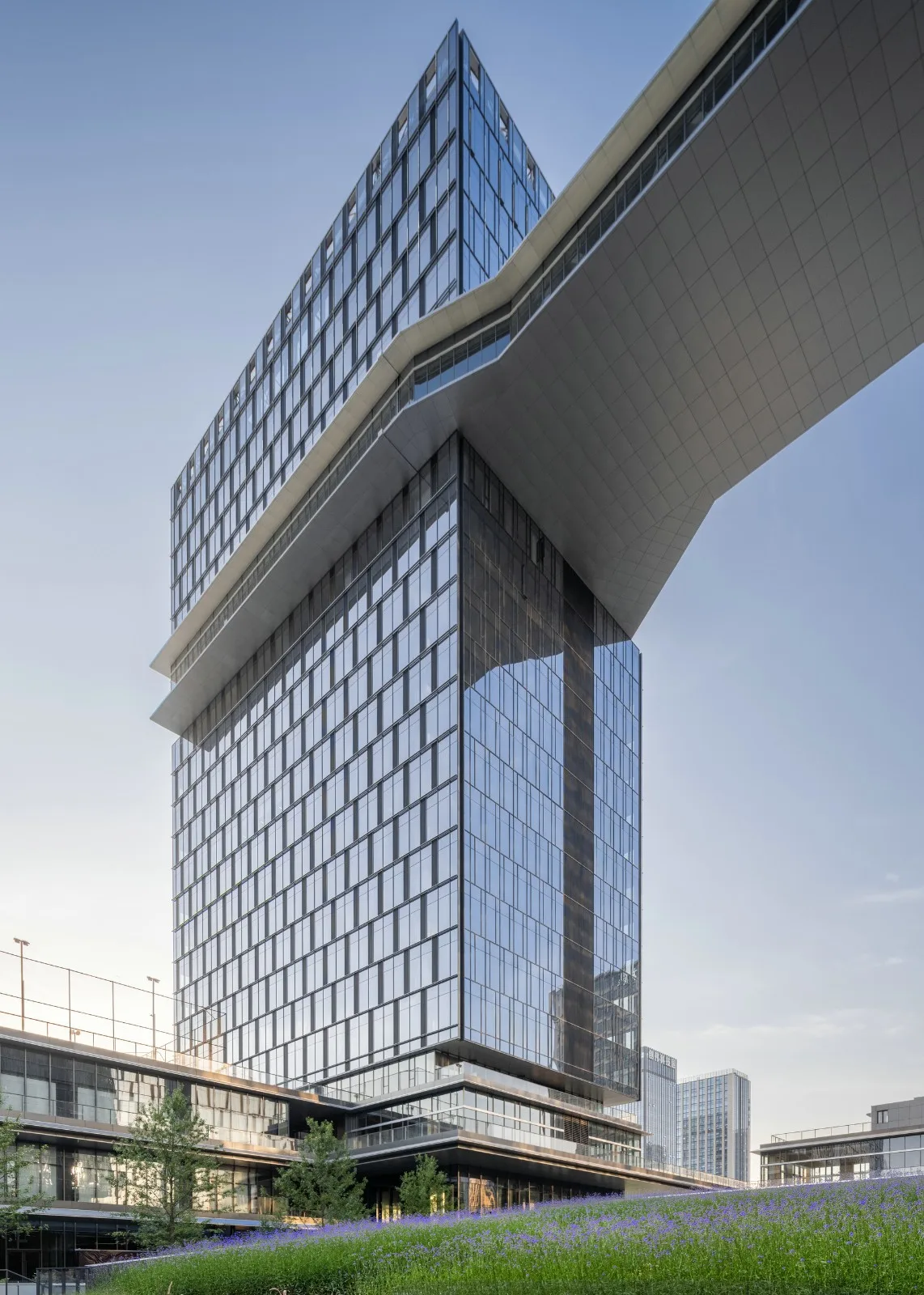
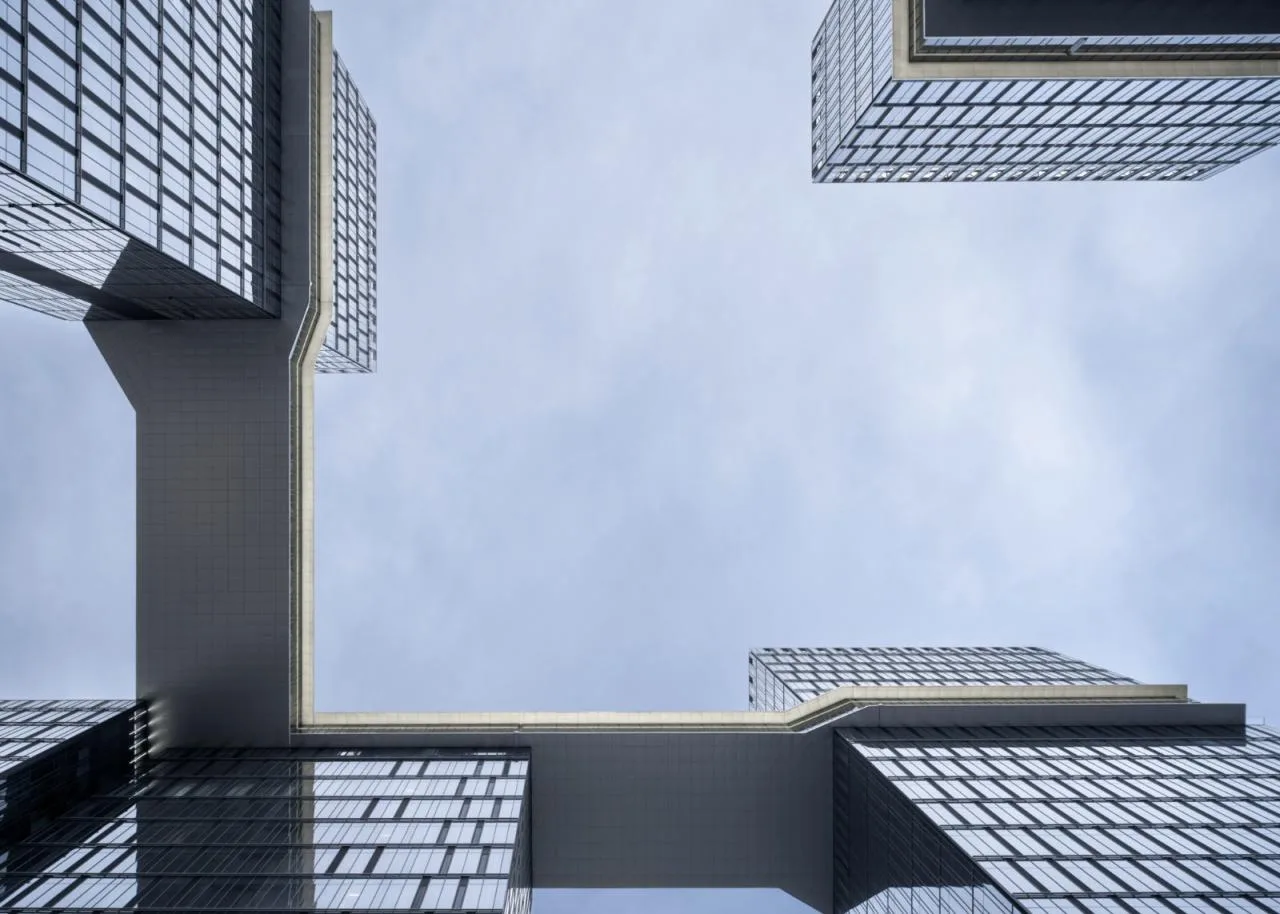
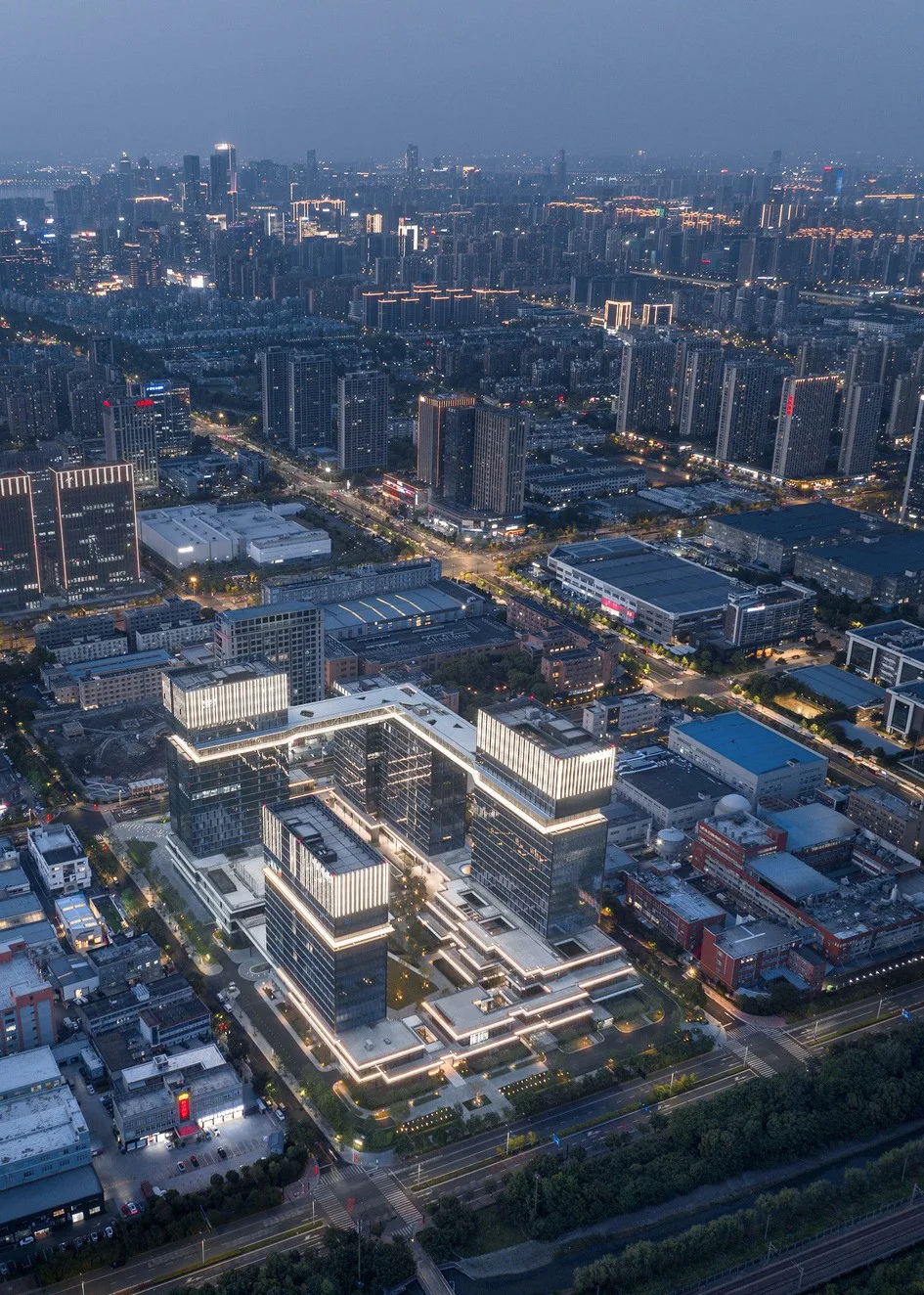
Preservation and renovation are key to the design, with the existing 17-story office building on the northeast retained and complemented by three new high-rise buildings arranged to form a cohesive enclosed layout. Elevated corridors connect these structures, cultivating a unified park atmosphere and establishing a “north dynamic, south static” spatial pattern. This approach balances large-scale enclosure and openness, crafting an impressive architectural image at the urban edge and providing expansive public spaces for city residents.
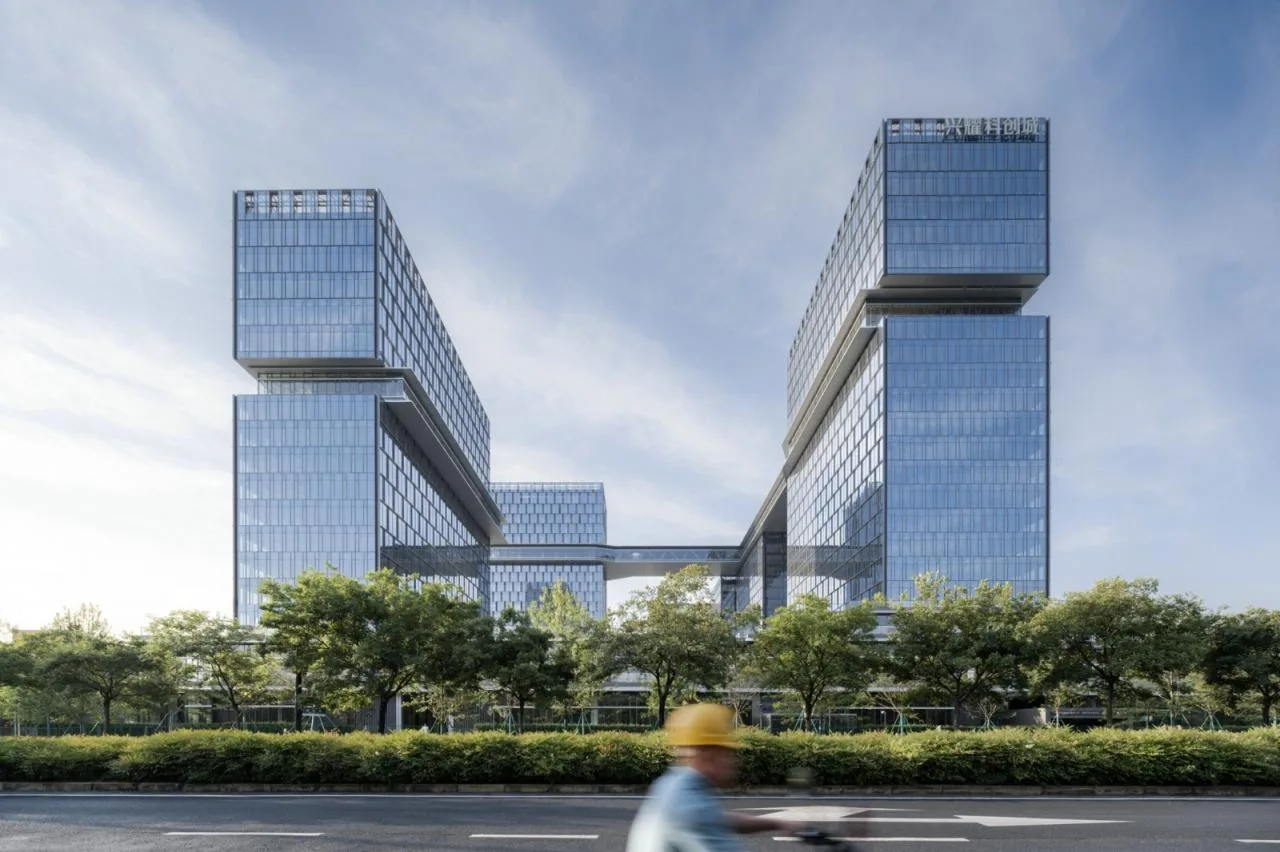
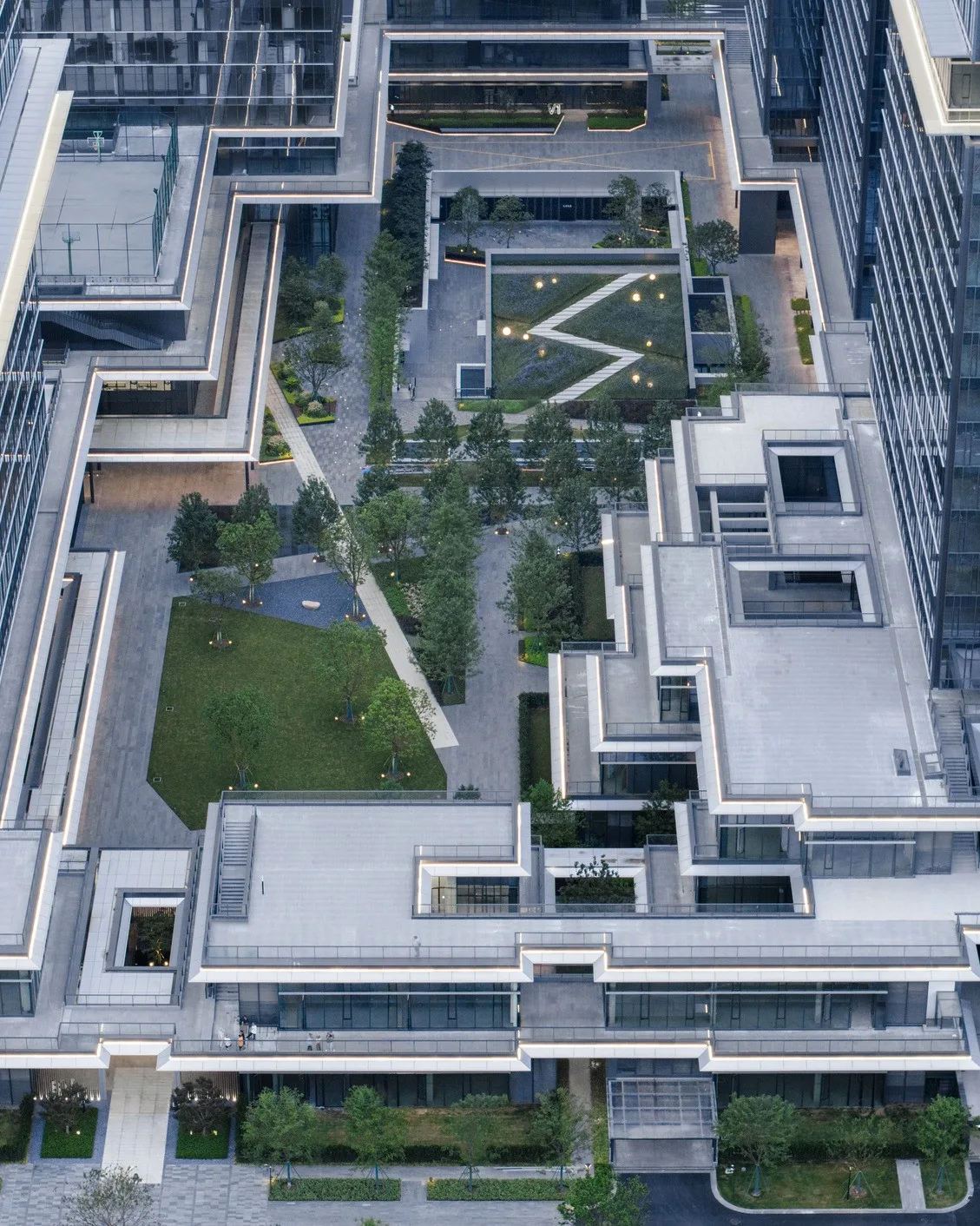
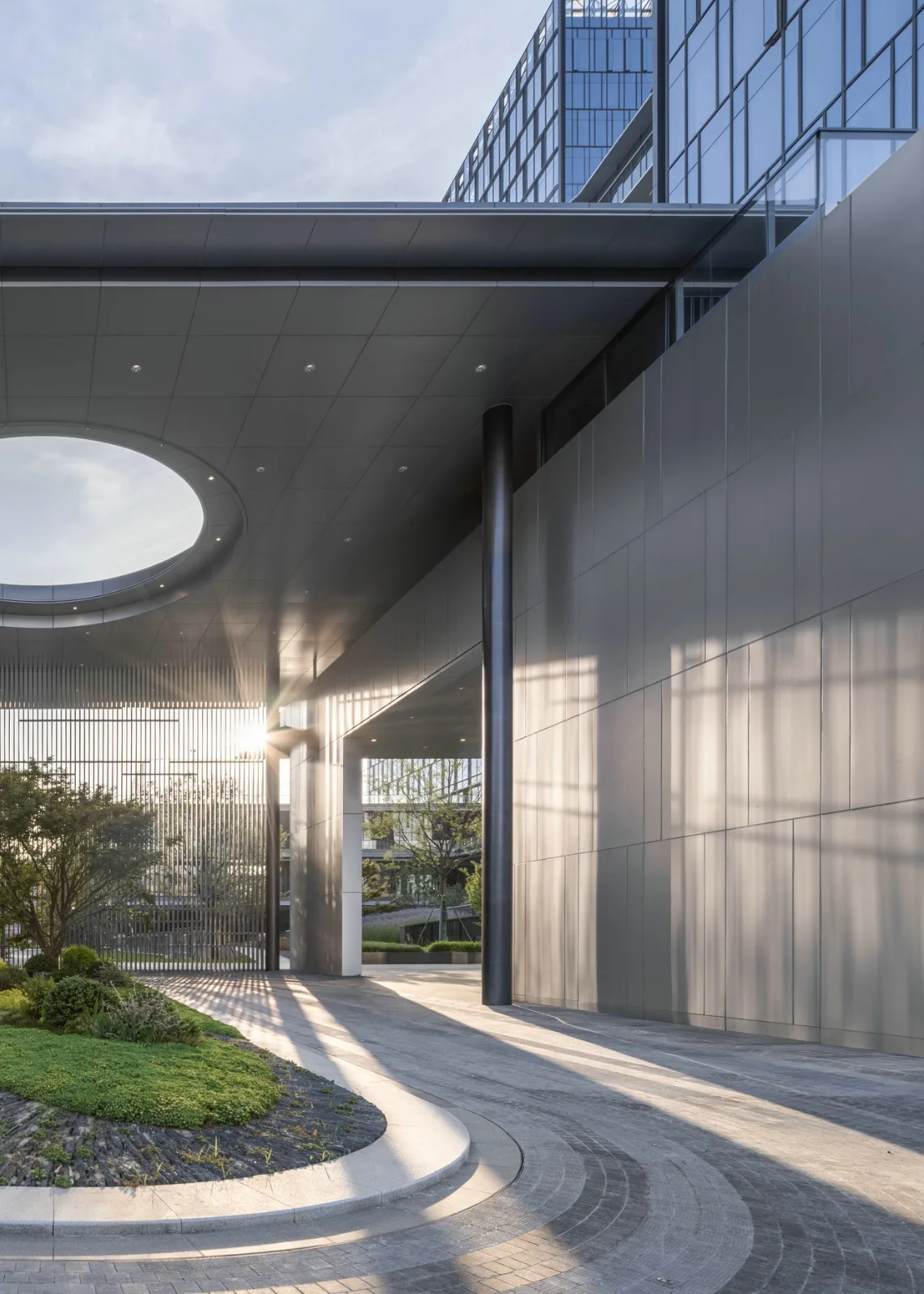
The transparent park space emphasizes pedestrian routes within buildings and across the site, accommodating diverse user behaviors while maintaining openness and visibility. Grey corridor spaces link various courtyards, while the podium retreats to form multiple aerial gardens that offer inviting areas for rest and leisure, creating a low-altitude, enclosed ecological walking loop. The podium extends the main building’s enclosed layout, with natural entrances and exits between individual structures.
The ground-level plaza integrates greenery at varying elevations and rooftop gardens, introducing site-level differences that soften the original terrain’s rigidity and provide pleasant rest areas for visitors. At the core, a sunken courtyard landscape forms a cohesive social hub. Flexible outdoor green areas connect buildings and shared spaces, creating dynamic visual experiences through staggered landscaping and window views, effectively blurring the line between indoor and outdoor environments.
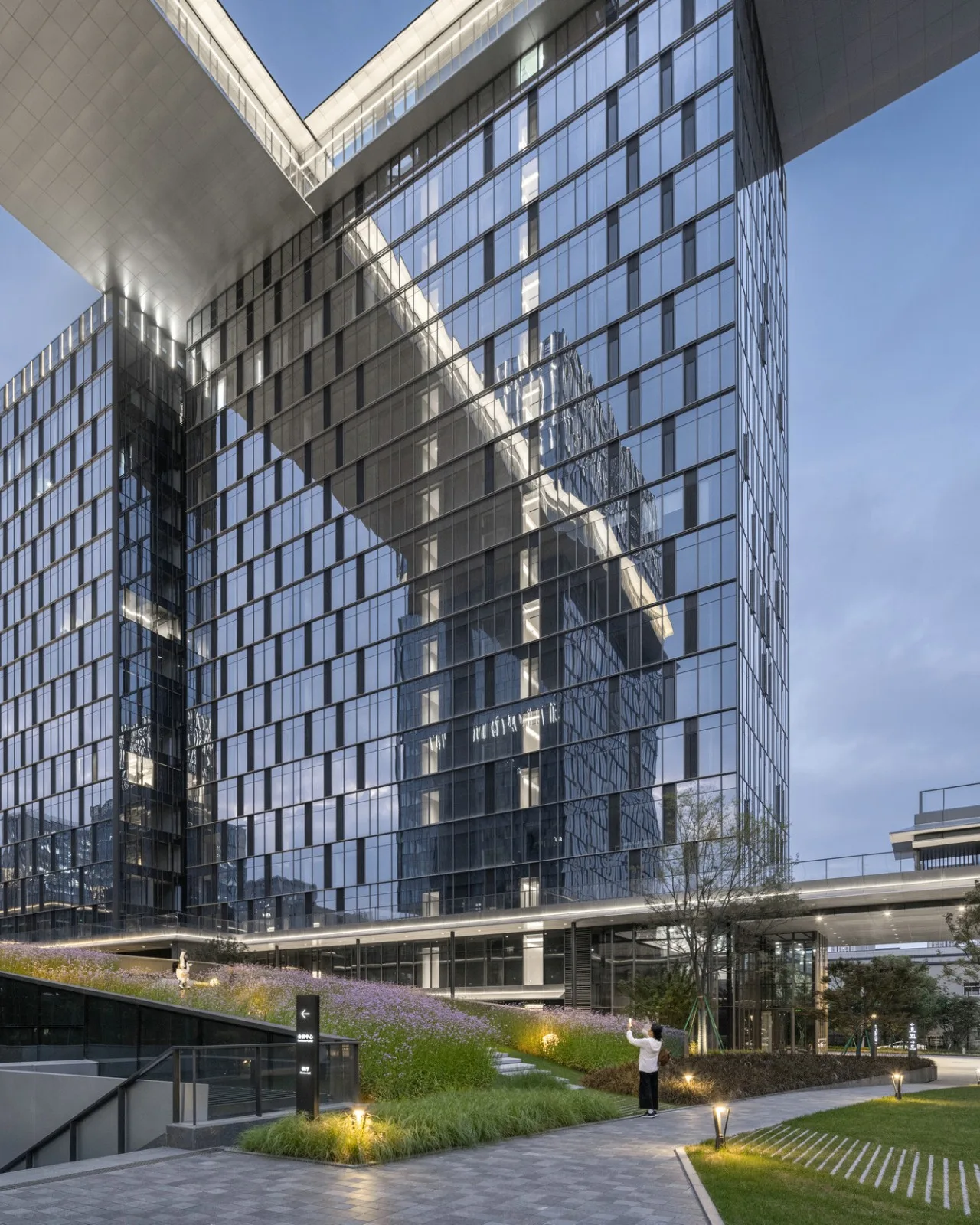
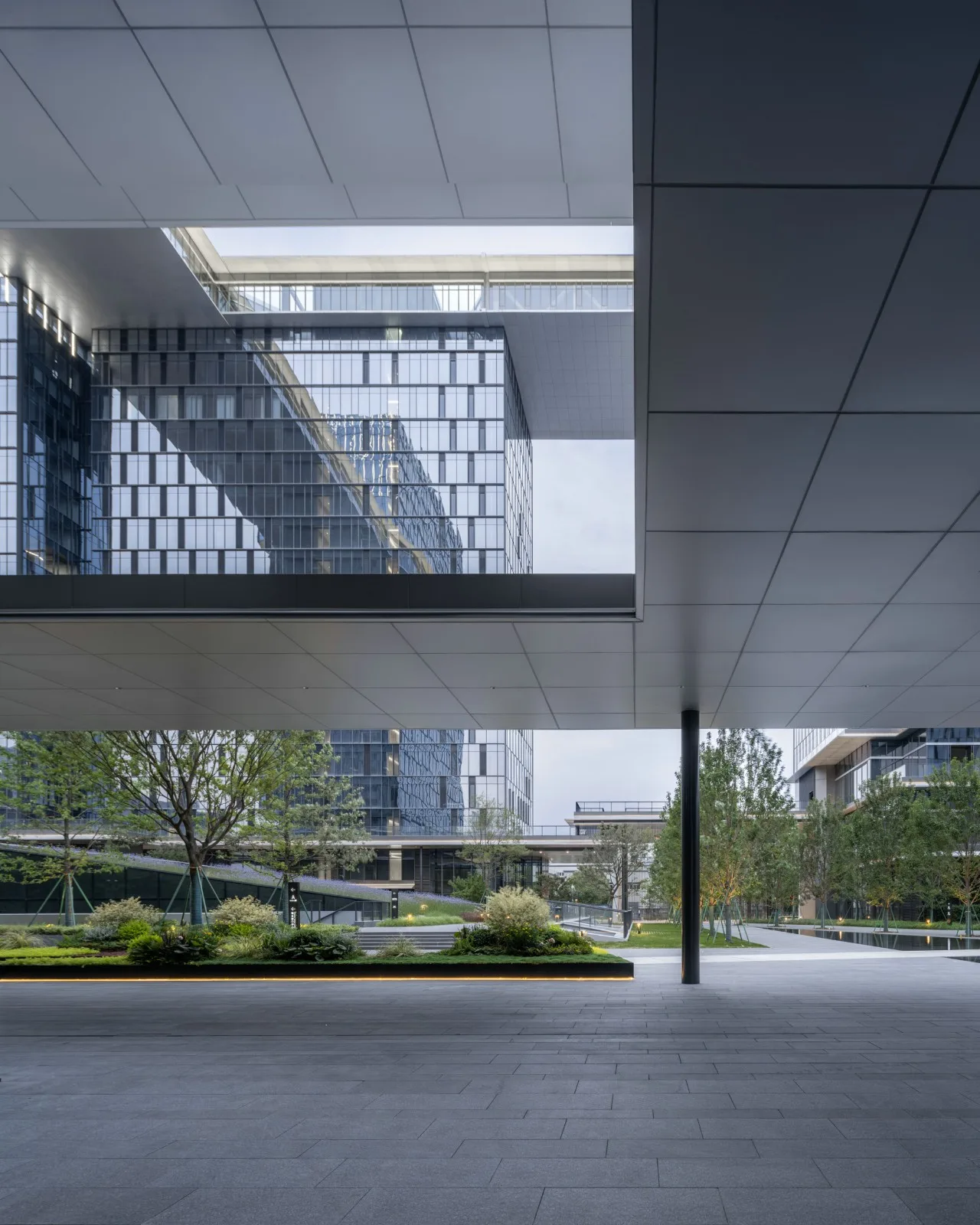
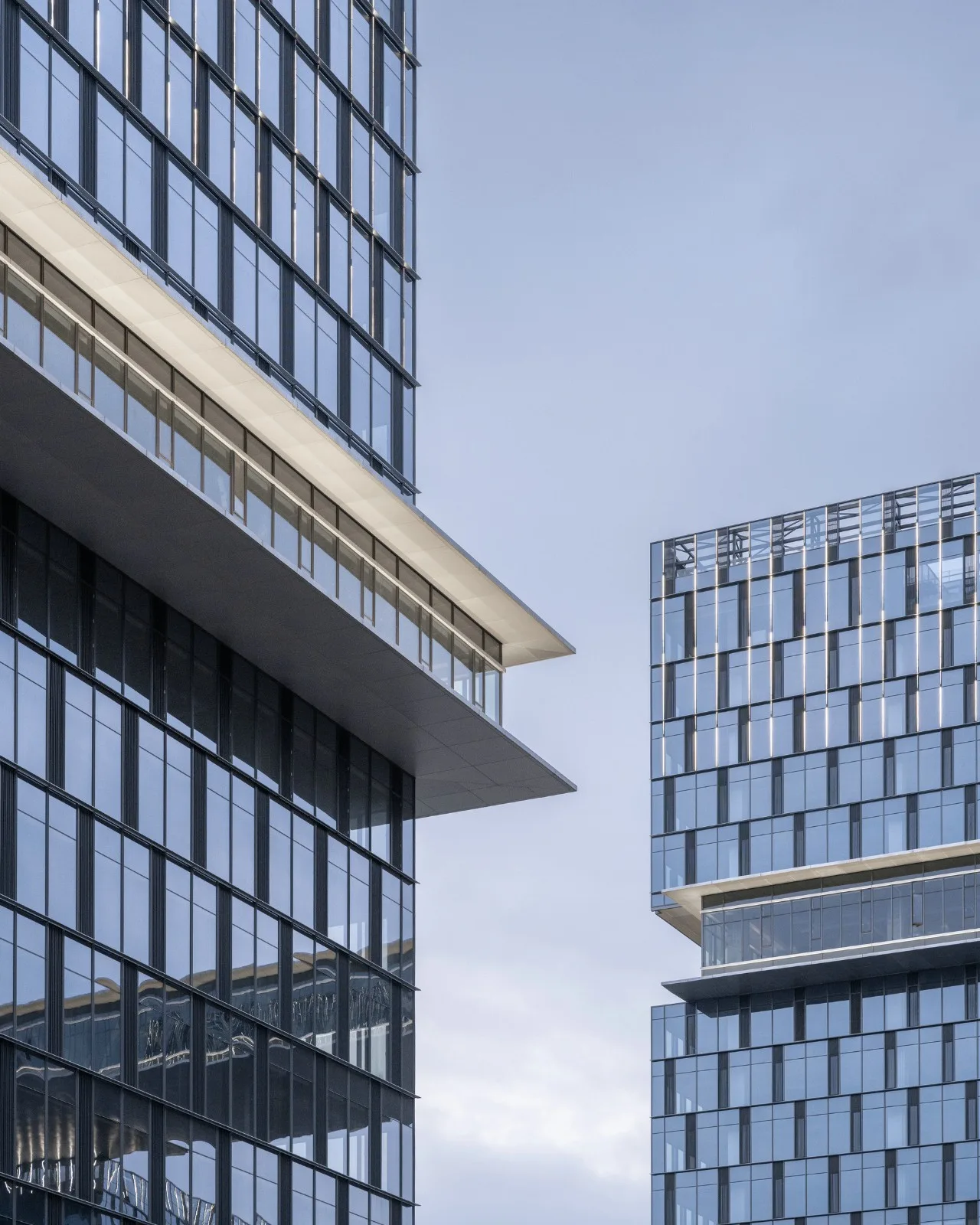
The design of the multi-tower connected structure offers users freedom and flexibility in high-rise office spaces. An L-shaped elevated corridor links the three main buildings, forming a complex that provides panoramic views of the southern mountains and ample recreational areas. This structure enhances the park’s overall cohesion and public space quality but presents challenges to the load-bearing capacity of the original north building.
To address this, the design minimizes structural reinforcements by adopting advanced solutions. Foundations are strengthened with additional anchor rod static pressure piles and drilled cast-in-place piles. The upper structure is reinforced using a combination of section enlargement, external steel bracing, and carbon fiber composite material wrapping. These measures ensure the existing building meets seismic performance standards after renovation.
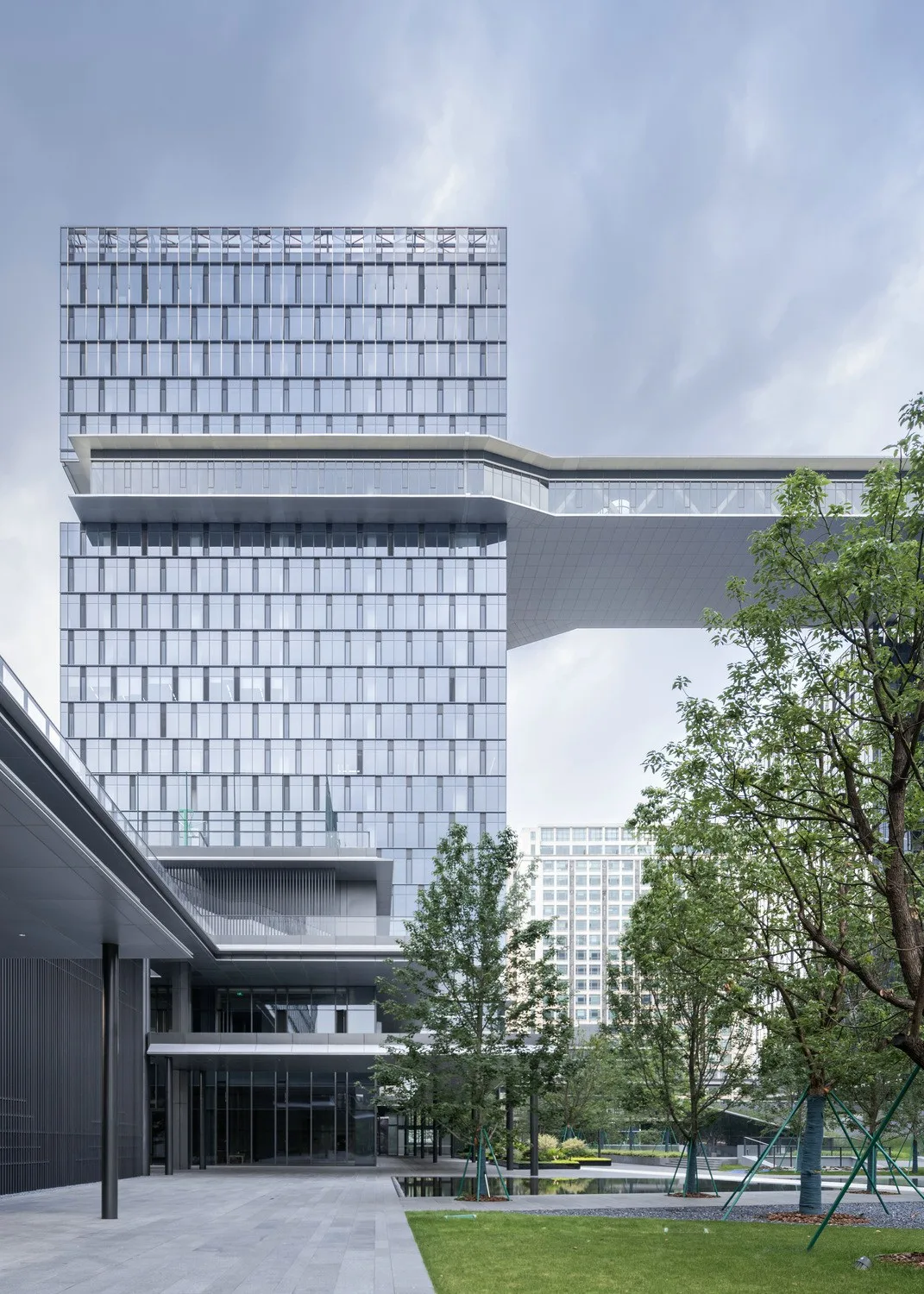
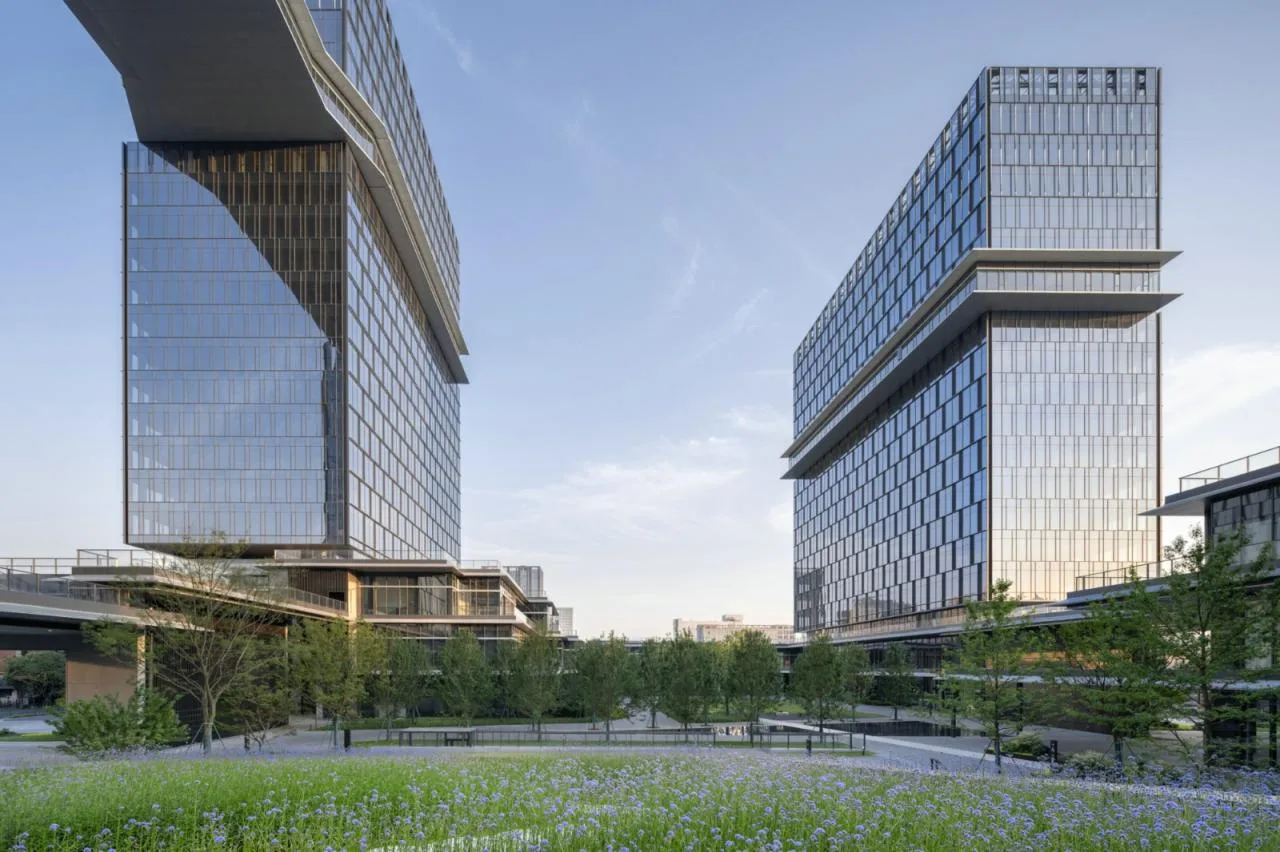
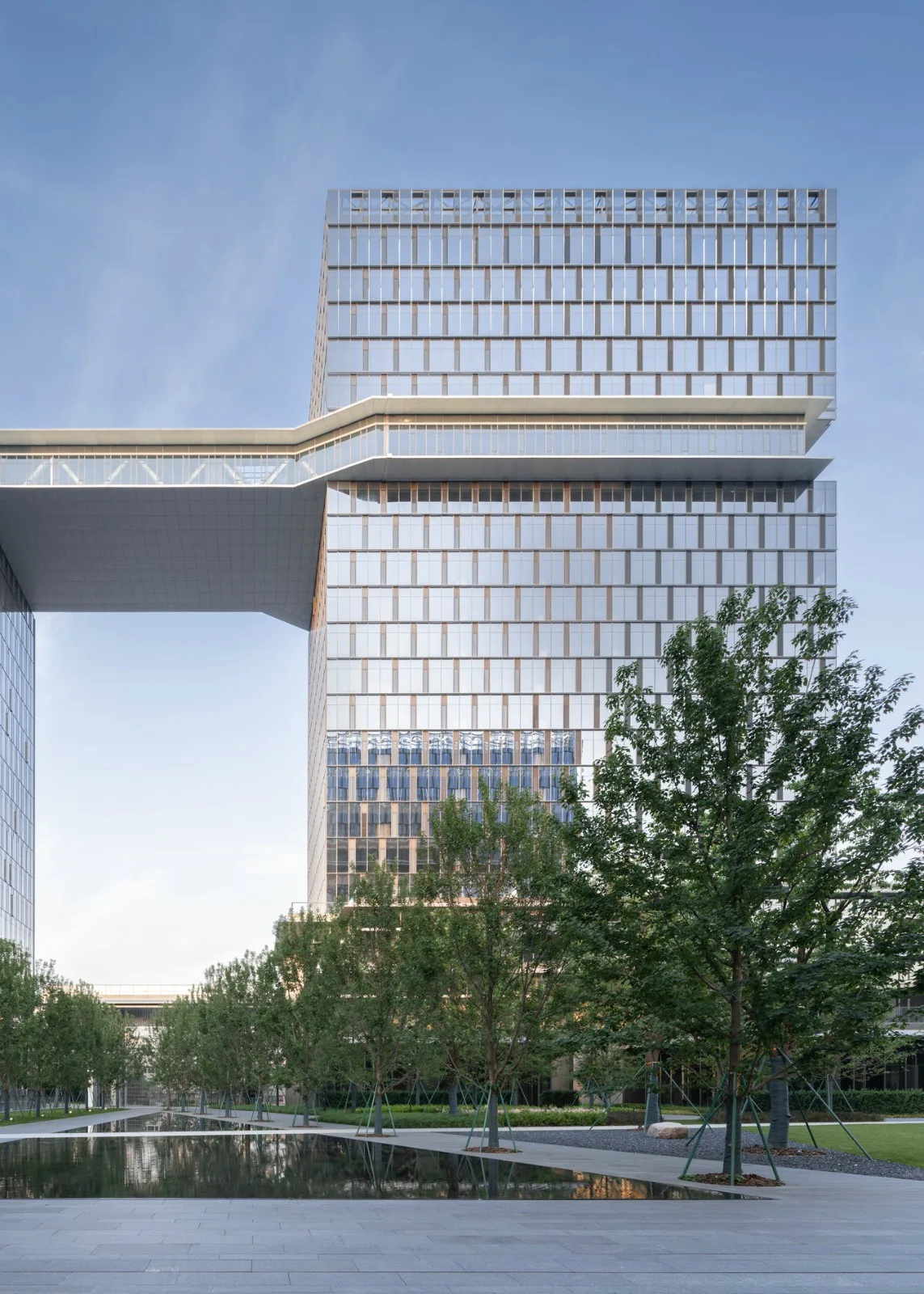
The complex programmatic layout responds to diverse office needs through flexible building volumes and spatial arrangements. Smaller, independent office spaces are located within the lower podium, where overlapping and intersecting blocks create connections to courtyards and terraces. Above the podium, larger independent office spaces are linked via elevated corridors, accommodating medium to large-scale office functions.
Public spaces are designed with flexibility and variation, allowing natural elements such as sunlight, air, and landscaping to penetrate the interior, enhancing transparency and comfort. Interiors feature welcoming lobbies, corridors with framed views, and shared areas on each standard floor for employees to interact, relax, and enjoy the scenery. Extensive grey spaces blur the boundary between indoor and outdoor, fostering closer spatial connections and facilitating functional adaptability and efficient organization.
The entrance to Xingyao Science and Technology Innovation City fills a gap in the region’s urban public space, delivering a pleasant office environment and revitalizing the urban interface.
Project Drawings
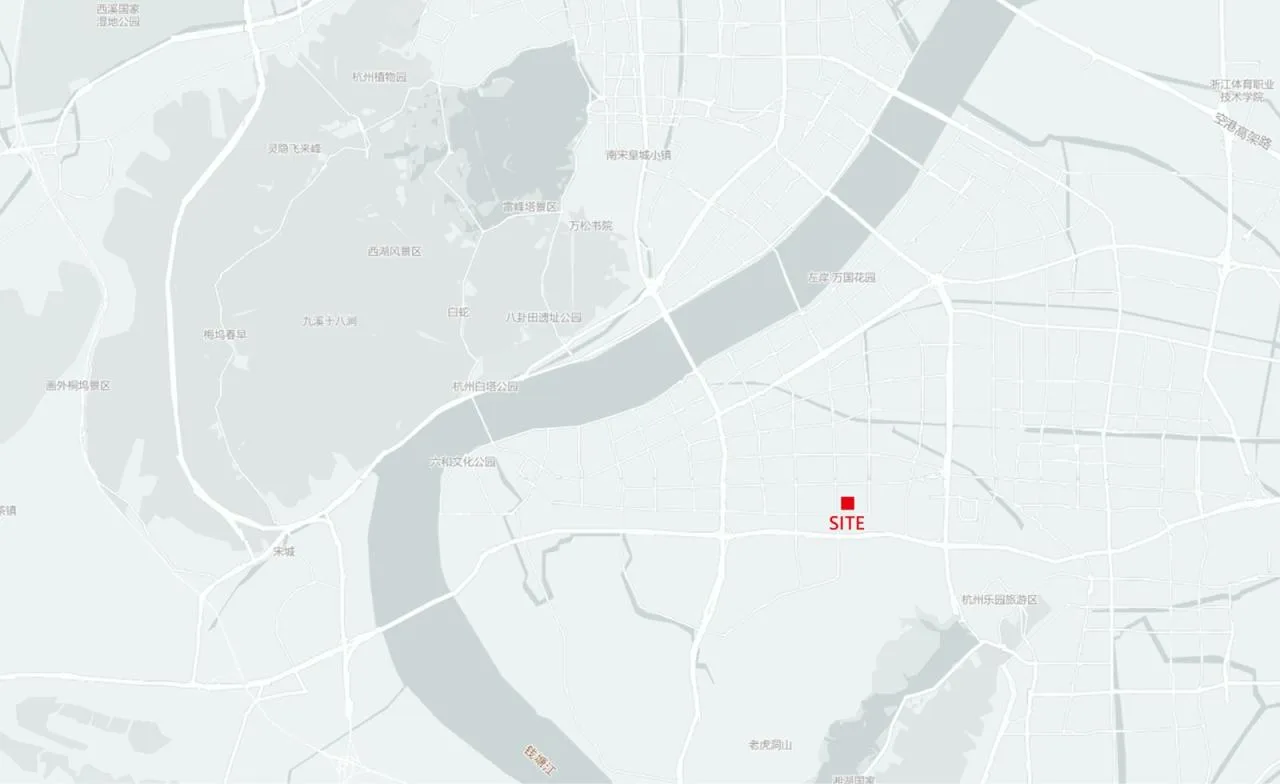
△ Location Diagram
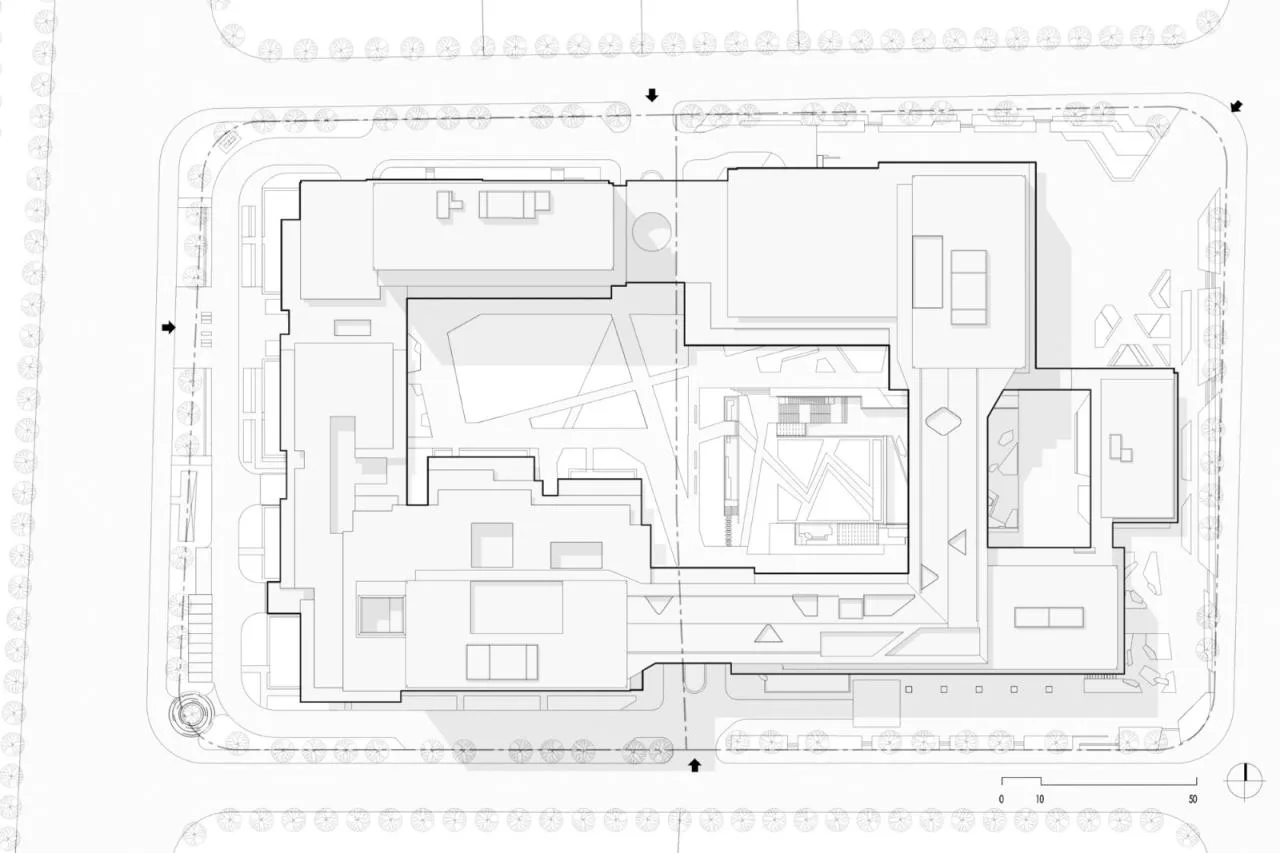
△ General Layout Plan
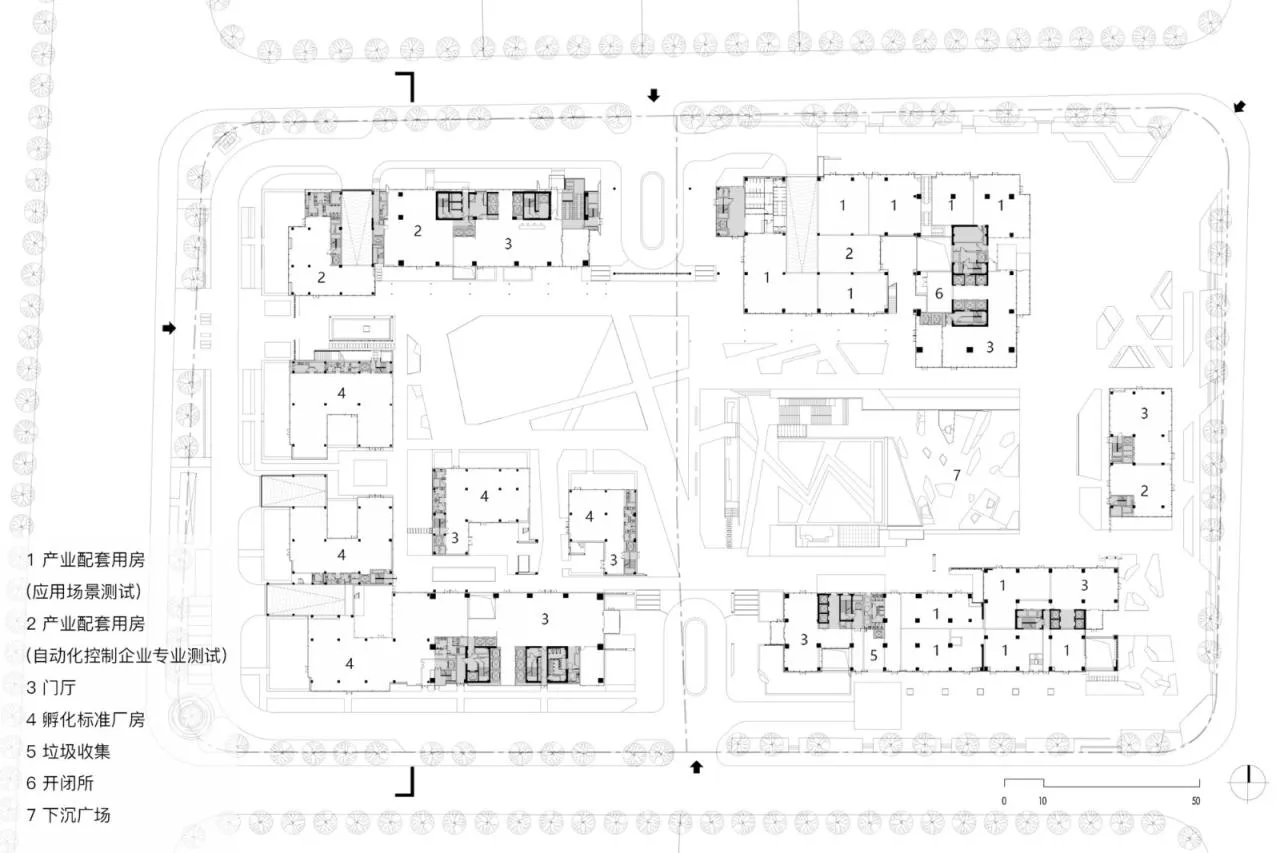
△ First Floor Plan
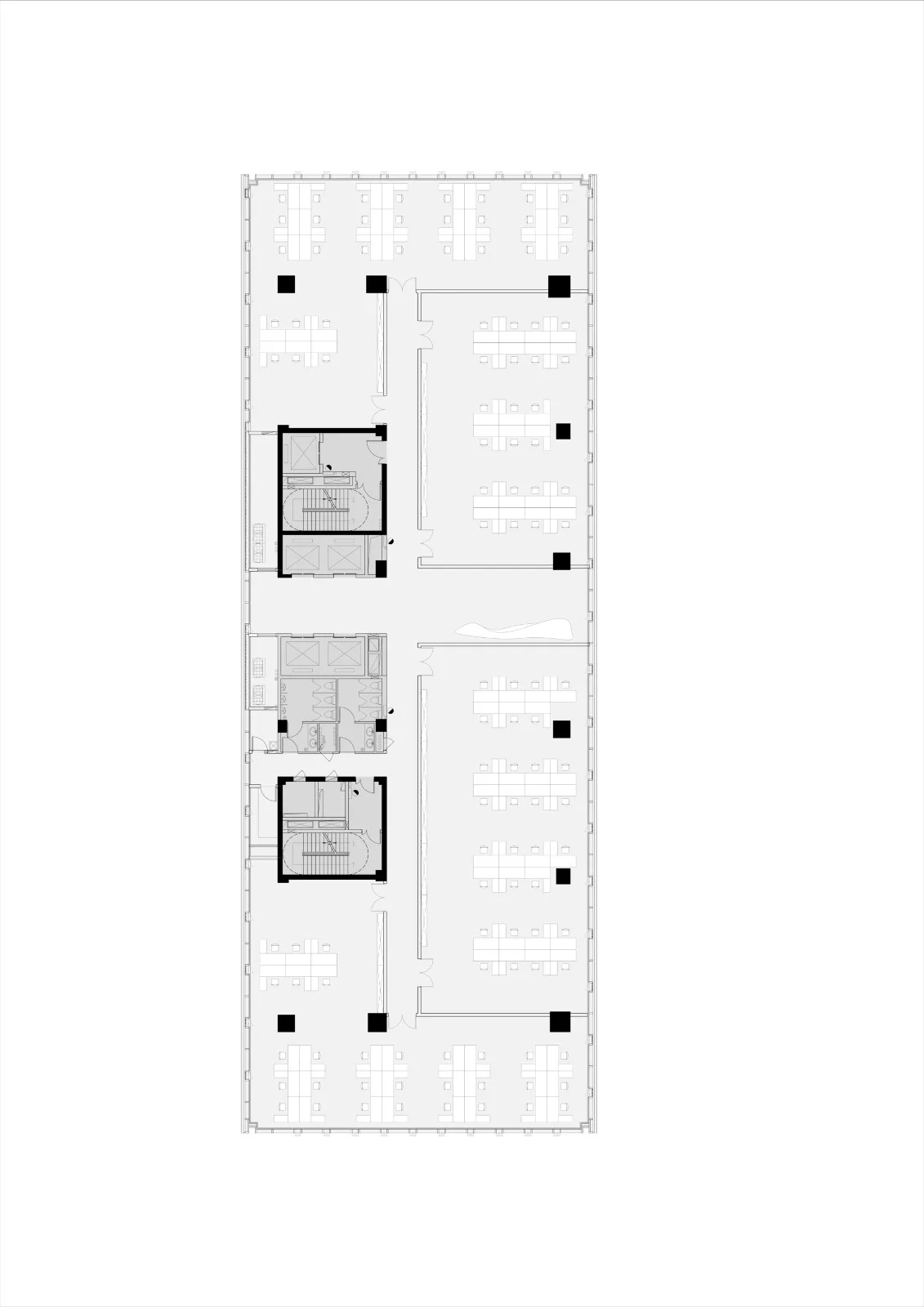
△ Plan View
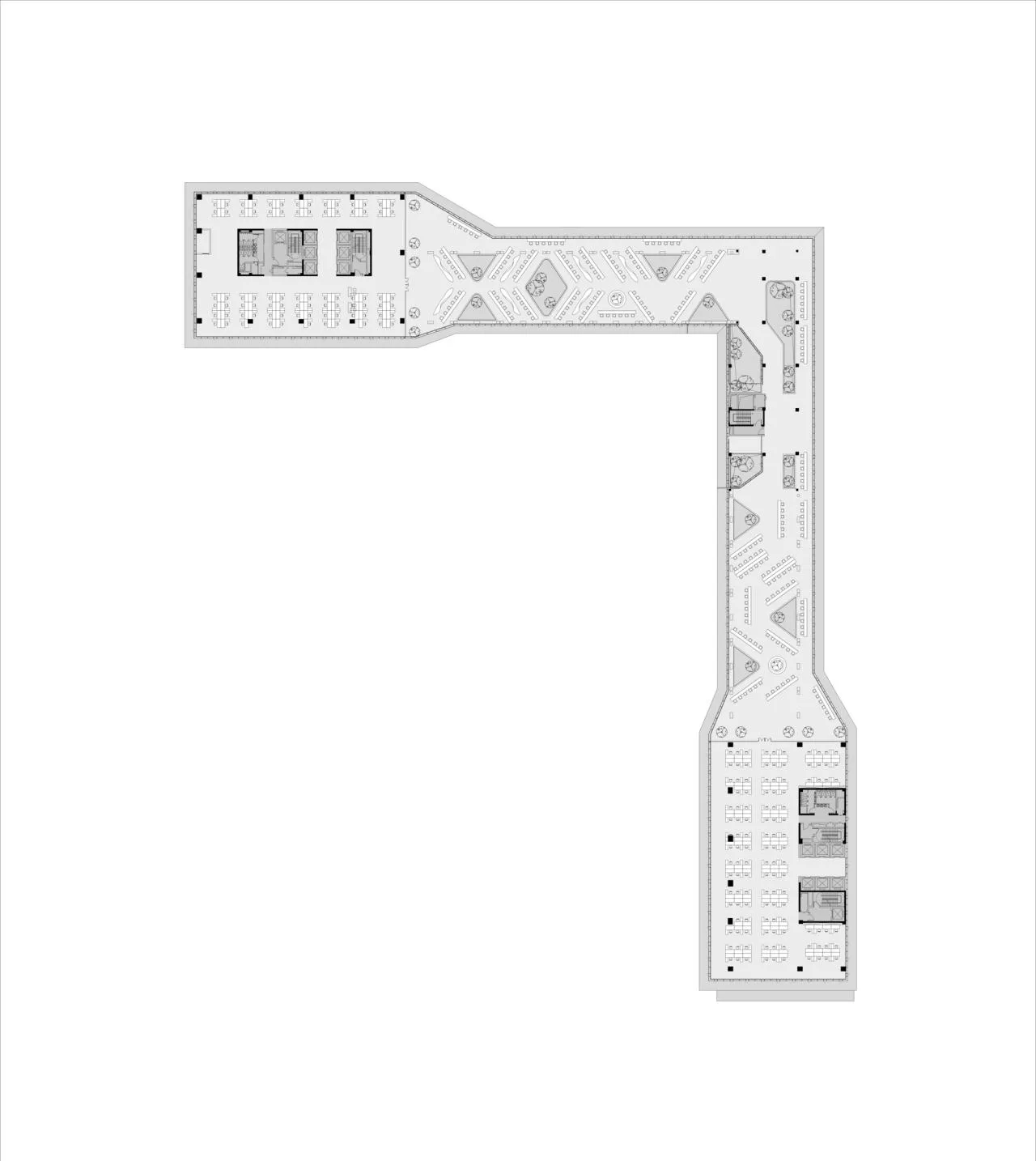
△ Plan View
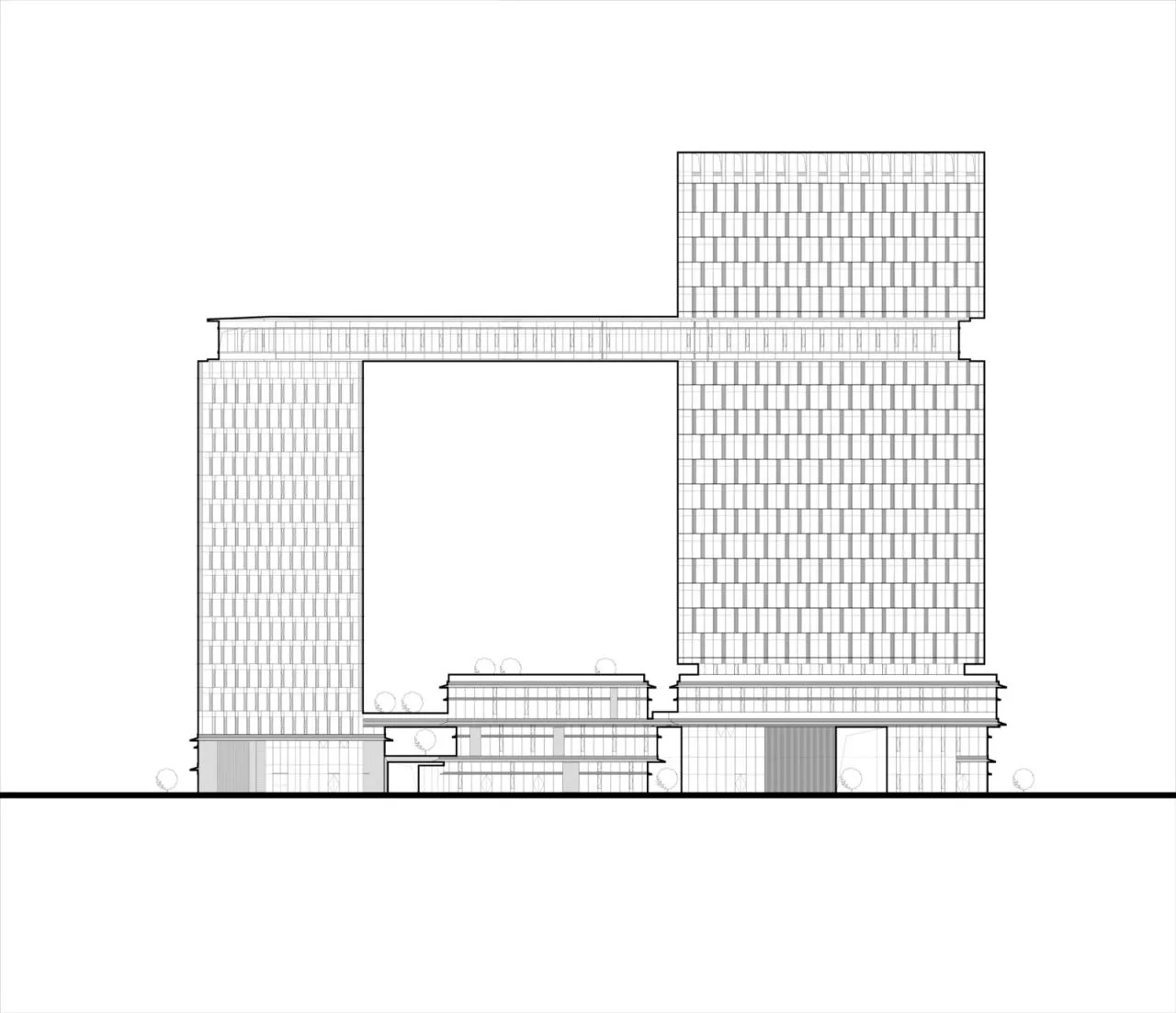
△ Elevation Drawing
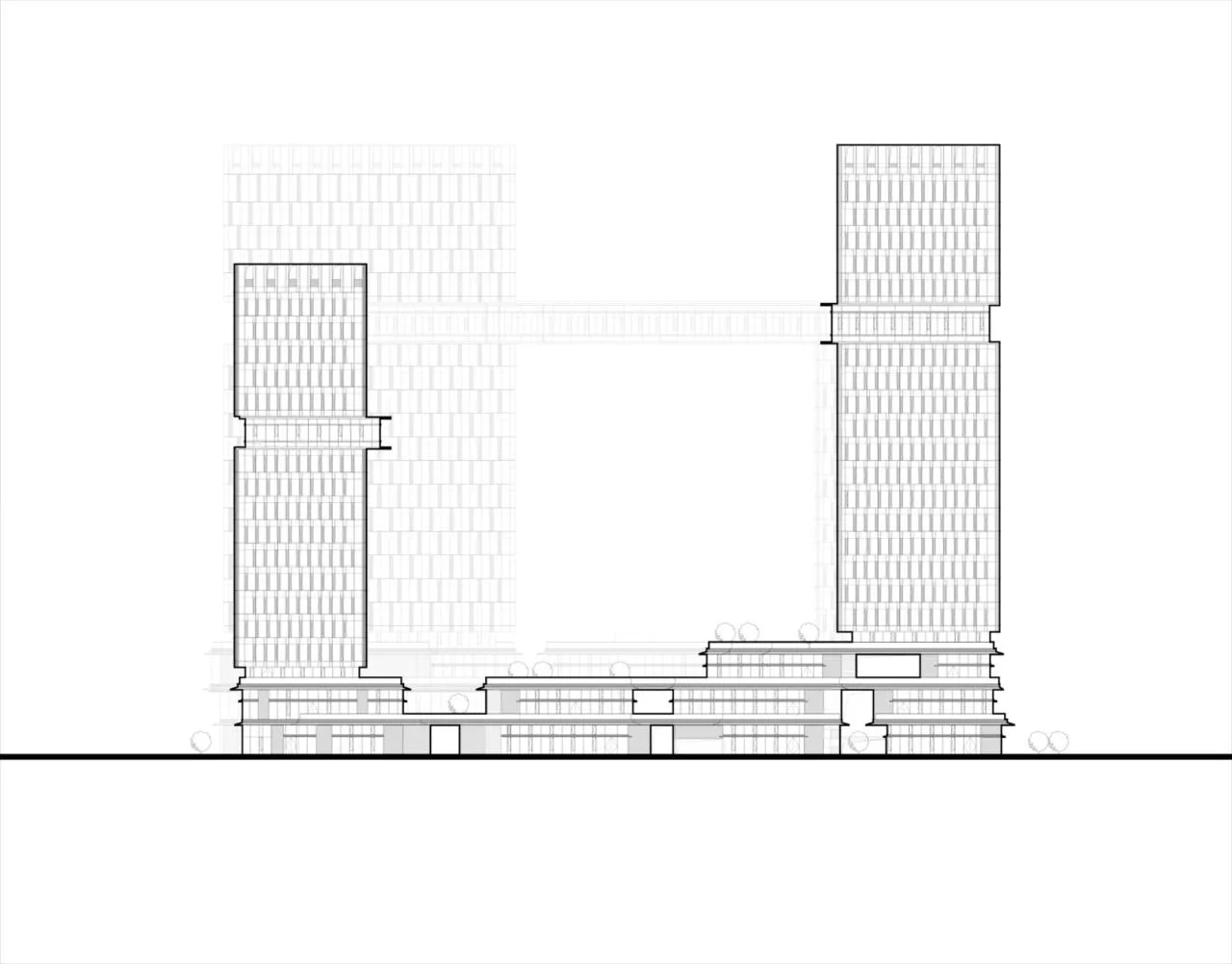
△ Elevation Drawing
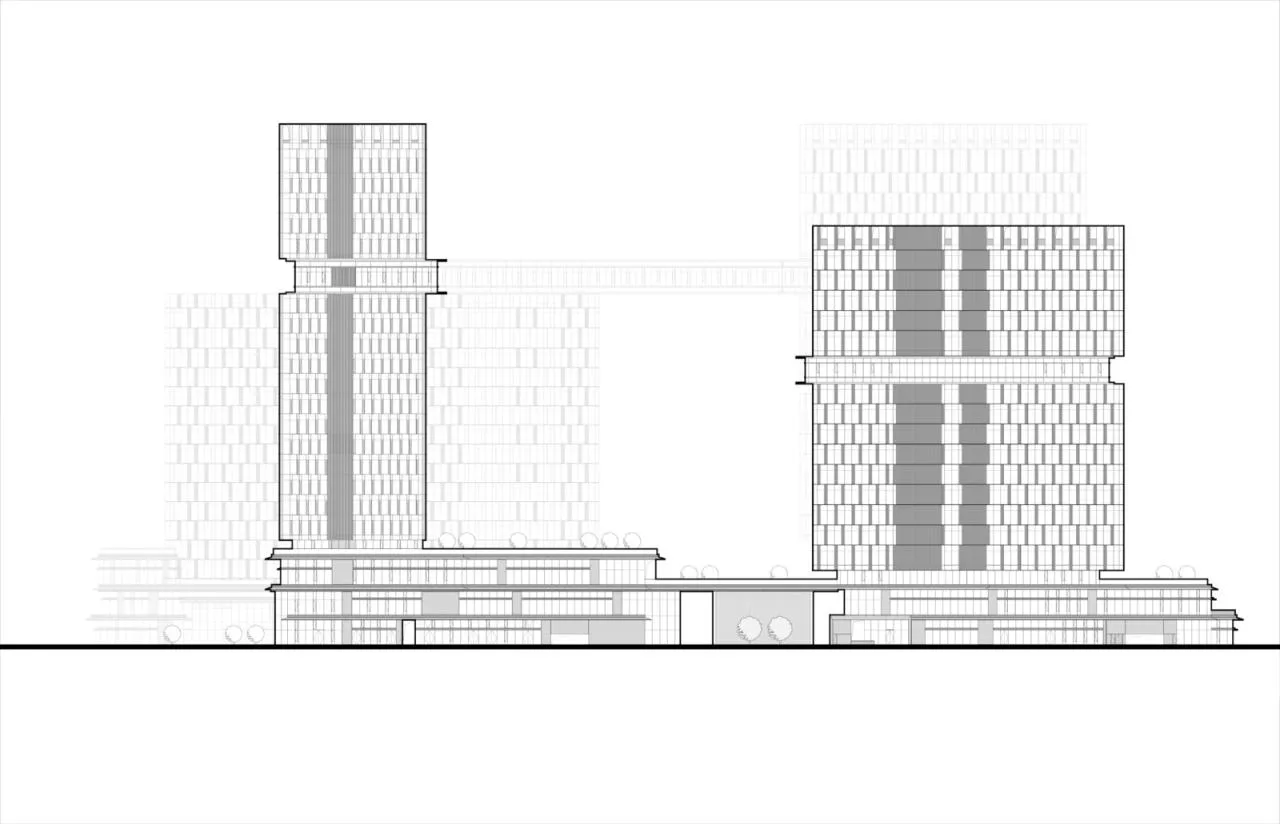
△ Elevation Drawing
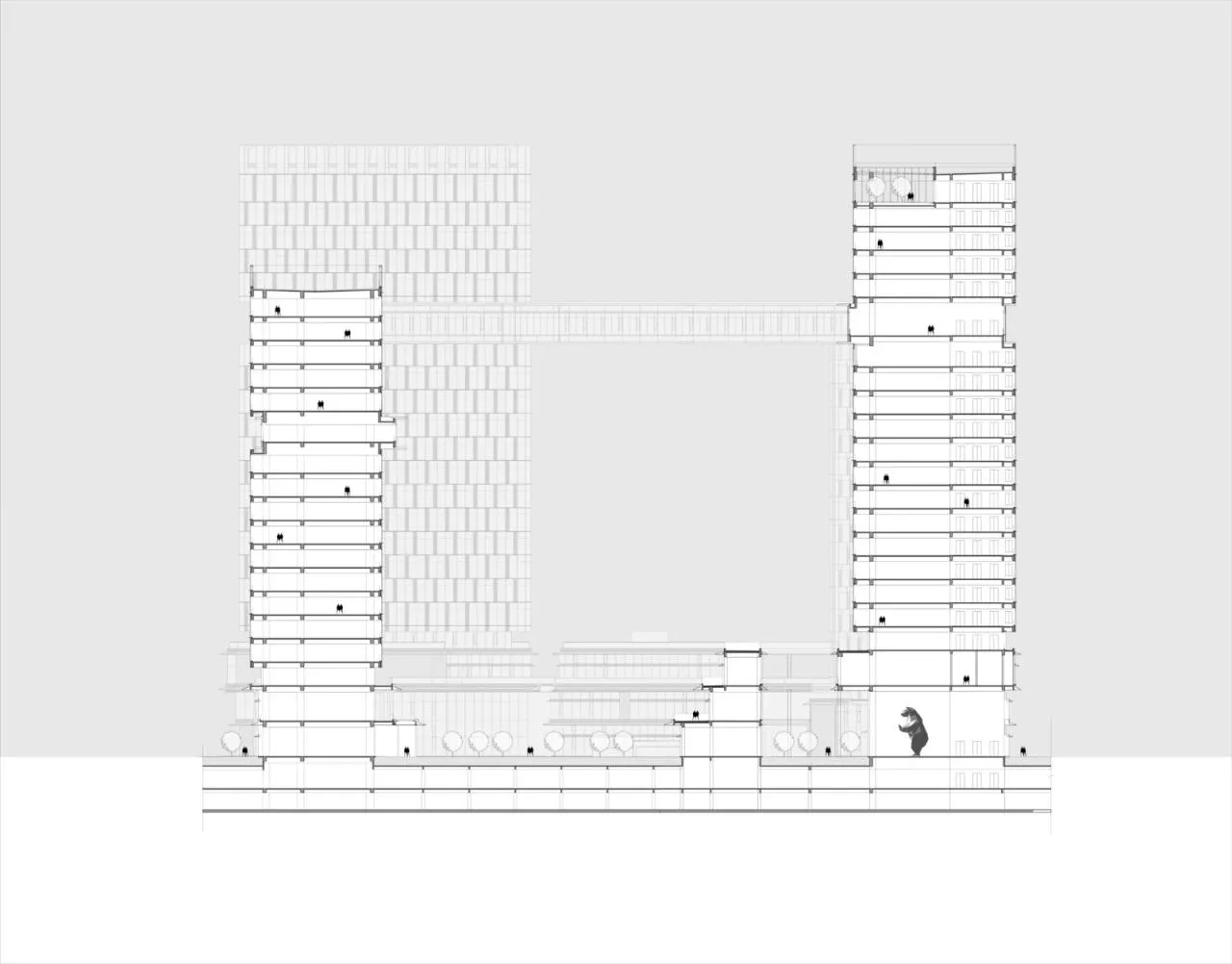
△ Section Diagram
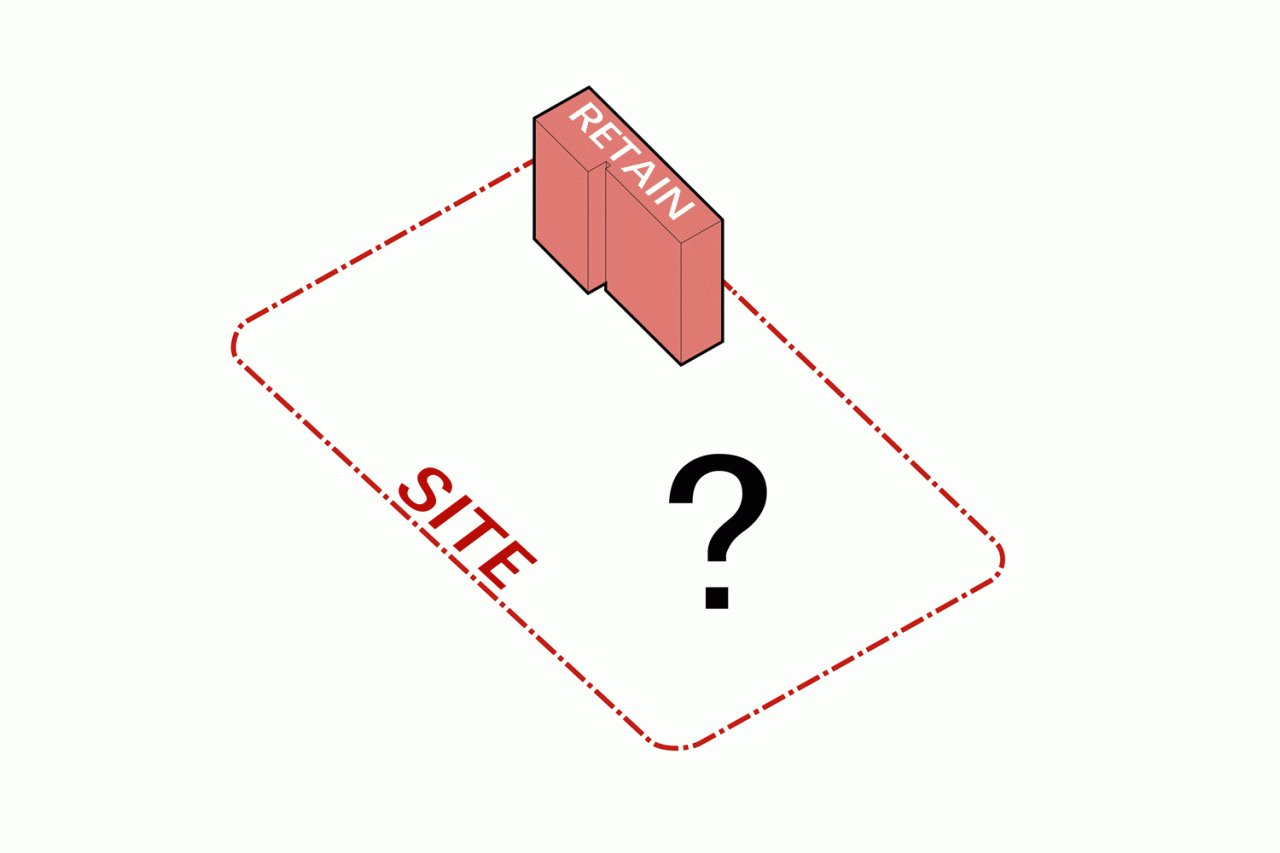
△ Analysis Chart
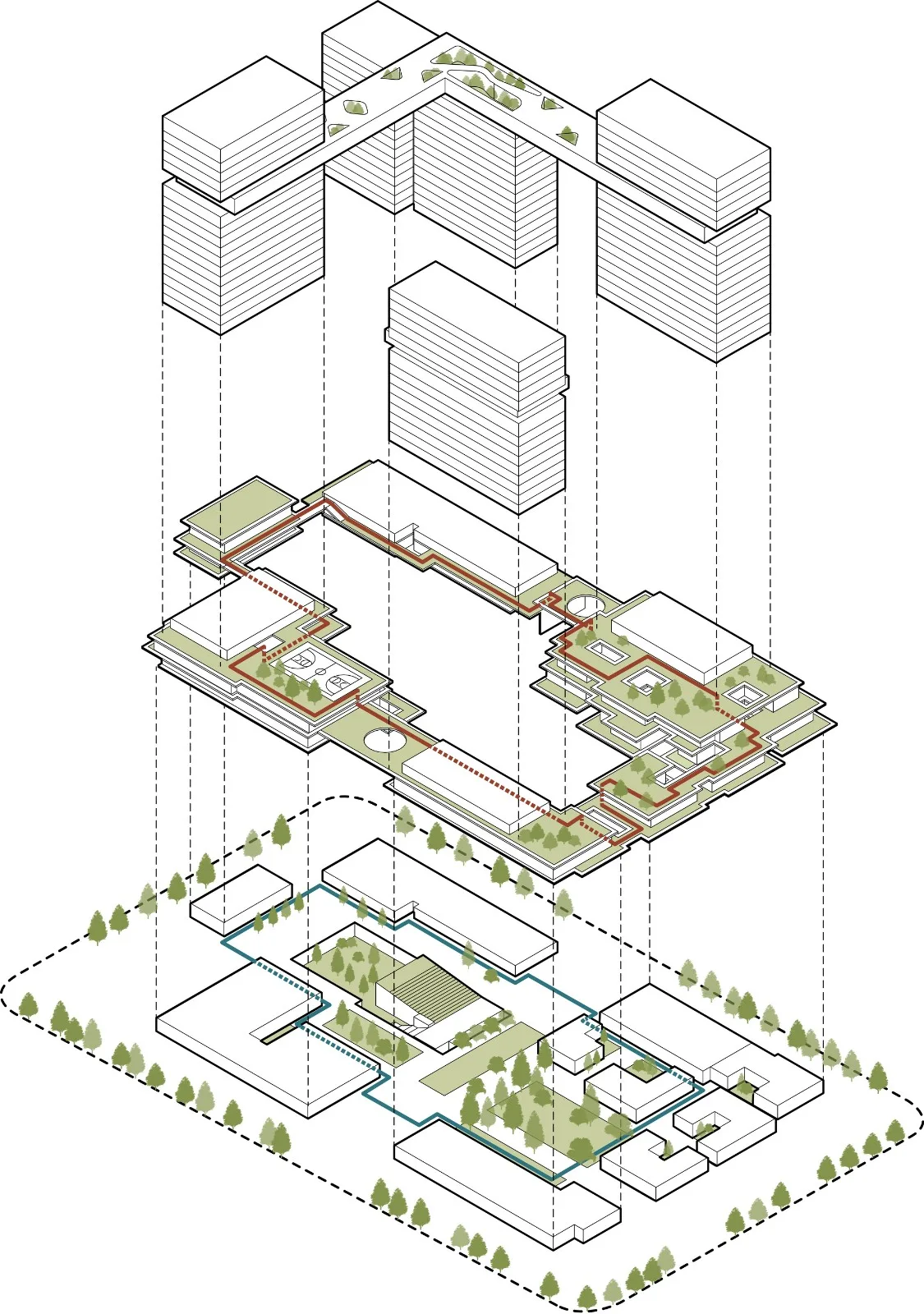
△ Explosion Diagram
Project Information
- Architect: Gad Jiedi Design
- Area: 189,223 m²
- Project Year: 2023
- Photographer: CreatAR Images
- Manufacturer: Qibin Glass, Xingfa Aluminum
- Structural Design: Gad Jiedi Design
- Landscape Design: Gad Jiedi Design
- Interior Design: Matrix Zongheng Design Co., Ltd
- Principal: Xingyao Holdings Group
- Location: Hangzhou












Must log in before commenting!
Sign Up