
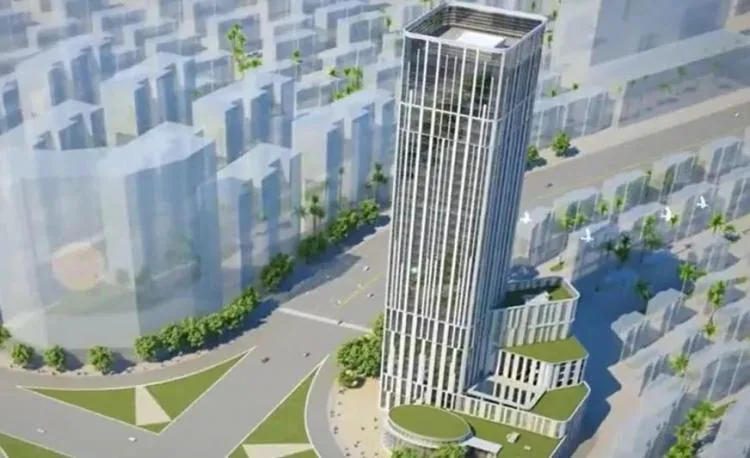
The Zhongding International Business Building is a remarkable structure featuring three basement levels and 37 floors above ground, topped with a 12-story podium that gradually rises. Covering an area of 100,000 square meters and standing 155.7 meters tall, it ranks among the tallest skyscrapers in Pingxiang.
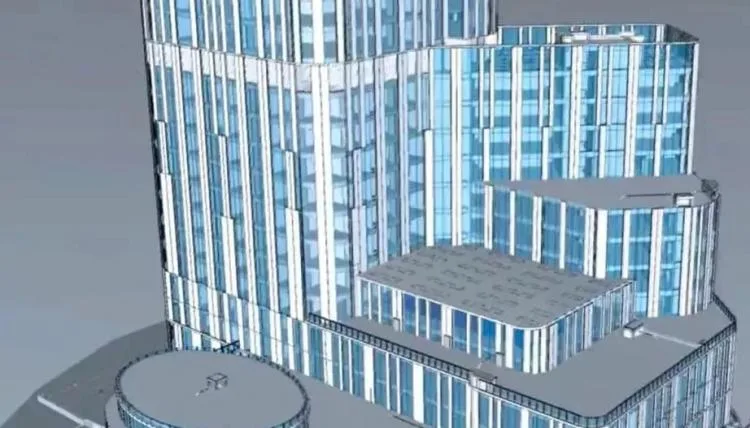
The basement includes a civil defense area equipped with personnel and material protection units, while basement levels one through three serve as an underground parking garage. The first floor accommodates commercial spaces, a lobby, and a banquet hall. The second floor houses conference rooms, commercial areas, and dining facilities.
Floors three to five support a luxury hotel, and floors six to twelve provide office spaces and guest rooms. Floors thirteen to twenty-five are designated as refuge floors. From the fourteenth to the thirty-seventh floor, excluding refuge levels, the building primarily serves office purposes.
Owing to its complex structure and densely packed underground mechanical and electrical pipelines, construction coordination across disciplines is challenging. To address this, BIM (Building Information Modeling) technology was employed for optimization, coordination, simulation, visualization, and parameterization. This approach helped technicians identify and resolve design and construction issues early, ensuring smooth project execution.
Zhongding International Commercial Building BIM Application Report Video
1. Project Overview
The Zhongding International Business Building comprises three basement floors and 37 floors above ground, with a 12-story podium gradually rising. The building spans 100,000 square meters and has a height of 155.7 meters, making it a notable skyscraper in Pingxiang.
The basement serves civil defense functions with personnel and material protection units, while the first to third basement levels are dedicated to underground parking. The first floor includes commercial spaces, a lobby, and banquet halls. The second floor is designated for conferences, commercial activities, and dining.
Floors three through five offer luxury hotel accommodations. Floors six to twelve function as offices and guest rooms. Floors thirteen to twenty-five are refuge floors. The remaining floors, from fourteen to thirty-seven (excluding refuge floors), are used for office space.
Given the building’s complex structure and the dense network of underground mechanical and electrical systems, construction required meticulous coordination between various specialties. BIM technology was leveraged to optimize, coordinate, simulate, visualize, and parameterize the process, enabling early detection and resolution of design and construction challenges, thereby facilitating smooth project progression.
2. BIM in the Design Phase
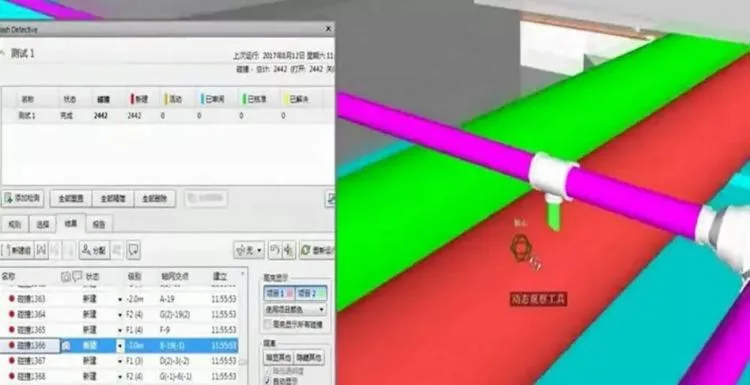
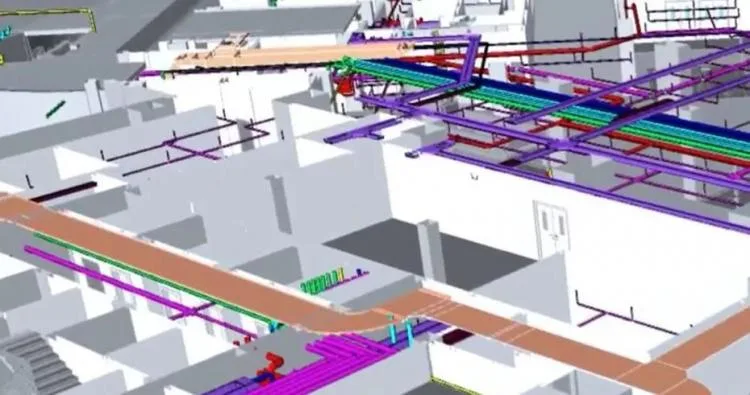
A comprehensive BIM model was developed covering architecture, structure, curtain walls, and mechanical and electrical engineering. This facilitated collision detection and overall management optimization, uncovering 335 issues such as insufficient clearances, structural clashes, and drawing inaccuracies, along with 5,326 pipeline conflicts.
The original design drawings were supplemented and refined, enabling early resolution of on-site coordination challenges, reducing project modifications, and minimizing losses. BIMSpace provided standardized validation for basement personnel protection units, material protection units, evacuation distances, fire doors, and staircases, enhancing design safety.
Detailed modeling helped optimize the layout of underground parking, driving routes, and equipment placements, significantly improving space utilization.
3. BIM in the Construction Phase
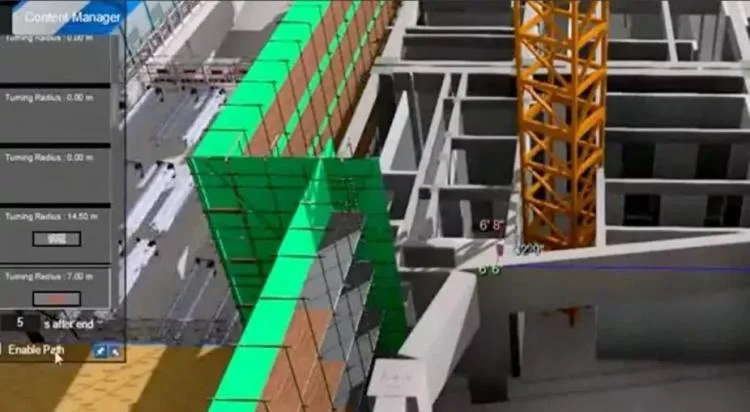
By applying BIM technology to site planning, safety hazards were identified through virtual site walkthroughs, enhancing space utilization and aligning the project with economic, environmental, and safety standards.
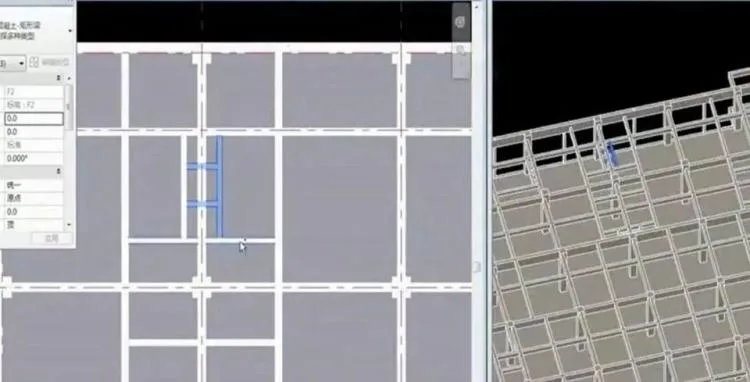
Using the optimized design-phase model and drawings, construction plans were implemented with detailed guidance. The model was updated in real time to reflect on-site conditions, providing an accurate foundation for subsequent fine decoration and renovations.
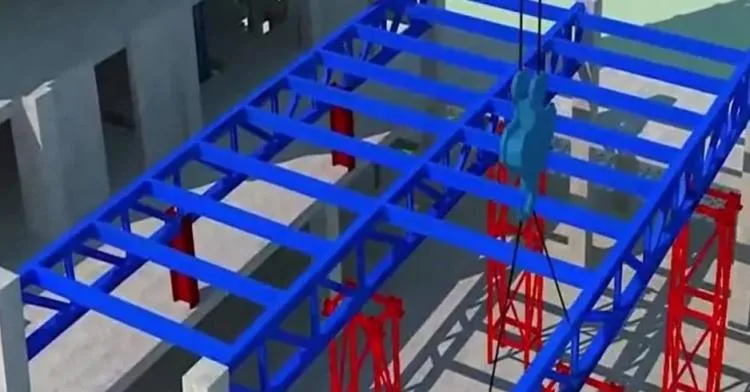
Integration of Navisworks with the construction schedule enabled the creation of construction progress simulations. These animations allowed project managers to compare planned versus actual progress, facilitating timely adjustments to the construction timeline.
4. BIM in the Operation and Maintenance Phase
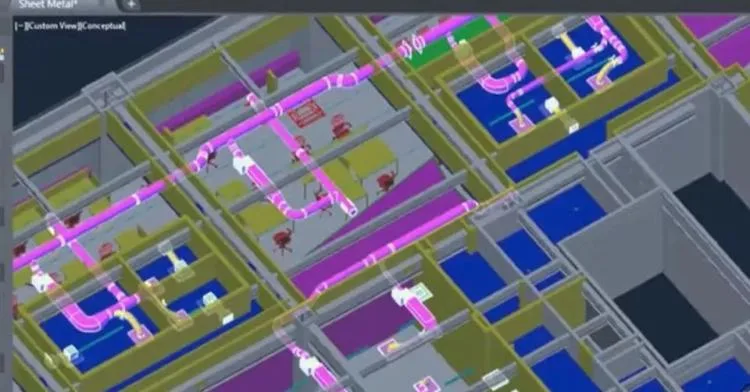
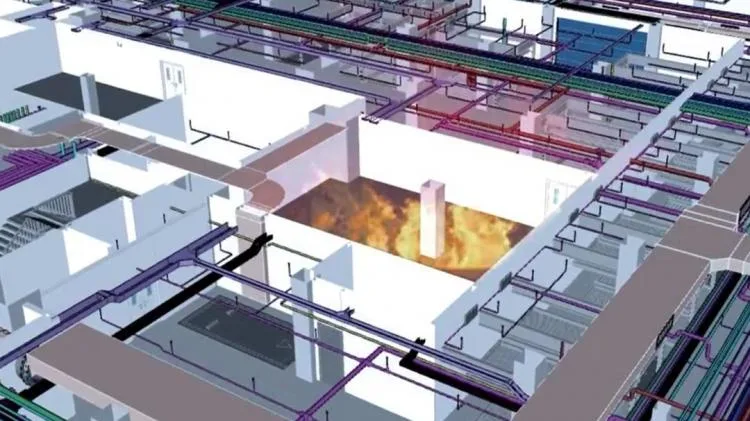
BIM technology enables real-time integration between the digital model and building systems such as monitoring and fire protection. This allows continuous oversight of internal equipment operation and assists maintenance teams in managing and servicing equipment effectively.
In emergencies like fires, the 3D model helps quickly locate hazards, determine optimal evacuation routes, and monitor personnel distribution in real time, providing vital data support for rescue operations.
5. Summary
In an era of increasing digitalization and connectivity, the Zhongding International Business Building stands as Pingxiang’s most distinctive commercial landmark, driven by BIM technology. It resonates with the visionaries of our time, gathers brilliance from all directions, leads the industry, and creates excellence together.












Must log in before commenting!
Sign Up