
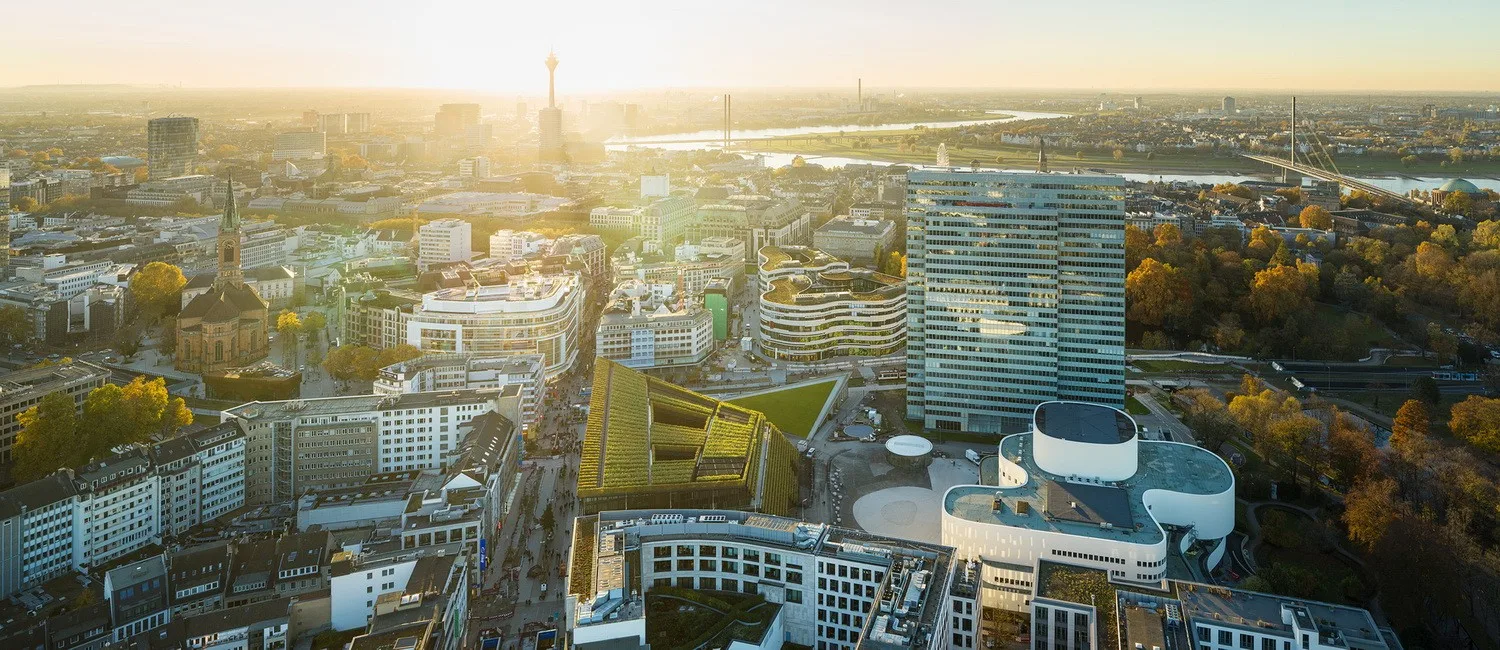
Europe’s largest green facade building has recently been officially completed. This landmark project is a key feature of the Kö-Bogen II commercial office complex in Düsseldorf. The building boasts an 8-kilometer-long corner tree fence planted with over 30,000 plants, marking the successful completion of a major urban renewal initiative in the city center.
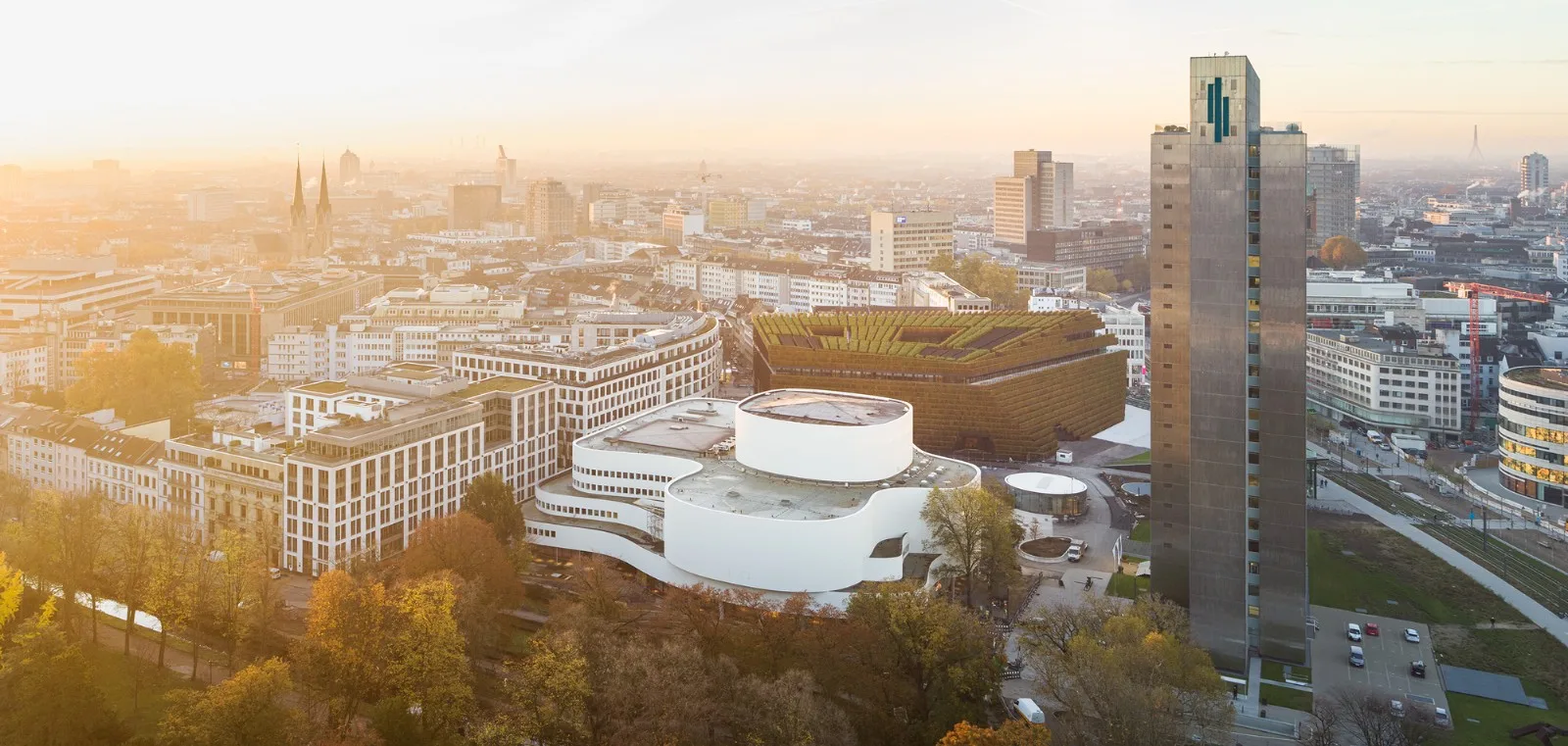
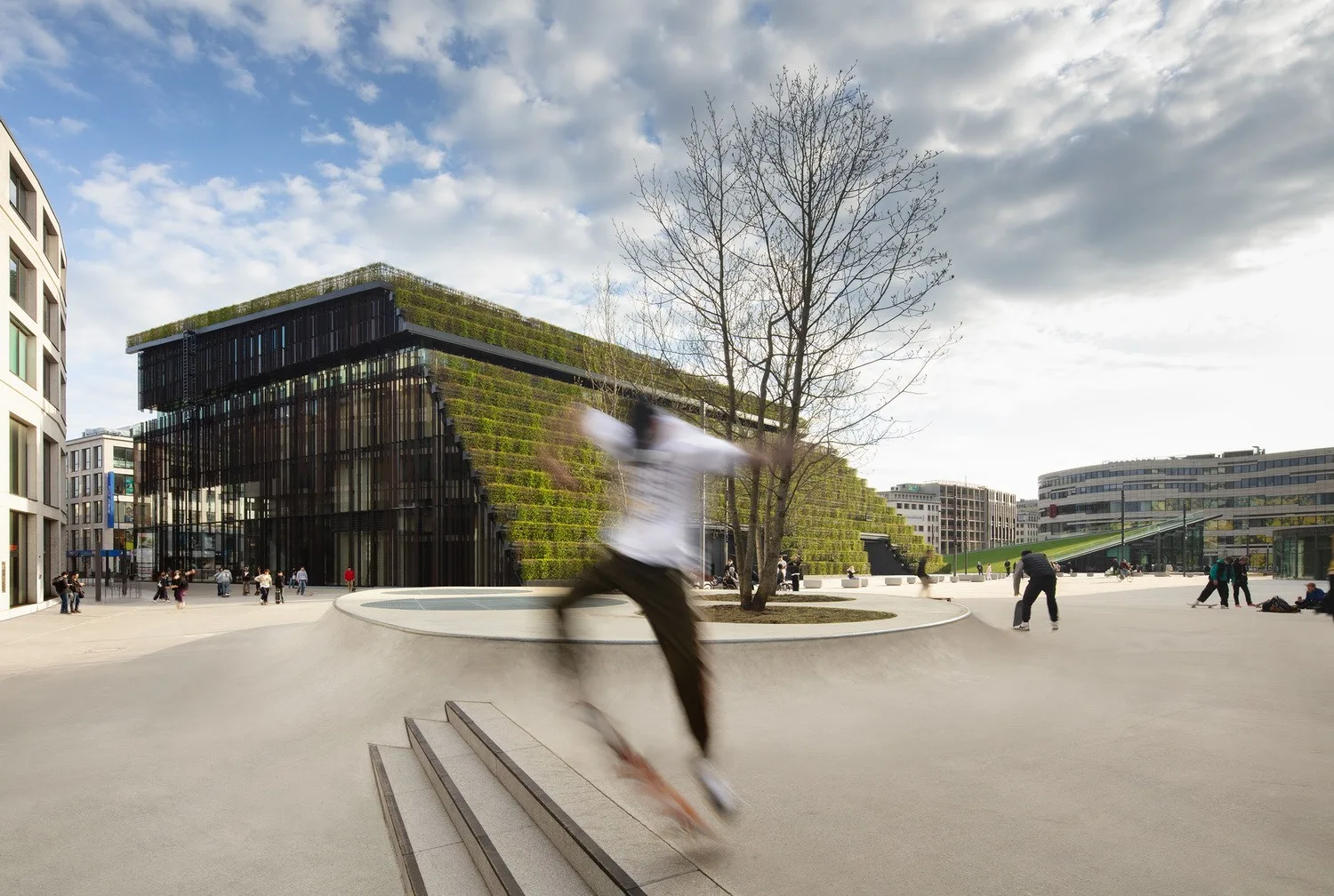
Ingenhoven Architects have dedicated decades to integrating greenery into urban environments across various climates. Their innovative green design and holistic sustainability approach culminate in this building – the largest green facade in Europe. It offers a visionary model for cities to combat climate change and represents a shift from car-centric urban planning to a more human-focused approach.
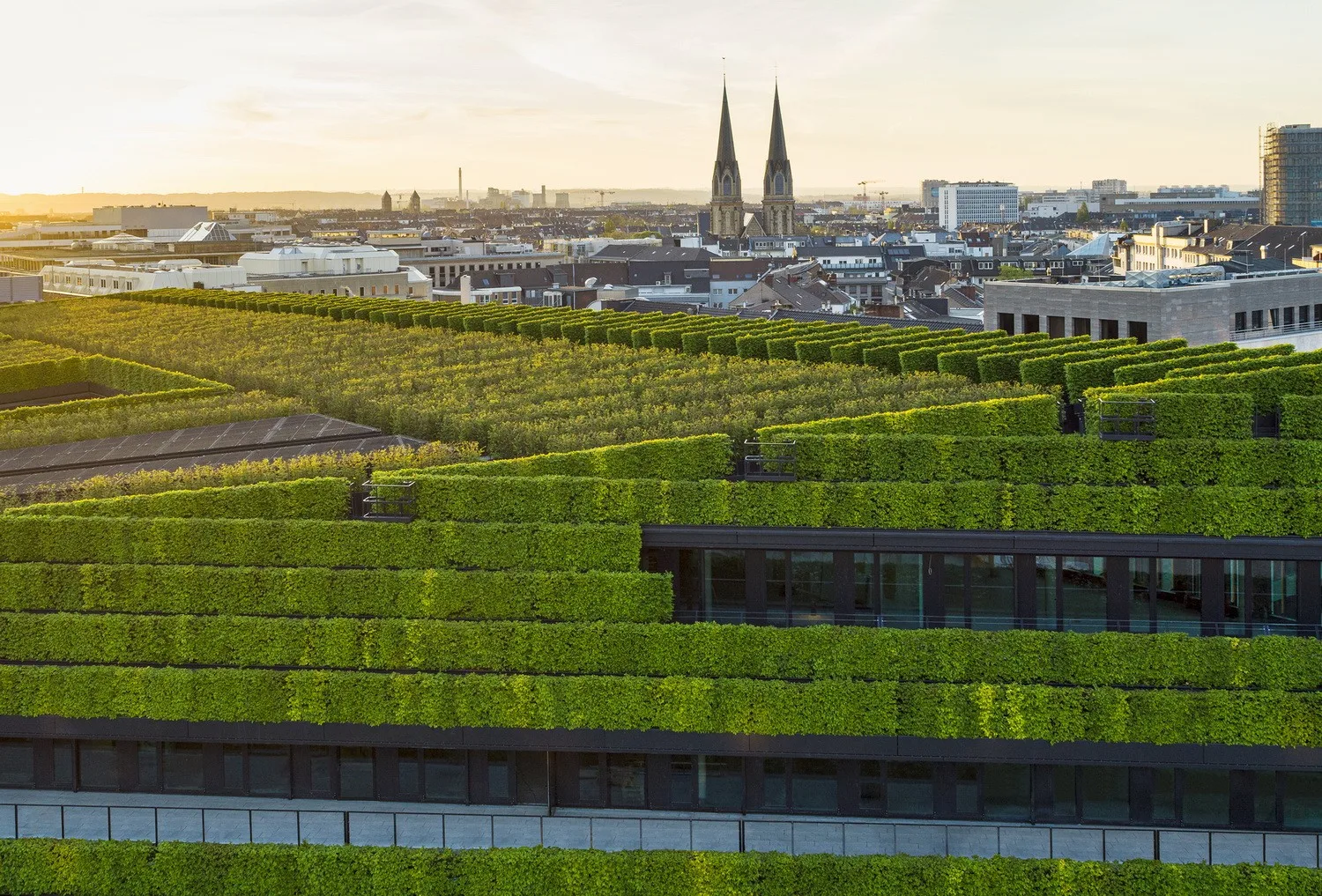
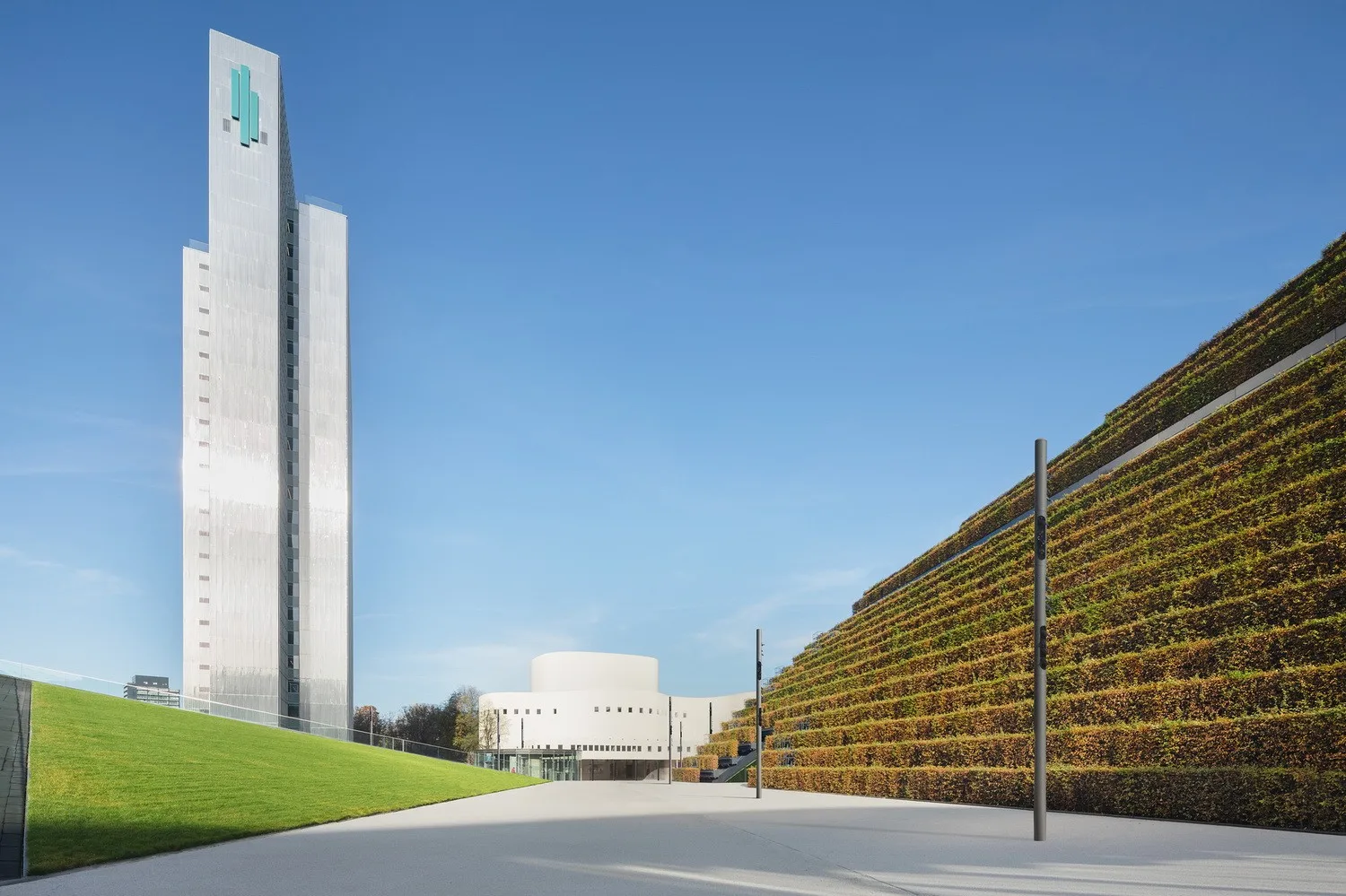
Prior to 2013, the site was dominated by elevated highways. Today, Hof Gardens have been restored to the city’s heart. The dynamic green facade of Kö-Bogen II takes inspiration from the earth’s natural art, intentionally bridging the divide between urban space and parkland. This design opens sightlines to iconic post-war modernist buildings: the bright and minimalist Dreischeibenhaus and the lively, airy Schauspielhaus, both revitalized by Ingenhoven Architects. Kö-Bogen II confidently responds to these historical landmarks, embodying a contemporary urban vision. Since 1992, Christoph Ingenhoven has been a driving force behind Düsseldorf’s city center transformation.
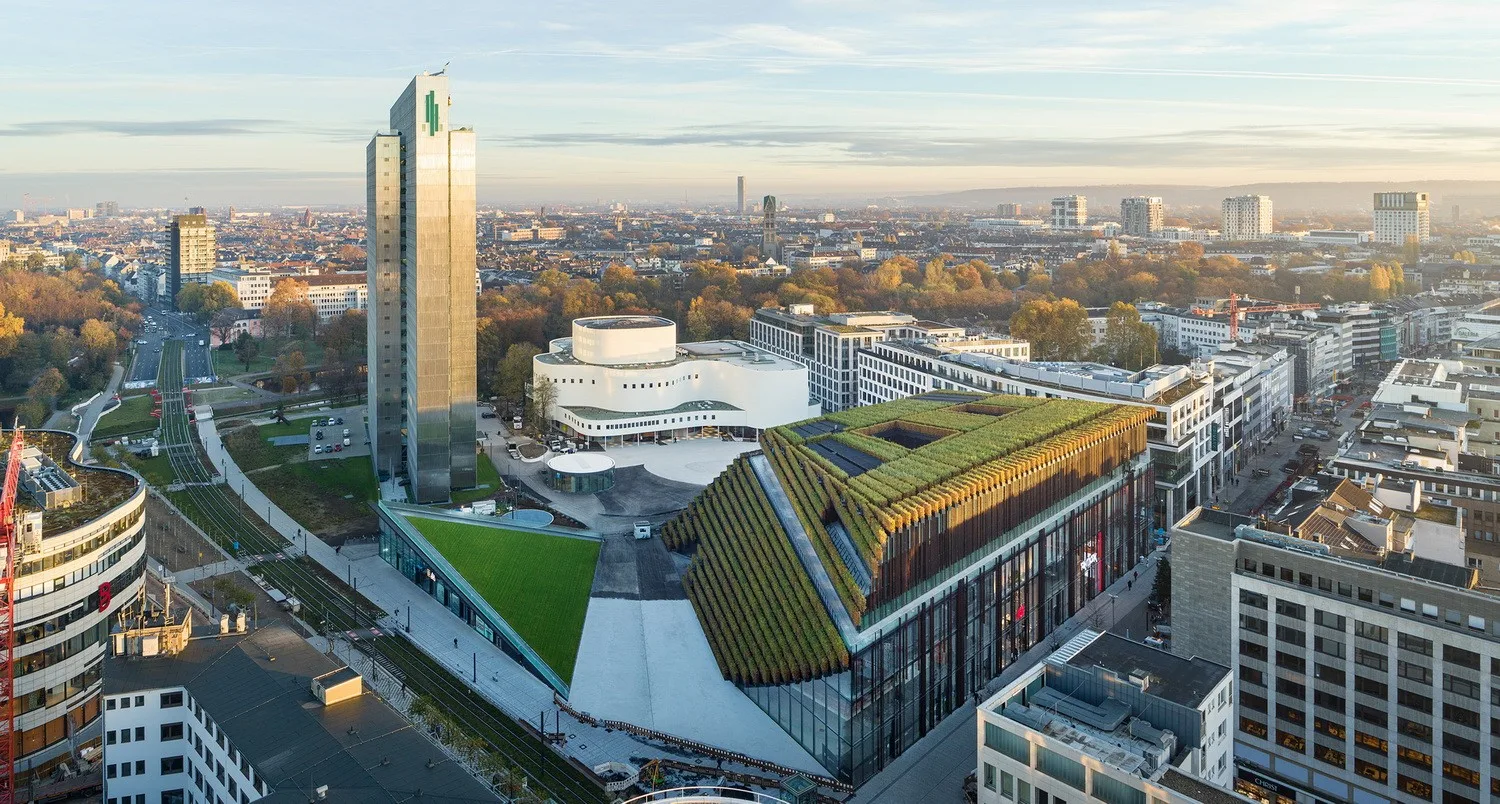
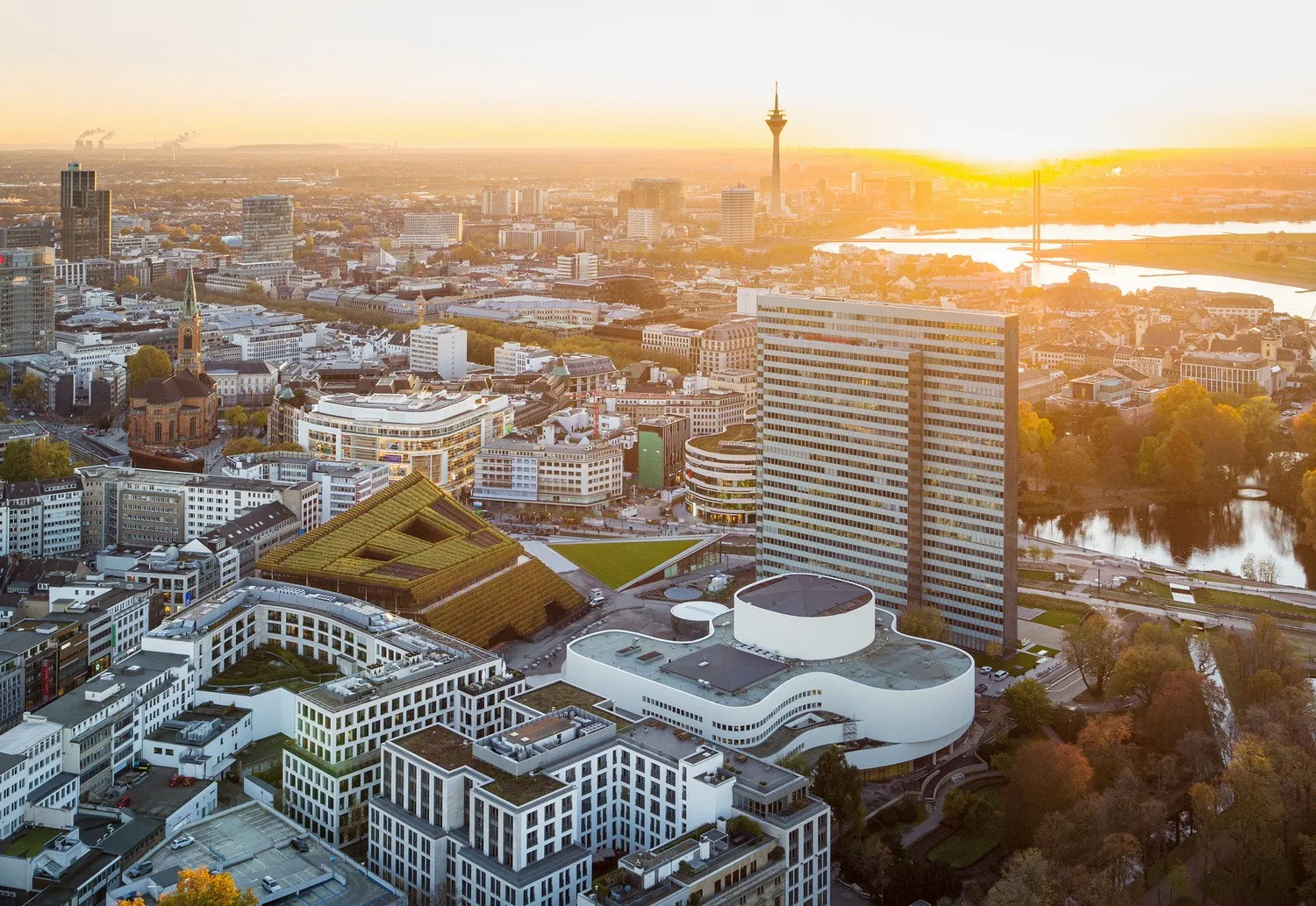
Kö-Bogen II serves as a multifunctional hub that connects various aspects of urban life, including culture and shopping. The 42,000-square-meter complex houses retail, dining, office, and entertainment spaces. Its main facade faces Xiadao Street, one of Germany’s busiest commercial thoroughfares, stretching 27 meters high and 120 meters long, constructed entirely of glass. An internal extended metal structure, resembling flat noodles, manipulates the building’s transparency, shifting from closed to open depending on the viewing angle.
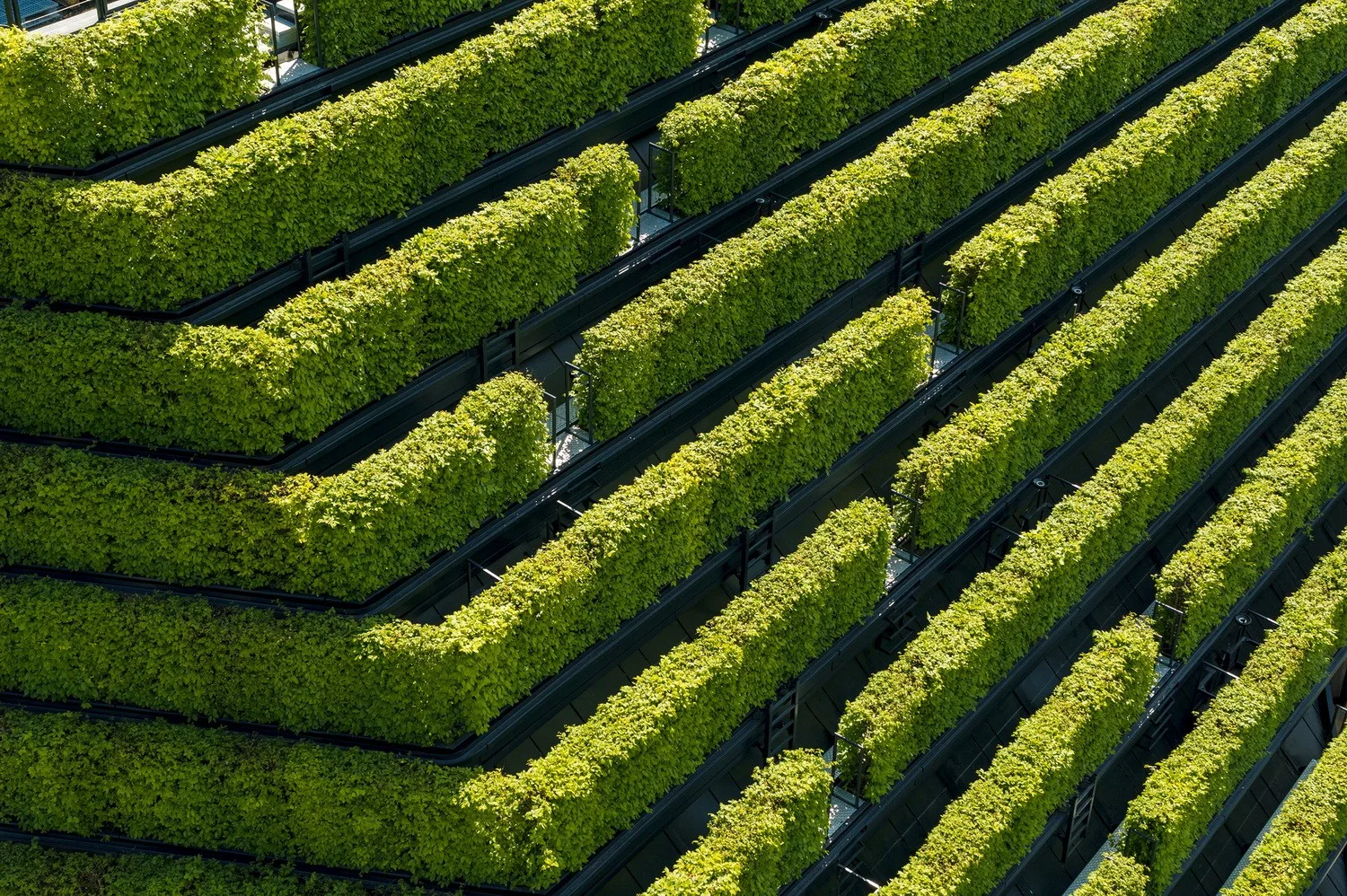
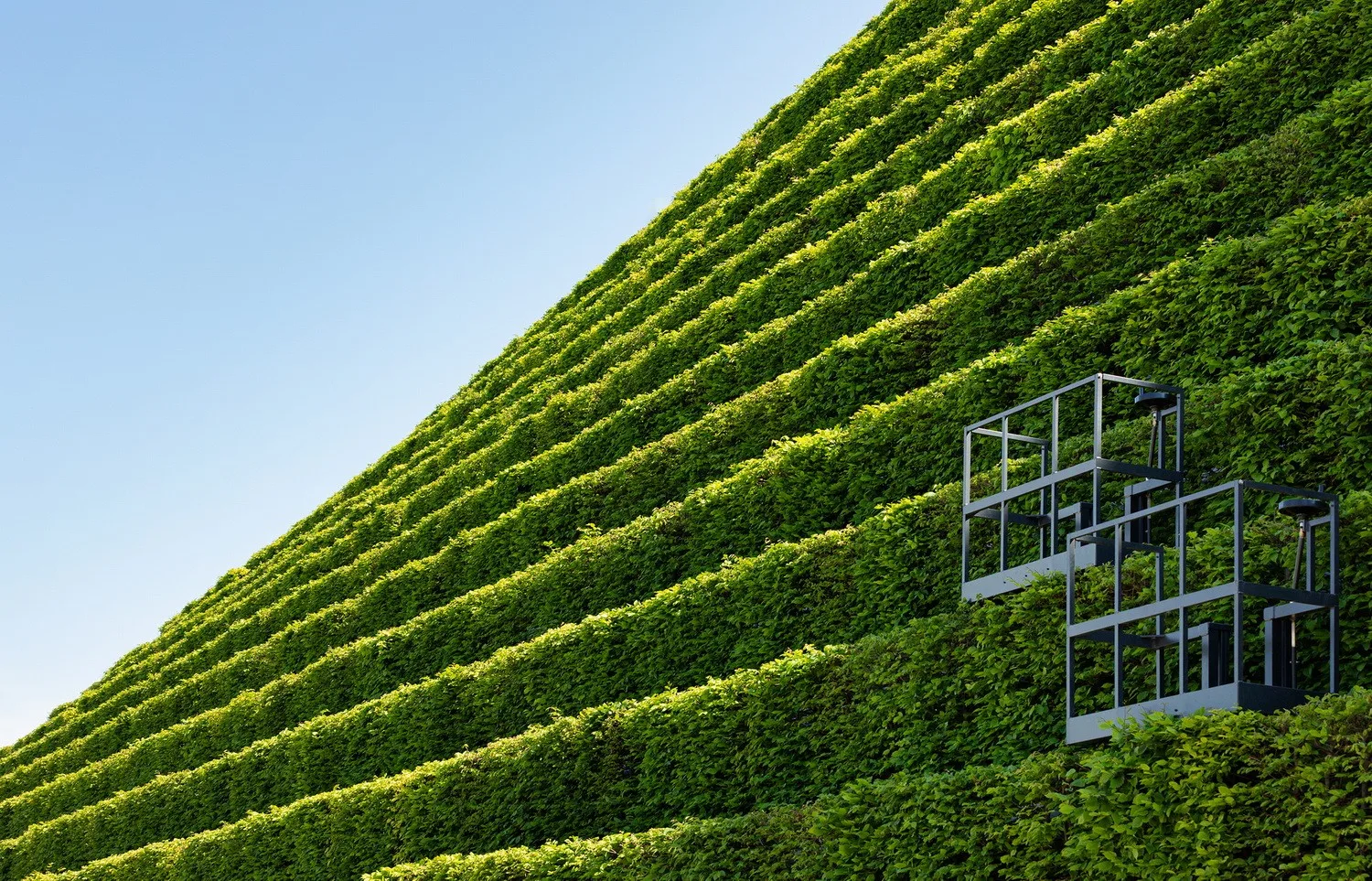
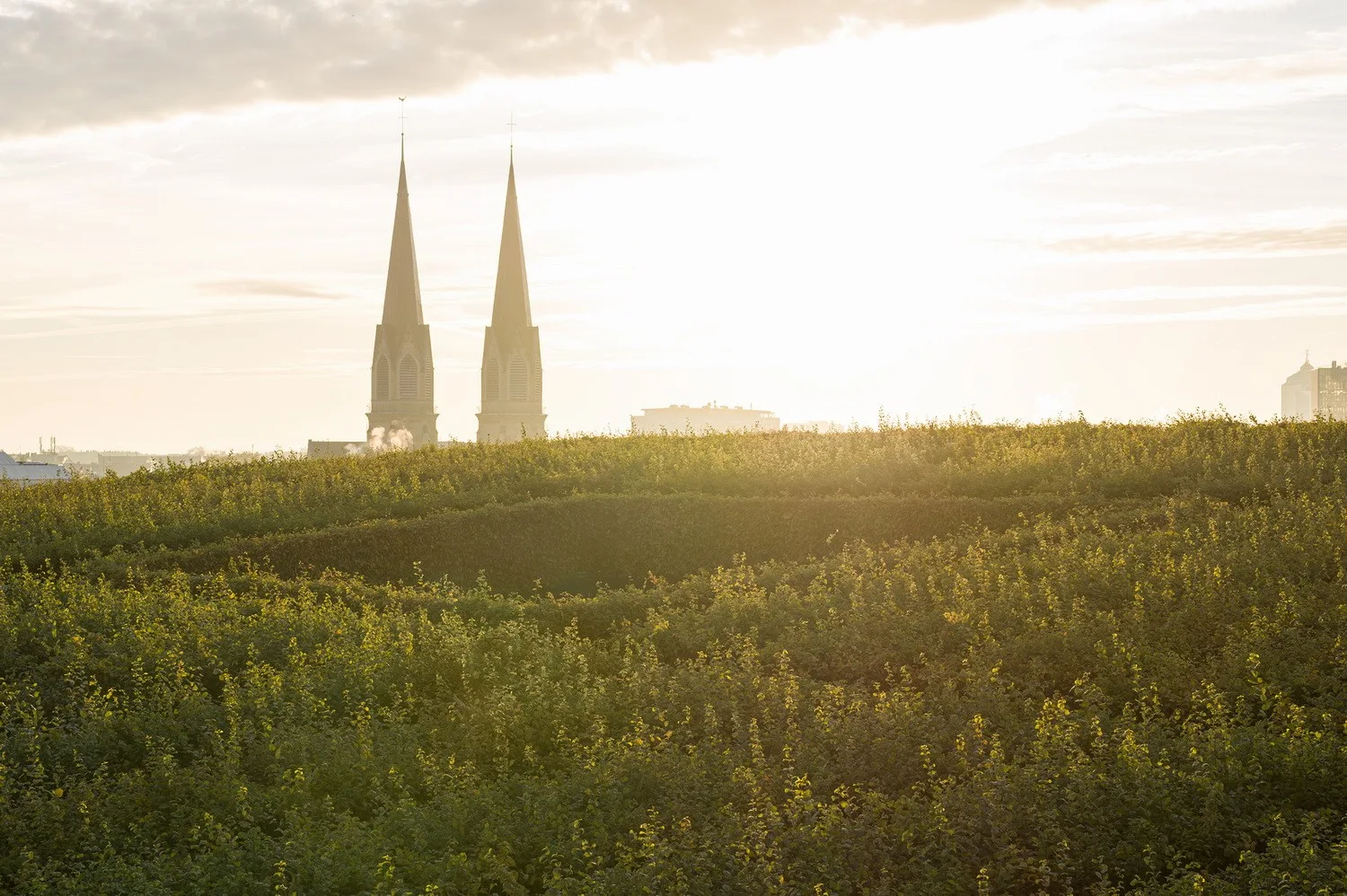
The other facades, including the roof, are softer and greener. The corner tree fence extends eight kilometers, making it Europe’s largest green facade. The adjacent 10-meter-high building features a sloped, accessible green roof that draws visitors seeking relaxation and sunshine. Inspired by natural earth art, these green design elements skillfully mediate between urban and park environments.
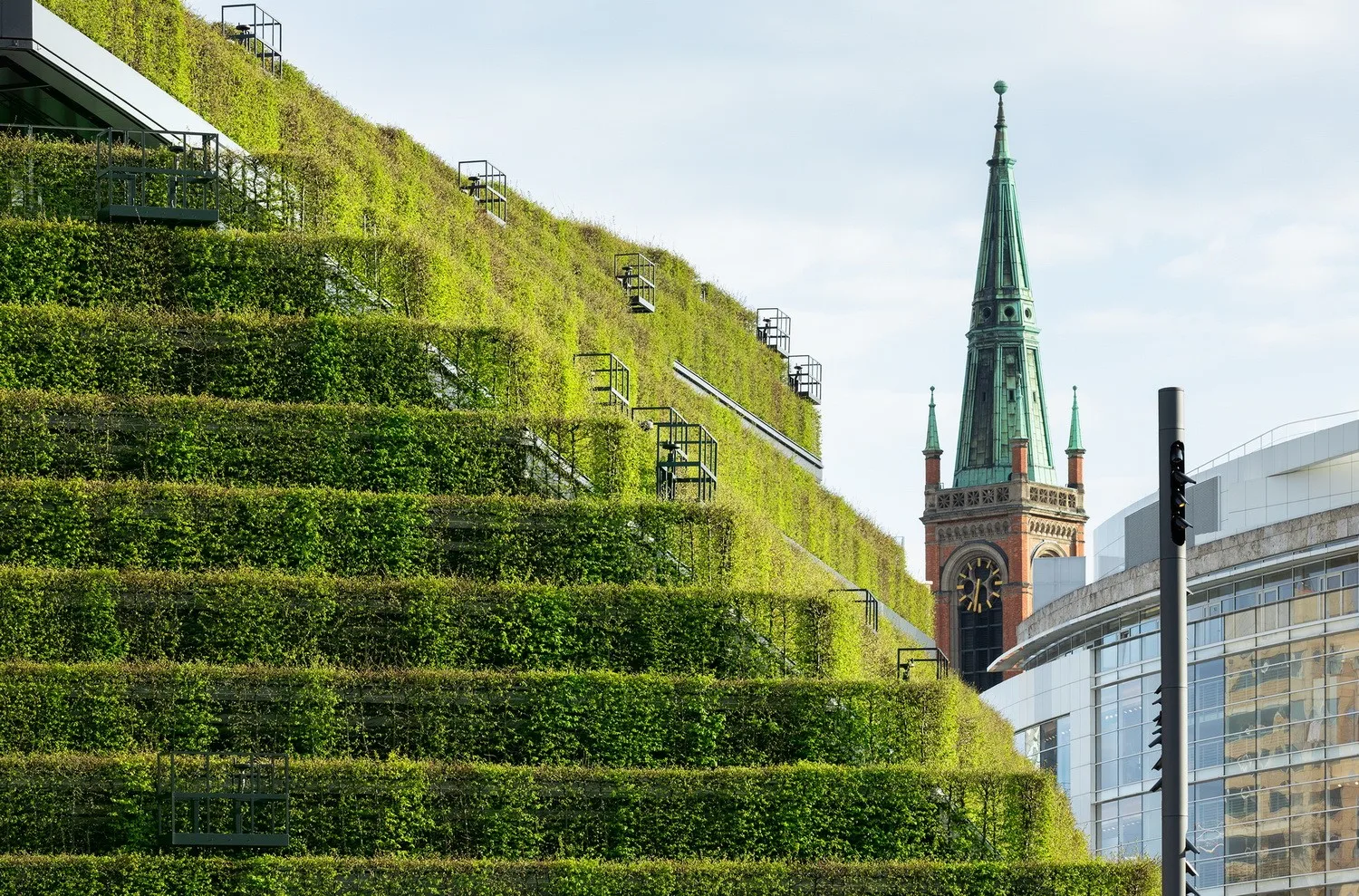
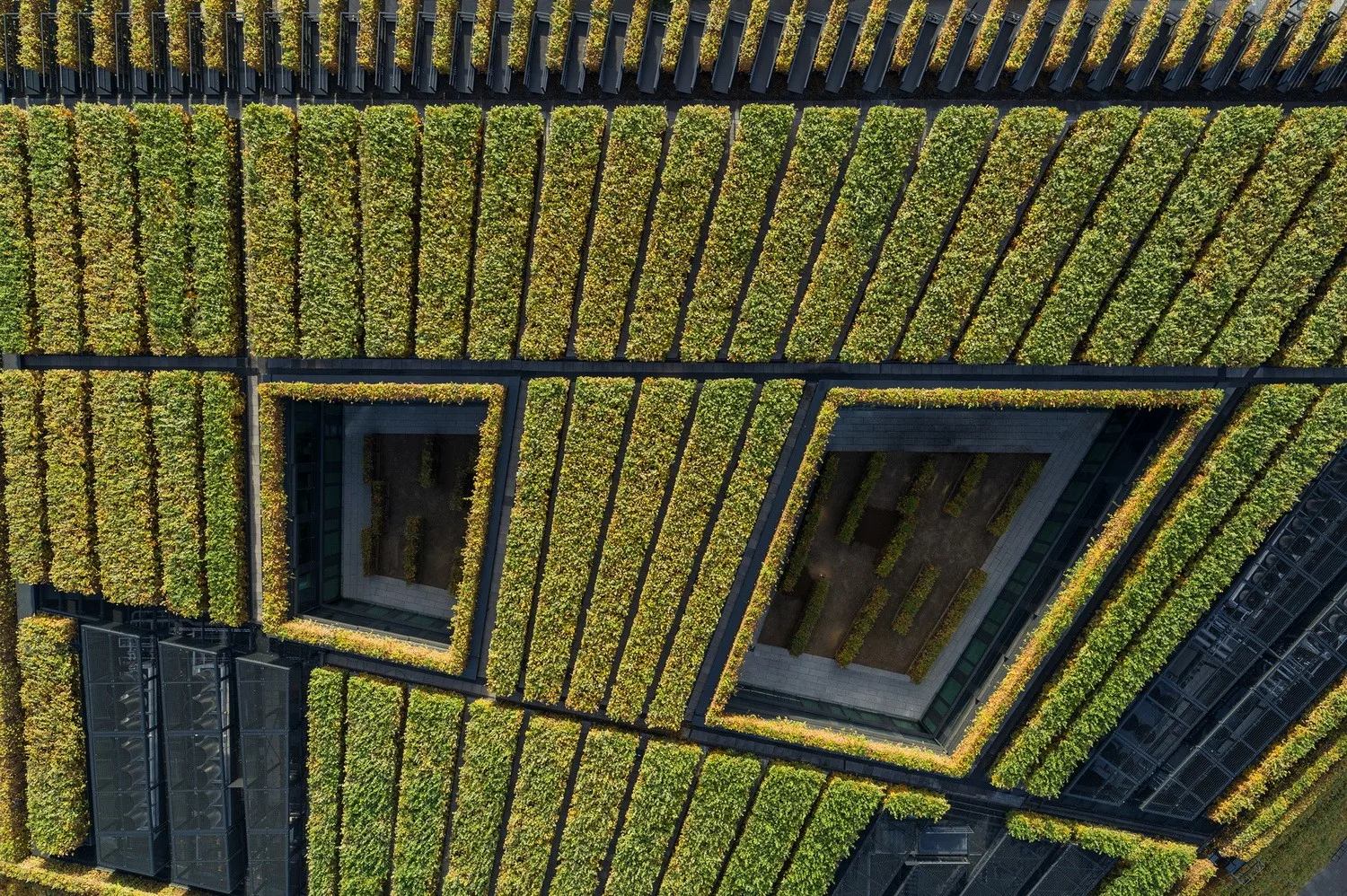
The corner tree fence features native winter deciduous hardwood species. In spring, fresh green leaves emerge; by summer, the foliage grows lush and dense; and in autumn, the leaves turn golden. This greenery enhances the urban microclimate by providing shade, reducing heat, absorbing carbon dioxide and noise, storing water, and supporting biodiversity. The ecological impact of these trees is comparable to around 80 mature deciduous trees.
Project Drawings
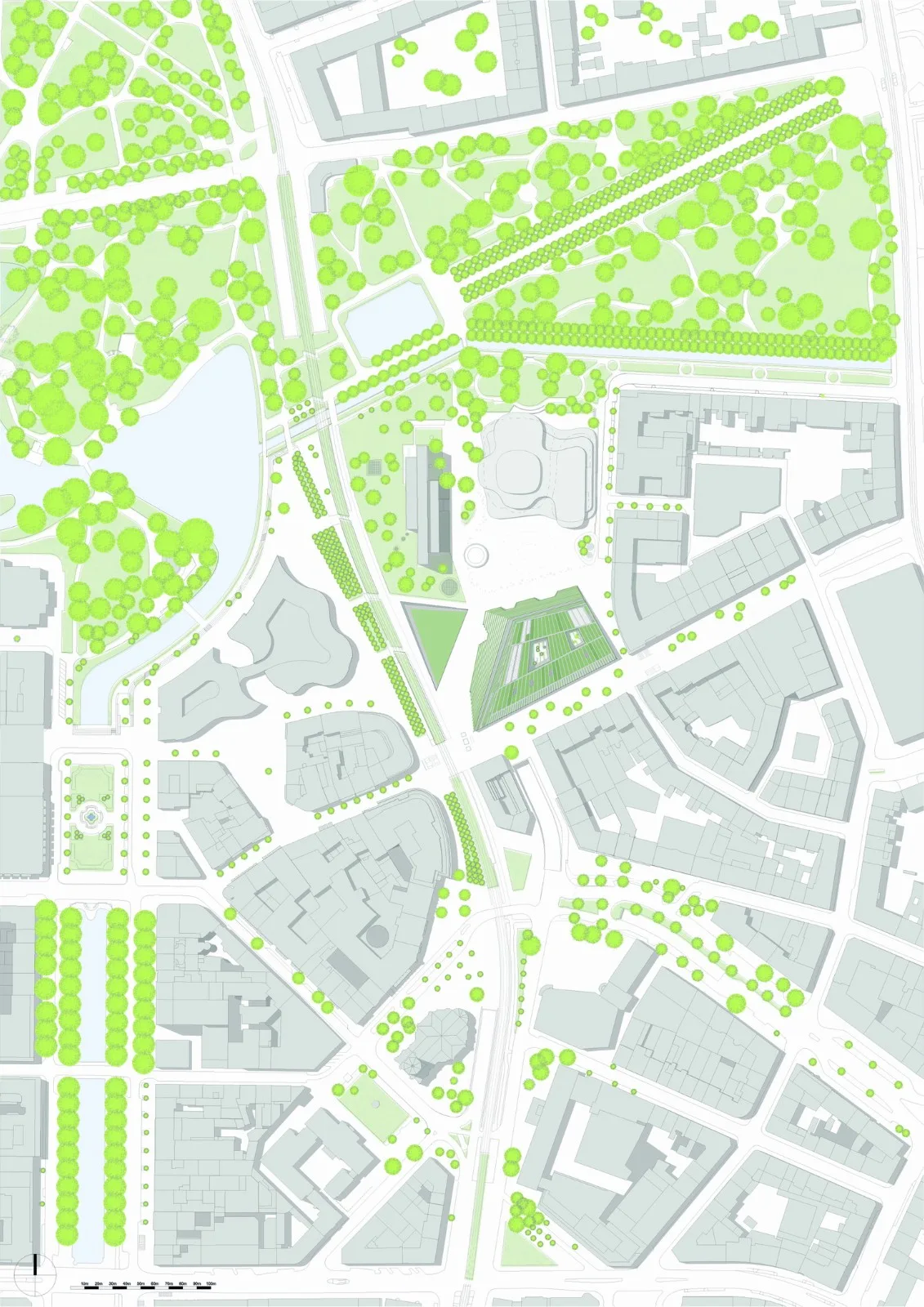
△ Base Plan
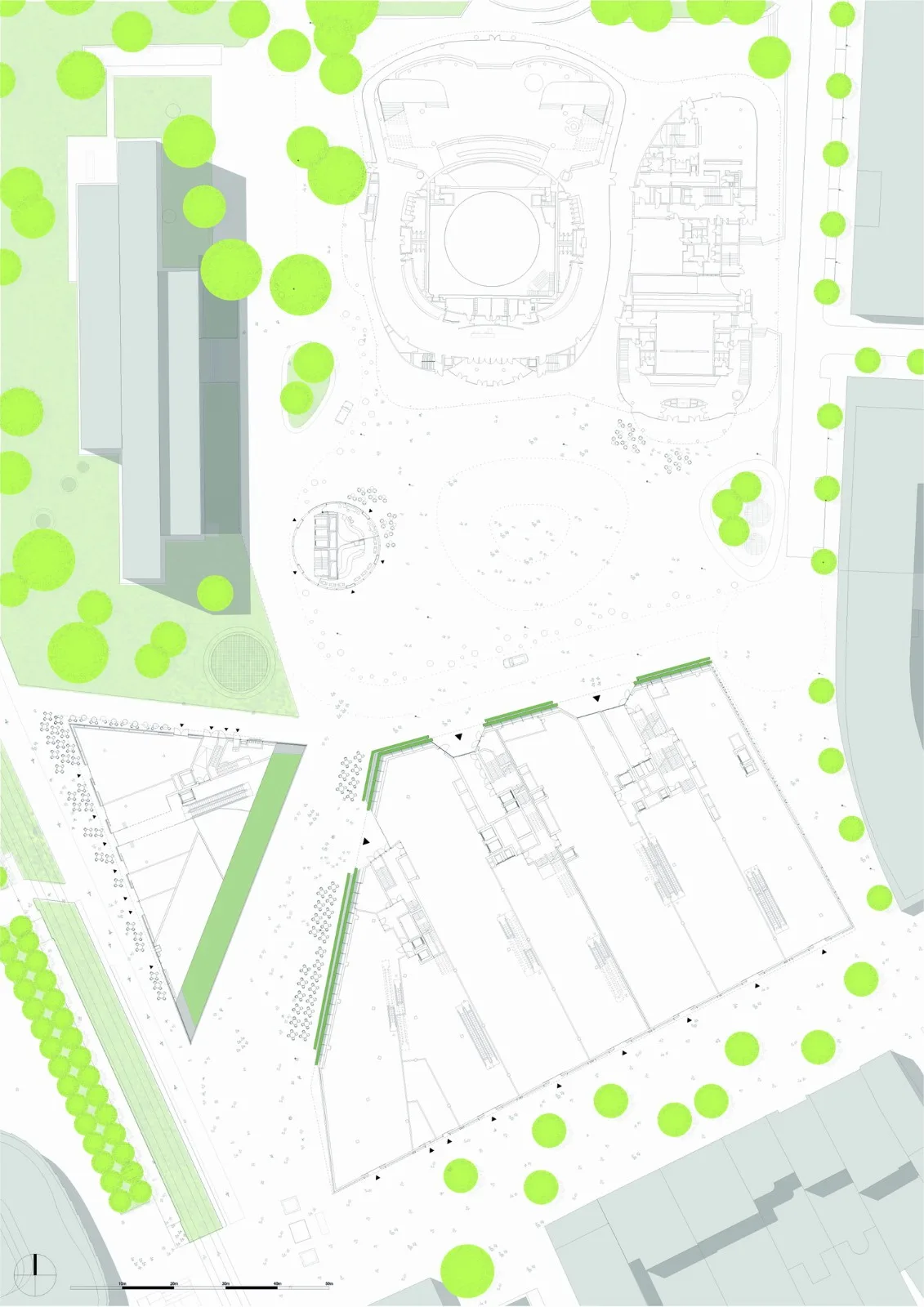
△ General Layout Plan
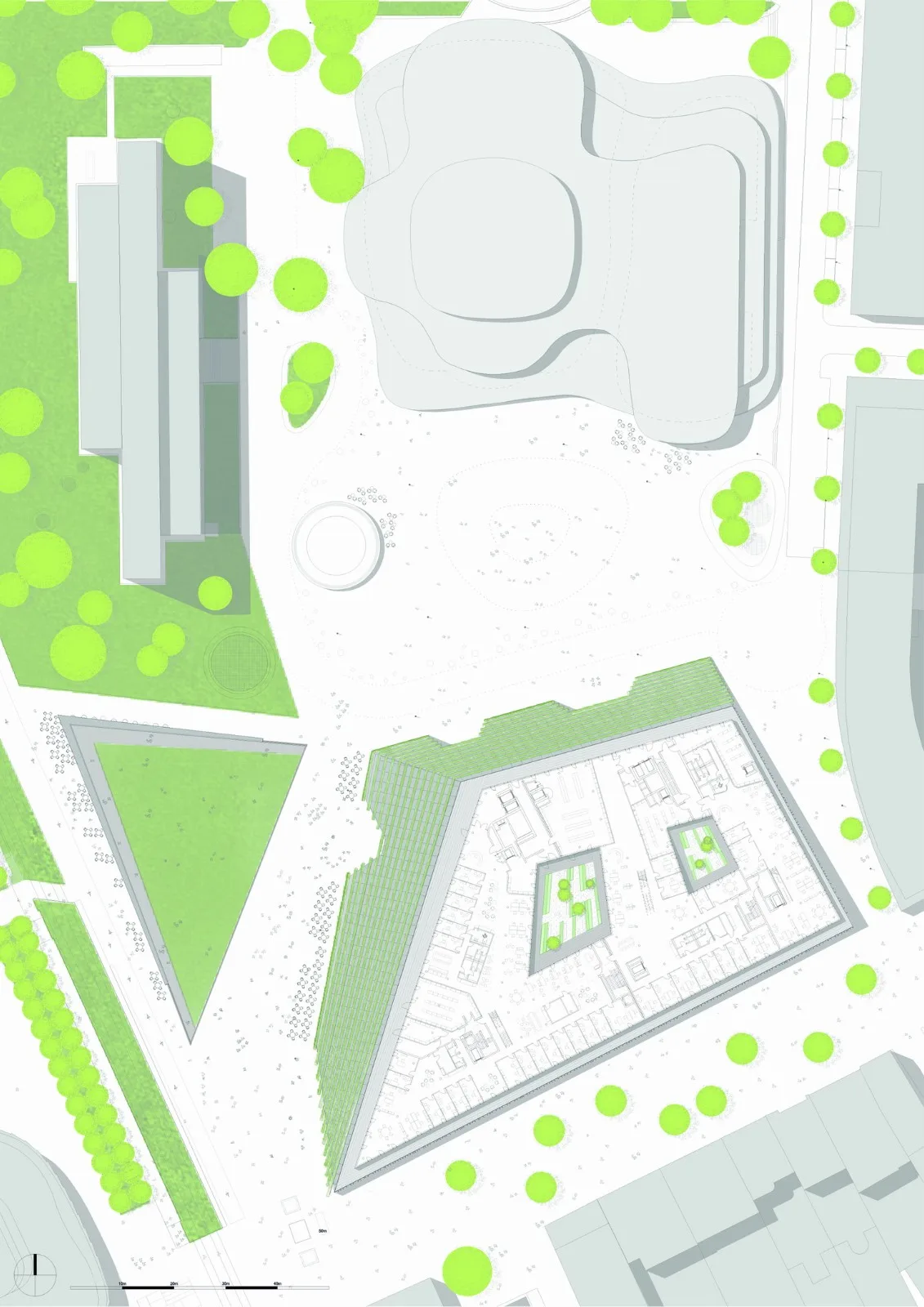
△ Plan View
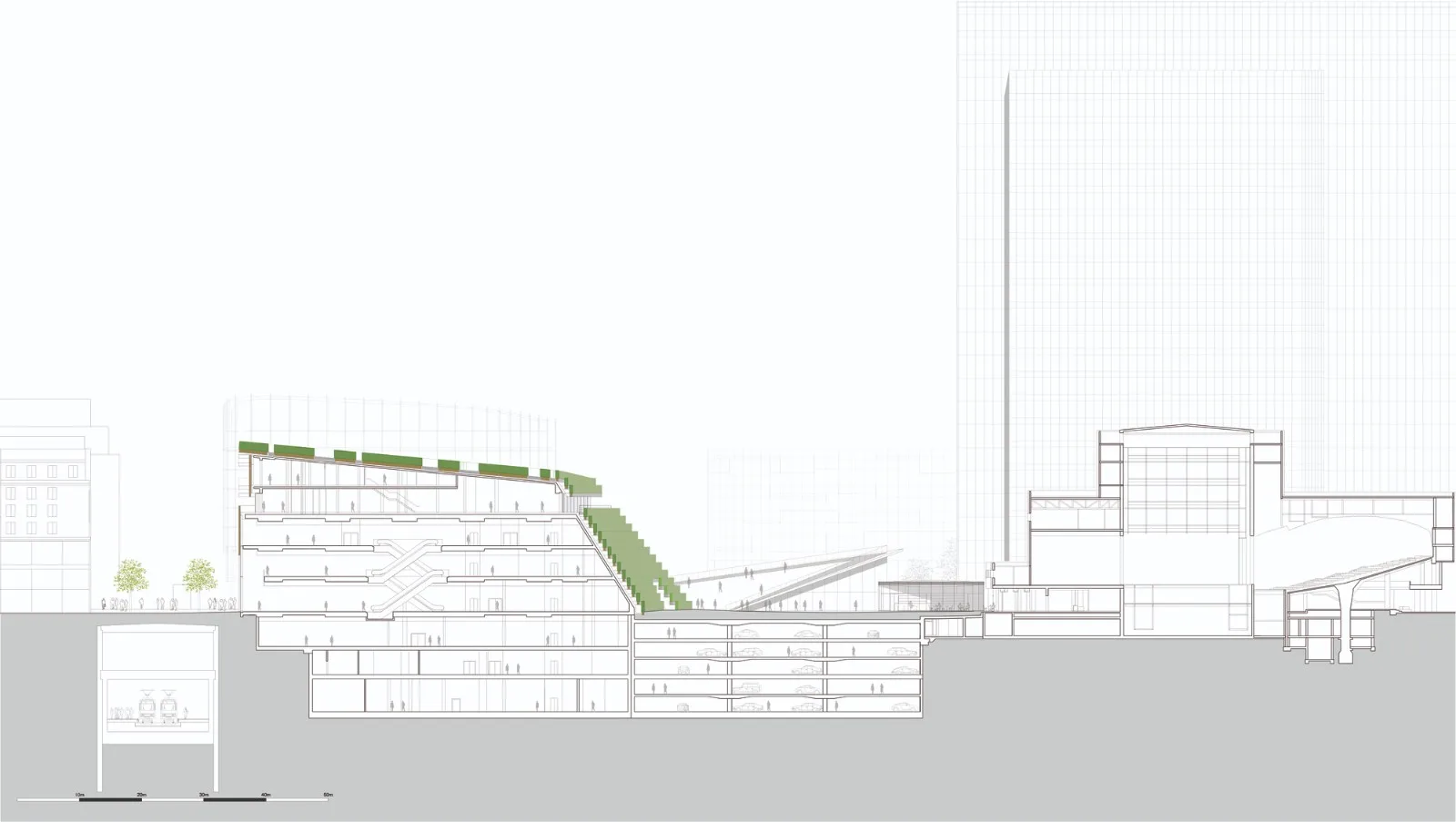
△ Section Diagram
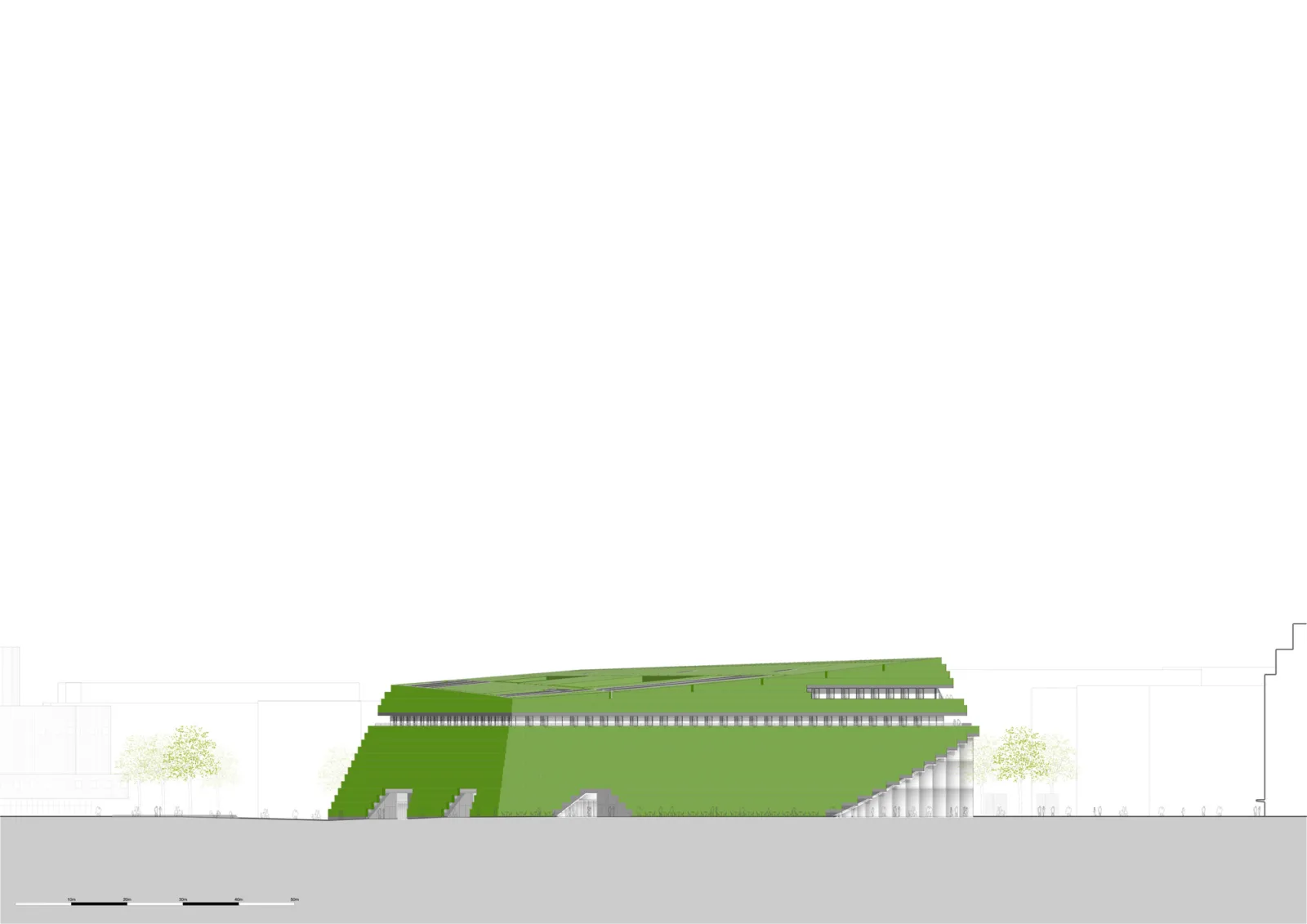
△ Elevation Drawing
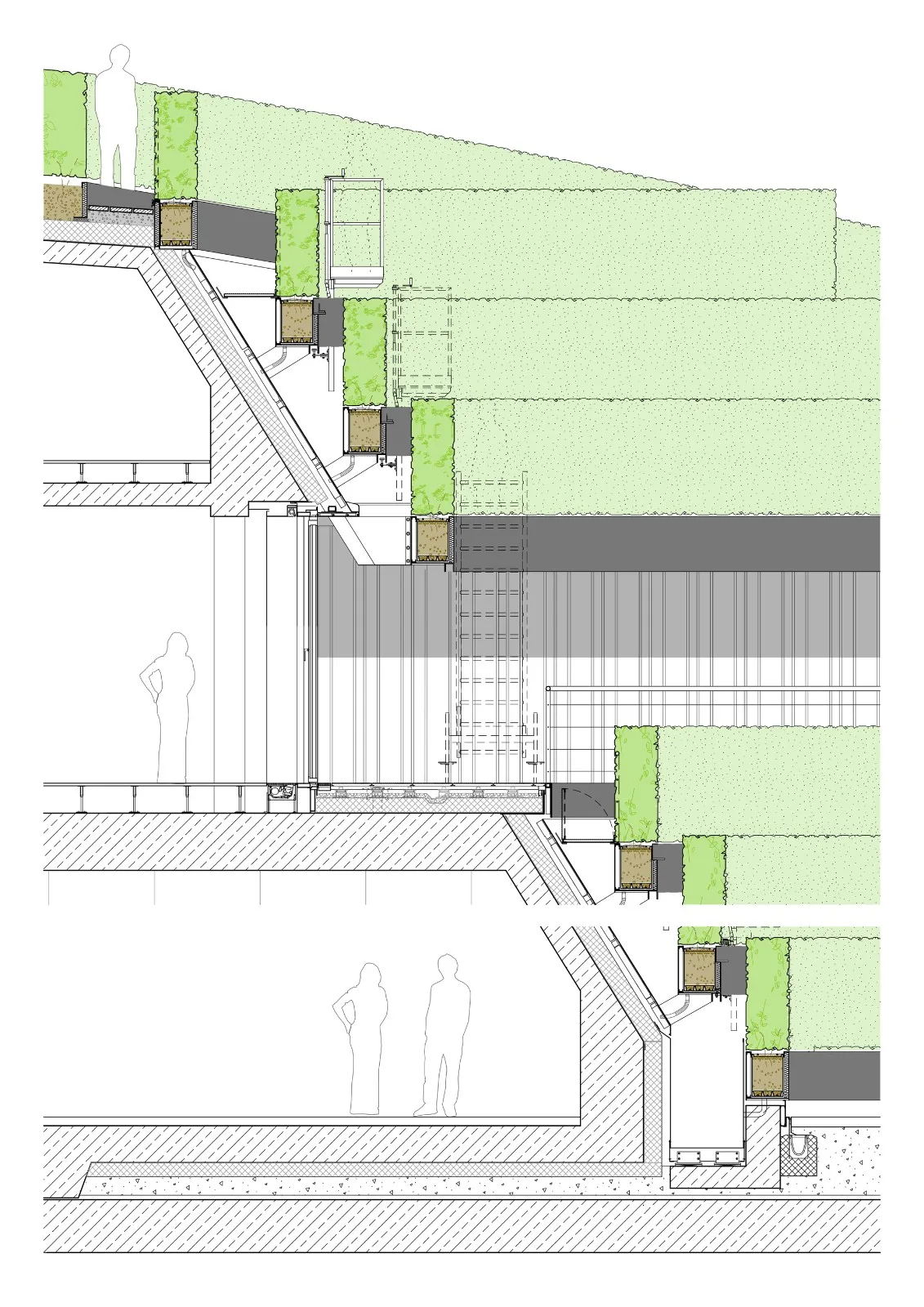
△ Node Construction Diagram
Project Information
Architectural Design: Ingenhoven Architects
Area: 41,370 m²
Project Year: 2020
Photography: Ingenhoven Architects / HGEsch
Manufacturers: Erco GmbH, Kone GmbH, WILA Lichttechnik GmbH, WINDSCHEID & WENDEL GmbH & Co. KG, Zumtobel
Team Members: Christoph Ingenhoven, Peter Jan van Ouwerkerk, Ben Dieckmann, Cem Uzman, Mehmet Congara, Vanessa Garcia Camicero, Yulia Grantovskikh, Tomoko Goi, Jakob Hense, Melike Islek, Christian Monning, Andres Pena Gomez, Peter Pistorius, Lukas Reichel, Jürgen Schreyer, Susana Somoza Parada, Jonas Unger, Nicolas Witsch, Dariusz Szczygielski, Stefan Boenicke, Thanh Dang
Location: Düsseldorf, Germany












Must log in before commenting!
Sign Up