
Questions and Ideas
The building site is situated in a densely populated urban area with limited space, intended to become part of the cityscape as a commercial property. At the project’s outset, the architect questioned whether traditional single-sided or double-sided dormitory layouts could maximize land use efficiency on such a compact site.
To address this, the architects compared the conventional dual-sided corridor dormitory layout with a custom design tailored specifically for the site. They concluded that creating a unique dormitory type would more effectively utilize the limited space available.
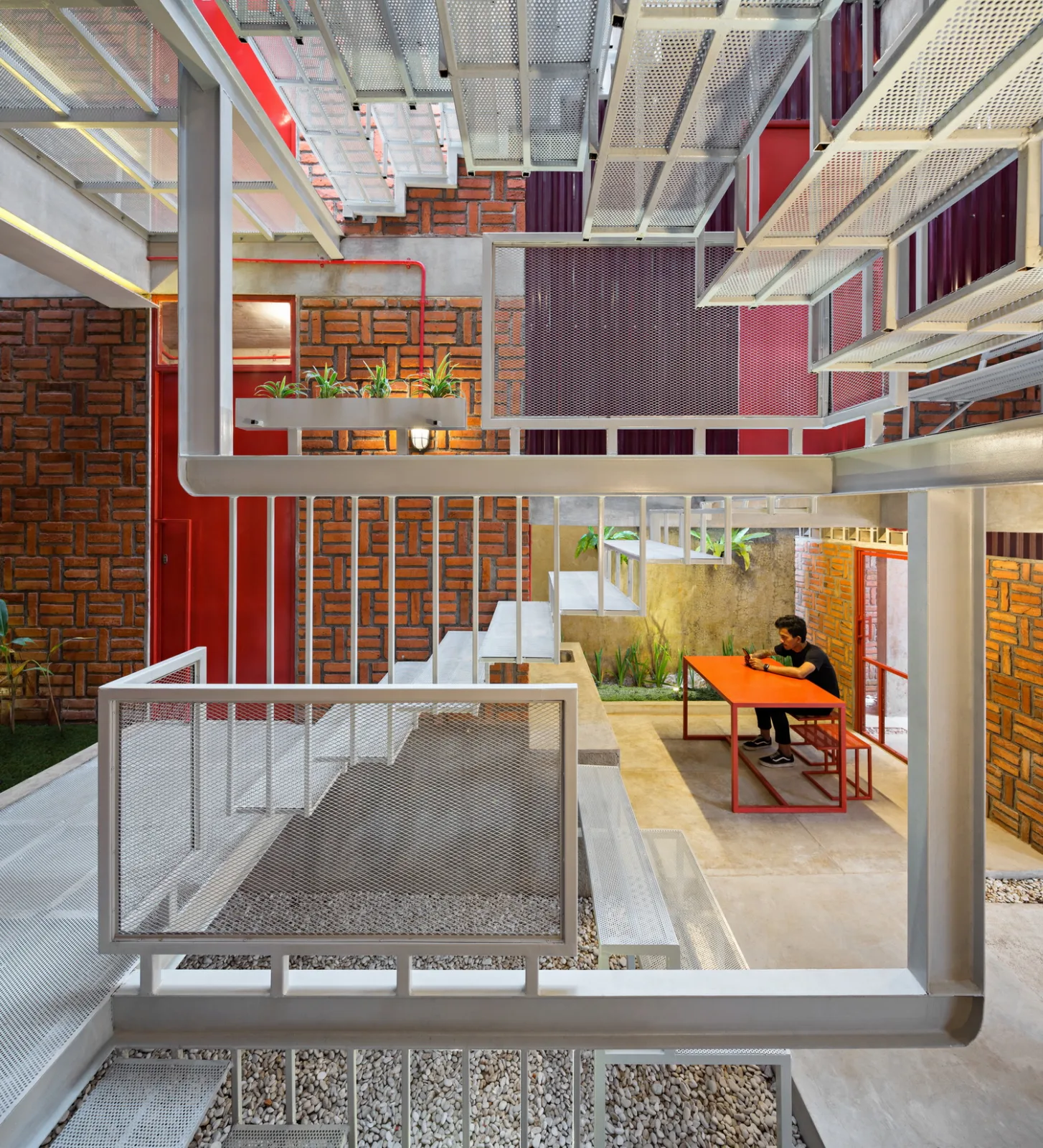
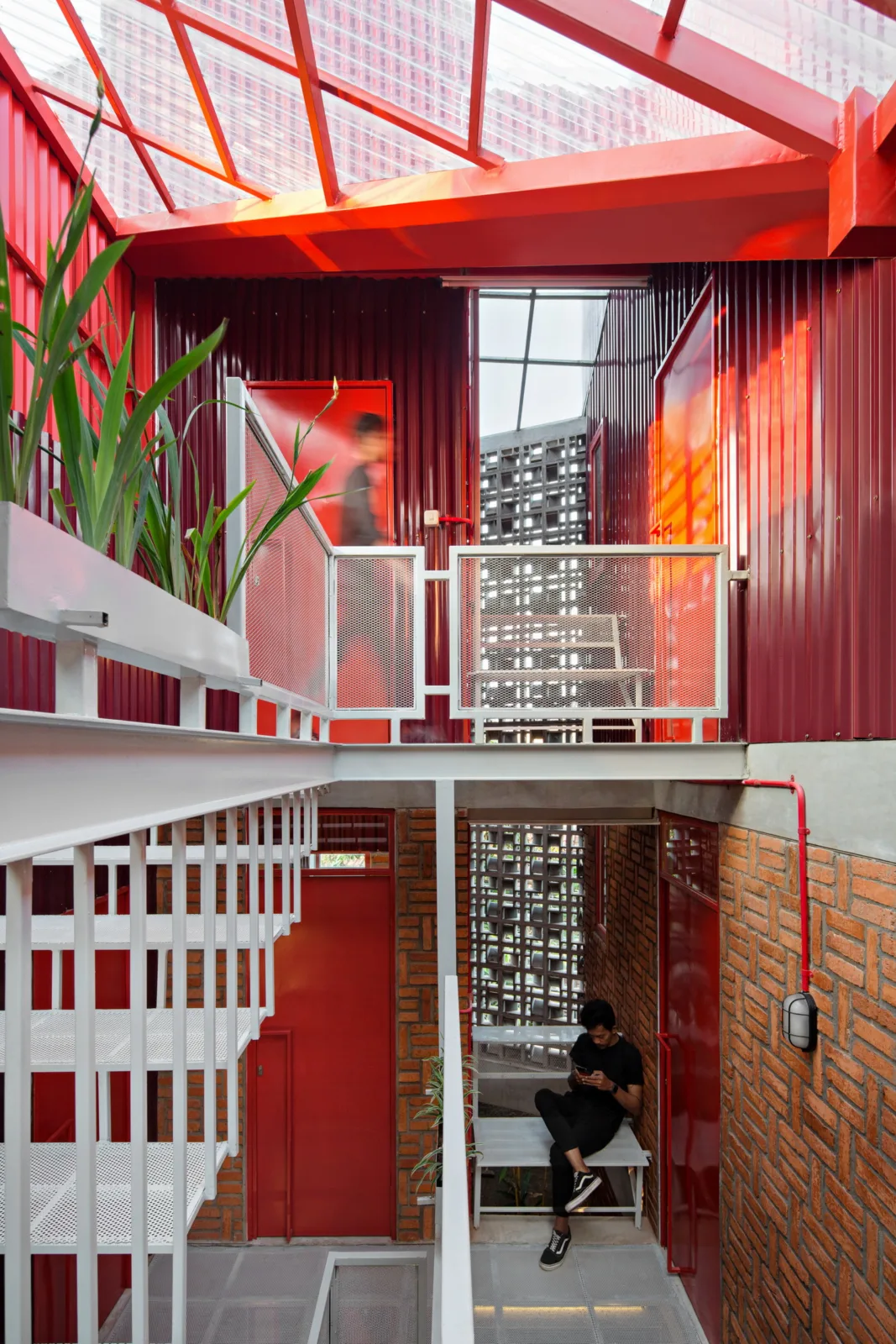
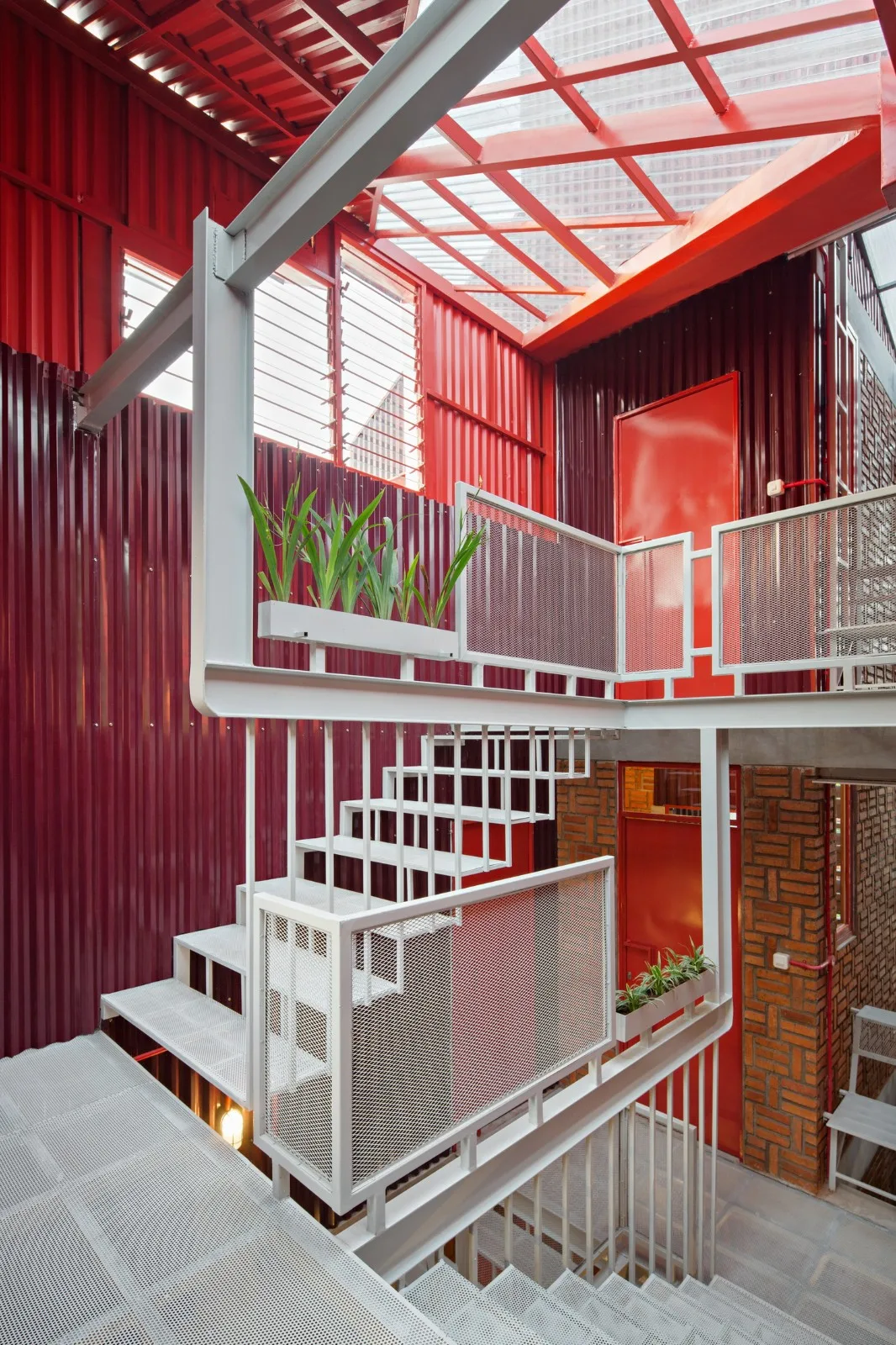
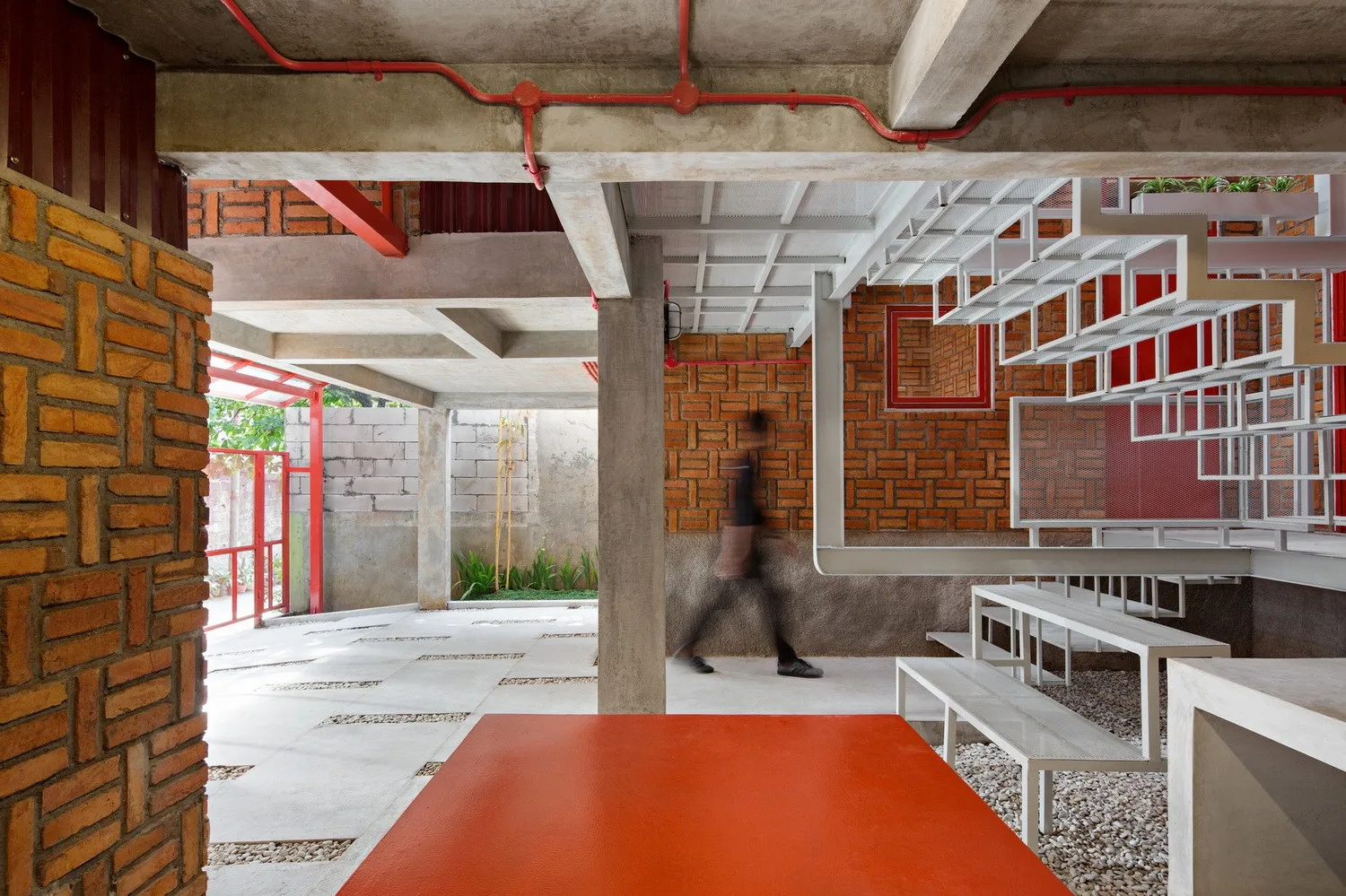
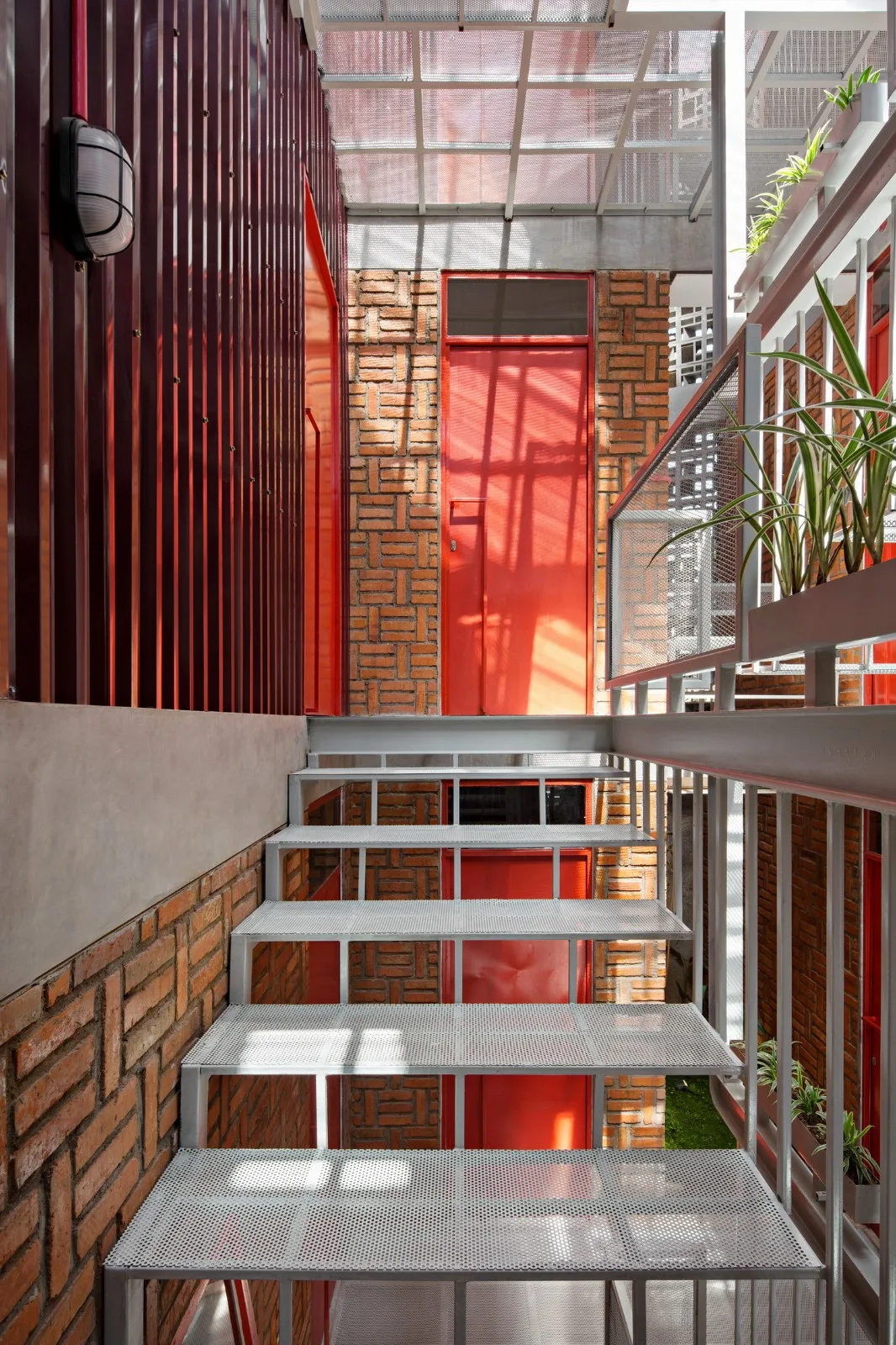
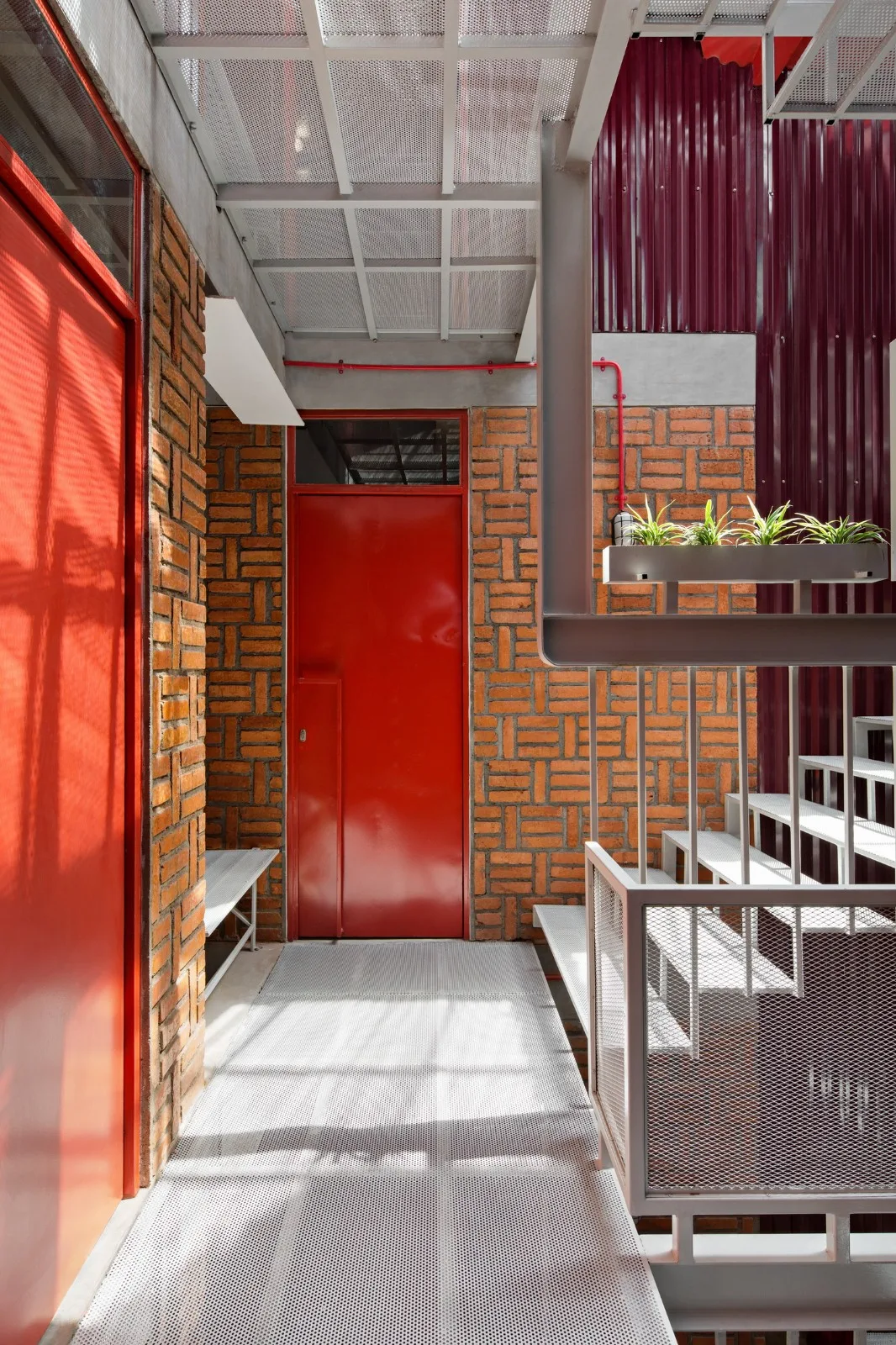
The design starts with the connecting corridors typical in dormitories, but here, stairs serve as the sole horizontal and vertical link between units. These stairs also function as communal social spaces for residents.
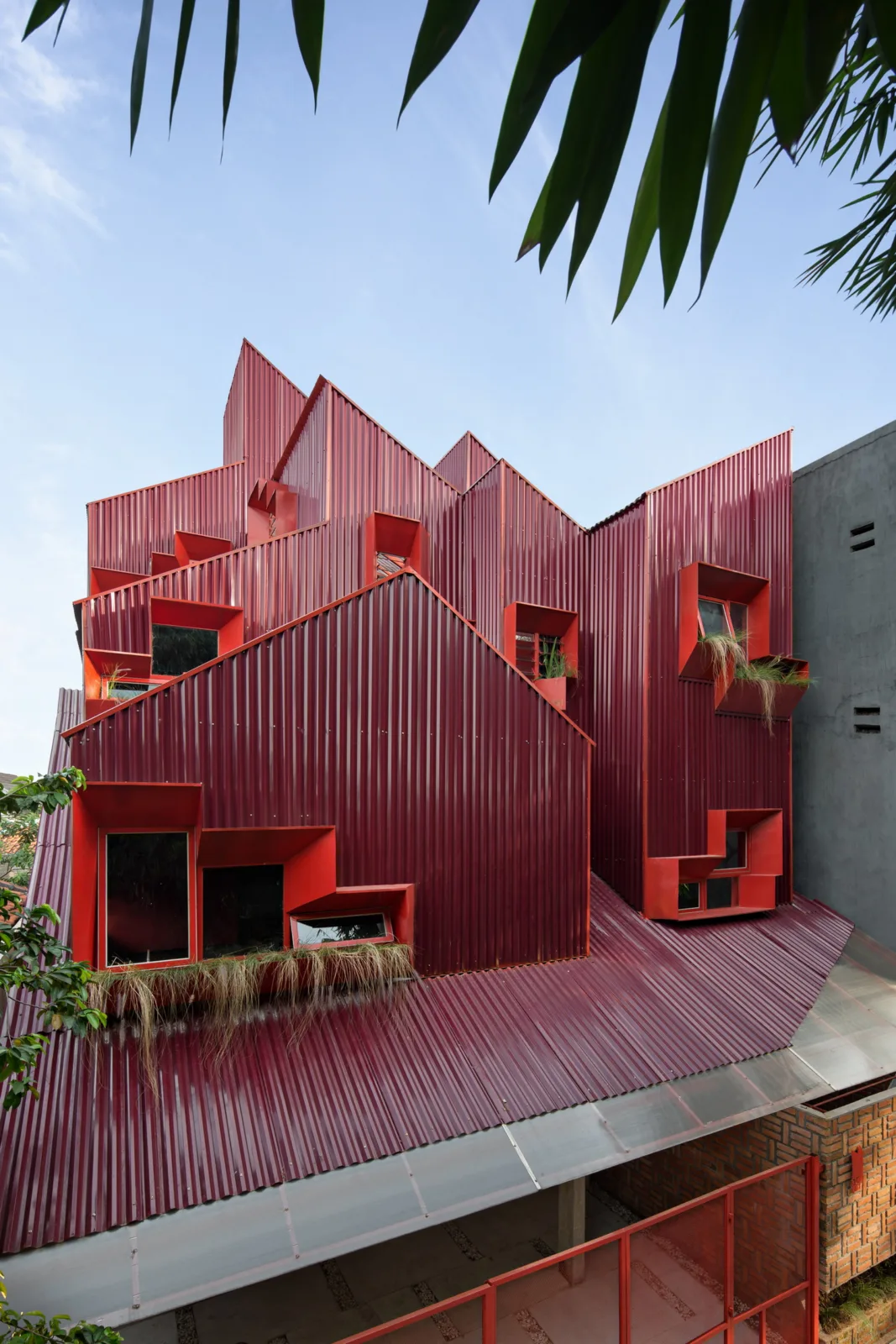
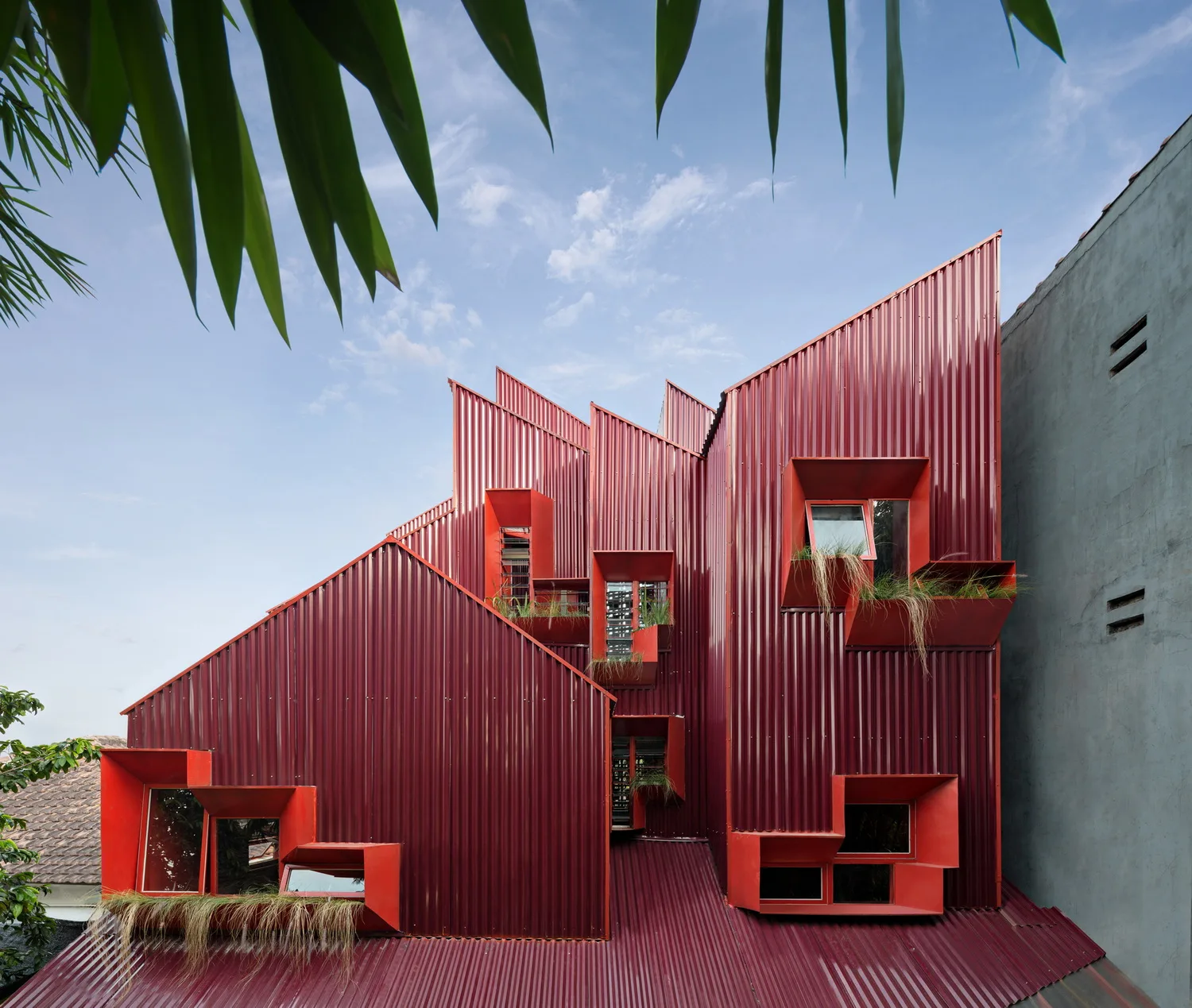
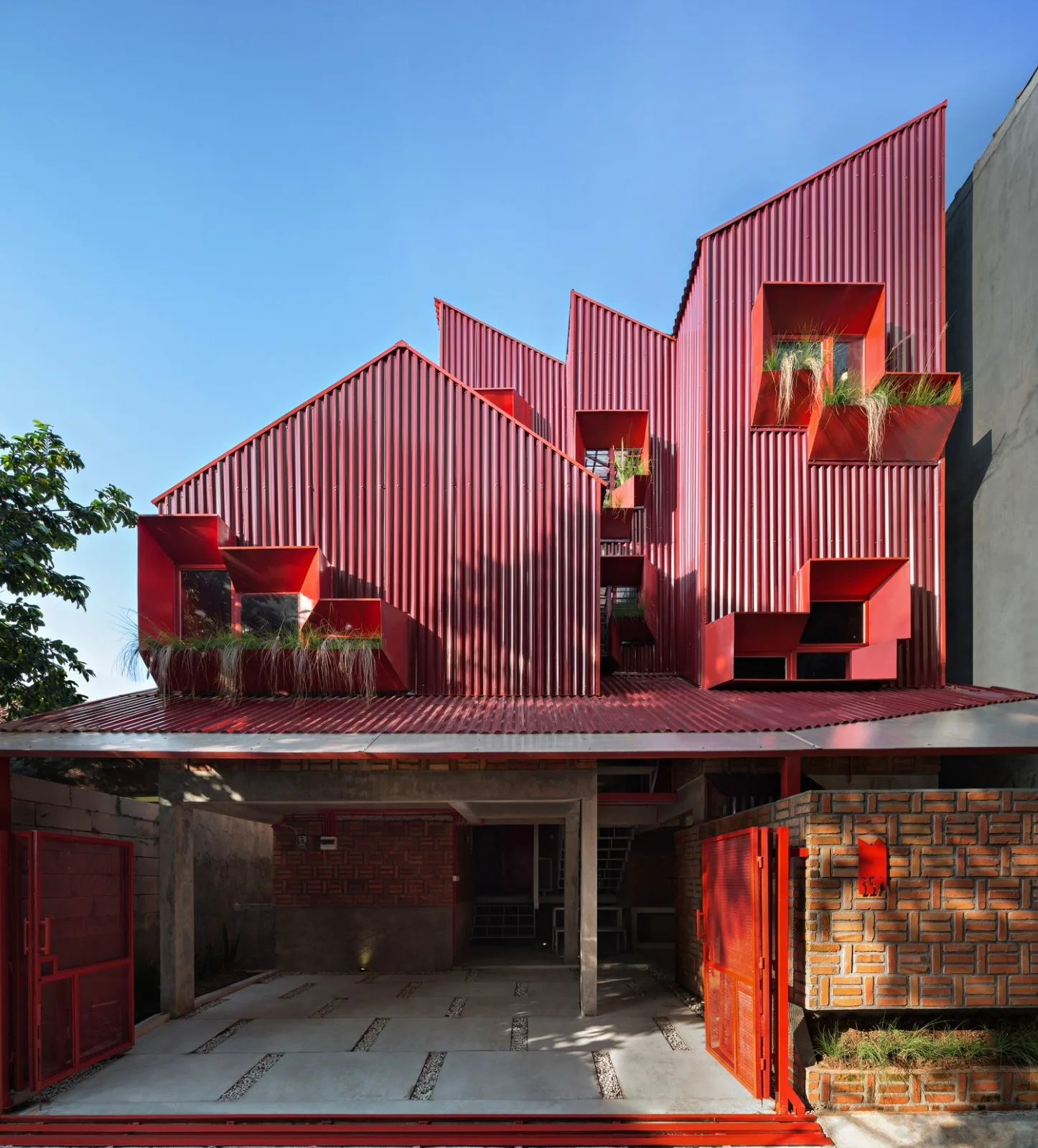
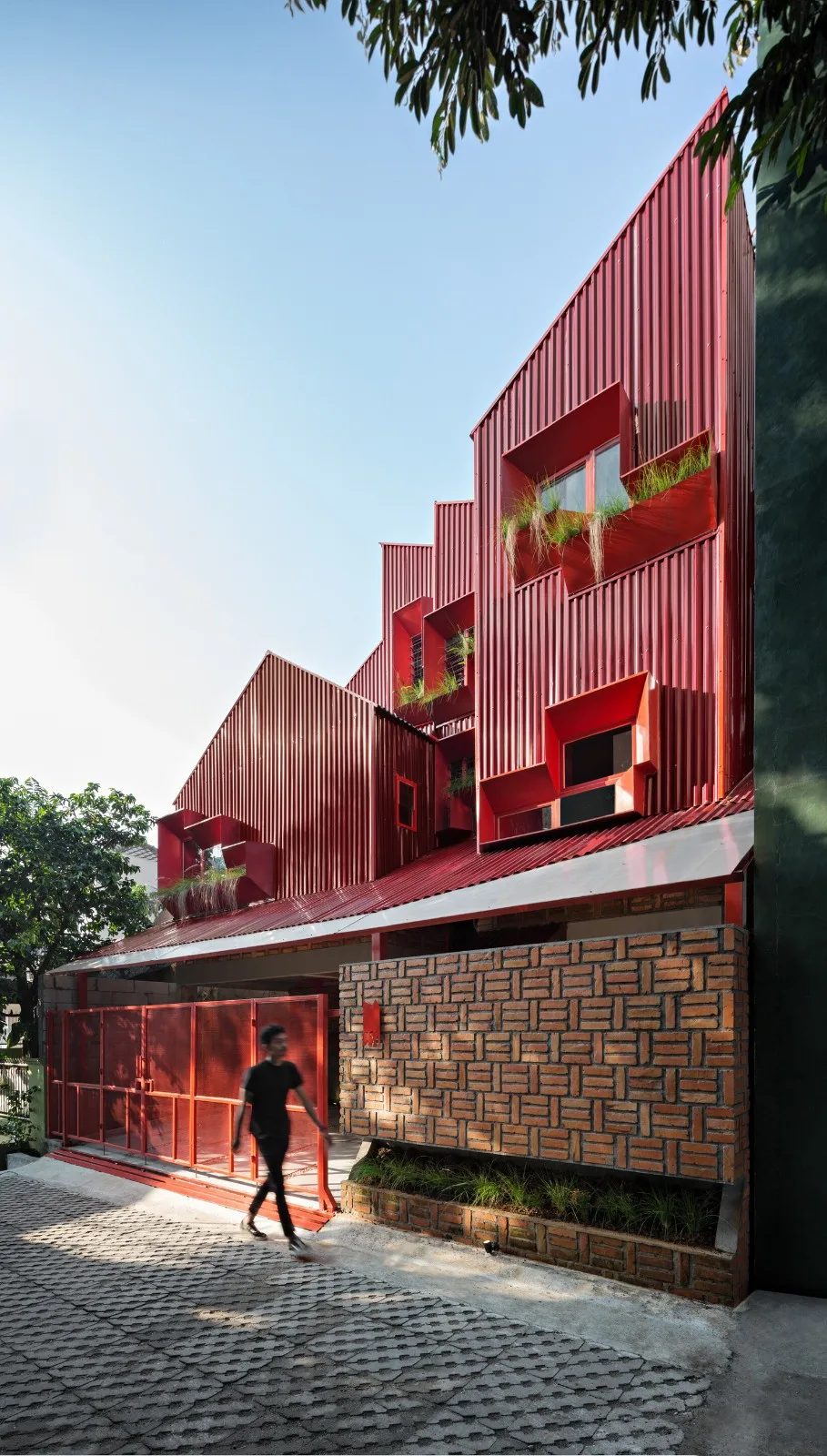
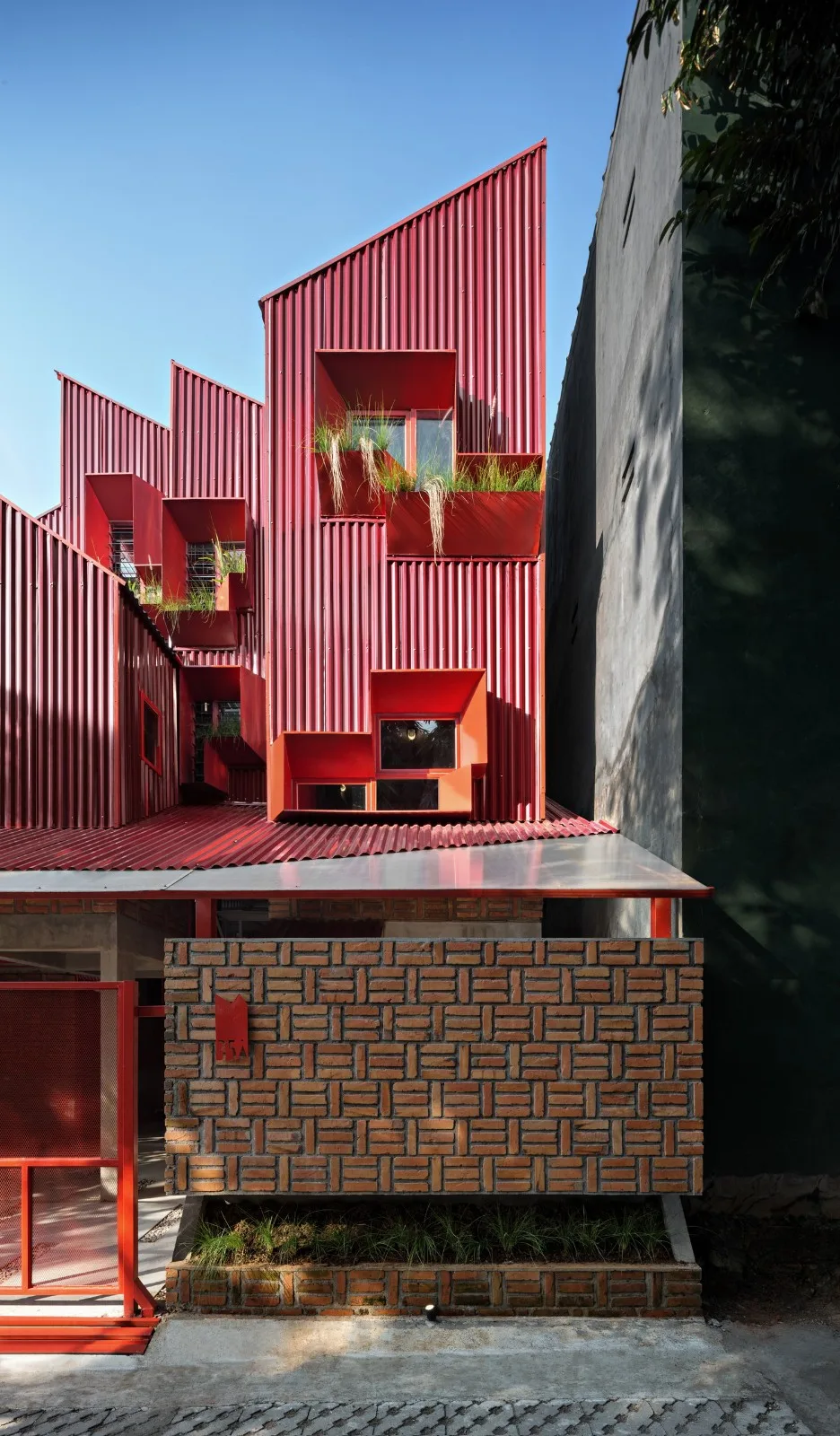
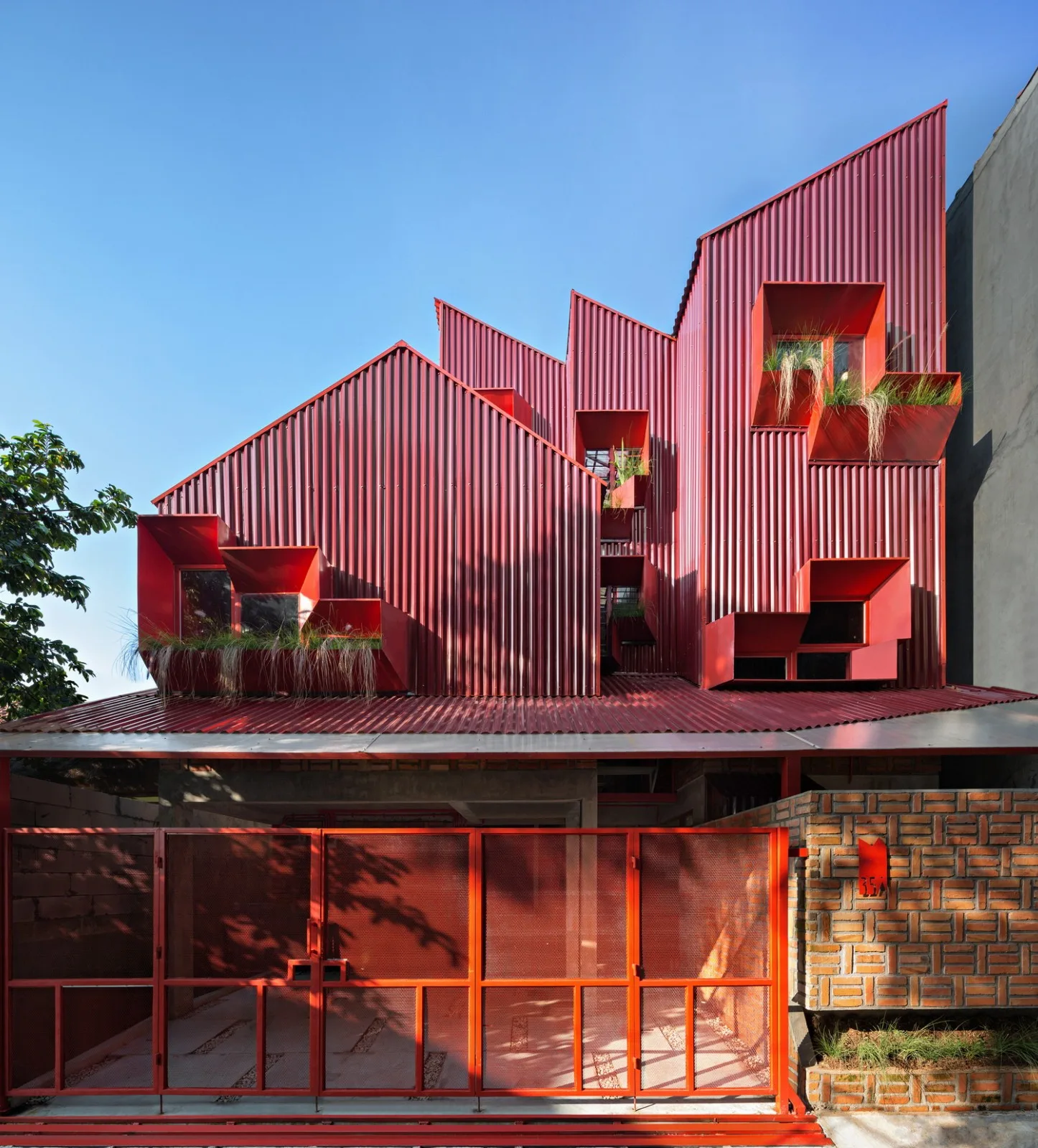
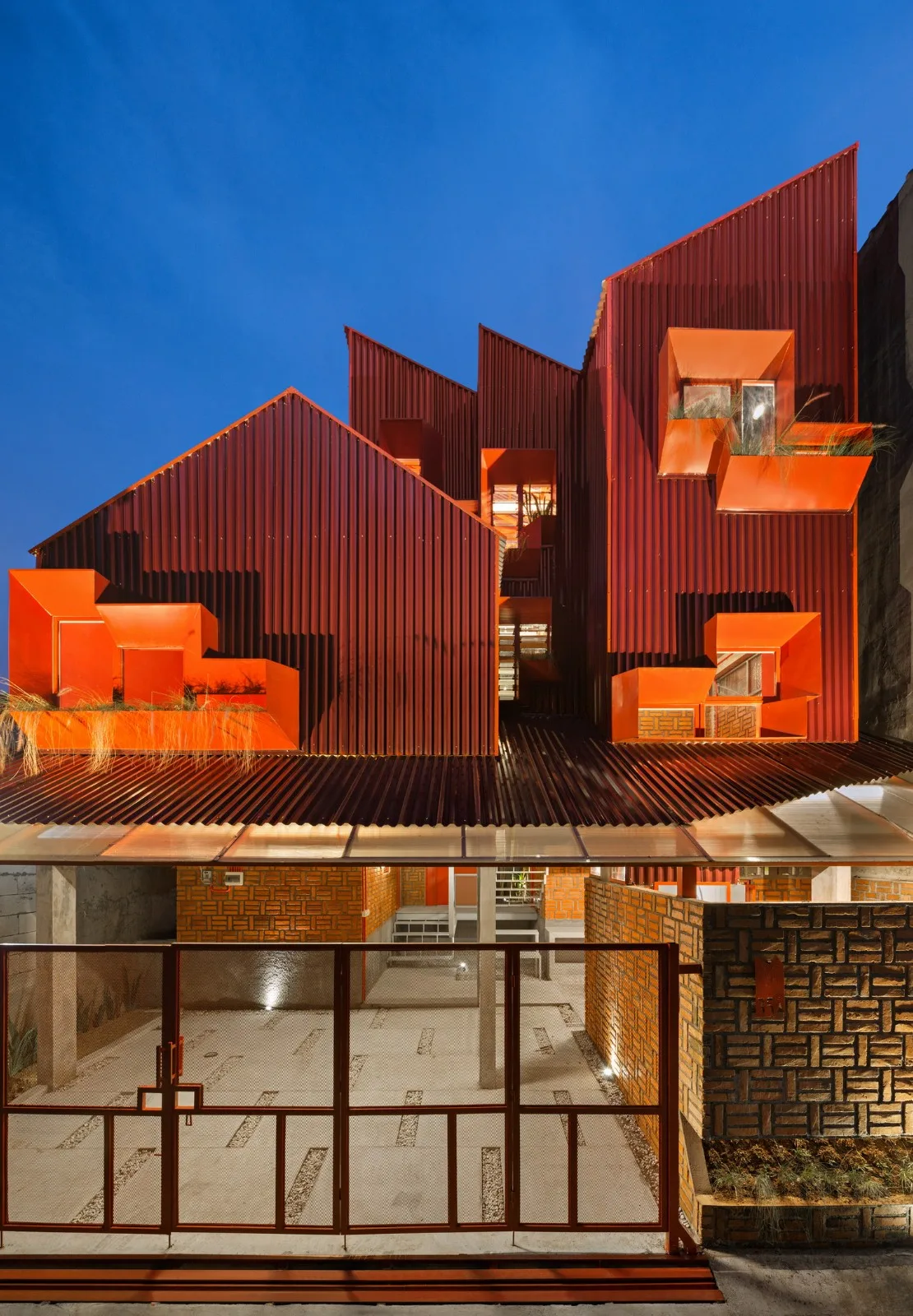
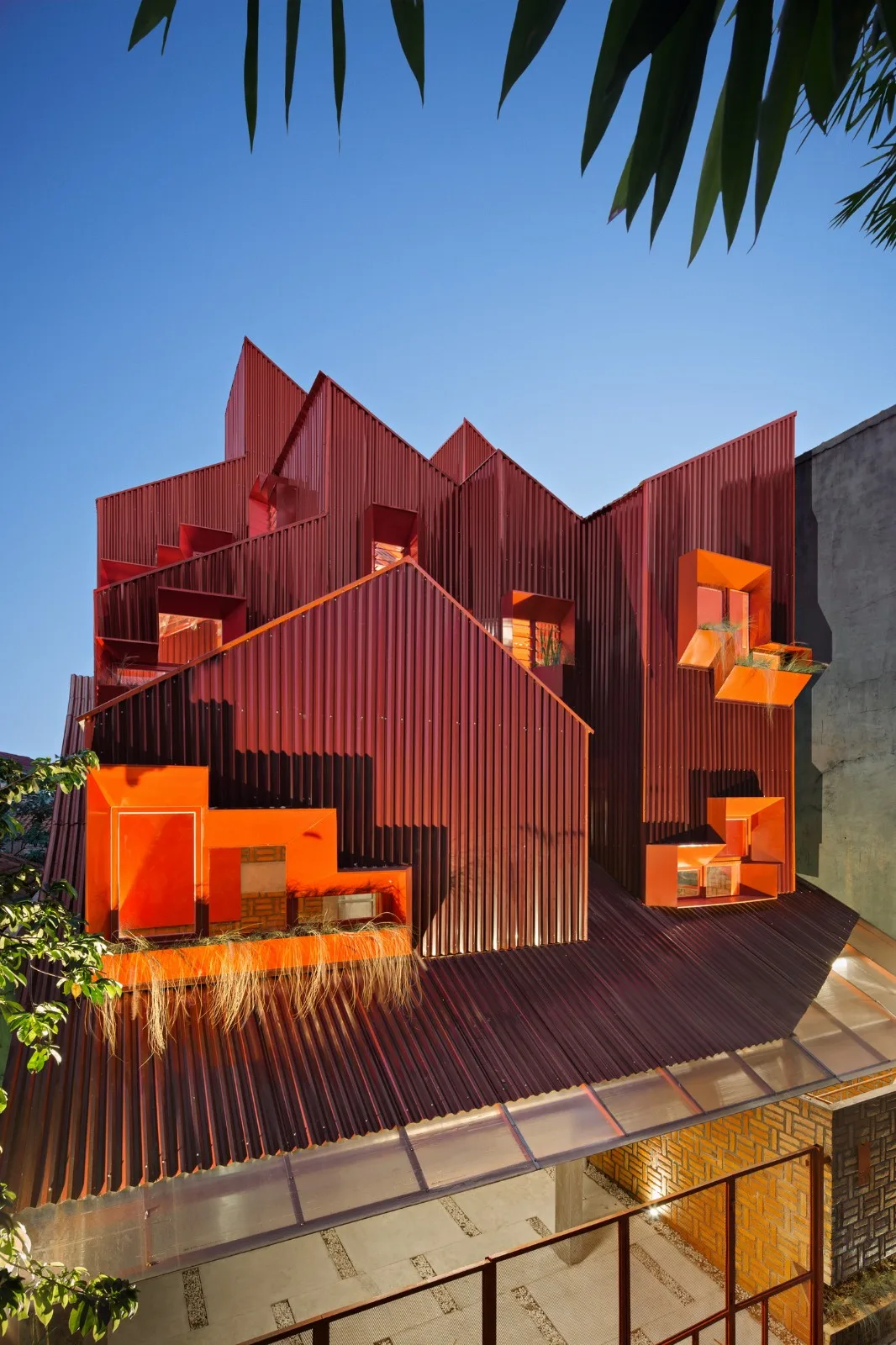
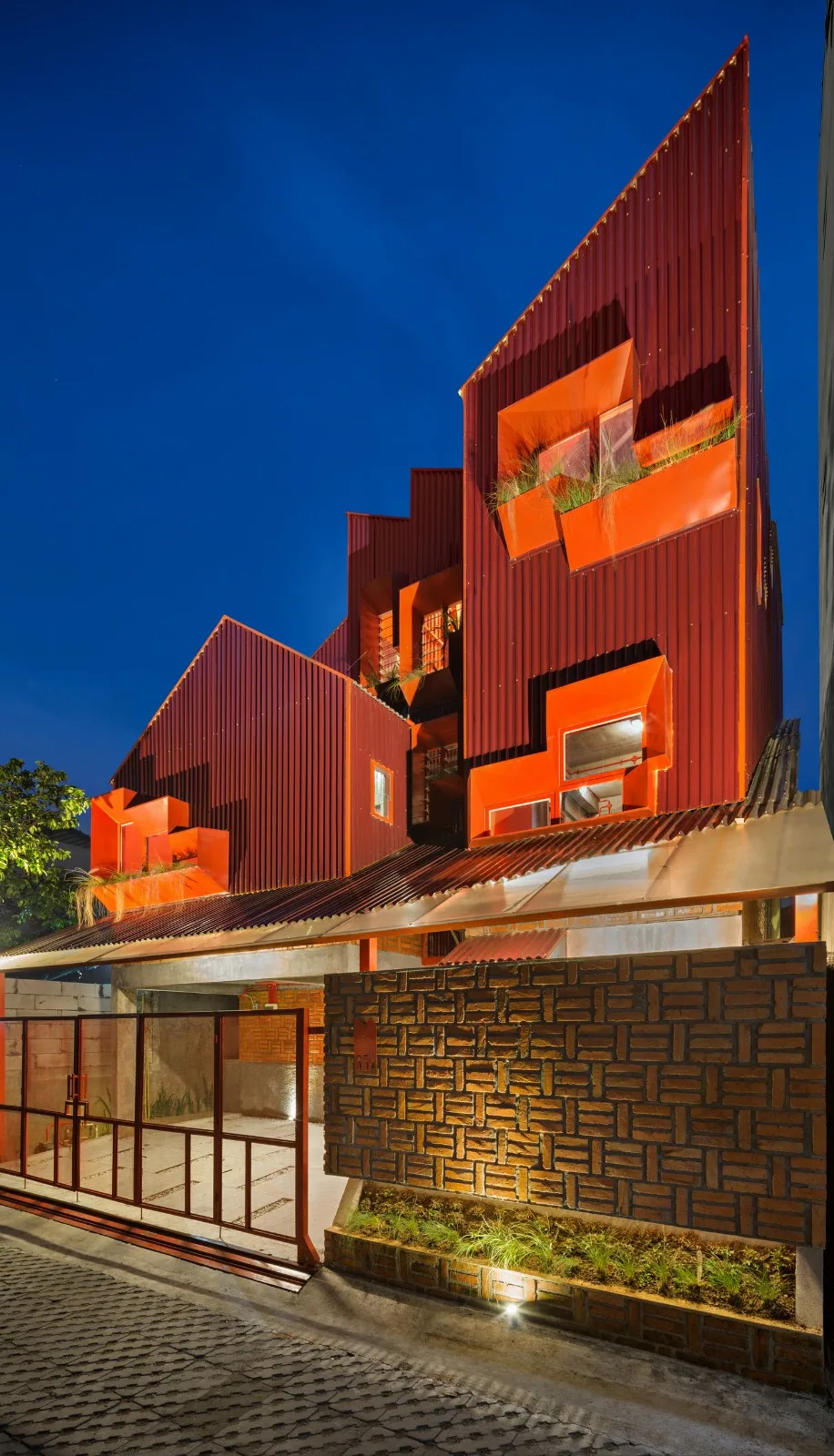
Compared to typical dormitories, this design maintains the same number of units but makes much more efficient use of the confined site area. The circulation design not only establishes a distinctive dormitory style but also becomes a bold architectural statement. To highlight this feature, the façade is painted red—a striking color with a wavelength range of 630-760 nanometers that naturally draws attention.
Volume and Passive Design Strategy
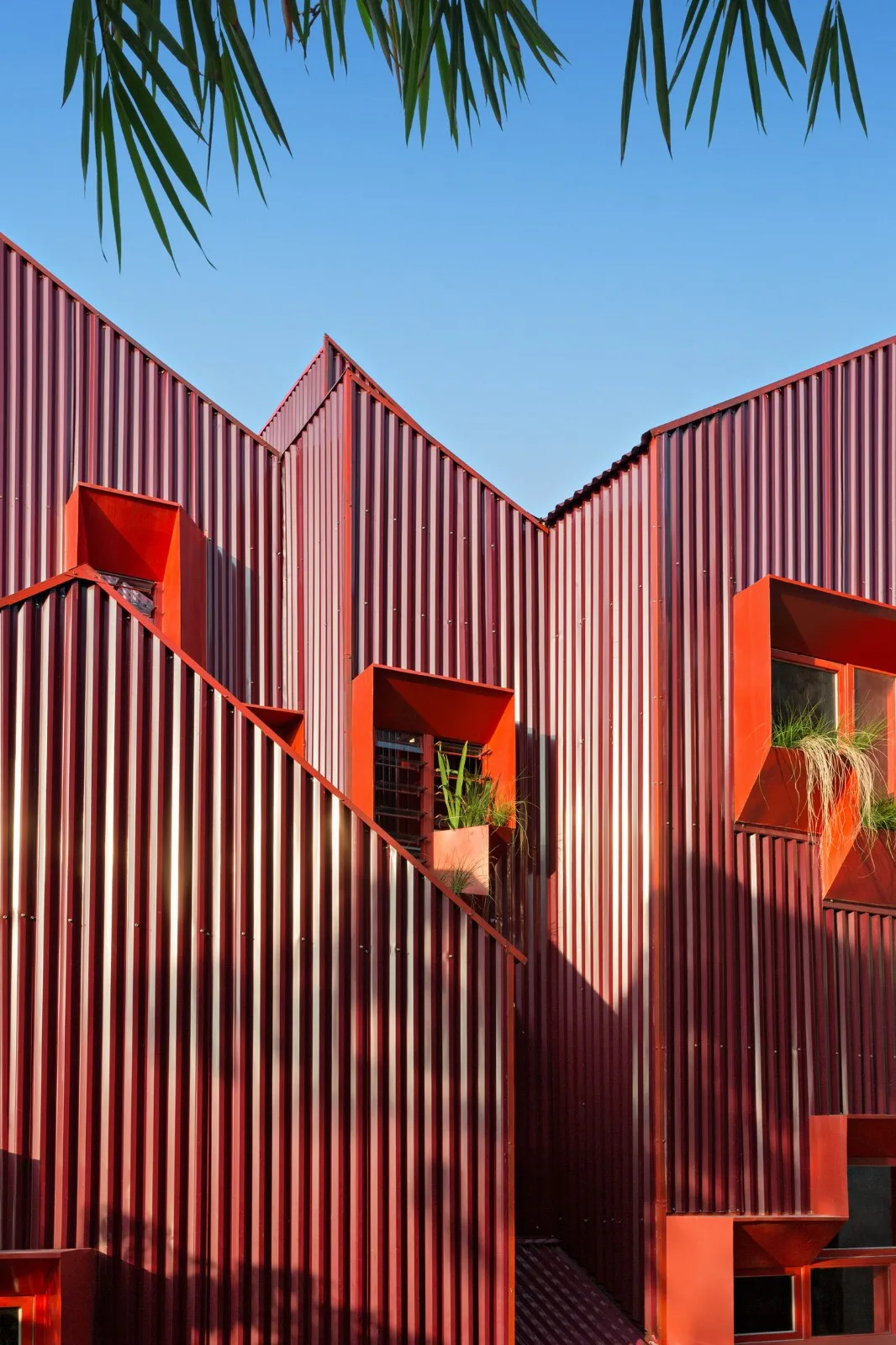
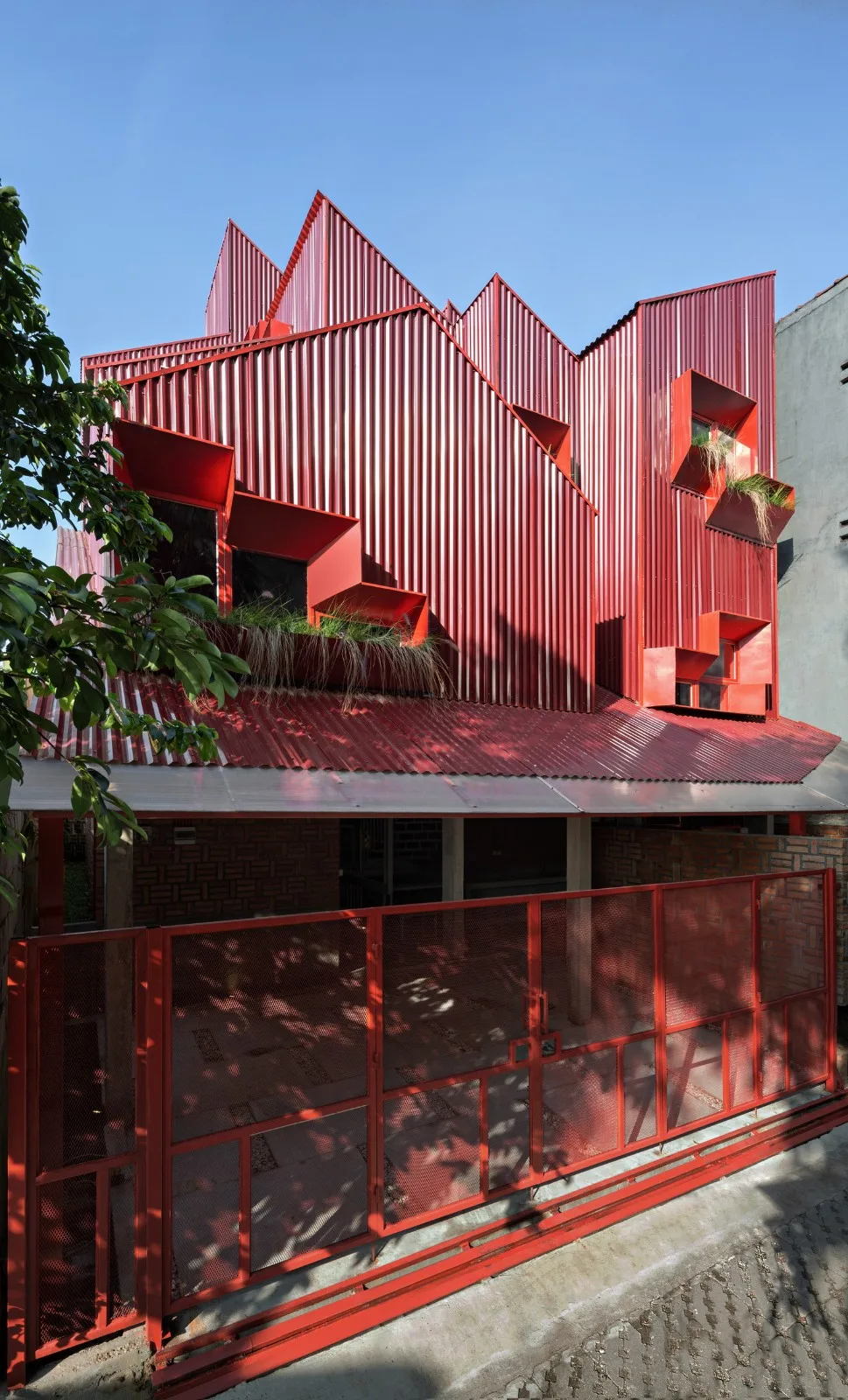
The building’s functional layout and location inspired the architects to conceive the structure as a continuously accumulating, stacked house. This approach results in staggered blocks forming layered spaces. Each fragmented, sloped roof aligns with the column grid of the dormitory units below, reinforcing the stacked effect. These roof spaces also serve as mezzanines, offering potential for future expansion of individual units.
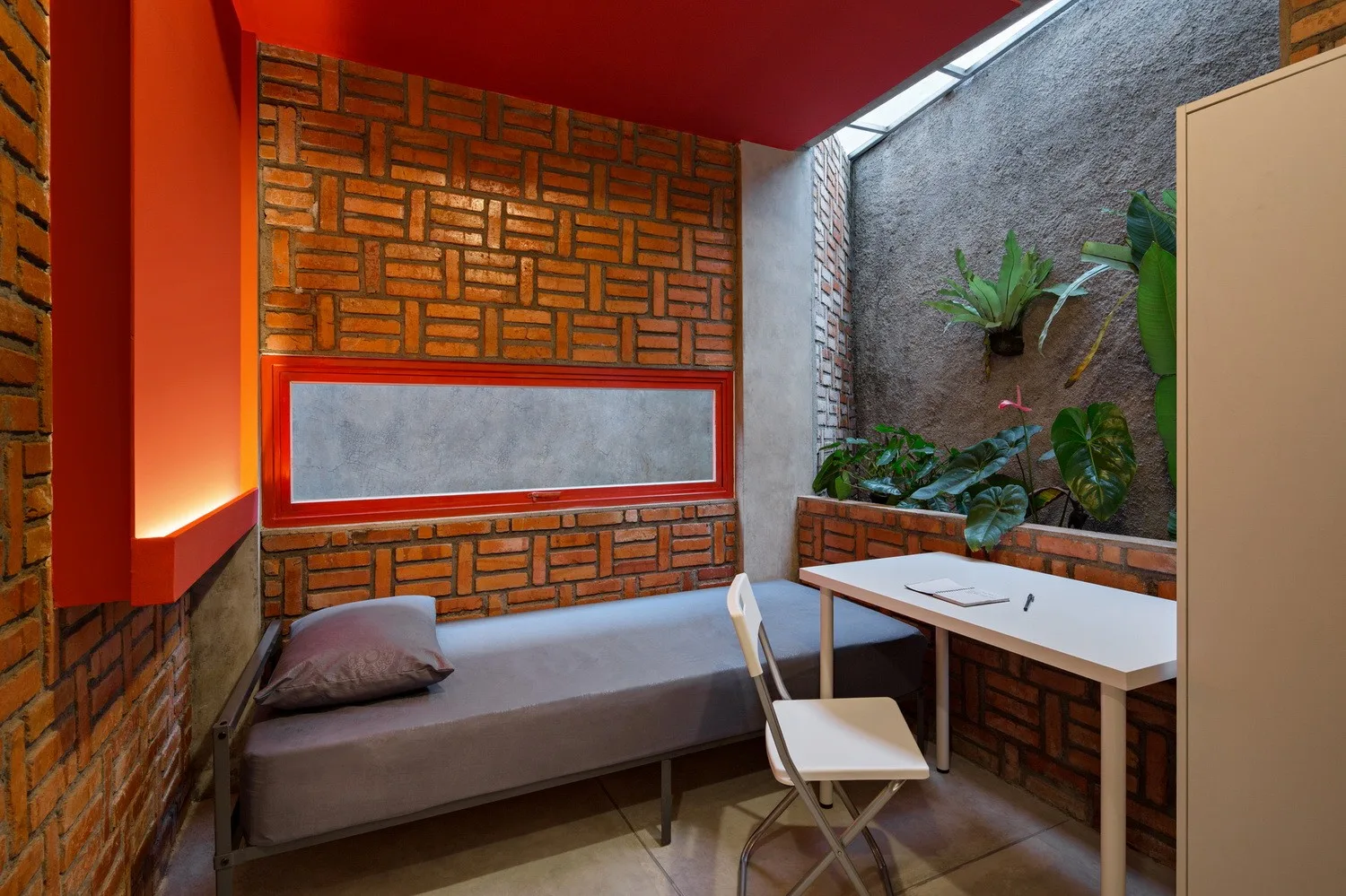
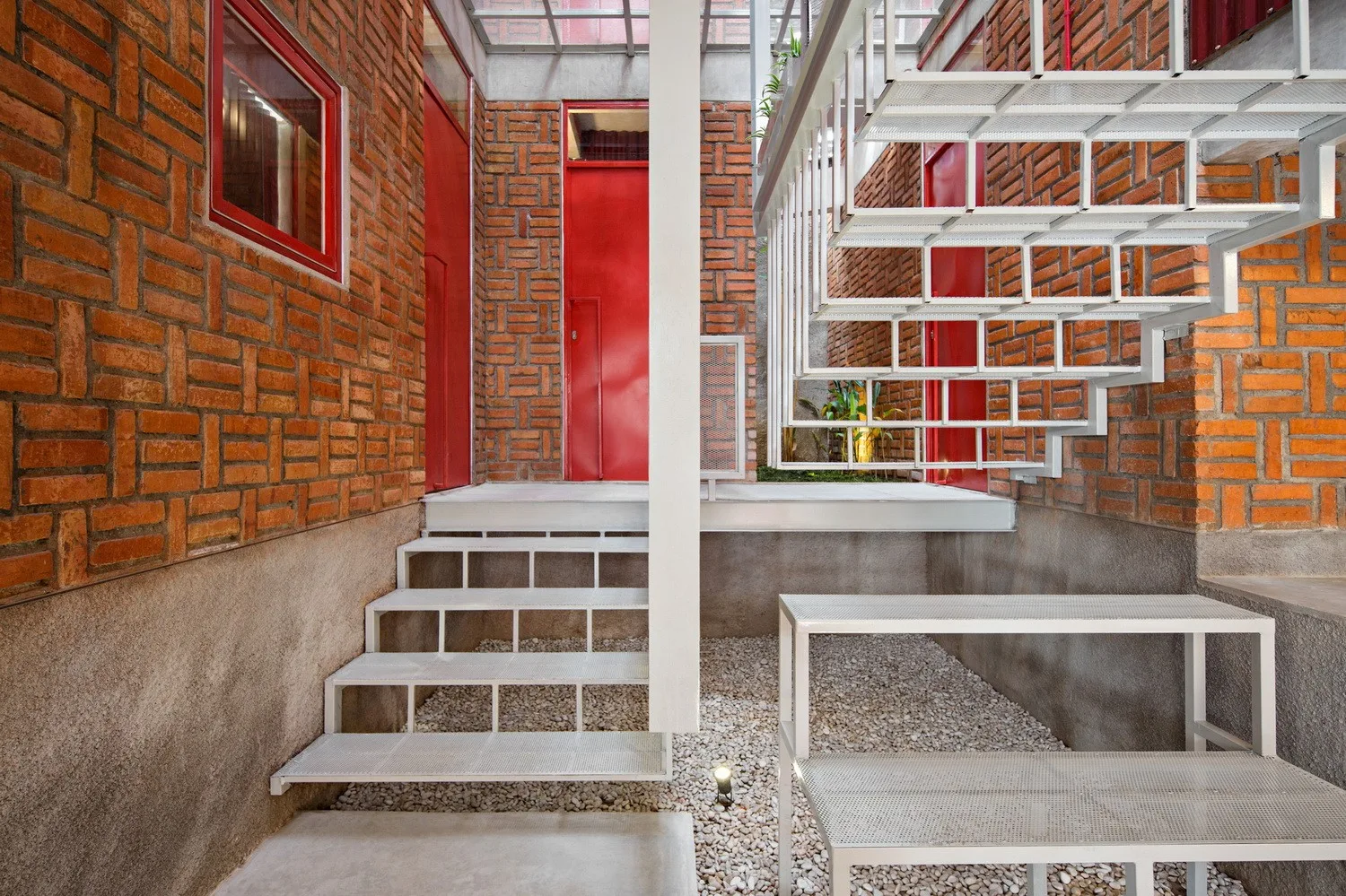
The fragmented roofs and stacked volumes also respond to the tropical climate by enhancing natural ventilation. Additionally, the architects introduced slight offsets between each block to create gaps, ensuring that the blocks do not press against one another. These gaps connect openings in each block, the central green space, and the stairs leading to a green area behind the site.
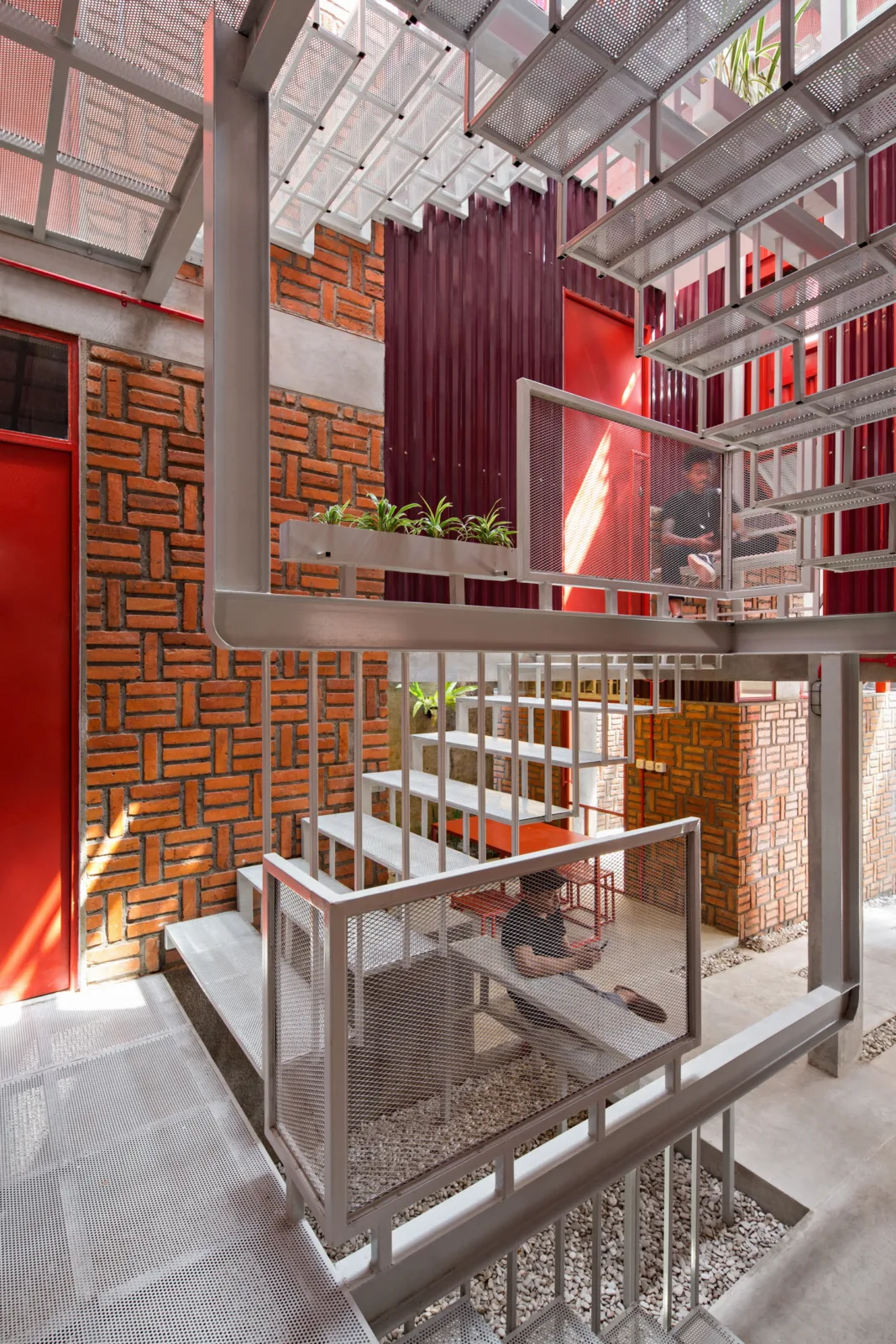
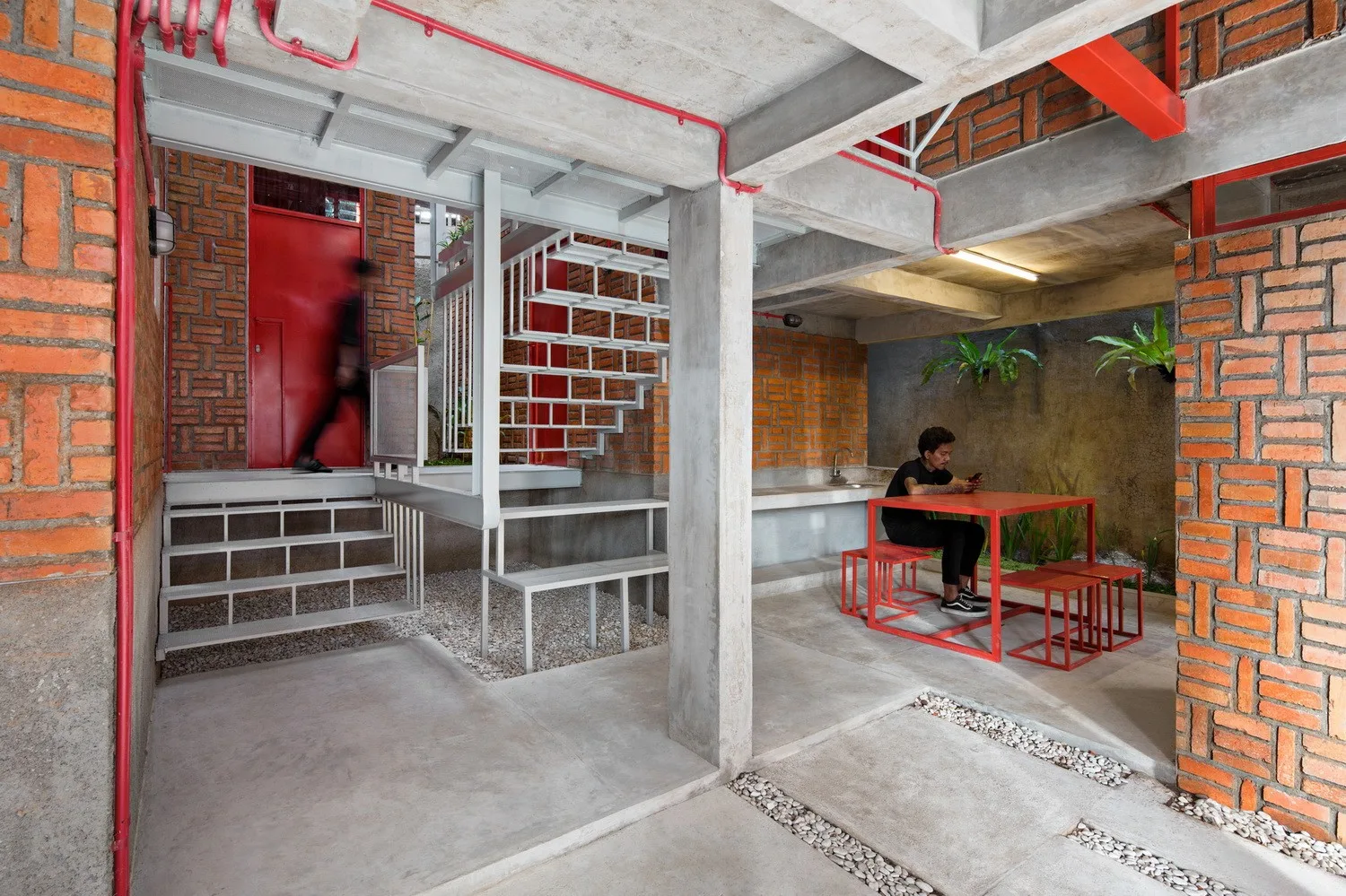
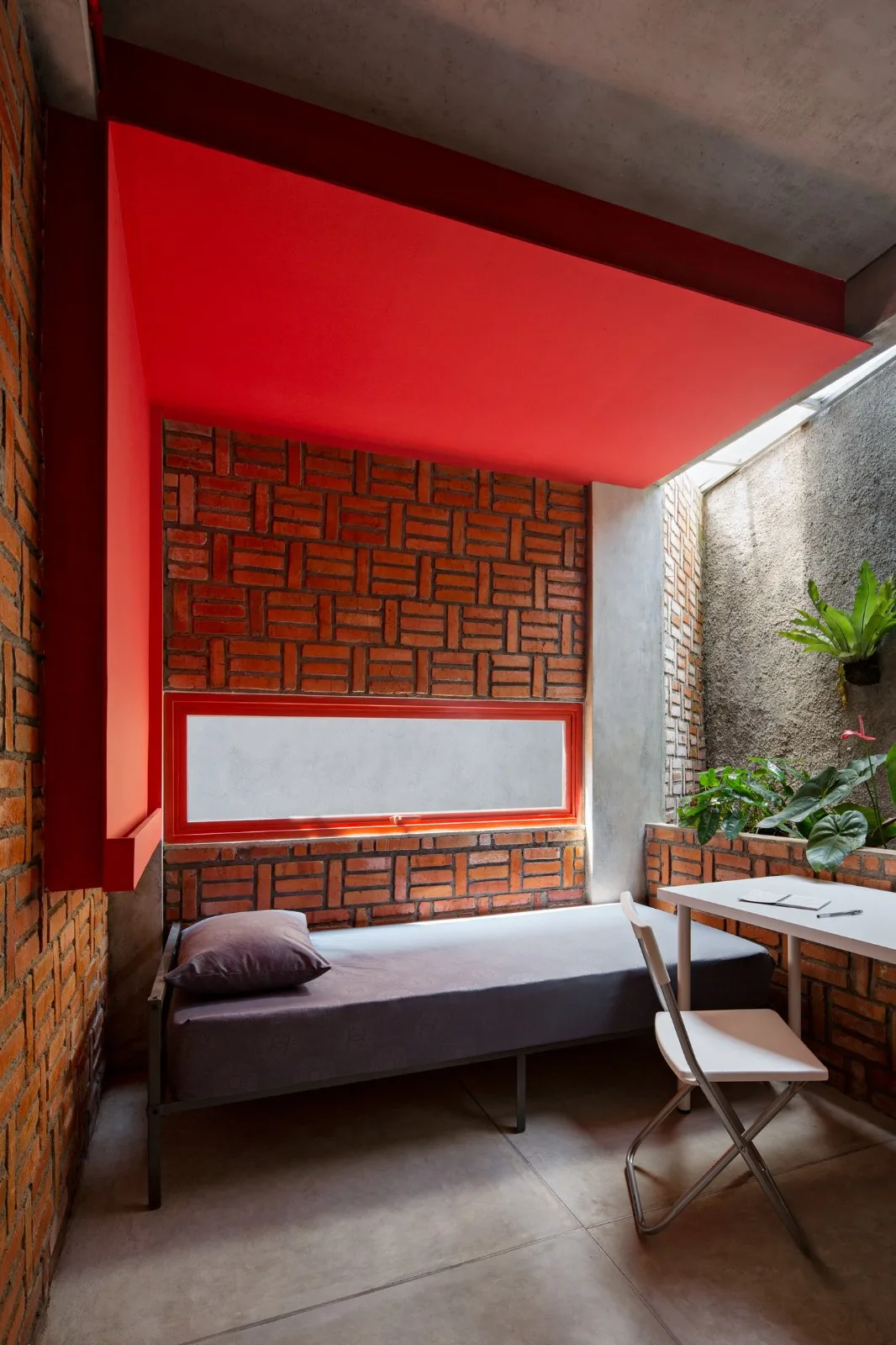
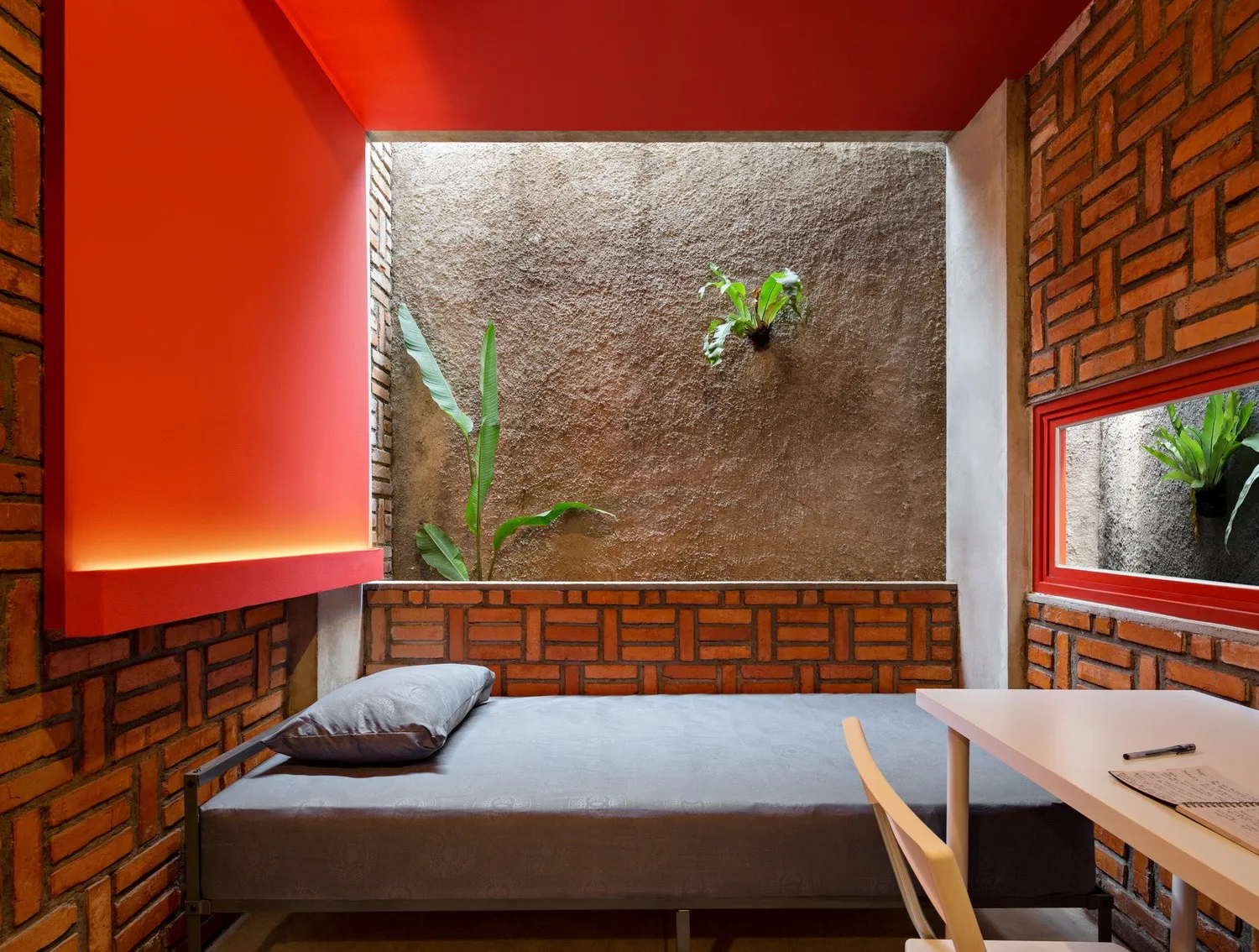
Corridors and stairs are constructed with perforated panels, maximizing airflow and natural light within each unit. The gaps between blocks form service zones, including parking, public areas, food storage, and laundry facilities.
Details and Materials
The staircase, serving as the sole access to each unit, is crafted from steel and iron with a cantilevered, sculptural design. These suspended stairs not only showcase structural innovation but also provide residents with a memorable living experience. Perforated steel stair treads allow natural light from skylights to penetrate deeper into the building, creating dynamic shadows that emphasize the contrast between exposed brick and red metal walls, adding unique character to both the interior and exterior.
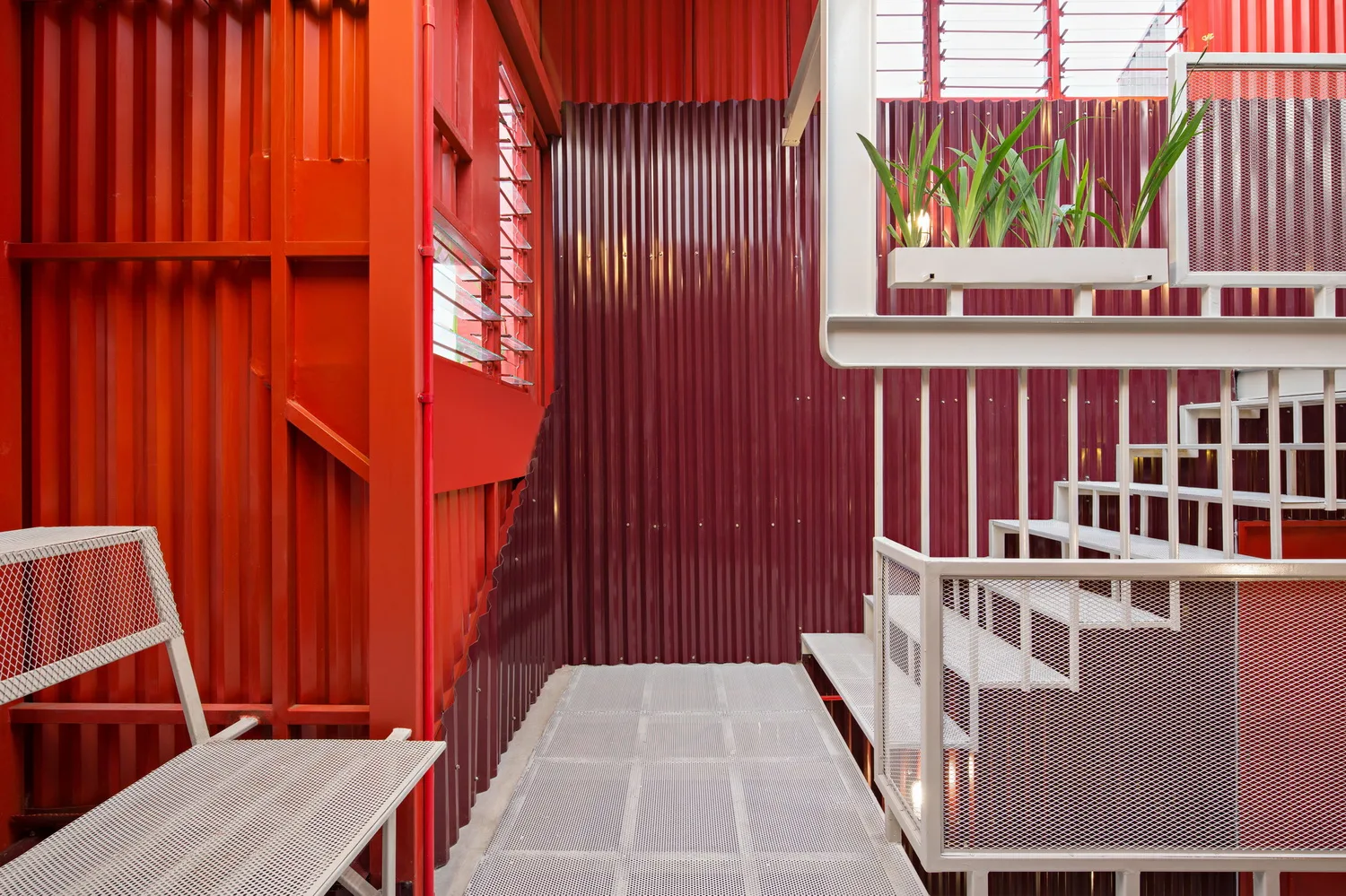
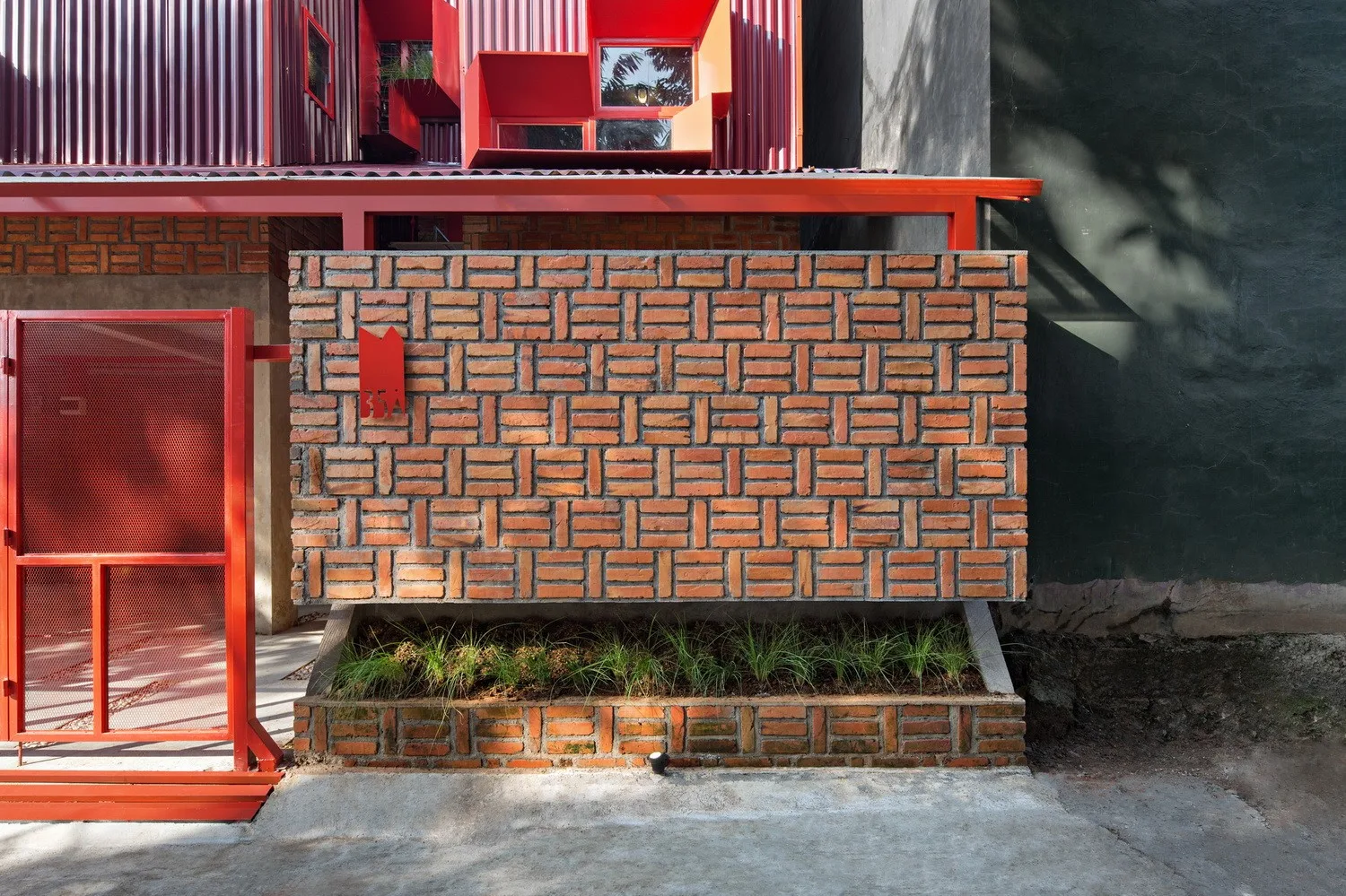
Upper floors employ lightweight structures with steel framing for roofs and walls, optimizing the building’s overall structural efficiency. The ground floor features concrete flooring and exposed brick walls, chosen for durability and minimal maintenance. These materials naturally age over time, allowing the building’s appearance to evolve uniquely within the urban environment.
Project Drawings
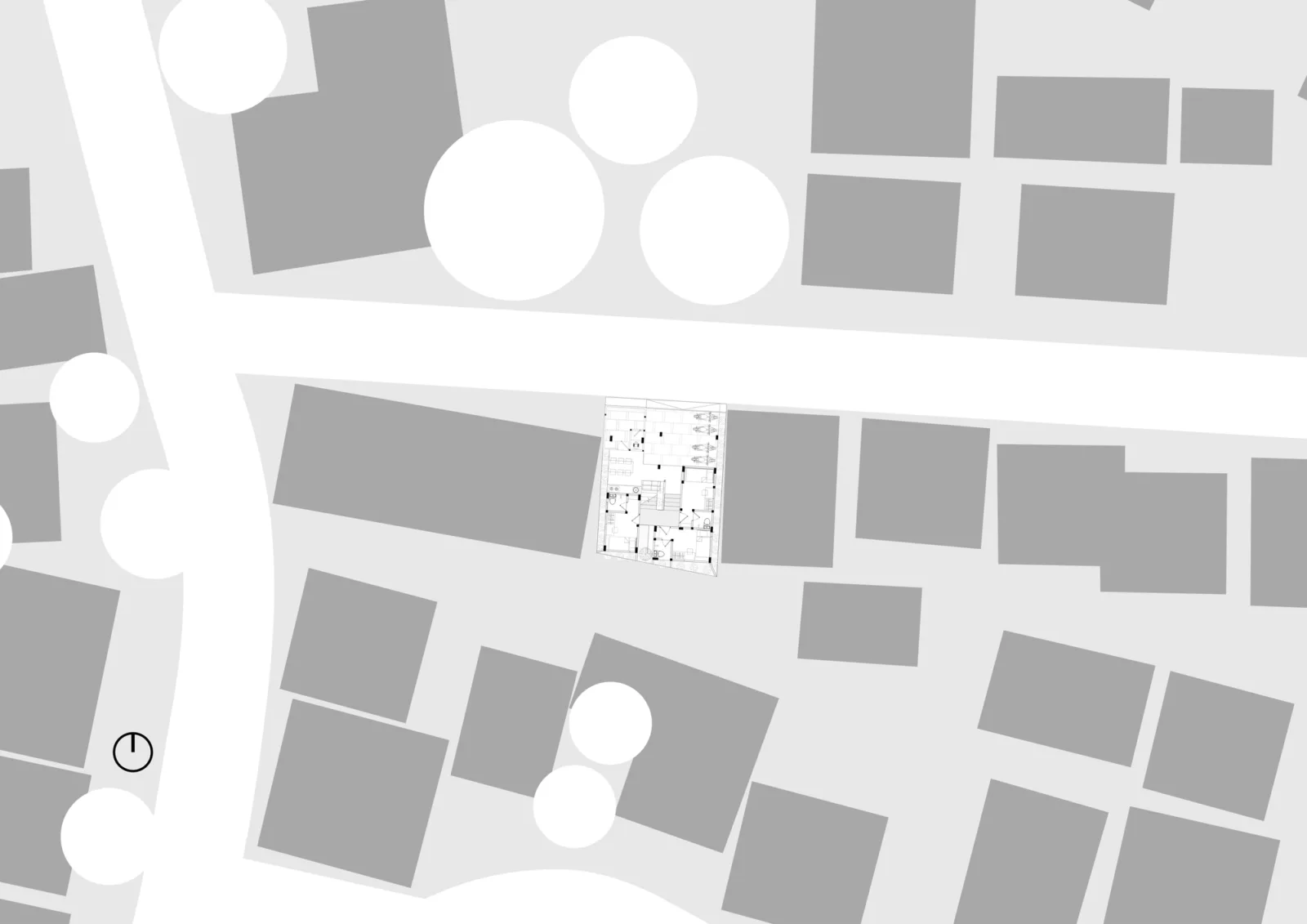
△ General Layout Plan
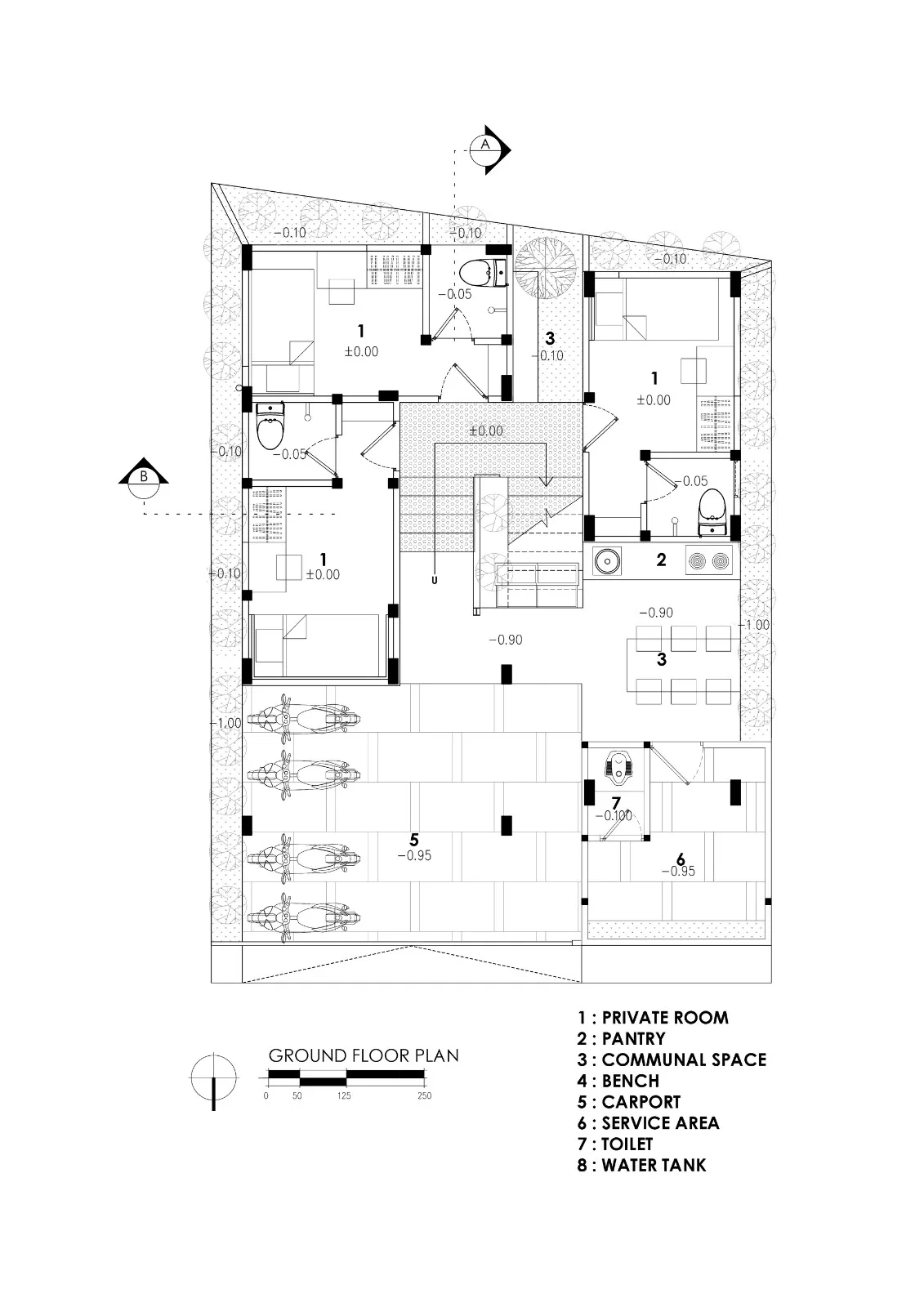
△ First Floor Plan
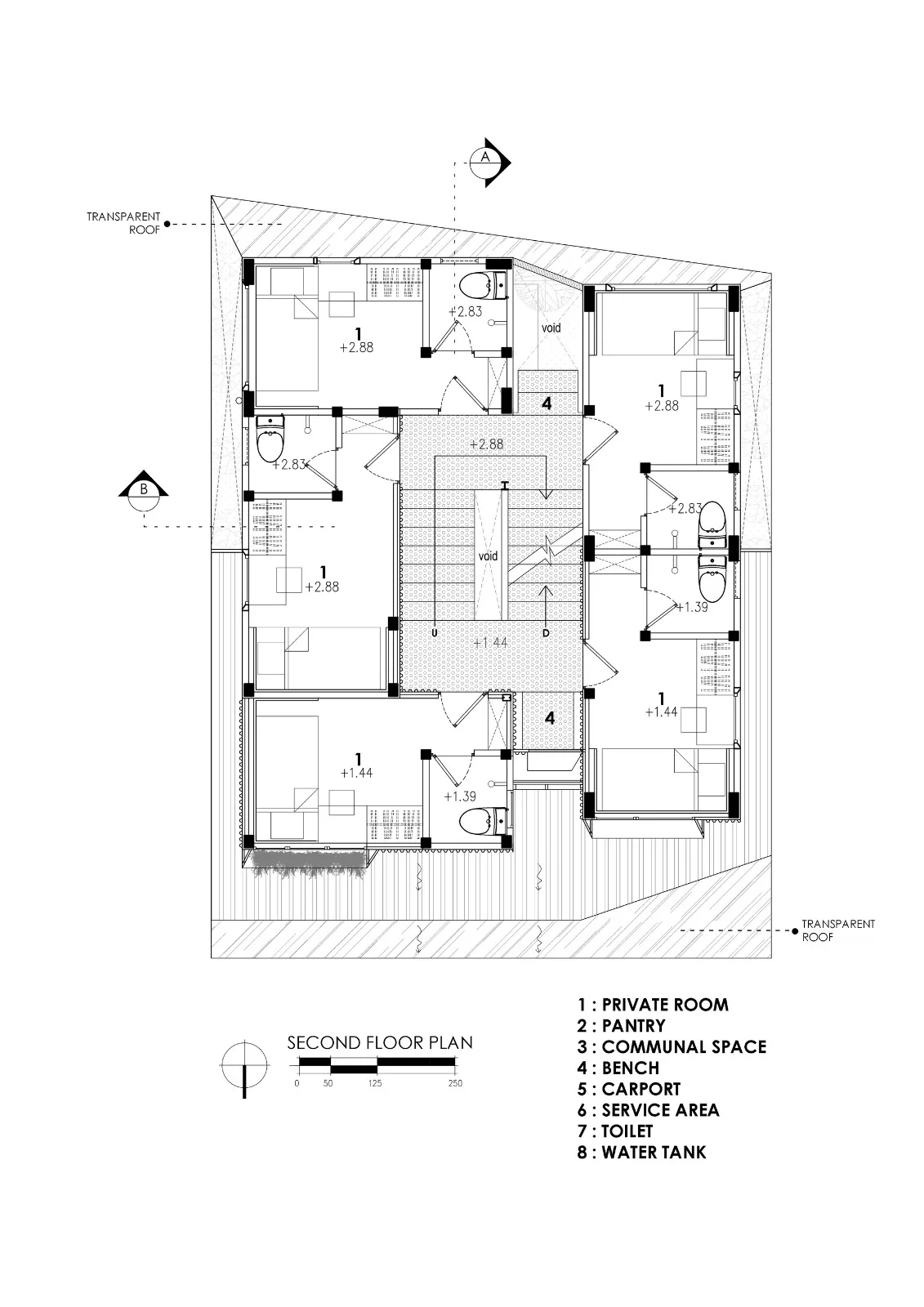
△ Second Floor Plan
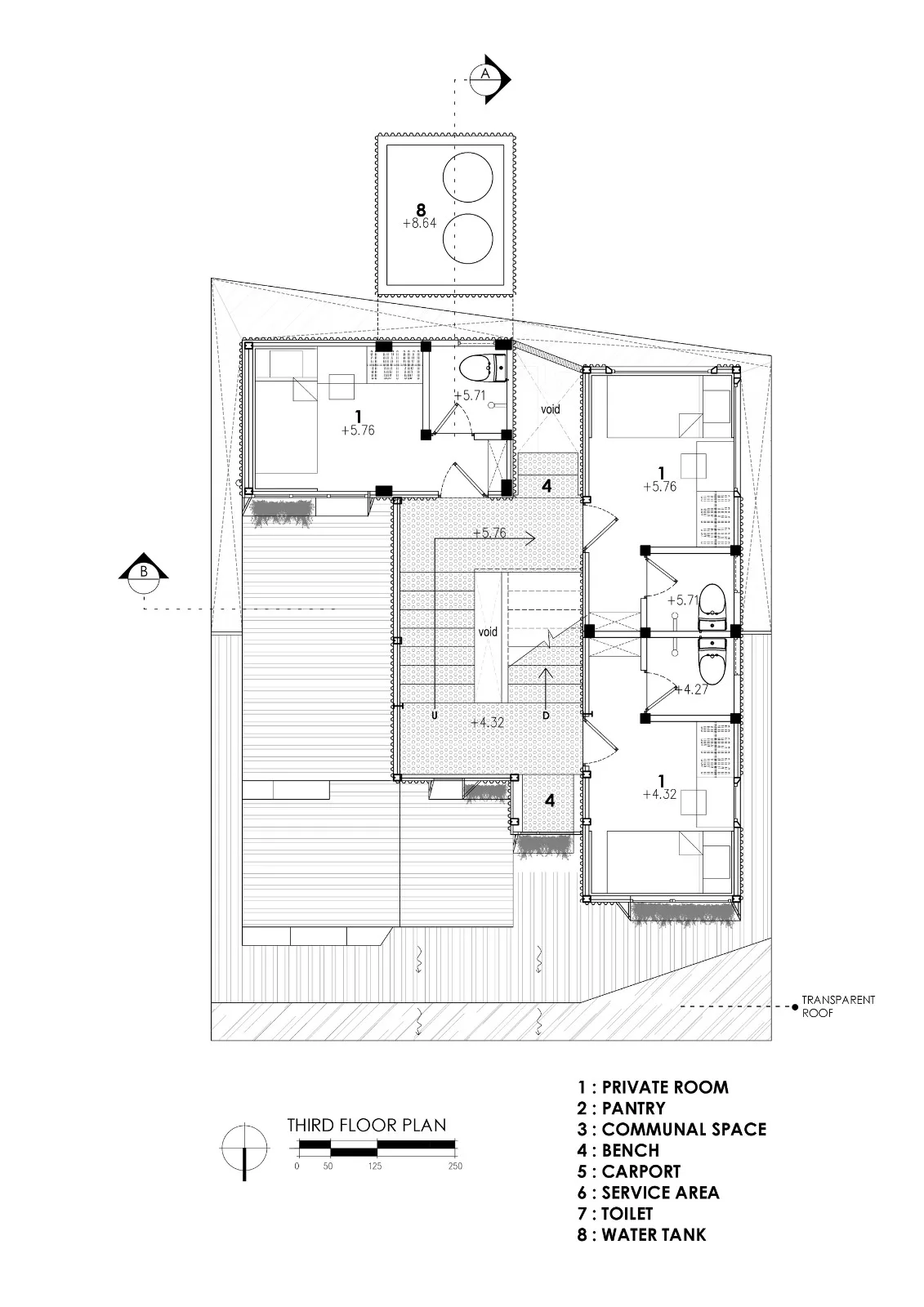
△ Third Floor Plan
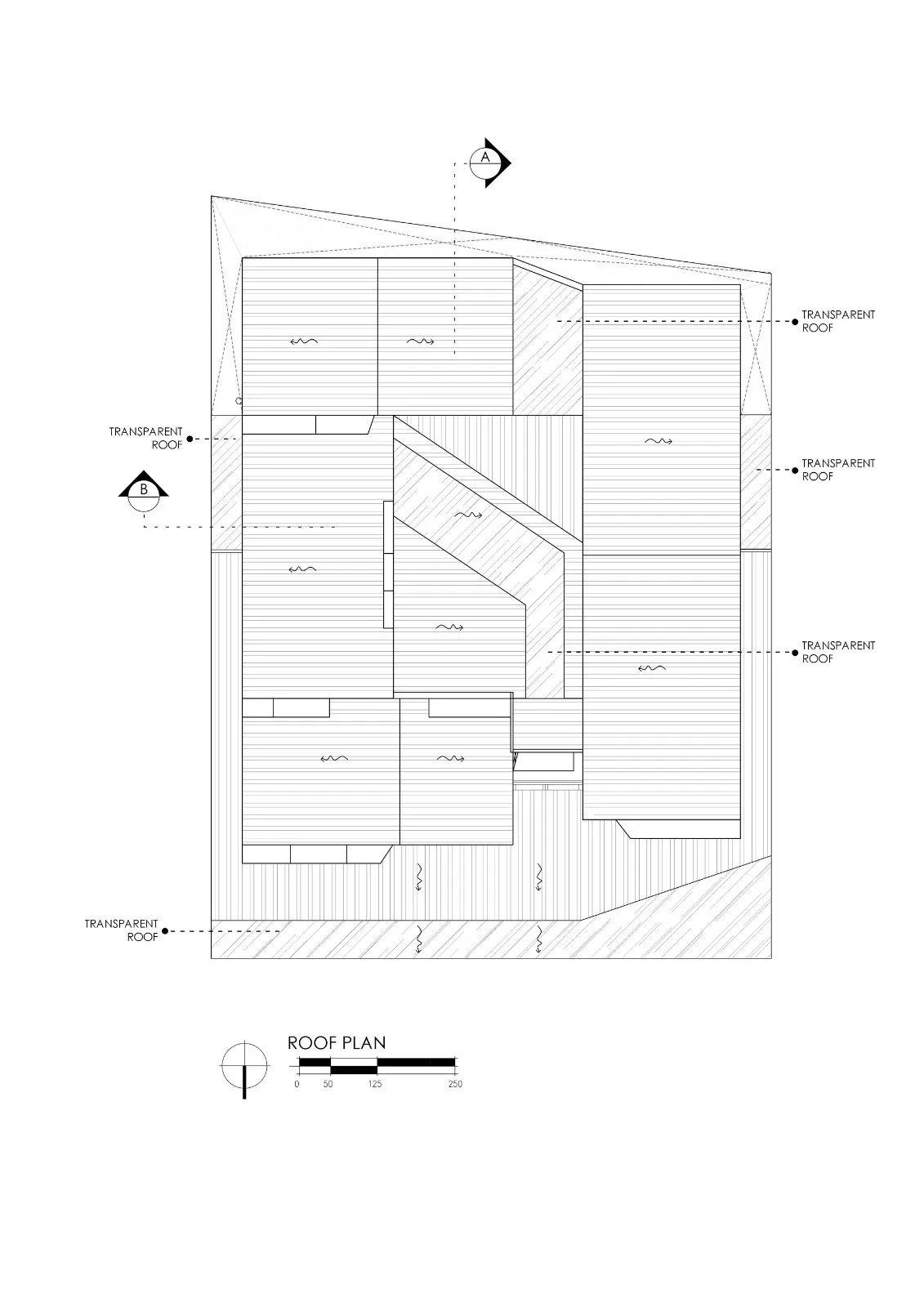
△ Roof Plan
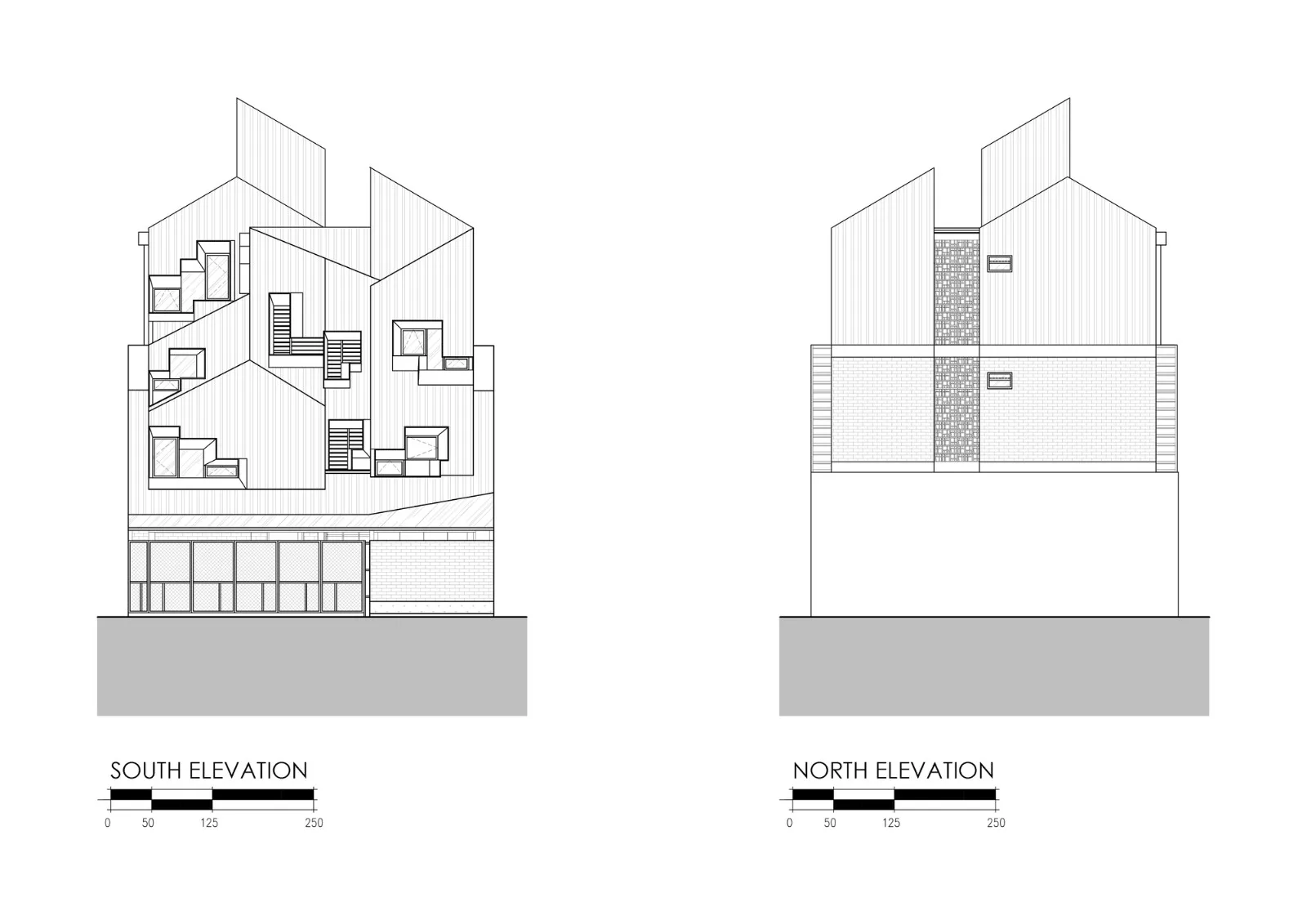
△ Elevation Drawing
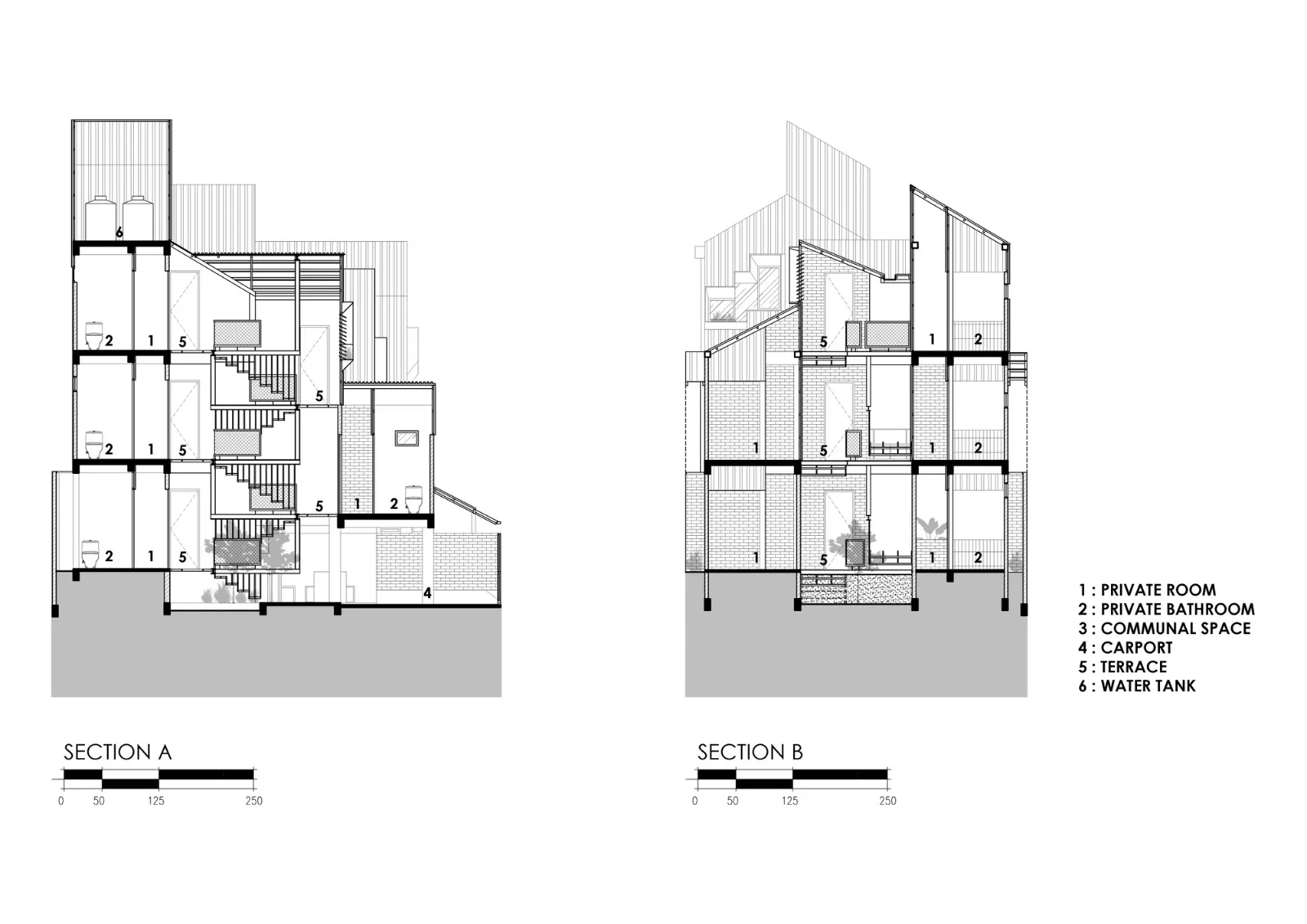
△ Section Diagram
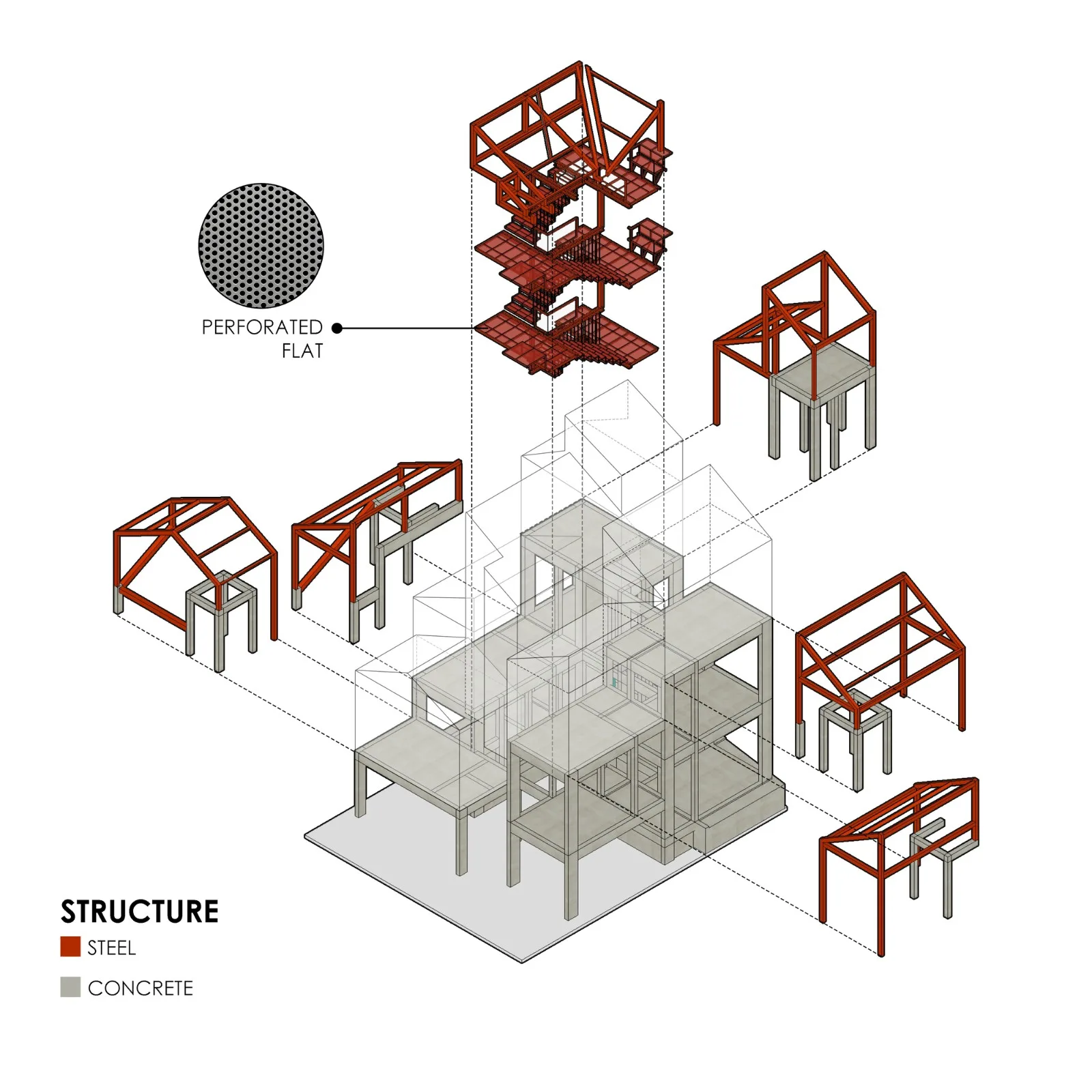
△ Structural Explosion Diagram
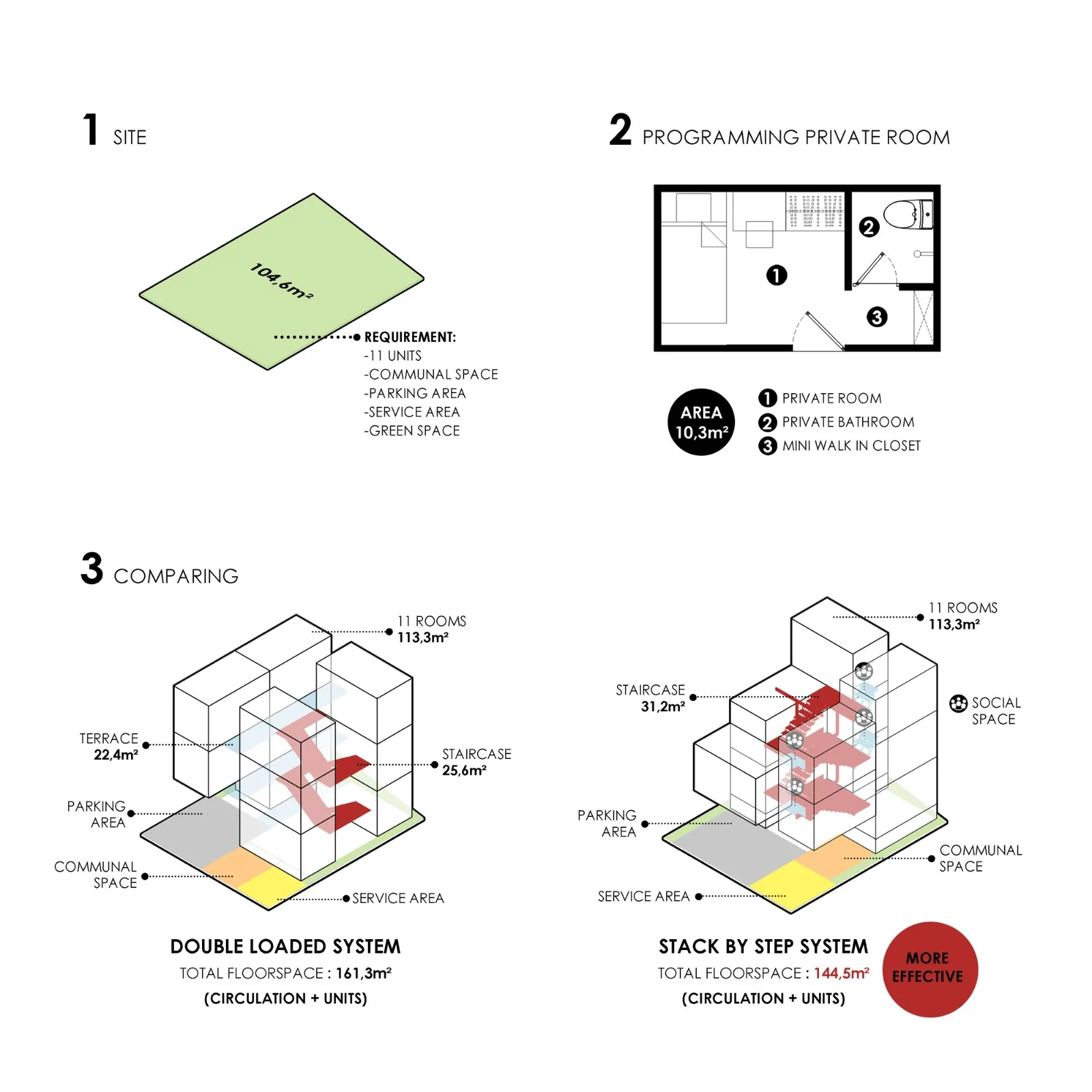
△ Analysis Chart
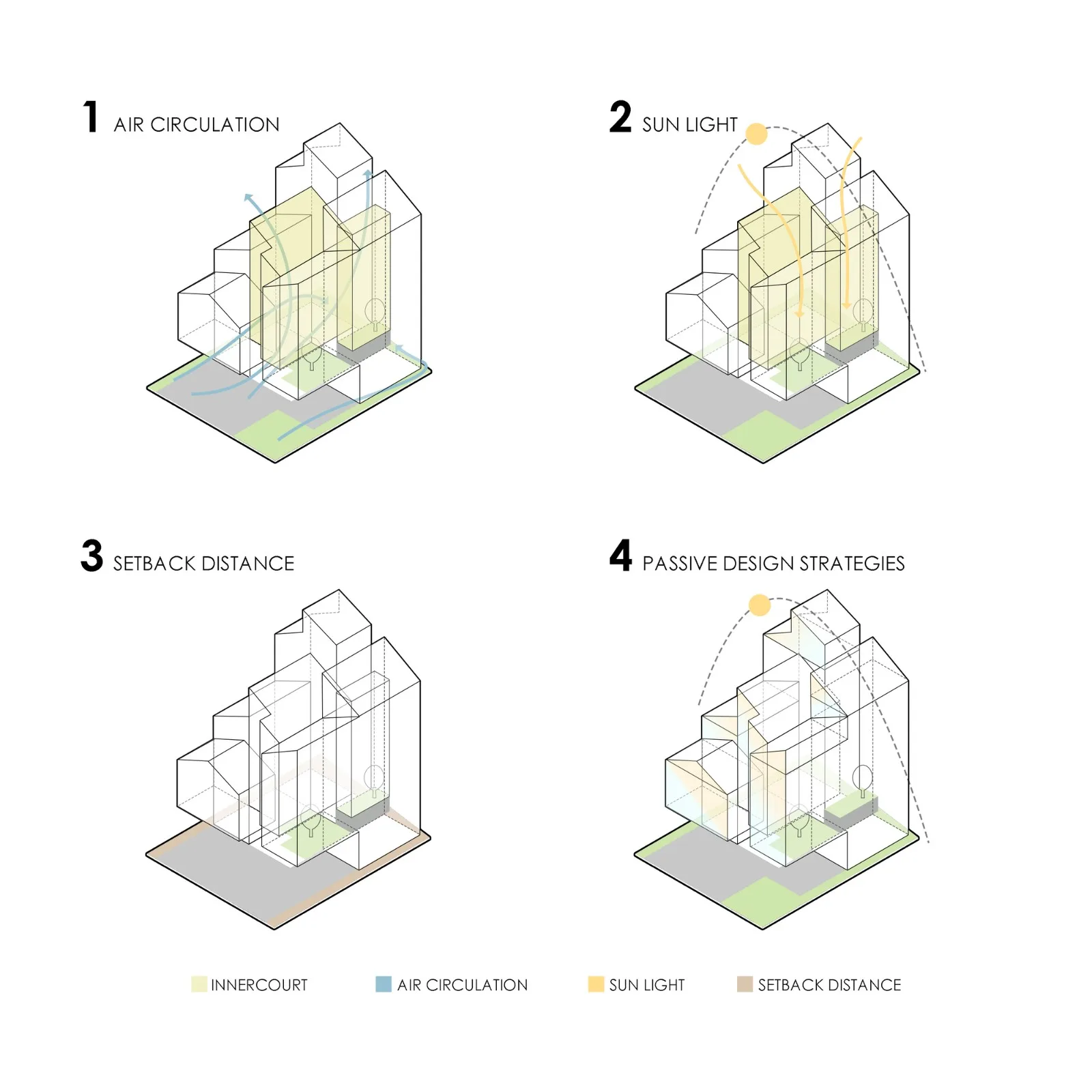
△ Analysis Chart
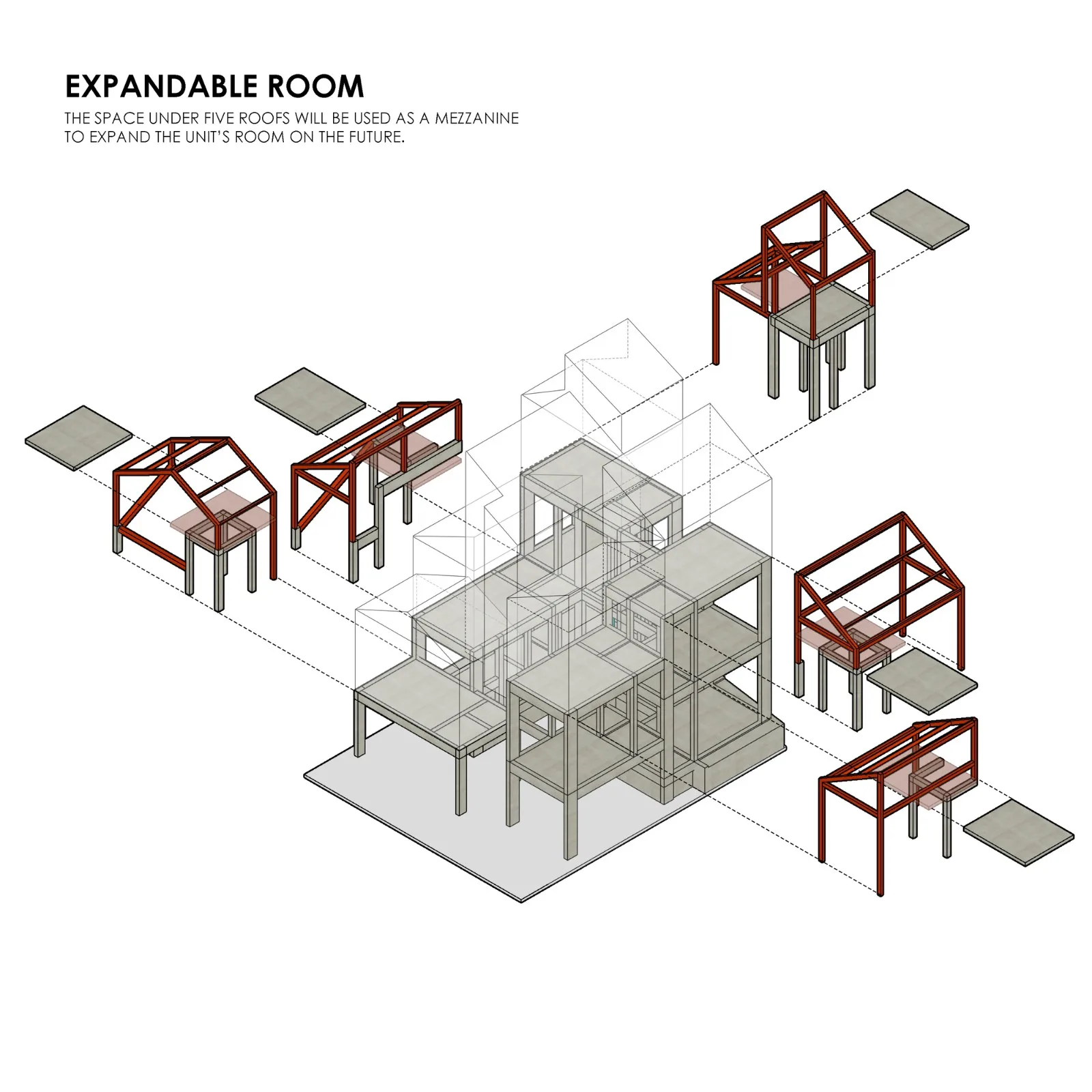
△ Analysis Chart
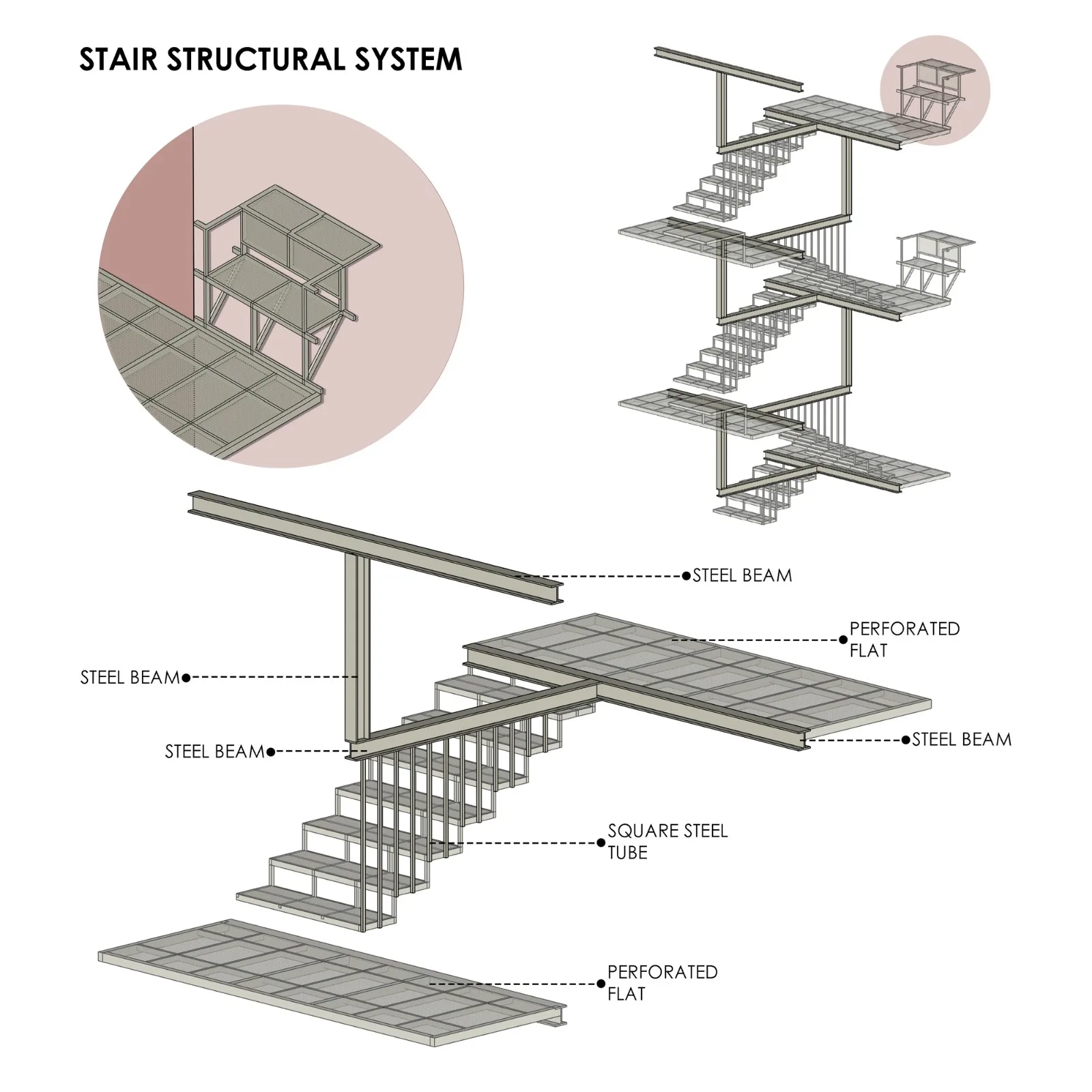
△ Node Diagram
Project Information
Architectural Design: Ismail Solehudin Architecture
Area: 178 m²
Project Year: 2021
Photographer: Mario Wibowo
Manufacturers: Boss, Mortar Utama, Nippon Paint, Philips, Rucika
Lead Architect: Ismail Solehudin
Assistant Designer: Jamilah Uswah
Project Manager: Ali Yazid Bustomi
Venue Manager: Zaini Tamrin
Structural Engineer: Setyadi Muztaba
Architect: Wani Build
Construction: Ismail Solehudin Architecture
Location: Bogor City, Indonesia












Must log in before commenting!
Sign Up