
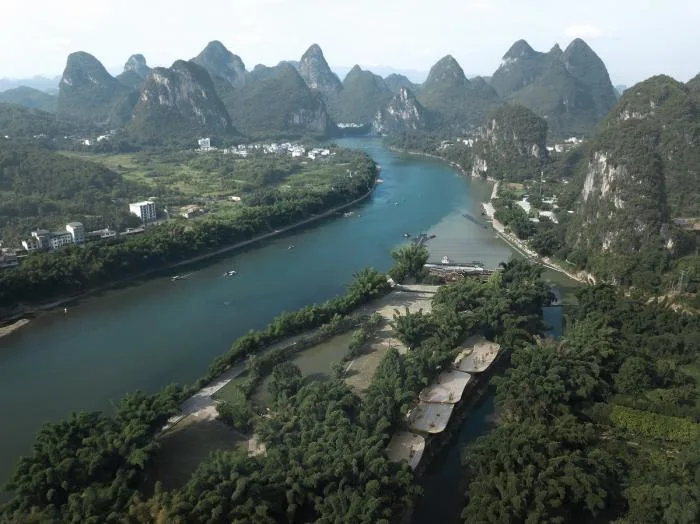
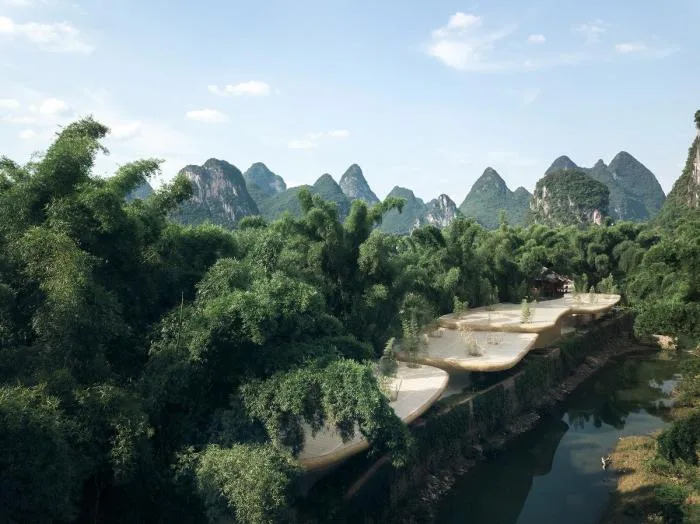
Guilin’s landscape is truly breathtaking. This project is situated within Impression Liu Sanjie Park in Yangshuo, one of China’s most spectacular natural scenic areas. The vast hills and boulders are surrounded by endless greenery. In such a magnificent setting, any architectural design that conflicts with the natural environment would seem inappropriate. With this understanding, the design concept embraces natural elements—especially bamboo—as its foundation.
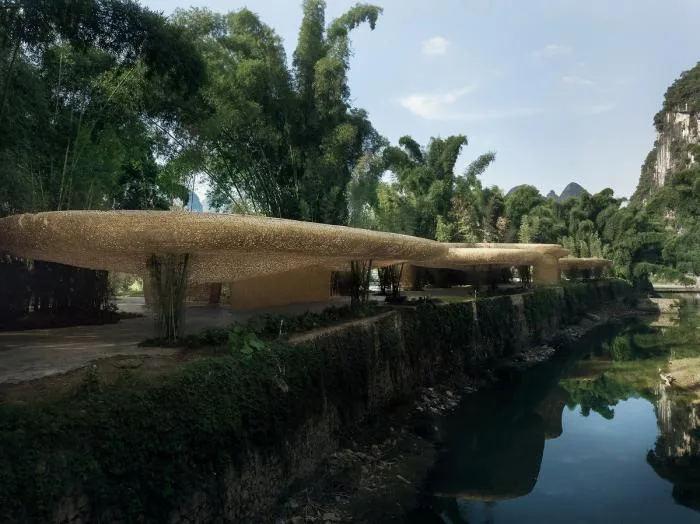
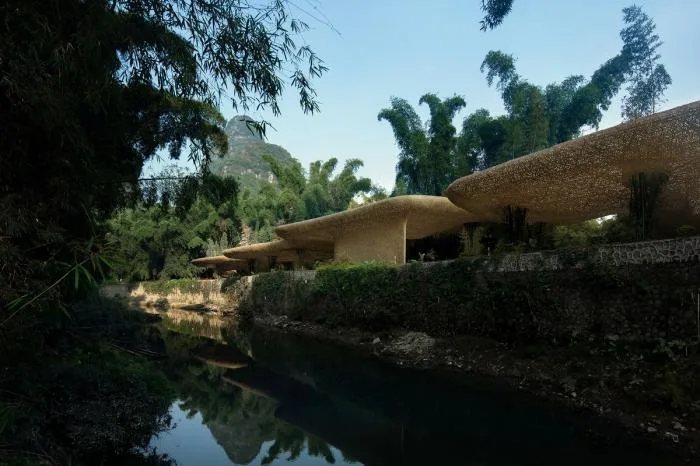
The Impression Liu Sanjie performance has been ongoing in the park for 15 years. Respecting the existing landscape, the design approach maintains most existing structures intact, shifting the focus to interventions that preserve the natural environment while highlighting the beauty of the local landscape.
Currently, large areas of bamboo form green corridors throughout the park. The new architecture draws inspiration from the growth habits and spatial forms of bamboo, reconfiguring these elements to create new spatial experiences.
This strategy ensures that the new spaces complement rather than compete with the natural surroundings. While such natural design techniques require time to mature, they enhance the interaction between visitors and the surrounding bamboo forests and hills, creating a richer sensory experience.
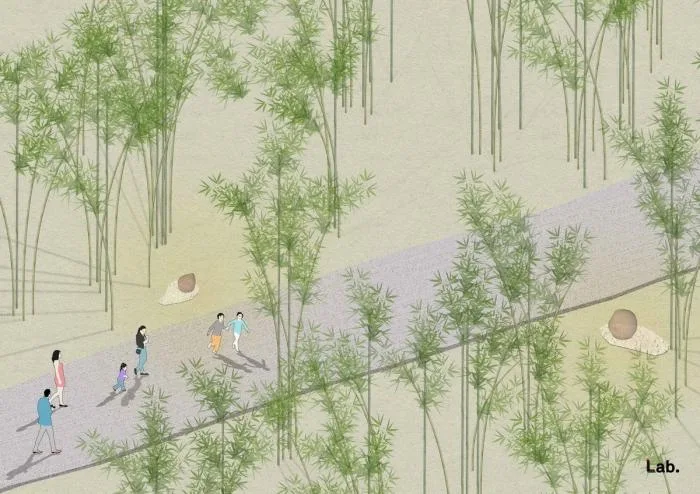
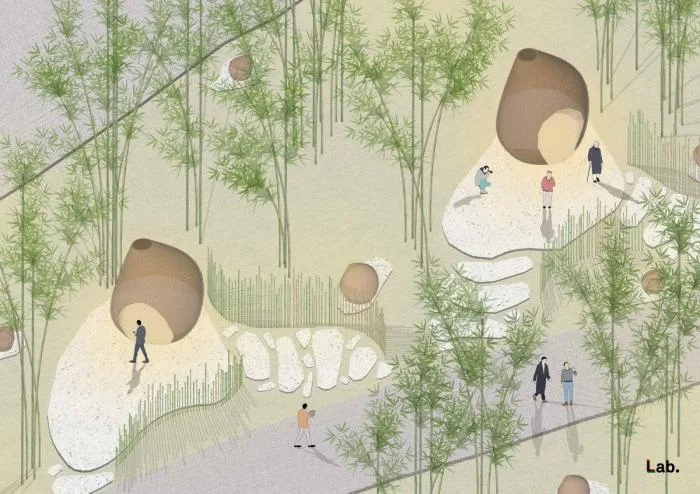
Concept Analysis
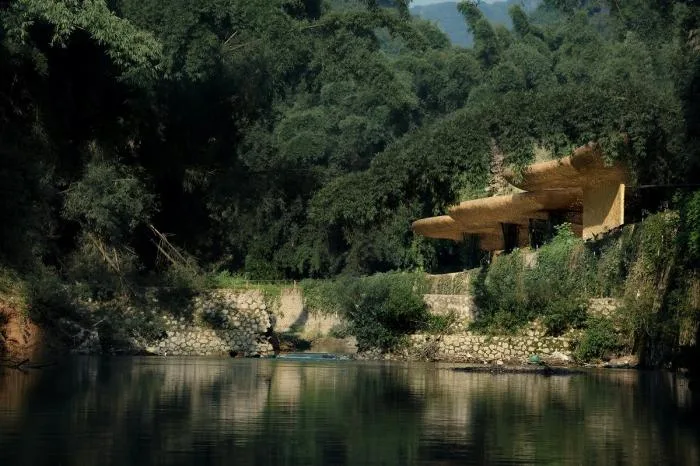
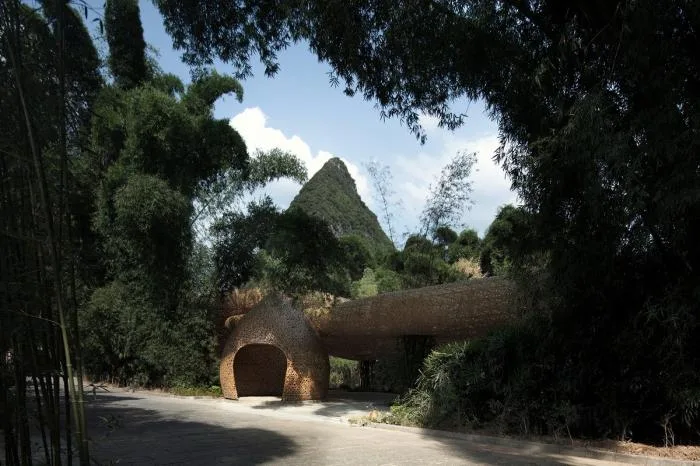
The Impression Liu Sanjie performance begins after dark, with visitors mainly gathering at the two ends of the island. The main entrance serves as the arrival point and features the original Drum Tower area, now renovated as the Impression Liu Sanjie Cultural Museum. The opposite end houses the performance stage and seating along the deepest bank of the Li River within the park.
Between these two points lies a large area currently used only for pedestrian circulation, lacking cultural elements to enrich the visitor experience. This project fills that middle space by introducing two new bamboo-based systems that integrate with the natural environment and craft an emotional and narrative journey.
Entrance Analysis
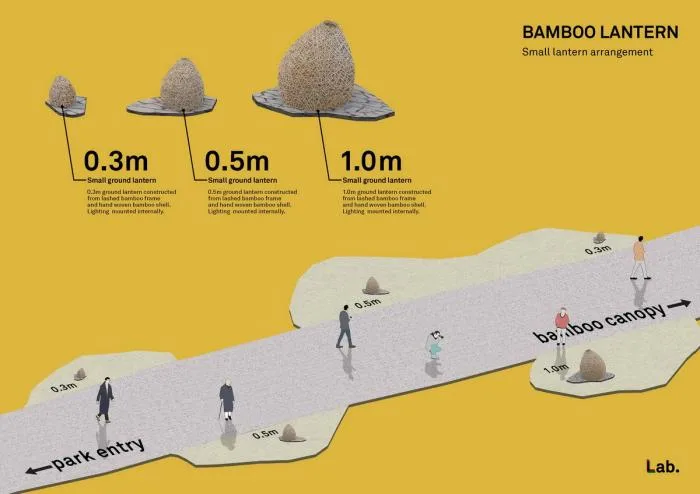
The first system, called “Bamboo Lantern Weiyang,” consists of handcrafted bamboo lantern structures scattered near the visitor entrance. These serve as cultural, creative, and leisure spaces where visitors can engage with Liu Sanjie’s heritage before entering the park.
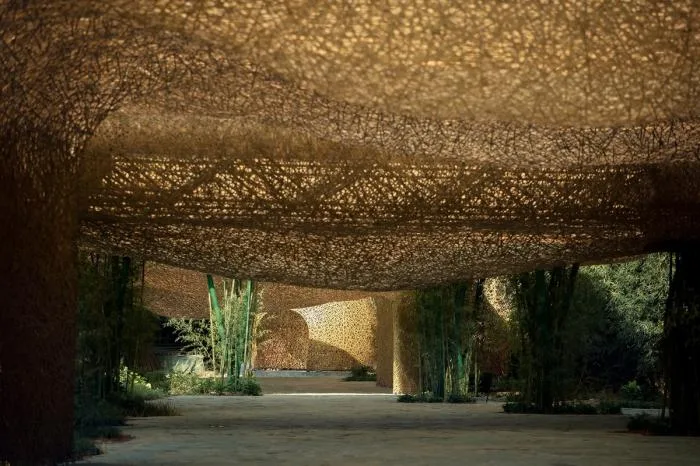
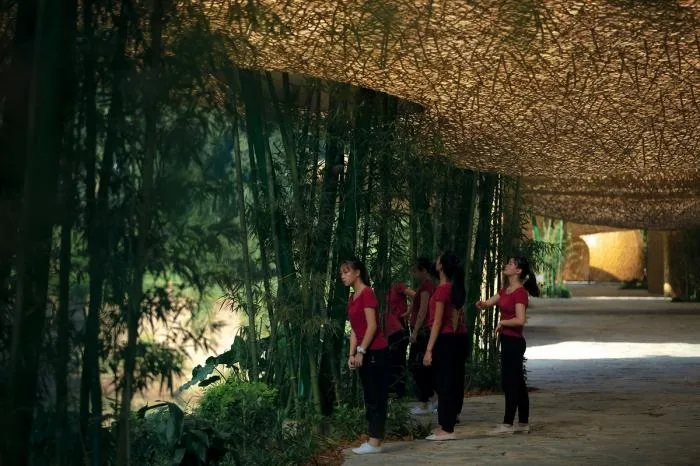
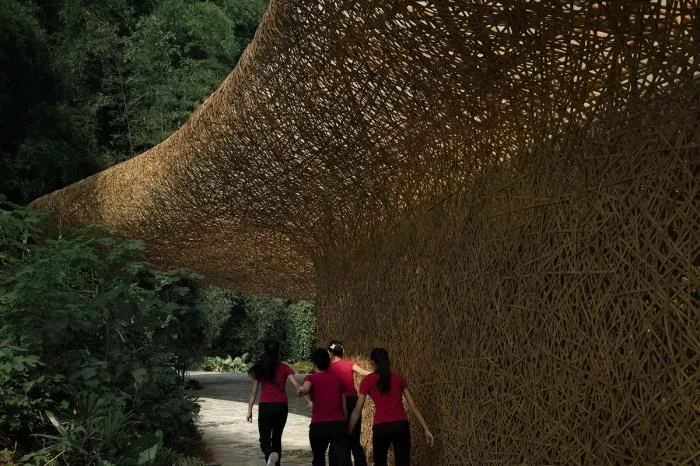
The second system is the “Handmade Bamboo Art Corridor,” which offers a woven bamboo canopy at varying heights between bamboo clusters. This corridor provides shelter from rain while creating a unique spatial experience.
These two bamboo systems not only exist as isolated elements but resonate deeply with the surrounding environment. Their materials, forms, and tactile qualities echo the natural bamboo groves, continuously enriching the meaning and vitality of the space.
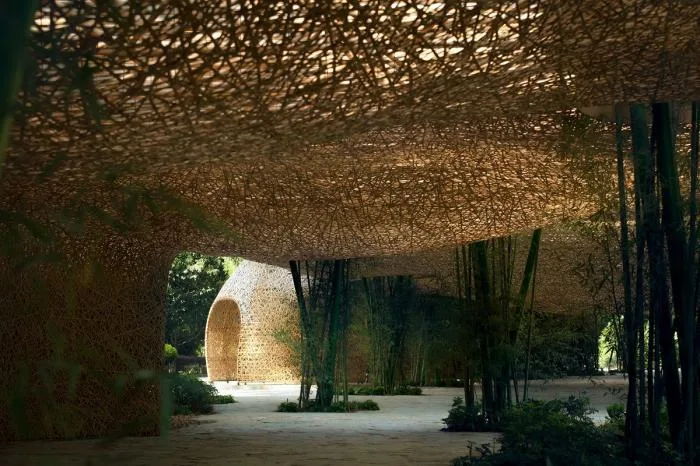
As visitors enter the park and walk toward the performance venue, small bamboo lanterns cast dappled light along the path. Moving deeper, the perceived size of the lanterns grows, transforming them into inhabitable spaces. This visual illusion and the shifting spatial perceptions turn the once straightforward pathway into an engaging and dynamic journey.
The bamboo lamps are crafted with care, using bamboo strips hand-cut and tied around natural bamboo poles. This traditional technique creates a natural bamboo structure with a distinctive handcrafted beauty. The outer woven layer of each lamp is slightly darker, reflecting the natural curves shaped by fire treatment. Local artisans skillfully weave countless bamboo strips without glue or nails, preserving the texture and achieving optimal light diffusion. This process reveals the intricate artistry and deep material understanding behind these creations.
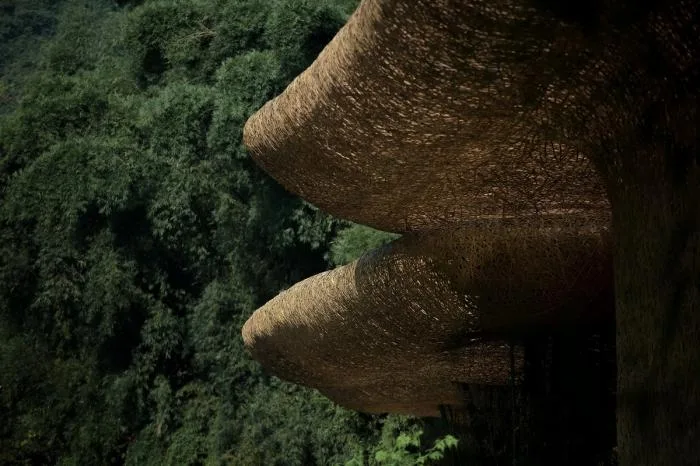
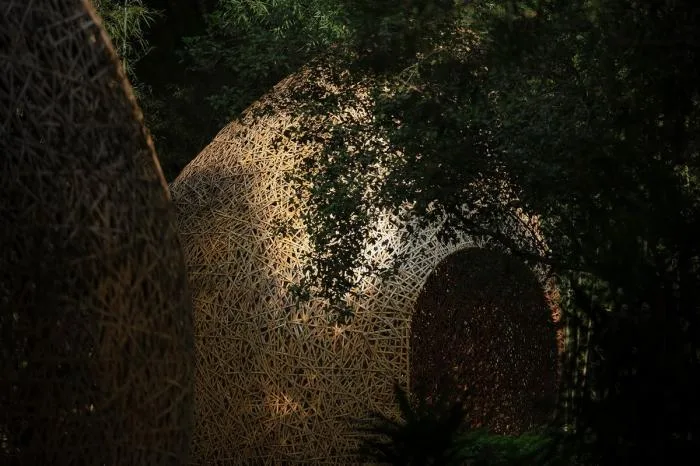
In daylight, the bamboo lamps appear solid, their yellow-green hues harmonizing with the surrounding environment. At night, they transform into porous, translucent forms, scattering light and creating a captivating interplay of light and shadow that engages visitors dynamically.
The bamboo lantern concept draws inspiration from the arched shapes formed by interwoven bamboo clusters in the park. Interestingly, when looking up toward the distant Yangshuo karst mountains, their silhouettes echo the lantern’s shape, creating a natural dialogue between architecture and landscape.
The stunning Guilin scenery stretches out along the horizon.
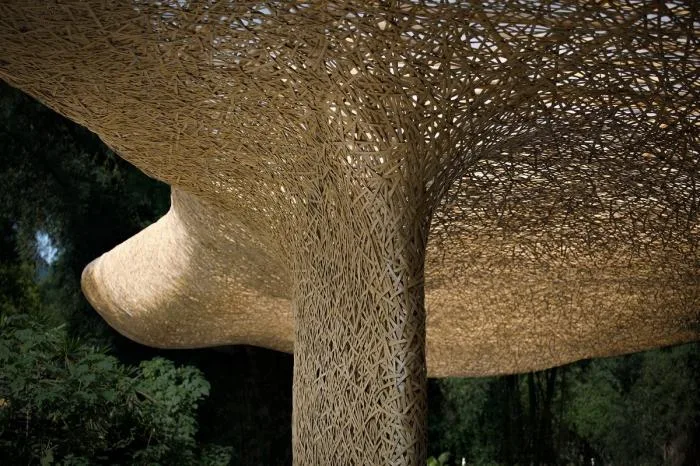
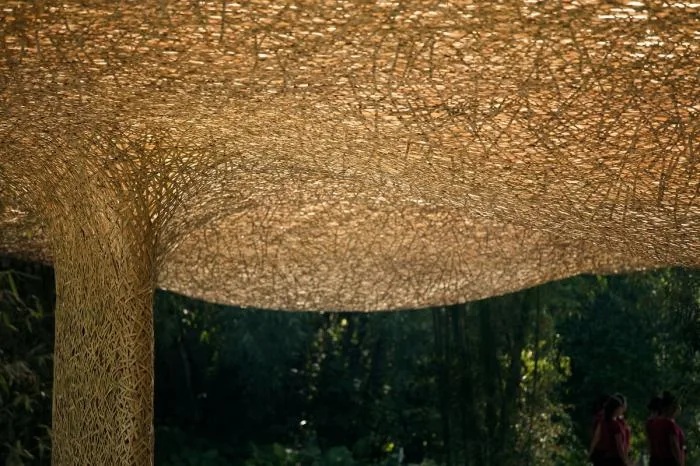
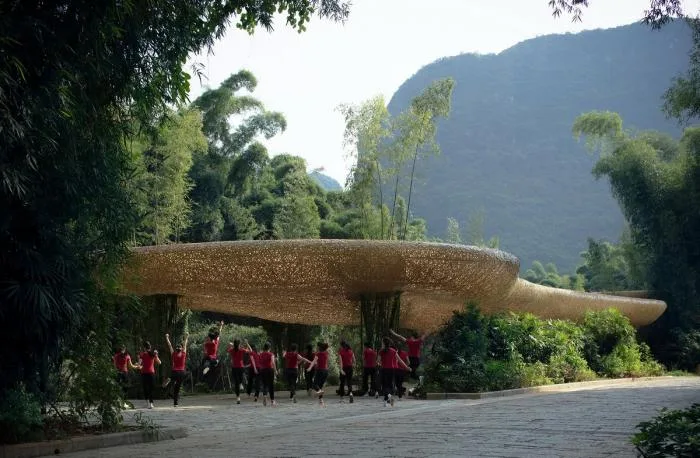
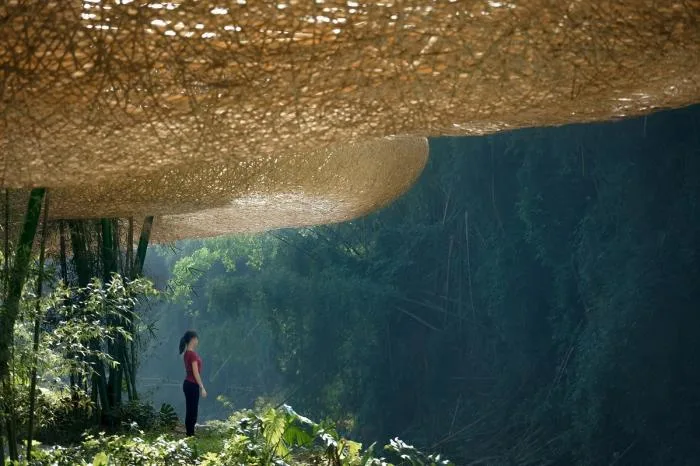
Along the edge of the island, the “Handmade Bamboo Art Corridor” floats gracefully among scattered bamboo groves. At first glance, it appears to have almost no structural support, with bamboo groves growing through circular openings in the canopy.
Hidden structural columns, varying in thickness like bamboo stalks, twist upward and outward from their bases, mimicking bamboo’s natural growth patterns. These columns extend into the circular openings, connecting seamlessly with the internal canopy structure.
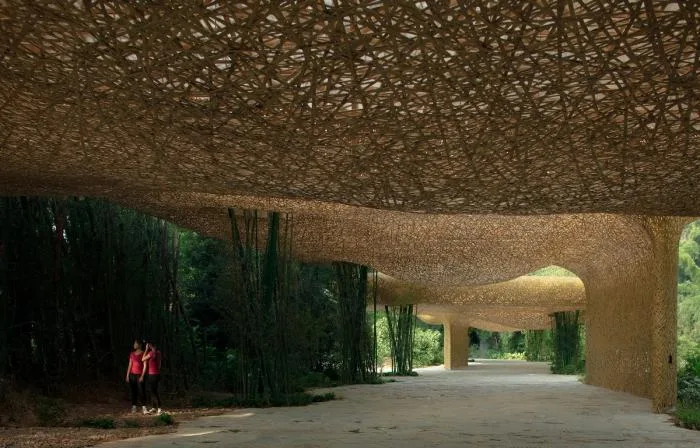
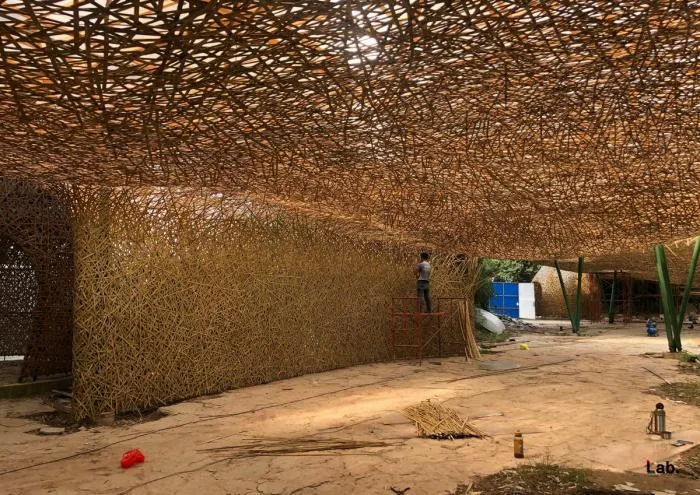
The bamboo weaving of the corridor stretches over 140 meters from the entrance, forming an undulating canopy with varying heights, creating a dreamlike spatial experience. Made entirely of irregular hand-woven bamboo strips similar to the lanterns, the canopy appears to float with the bamboo’s natural rhythm, transforming a simple waiting area into an immersive environment and expanding visitors’ connection to the surrounding landscape.
Light filters through the woven bamboo waves, casting dynamic patterns onto the ground. Walking beneath the corridor, visitors experience an even scattering of light, while looking upward reveals a gentle glow radiating golden hues.
At night, artificial lighting shines through the bamboo weave, casting dramatic, focused light patterns on the ground. The interplay of solid and translucent layers enhances the sensory experience.
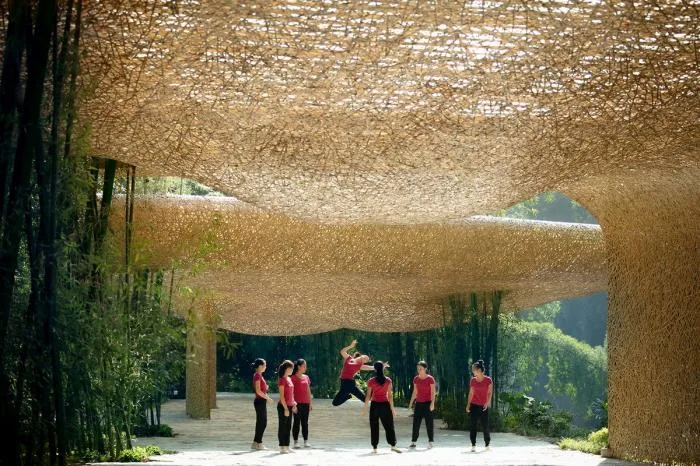
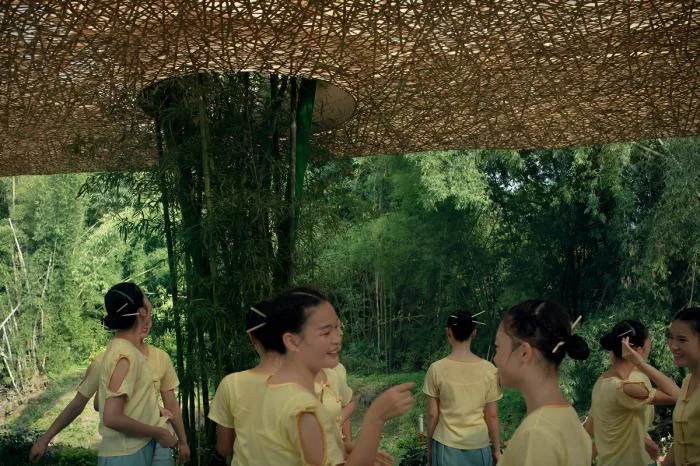
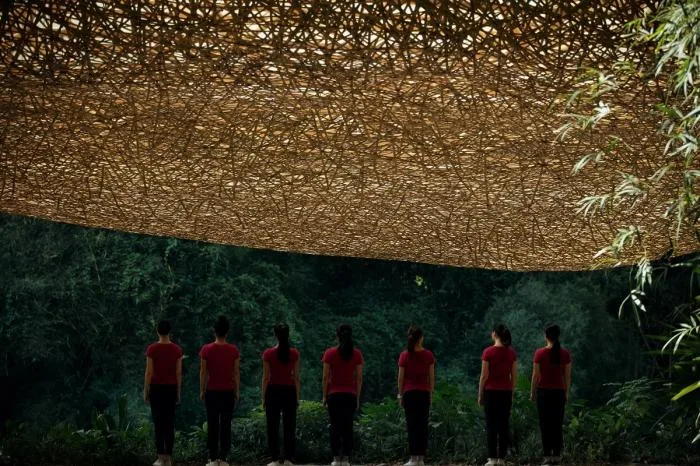
The design respects the dramatic spirit of Liu Sanjie’s impression and shows profound reverence for the local natural environment. Numerous subtle elements are woven throughout: the integration of handwoven culture, the use of bamboo materials in harmony with the bamboo forest, the flowing terrain of the bamboo canopy, structural columns that mimic bamboo growth, and the narrative movement of visitors from one lantern to another. Together, these details create a unique sensory framework that enriches visitors’ cultural and psychological experience when attending the performance.
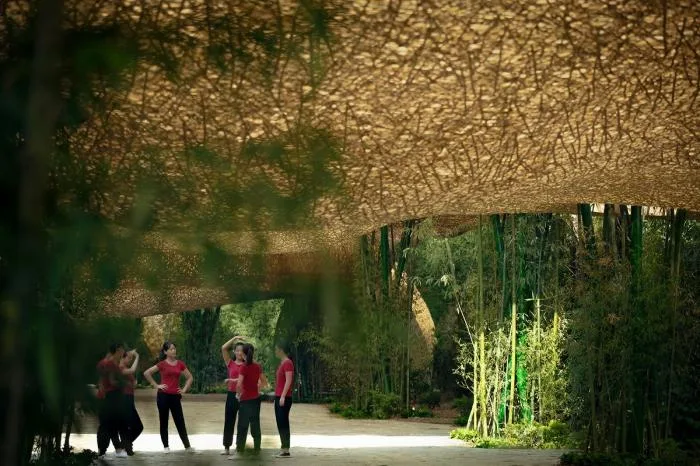
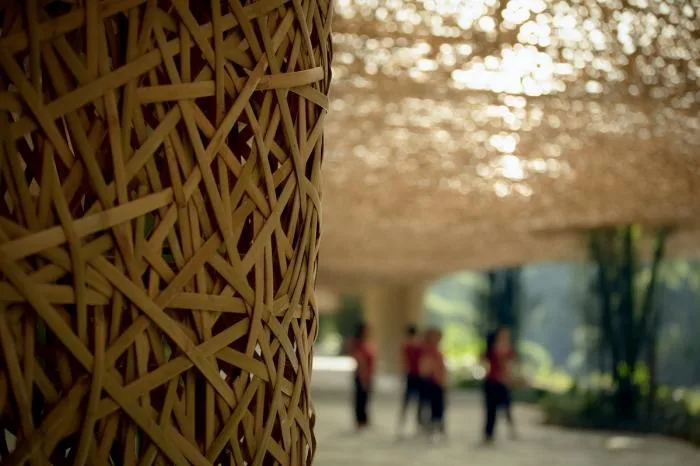
Design Drawings
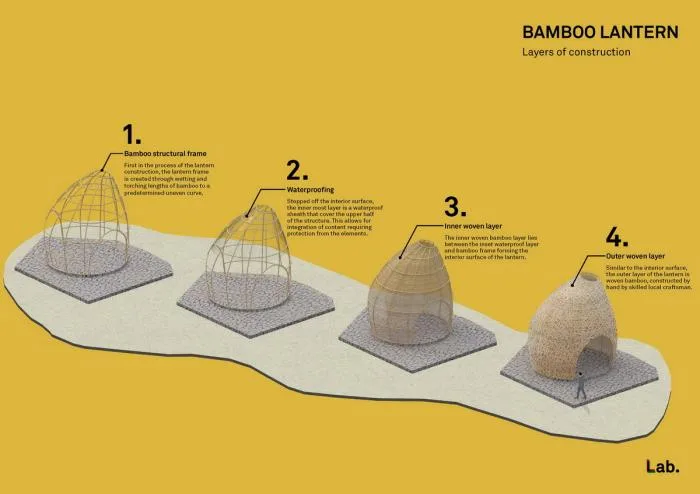
Analysis of Bamboo Lamp Structure
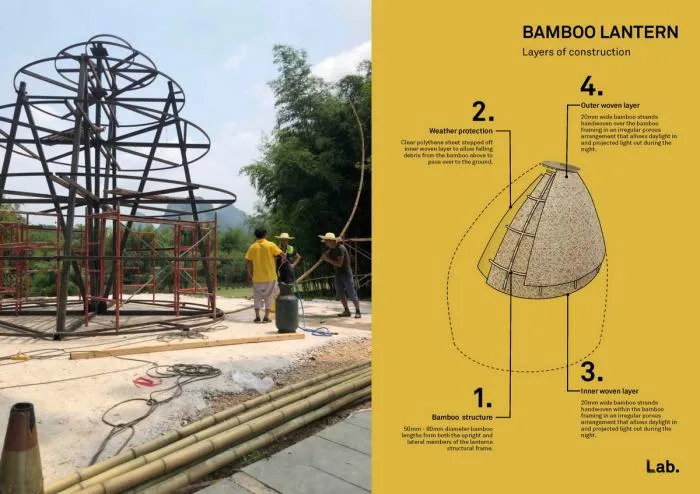
Bamboo Lamp Construction Process
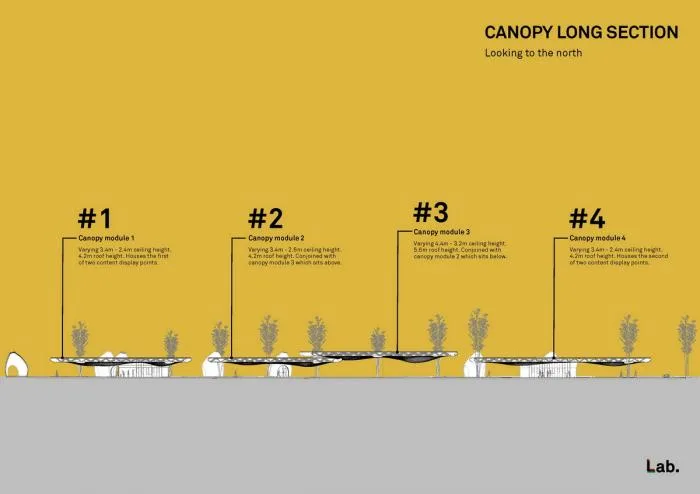
Section of Handmade Bamboo Art Gallery
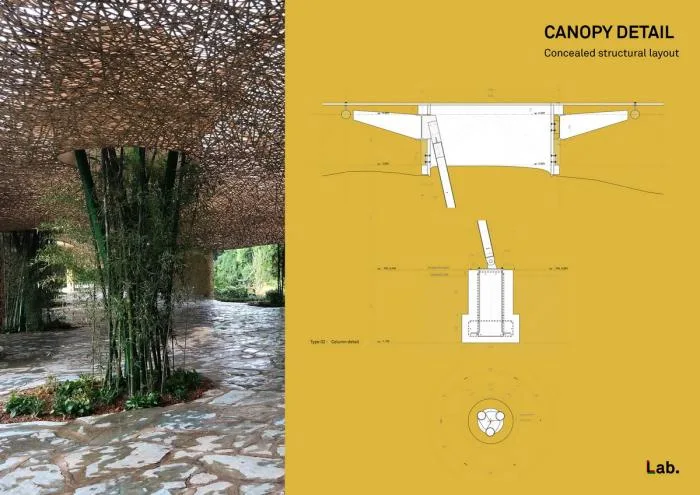
Detailed Drawing of Nodes in the Handmade Bamboo Art Corridor
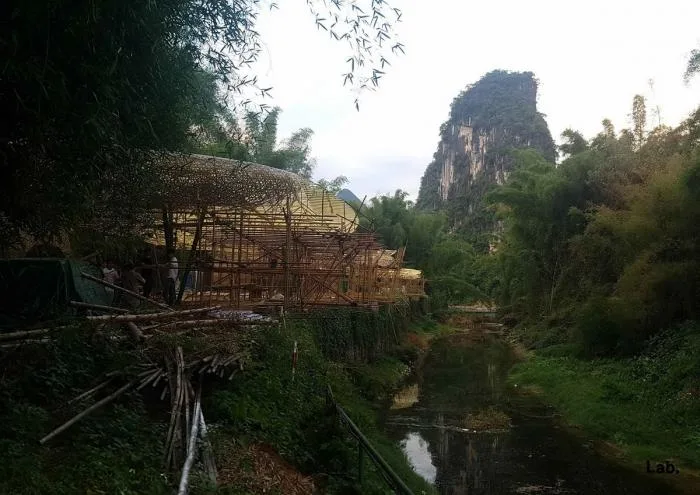
Construction Process of Handmade Bamboo Art Corridor
Project Information
Project Name: Bamboo Grove Pavilion (Impression Liu Sanjie Park)
Location: Yangshuo, Guilin, China
Site Area: 90,000 square meters
Building Area: 1,900 square meters
Status: Completed
Timeline: May 2018 – July 2020
Client: Guilin Large-Scale Landscape Live Performance “Impression: Liu Sanjie”
Architectural Design Firm: llLab. | Southbound Architectural Design (__AI_ST_URL_0)__
Design Team: Liu Hanxiao Henry D’Ath, Hu Lexian Alyssa Tang, Fan Chaoran Luis Ricardo, David Correa
Project Management: Botao Platinum Wire (Shanghai) Construction Engineering Co., Ltd., Mi Lihua, Chai Dalin, Zhang Hao, Wan Guoyang
Construction Team: Shao Yinghong, Dong Yanru, Shao Yingming
Structural Design: Luan Cong Construction Design Firm
Photography: Existence of Architecture – Architectural Photography












Must log in before commenting!
Sign Up