
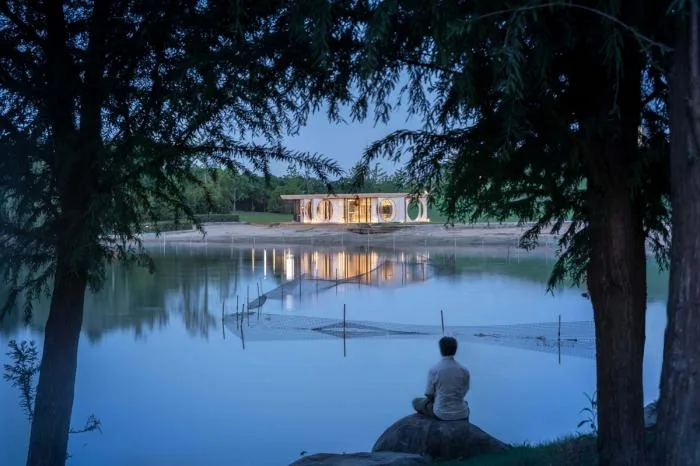
The “Screen Pavilion” stands as the exemplary service station within the Xianghu Scenic Area. Xianghu Lake, at the heart of Xiaoshan District’s urban life in Hangzhou, boasts a rich history dating back to the Spring and Autumn Period when it was part of the State of Yue. Today, it serves as a city park integral to the local community, where parents bring their children to relax by the beach, young people enjoy cycling and night runs, and couples take leisurely walks and intimate conversations.
Commissioned by the Xianghu National Tourism Resort Management Committee along with partner institutions, this project aims to create a public service station. It offers both residents and tourists a comfortable place to rest, cool down, enjoy tea, and read after outdoor activities.
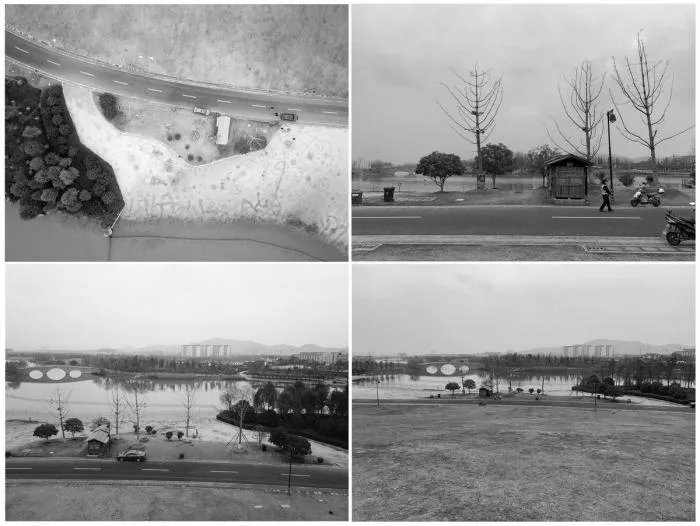
The original site featured a small, dilapidated shop that no longer met the public’s recreational needs.
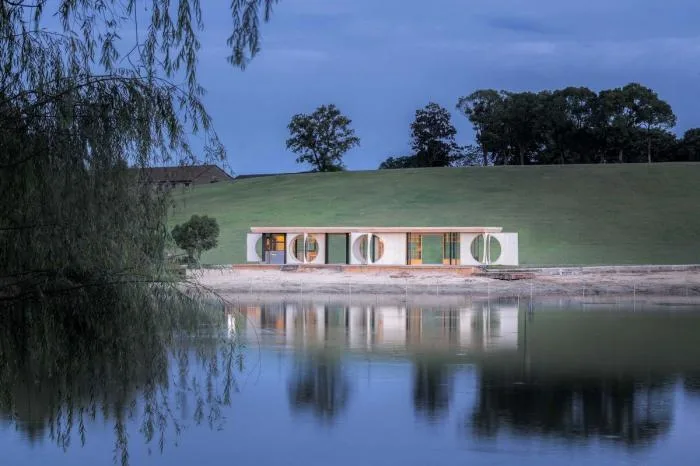
Occupying 66 square meters, the Xianghu Station is situated on the Dingshan beach, south of Xianghu Academician Island. The pavilion faces the lake and beach, with a hillside as its backdrop. Nearby, stone arch bridges, corridors, and pavilions line the water’s edge, creating a picturesque setting for the “Screen Pavilion.”
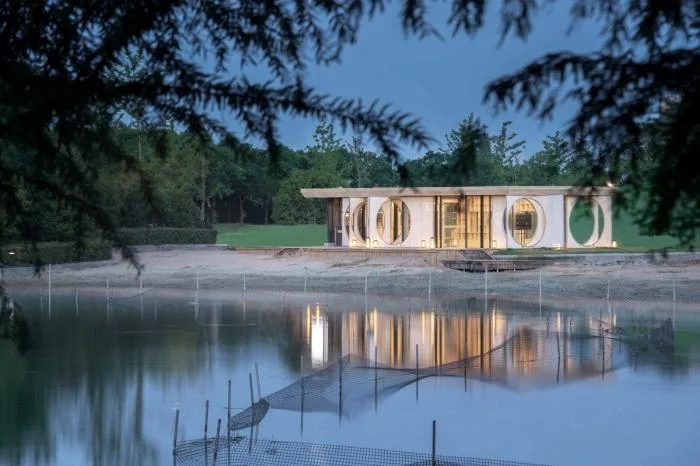
Considering the natural surroundings, the design aims to integrate the station seamlessly into the landscape. However, unrestricted openness can lead to environmental and visual chaos. Therefore, the pavilion embodies a “screen” concept—a balance between concealment and openness. This approach evokes the traditional Chinese aesthetic of “still holding the pipa and half covering the face,” presenting beauty filled with imagination and potential extension.
Screen as a ‘Spatial Connector’
We reinterpret the “screen” as a spatial articulation device, bridging architecture, nature, people, and the environment. This installation turns the building itself into a medium for interaction between people and nature.

△ Shape generation process
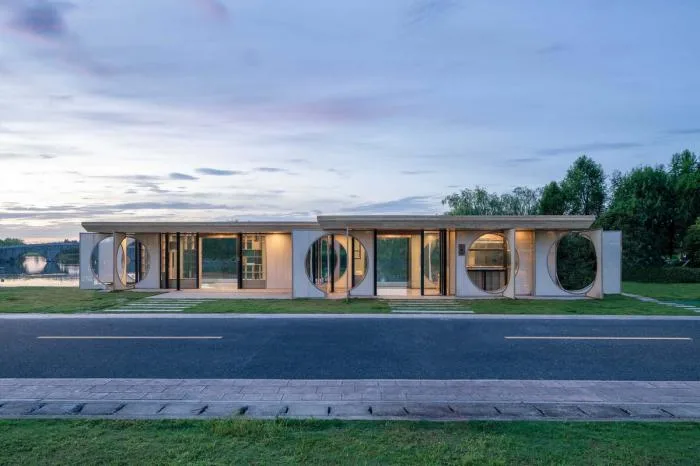
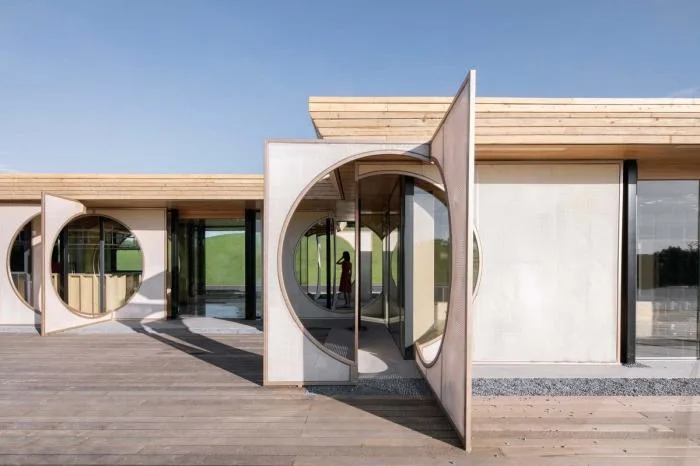
The ‘screen’ breaks down barriers between interior and exterior, extending deep into the building’s interior and flowing outwards into the environment. Initially, the two transparent glass structures housing internal spaces were separate. Thanks to the screen’s connective force, they are now firmly linked, creating a dialogue between the spaces.
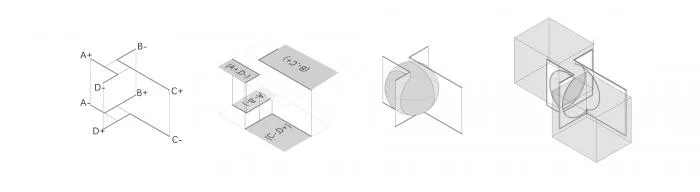
Analysis of the intrinsic geometric logic of spatial joints formed by screens.
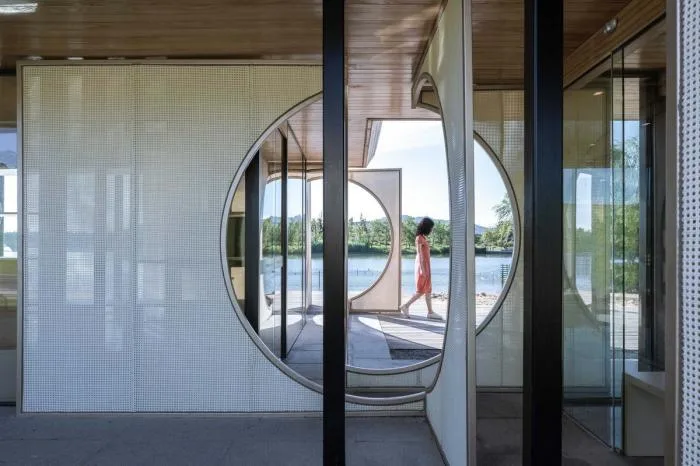
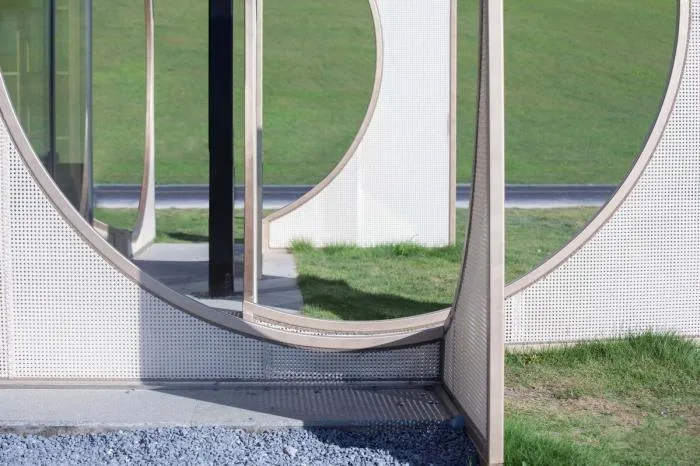
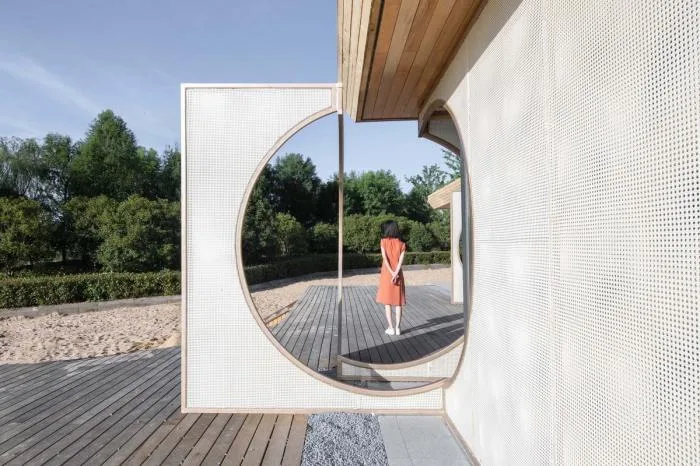
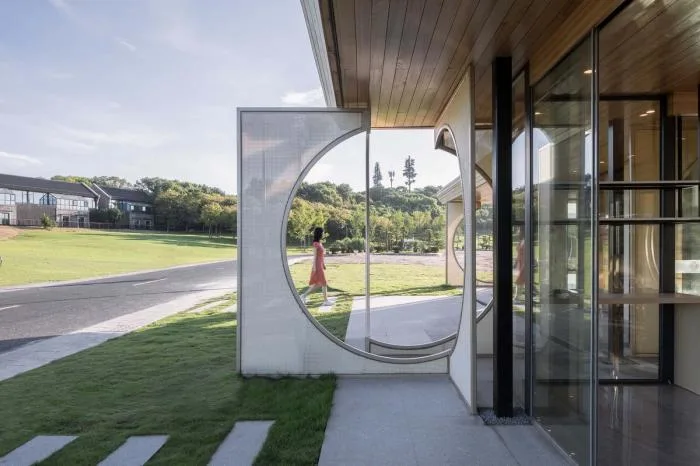
Unlike traditional eave projections, these screens extend beyond the building’s boundaries, opening naturally and coexisting with the outdoors. This connection reinforces the relationship between interior spaces and the surrounding natural environment. The arches in this installation are essential, linking space, architecture, people, and nature to create a cohesive cultural landscape.
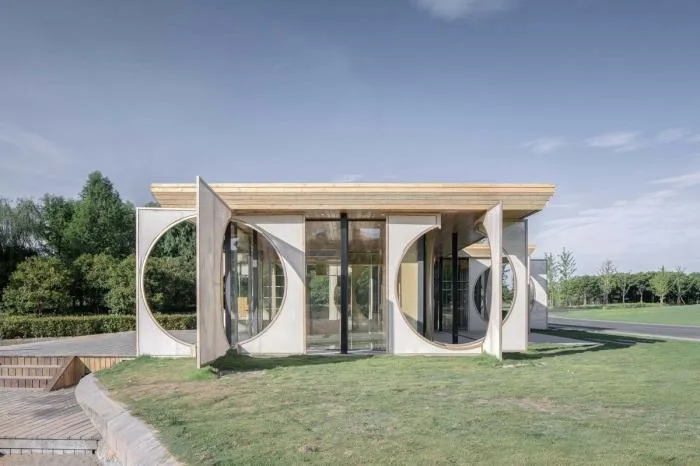
The Capturing Power of the Screen
Wu Hong, in “Heavy Screen,” notes that traditional screens exert strong spatial control by defining spaces, locations, and shaping human perception. In this natural setting, the “Screen Pavilion” aims to capture visitors’ environmental perception in two ways.
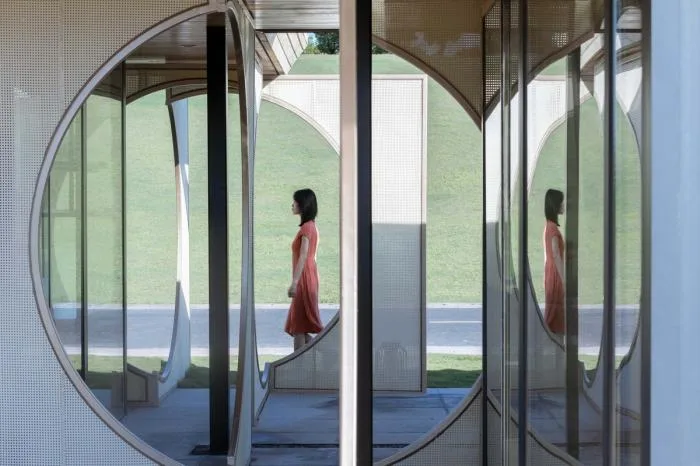
First, through physical perception: a positive sphere is tangent to a set of four screen devices, precisely defining the negative space of this sphere. This design centers the observer’s visual focus within the sphere, establishing a stable vertical symmetry at eye level (approximately 1.5 meters). This requires strict control of the building’s height, maintaining a low horizontal plane to align the building’s scale with human perception—similar to the vertical symmetry found in Mies van der Rohe’s German Pavilion in Barcelona.
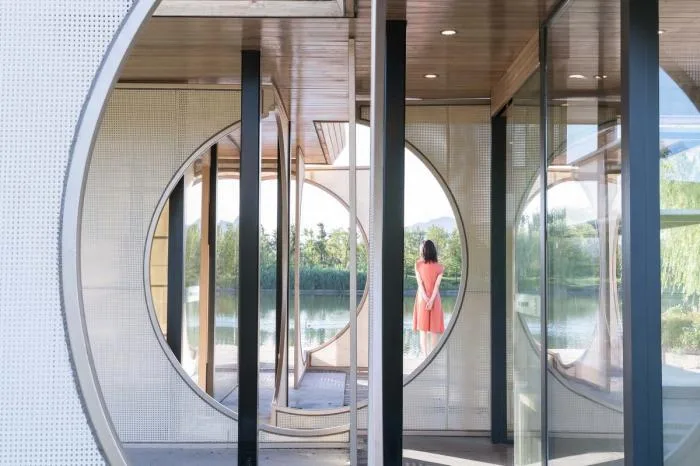
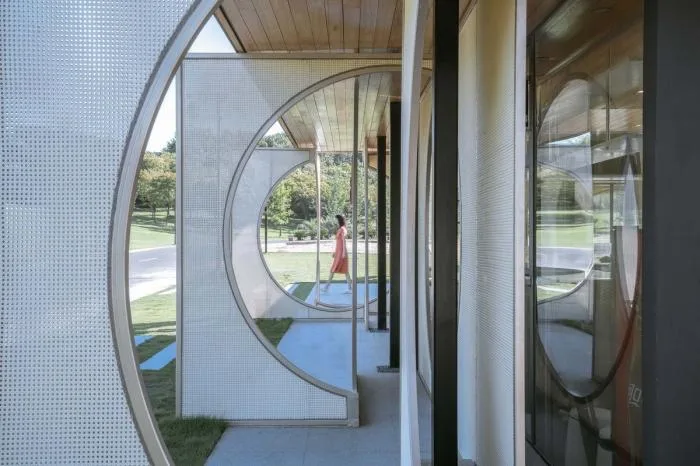
Second, through narrative perception: the pavilion acts as a spatial medium and a stage for rest and social interaction. The intricately designed screens and walls weave a complex, winding corridor that offers visitors an exploratory garden-like experience. This narrative landscape unfolds gradually during sightseeing.
Each aperture frames a specific landscape view, guiding visitors’ gaze and structuring the existing scenery. For example, corridor openings offer framed views of distant arch bridges and pavilions that were previously hidden, emphasizing key landscape nodes. These views establish a narrative connection throughout the landscape, creating a field-based storytelling structure.
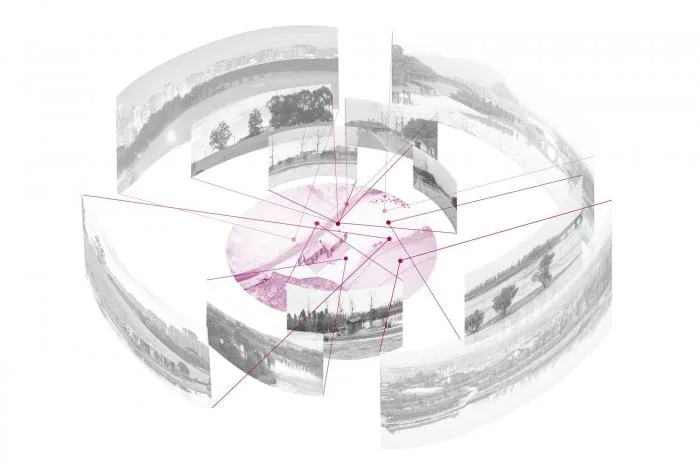
The narrative field structure established by the Screen Pavilion
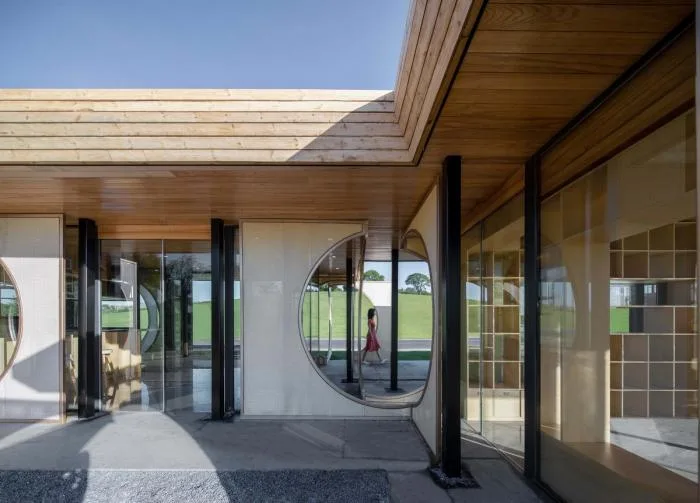
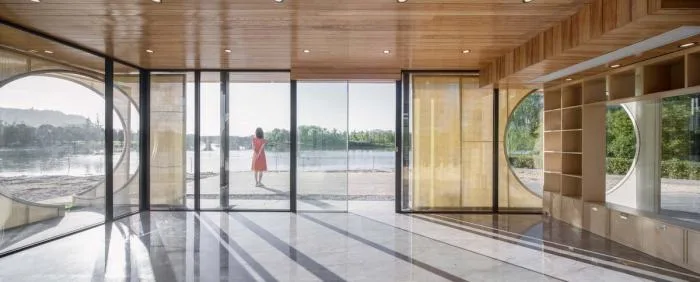
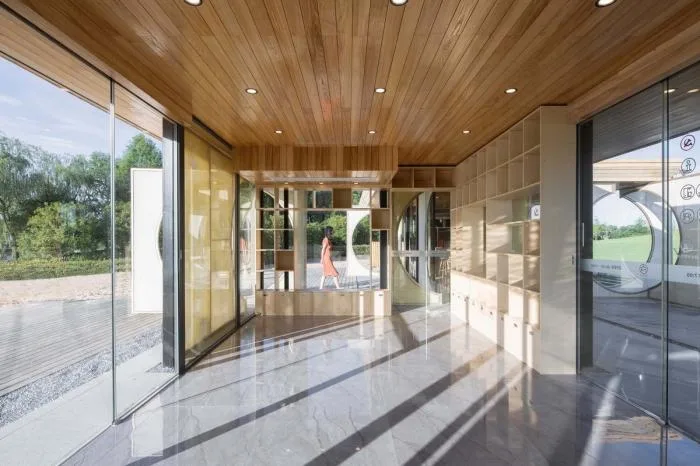
Transparency of the Screen
The sense of place inside the building is crafted with simple ceiling and floor materials. The facade highlights spatial variation through two transparency levels using glass and semi-transparent rattan mesh. This material transparency symbolizes the passage of time, revealing the poetic essence of the materials.
The semi-transparent rattan changes appearance depending on lighting conditions. Due to the building’s east-west orientation, natural light creates varying internal atmospheres throughout the day, giving the pavilion a dynamic temporal quality. These two materials provide a rich, comfortable sensory environment under the shelter of the roof and screens, while also ensuring privacy and security inside.
Community-Oriented Public Relay Stations
We offer a fresh, abstract interpretation of the traditional screen element from an architectural standpoint, exploring the potential to create distinctive screen installations within natural landscapes. This project forms an open public space that blends garden-like stepped landscapes with the openness characteristic of landscape architecture, allowing the building’s transparency to harmonize with nature.
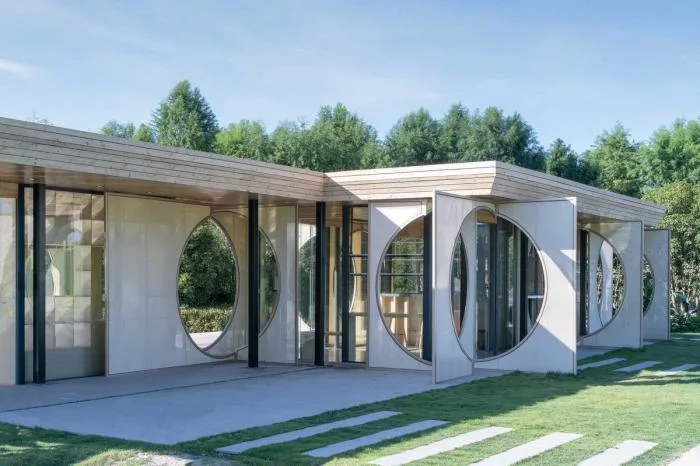
Serving as a vital social hub, the post station caters to the community with small activity rooms, tea bars, and ample indoor and outdoor seating. It supports various activities including parent-child programs, team-building events, and everyday relaxation. User-friendly amenities such as a washing area for children’s beach play and stroller parking enhance convenience. Since opening, it has become a favorite spot for families to unwind, socialize, and enjoy the scenery.
Design Drawings
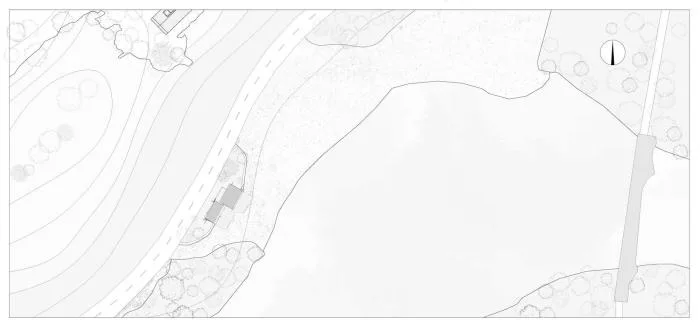
△ General layout plan
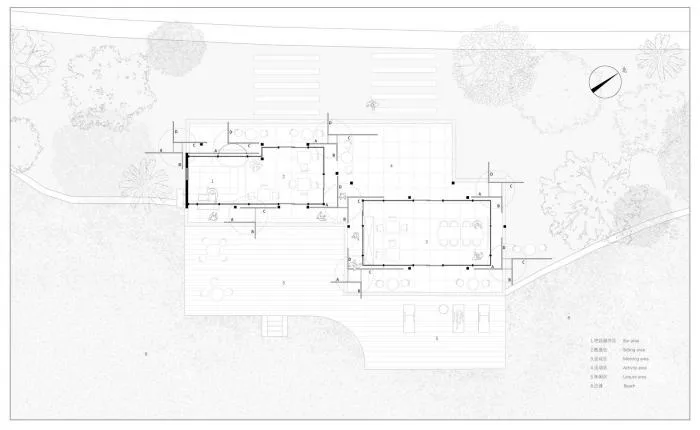
△ Plan view
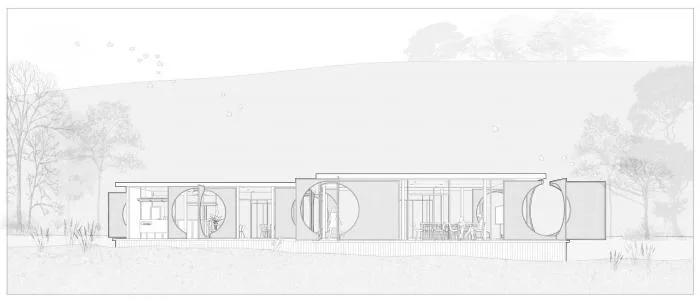
△ Beachfront building facade
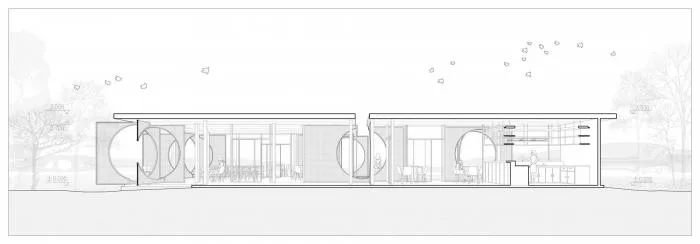
△ Building section along the road
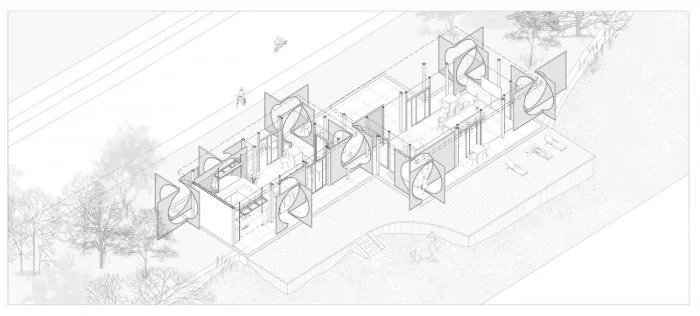
△ Axonometric diagram
Project Information
Project Type: Visitor Center
Location: Hangzhou, China
Architect: Ueda Architecture
Area: 66 m²
Year: 2020
Photographer: Zhao Yilong
Lead Architects: Fang Runwu, Wang Minghao
Design Team: Fan Jiangnan, Xu Dawei, Gong Ziyue, Ma Zhichao
Modeling and Rendering: Wang Xiangyi, Wang Qianhui
Construction: Zhejiang Junhao Construction Co., Ltd.
Client and Owner: Hangzhou Bole Industrial Design Co., Ltd., Xianghu National Tourism Resort Management Committee












Must log in before commenting!
Sign Up