
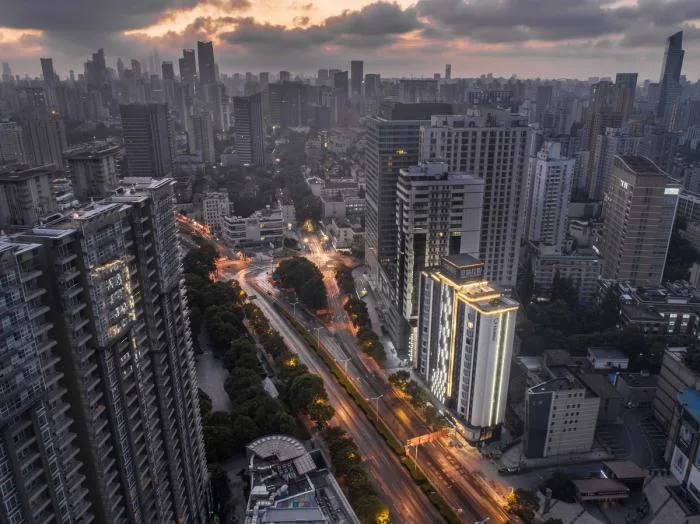
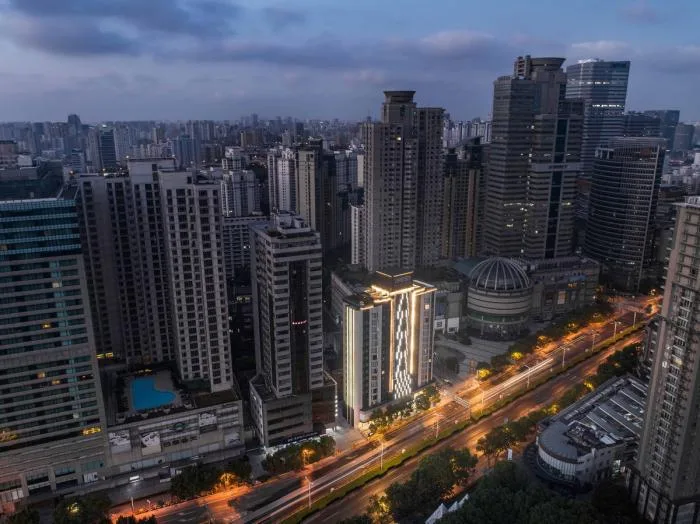
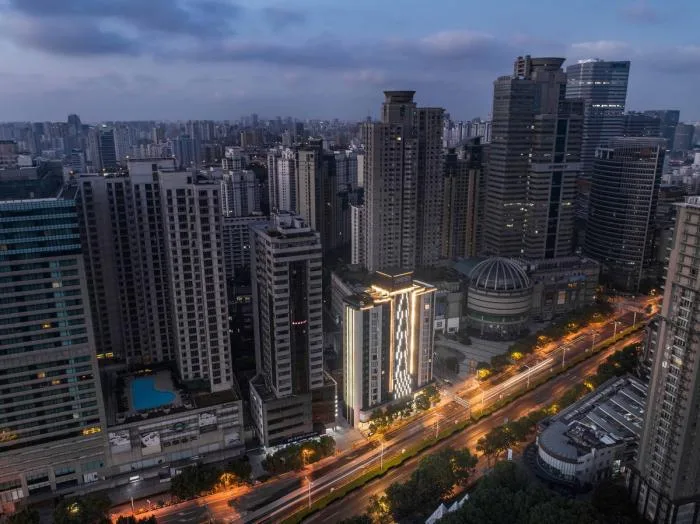
▲ Nighttime aerial view
Source: Top-down perspective
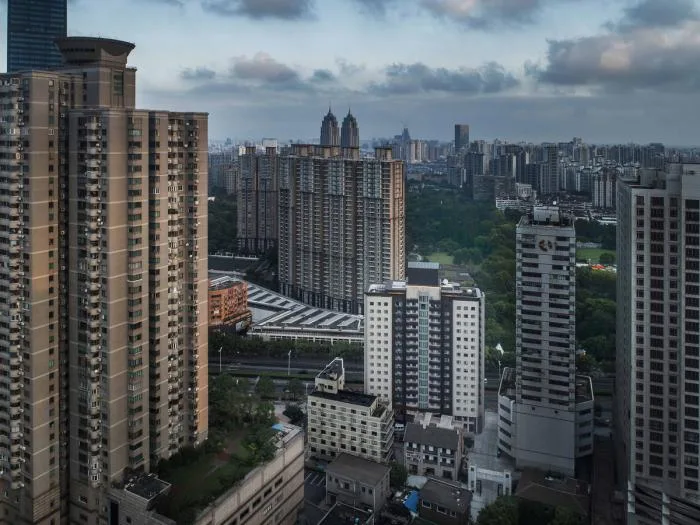
Shanghai Zhongshan Park is among the city’s earliest parks and serves as a vital commercial and business hub in the western district. The government’s comprehensive plan for the Zhongshan Park area aims to enhance the overall image, improve functionality, emphasize landscape features, and establish distinct spatial identities through environmental upgrades and urban design guidelines.
This project is situated within the inner ring of Changning Road, adjacent to Zhongshan Park, and is part of a subway overstructure development. The area boasts mature commercial facilities, surrounded by major shopping centers including Paris Spring Shopping, Dragon’s Dream Shopping Center, and Changning Raffles City. Daily foot traffic exceeds 400,000 people. Originally built in the 1990s, this tower was once the tallest building in the area. To align with regional planning goals of “enriching visual experience,” the building has undergone partial renovation and revitalization to meet residential needs and support the area’s industrial culture, all while preserving its original structure.
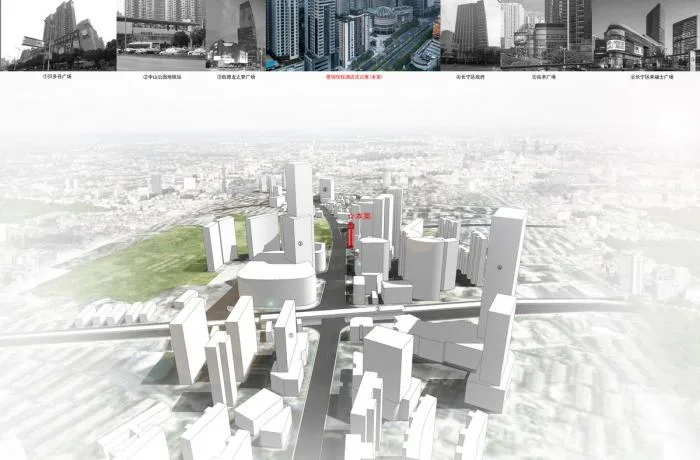
▲ Project site map
The original facade’s arched features are overly symbolic and evoke a dated aesthetic. Door decorations appear obsolete, and the prominent rooftop water tank disrupts the overall design harmony. Additionally, the window area between the north and south facades on the second floor is relatively small, limiting indoor lighting and visual appeal. As a long-term rental apartment, the public spaces are cramped and outdated, making it less attractive to mid- and high-level residents seeking better quality of life.
▲ Front facade before renovation
Sculpture: Modern Era
At the renovation’s outset, architects emphasized architecture’s multifaceted value—considering both exterior and interior perspectives of form and surface. The original facade was cluttered with elements; the design strategy involved simplifying complexity and integrating new features into the old, transforming it into a modern building.
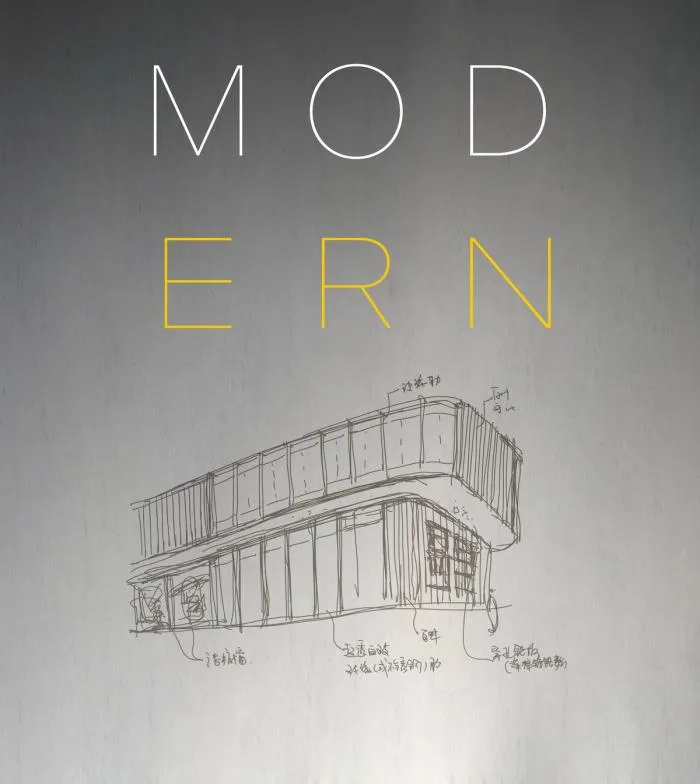
▲ Design sketches
Preserving original elements such as the arches and vertical tower lines, the design extends these from the base to the rooftop, unfolding upward—“rooted in the ground, blossoming at the top.” This approach blends the memory of the place’s origins with contemporary architectural style.
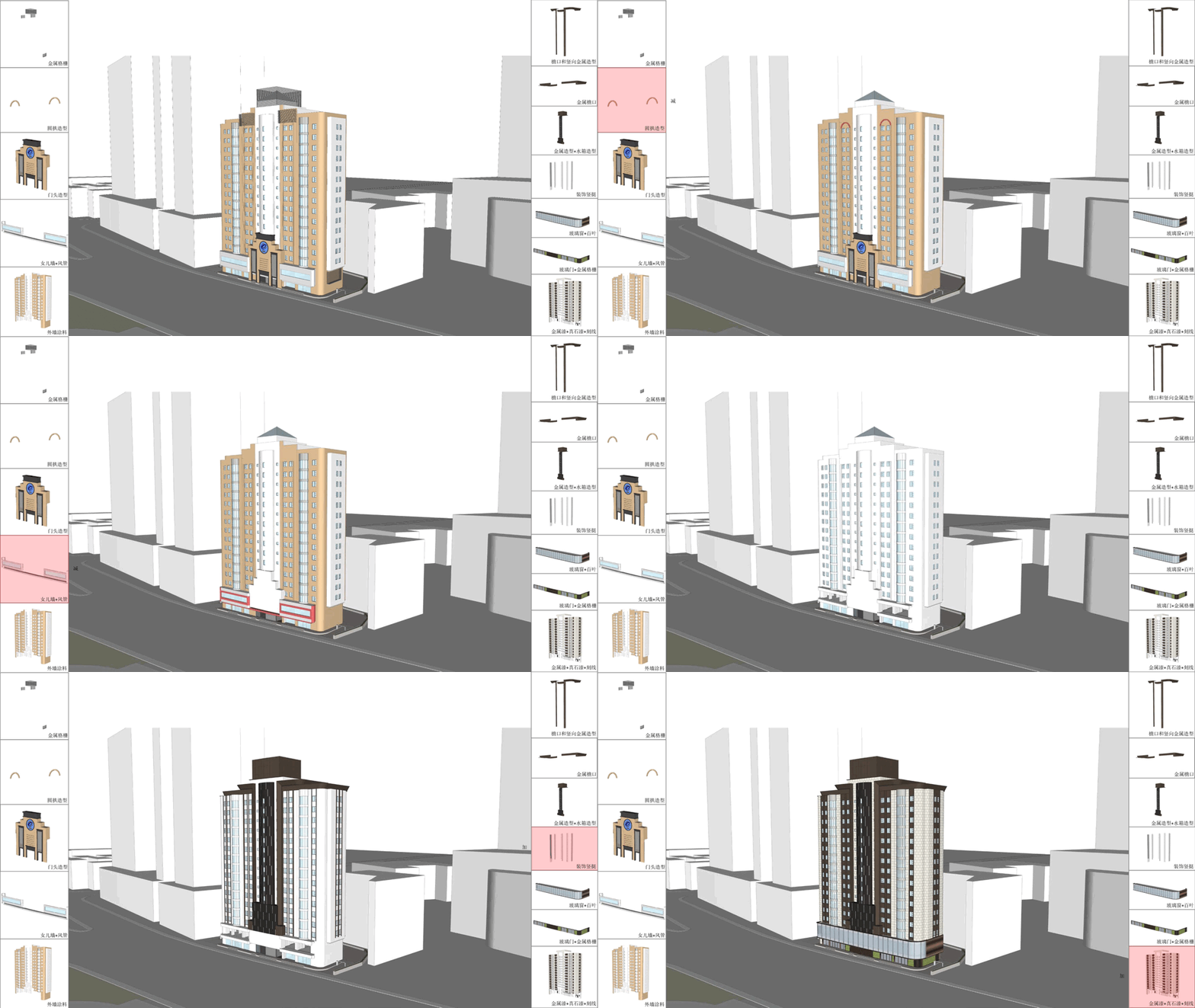
▲ Building dismantling and remodeling process
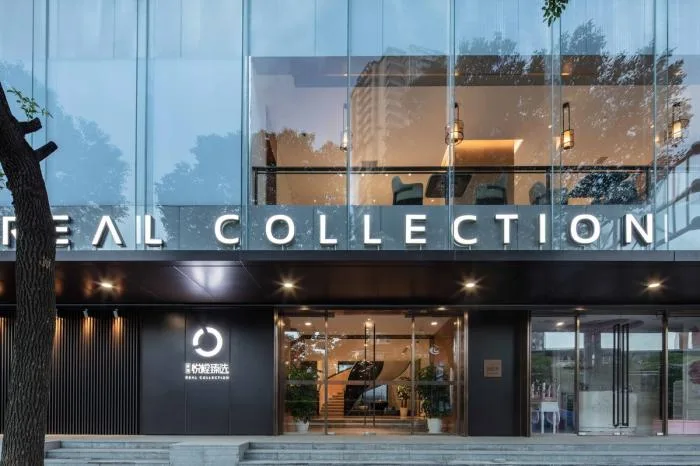
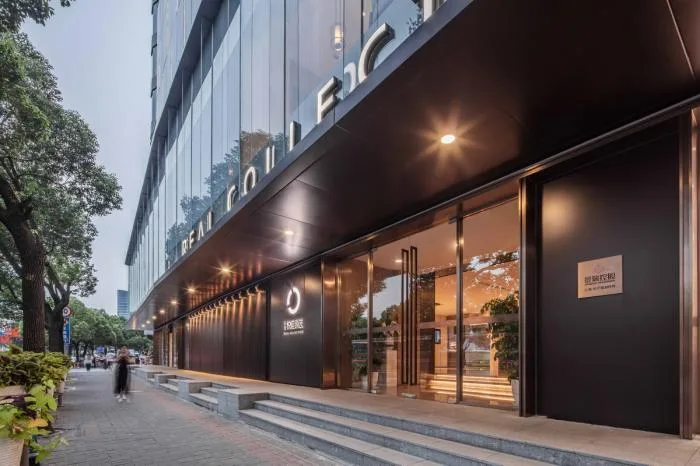
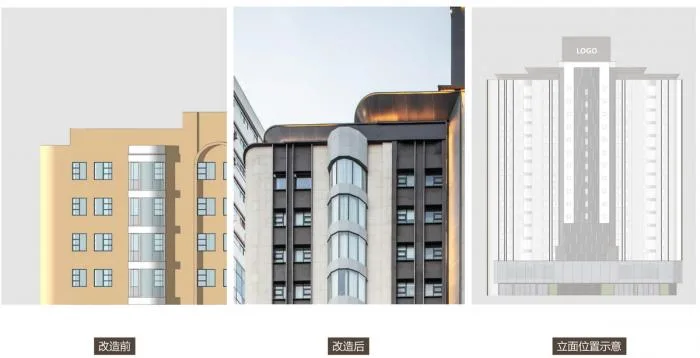
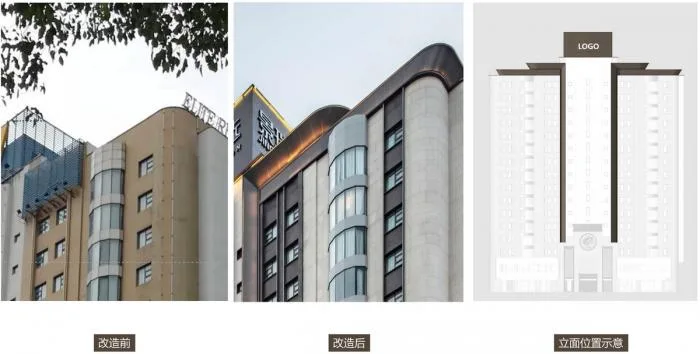
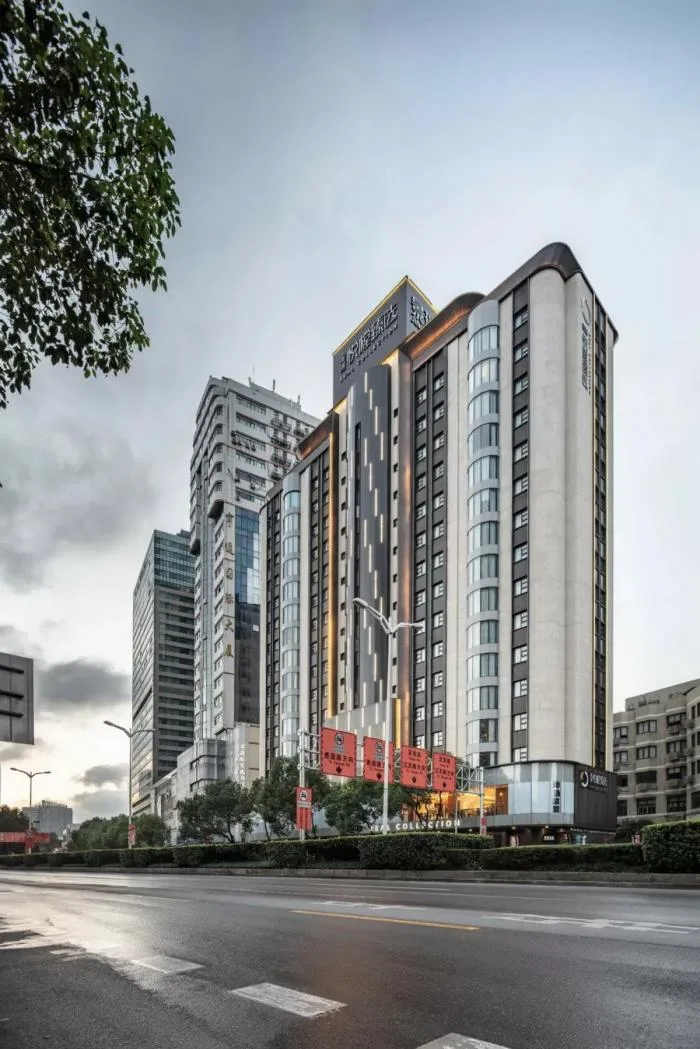
Without changing the building’s original structure, the outdated arched sections atop the vertical wall columns were removed and repainted with metallic textured paint. Additionally, metal strips were added along the facade window openings, emphasizing verticality and giving the facade a more upright and dynamic presence.
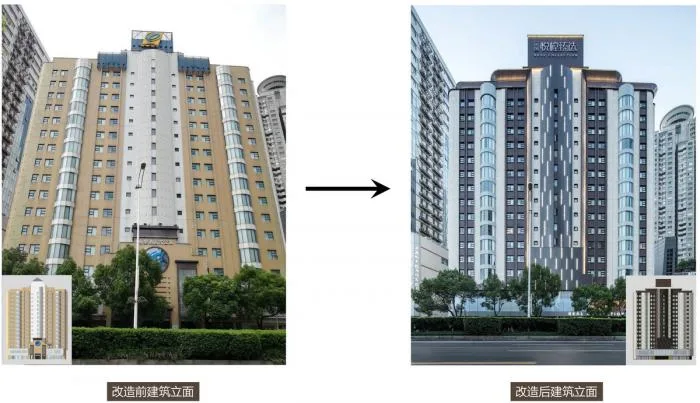
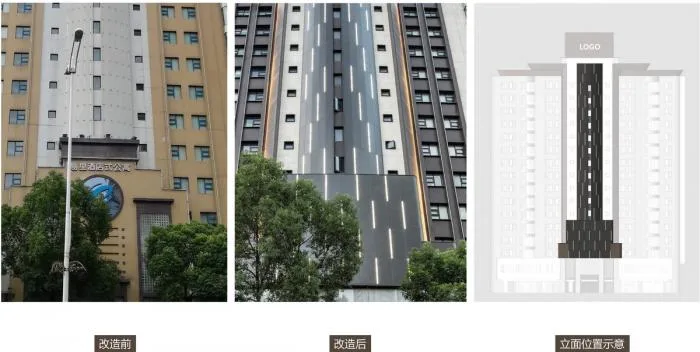
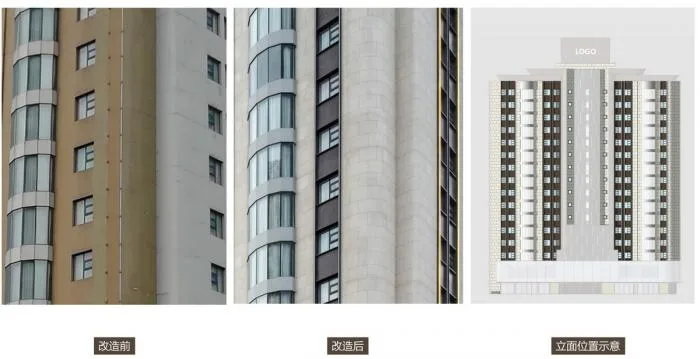
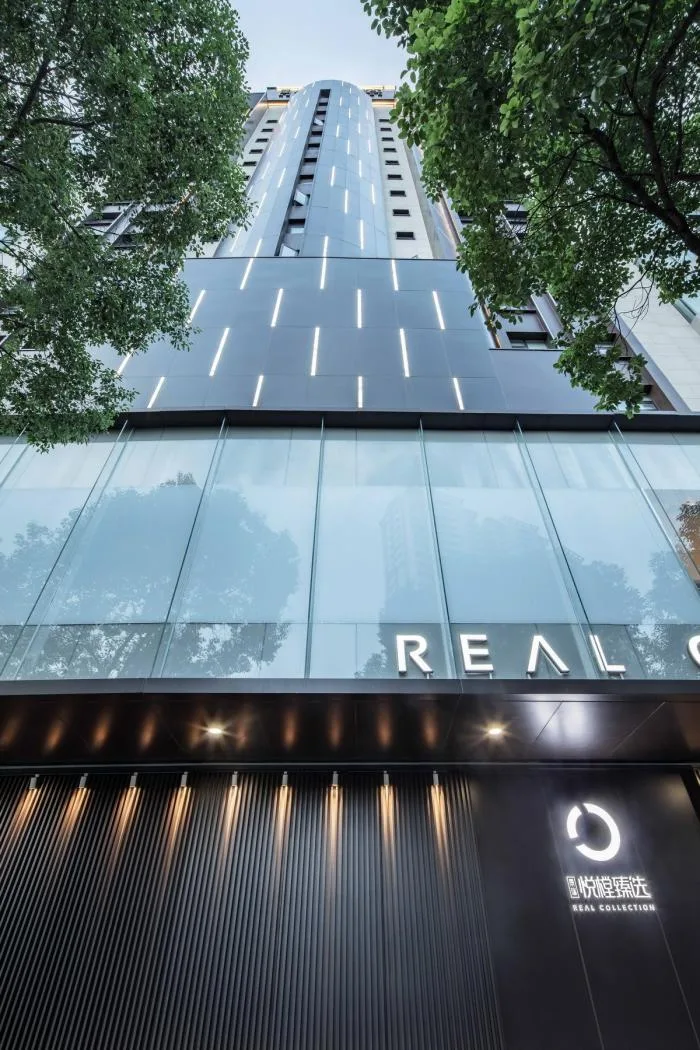
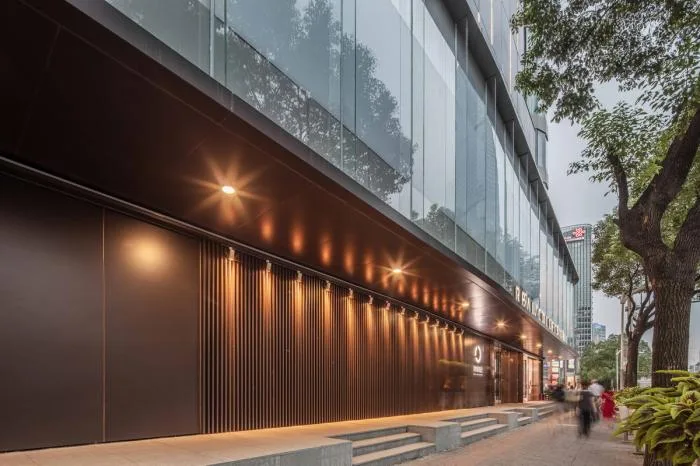
The old yellow paint was stripped from the walls and replaced with white real stone paint. The light stone texture contrasts with the dark metals, creating a simple, dignified facade that aligns perfectly with the hotel’s function. Vertical grooves house lighting fixtures, producing a striking nighttime effect that integrates the building harmoniously into the vibrant modern neighborhood.
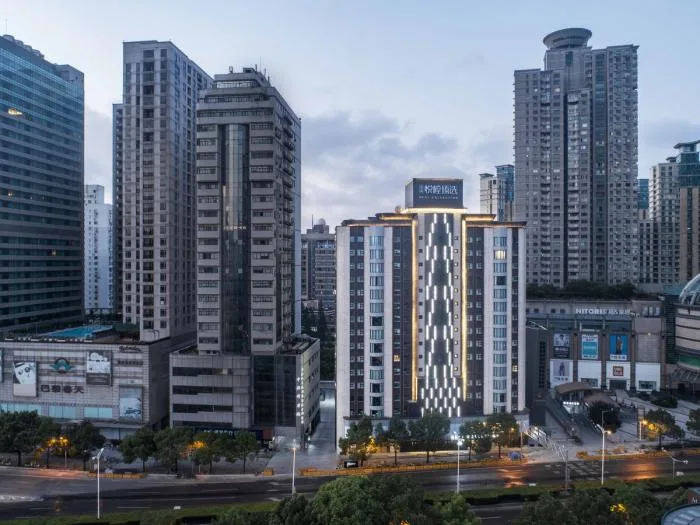
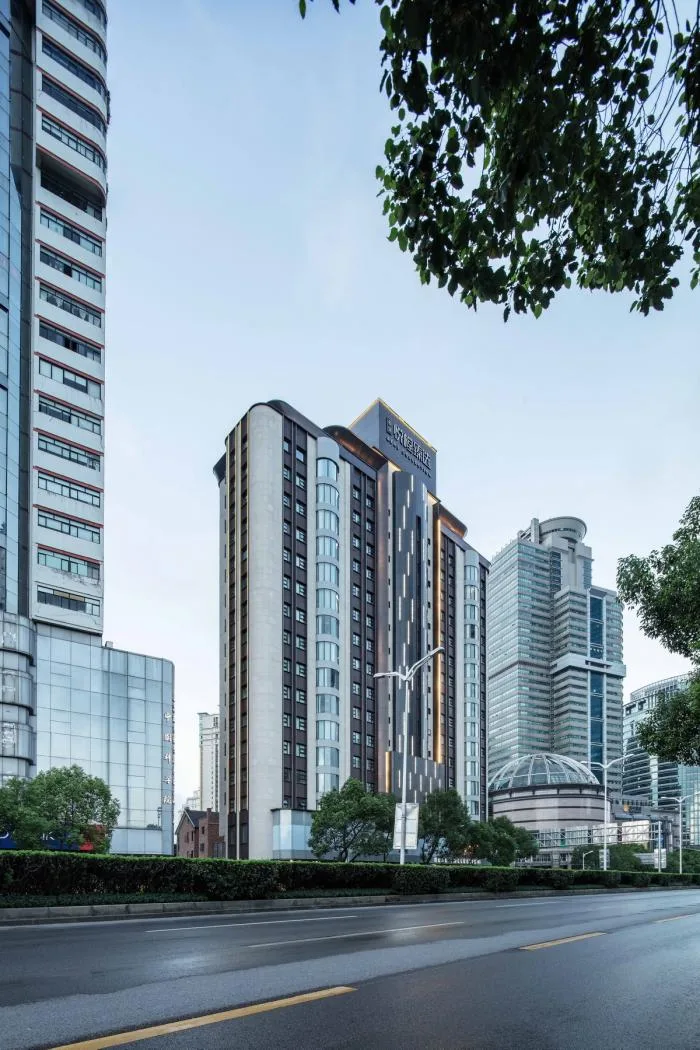
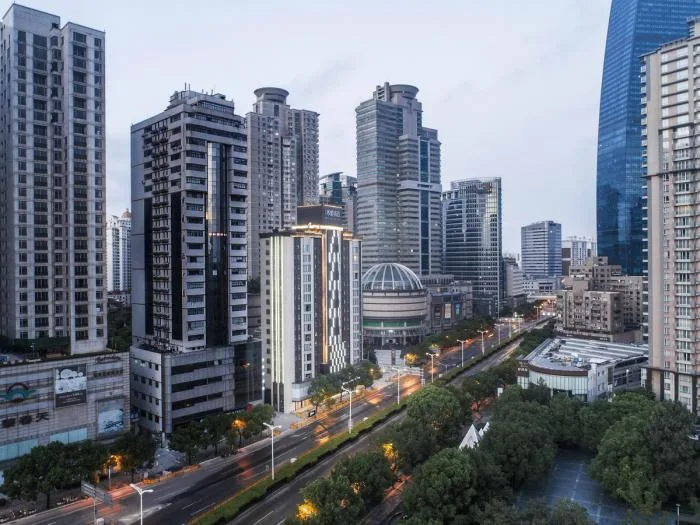
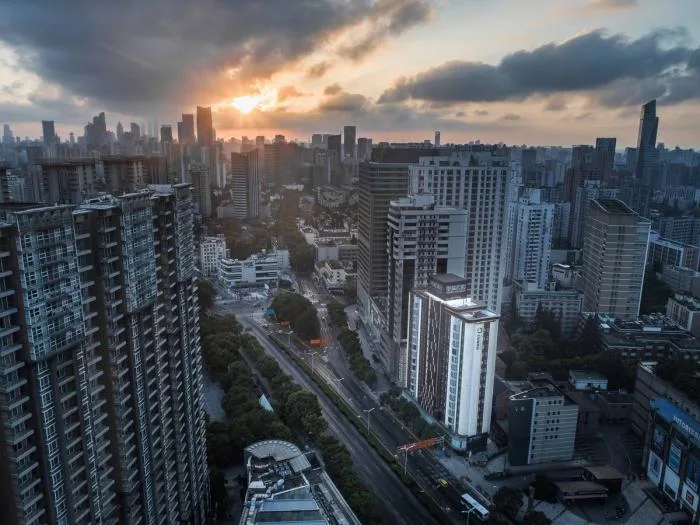
The original tower-shaped rooftop water tank was clad in aluminum panels, reshaping its outer facade into a rectangular form that serves as the backdrop for the brand logo display. The complex height variations at the rooftop were enhanced with a double-eave aluminum panel design, achieving a cohesive and iconic building character.
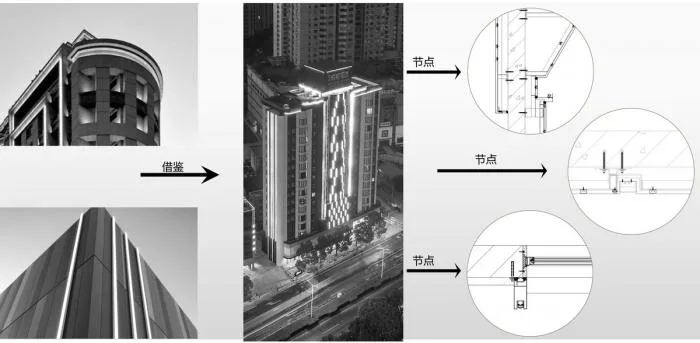
▲ Detailed node diagrams
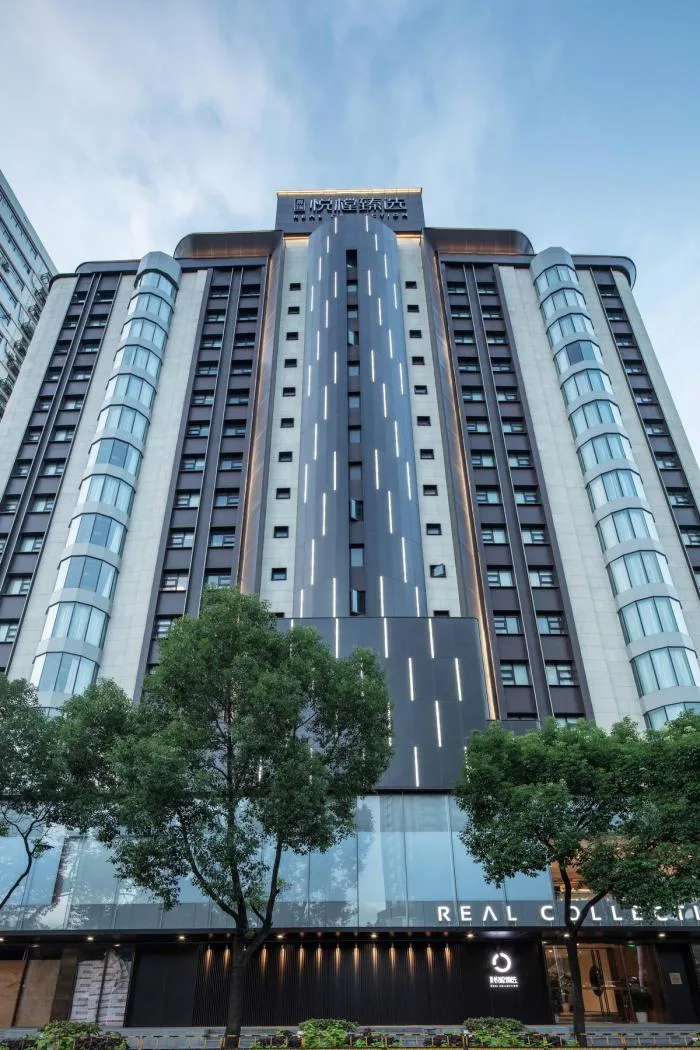
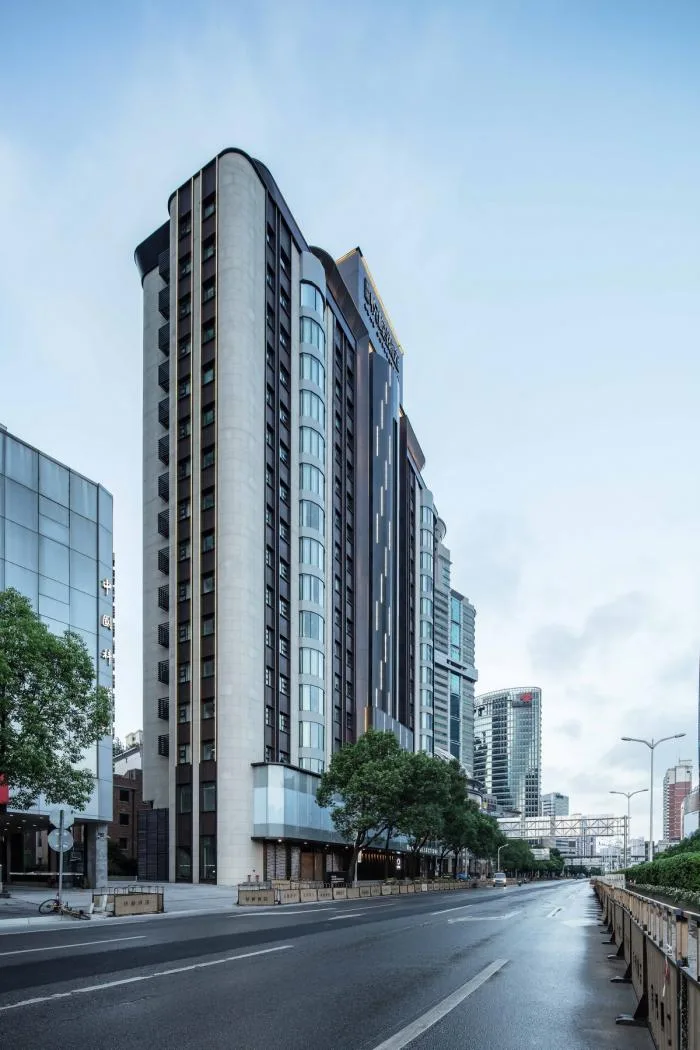
The original doorway was removed, and the curved central facade section was connected to the protruding second-floor area using aluminum panel cladding. Embedded vertical light strips highlight the white staggered lines, emphasizing the building’s central axis. This design creates a striking night lighting effect with high visibility. The main and storefront entrances feature large glass and stainless steel door frames, enhancing texture and elevating the commercial appeal and aesthetics of the street facade.
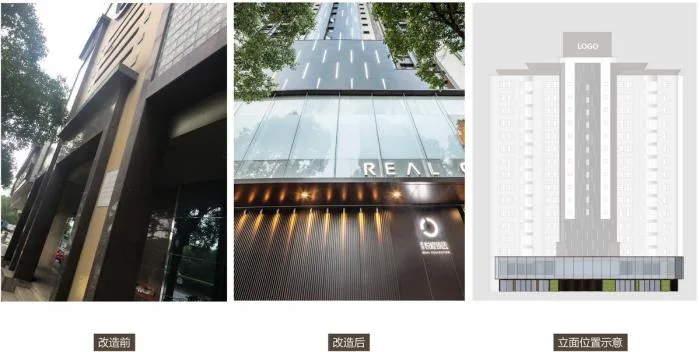
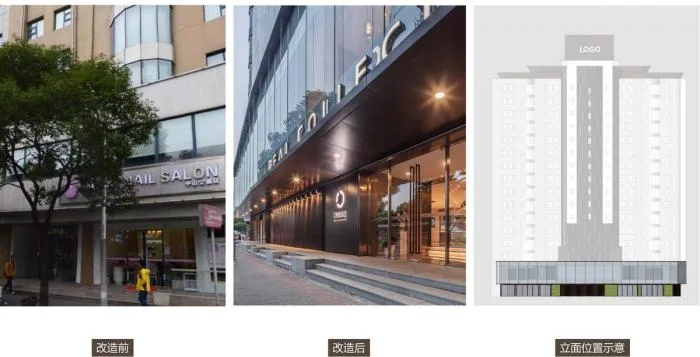
The second-floor parapet was removed and replaced with large glass French windows. Using external glass rib supports increased indoor natural light and transparency, enhancing both the street facade’s appearance and the building’s commercial value.
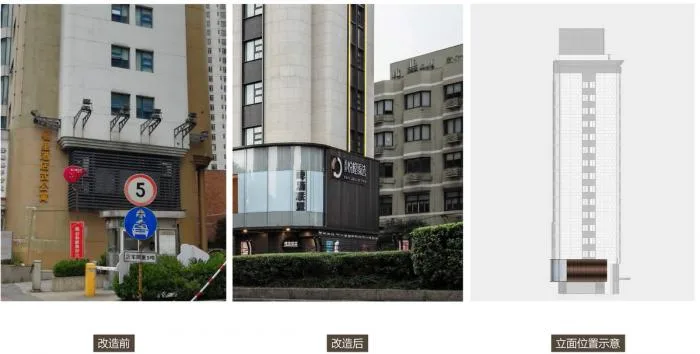
Concept: Embracing Agility
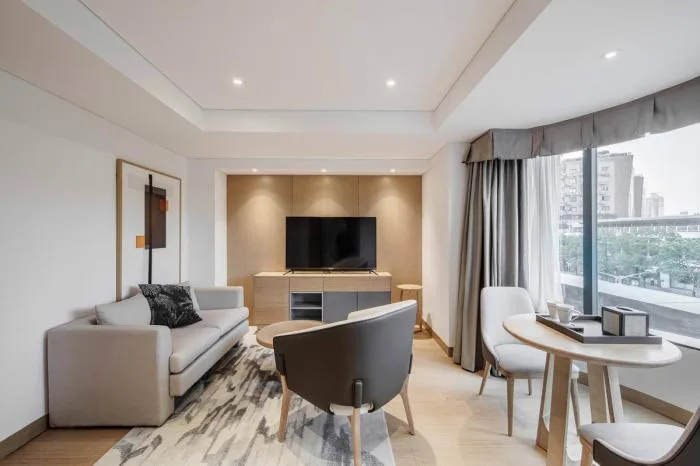
At the beginning of the renovation, Yuezhong Apartment incorporated cutting-edge public area design concepts and cross-industry collaborations. Leveraging the idea of “sharing,” the long-term rental apartments were transformed into a multifunctional space integrating living, work, socializing, leisure, services, and entertainment. This created a high-end rental product defined by “personalization + experience + sharing.”
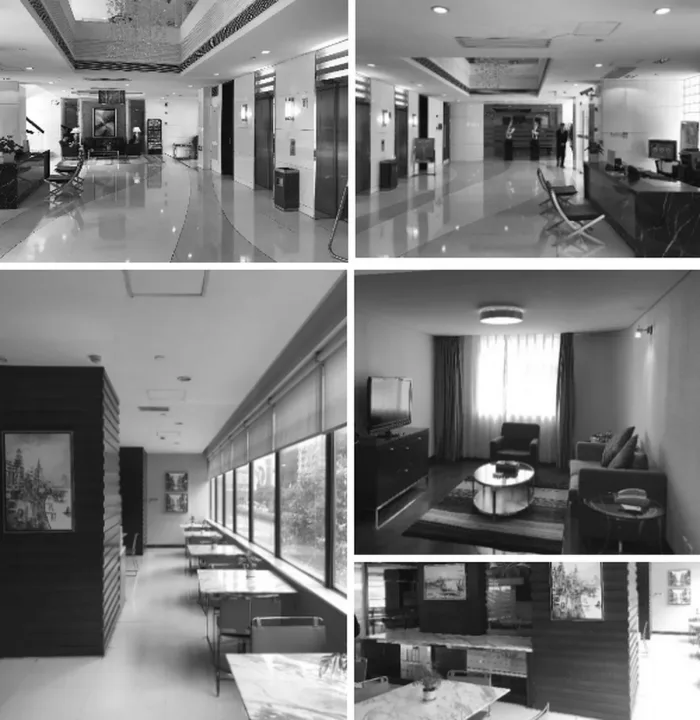
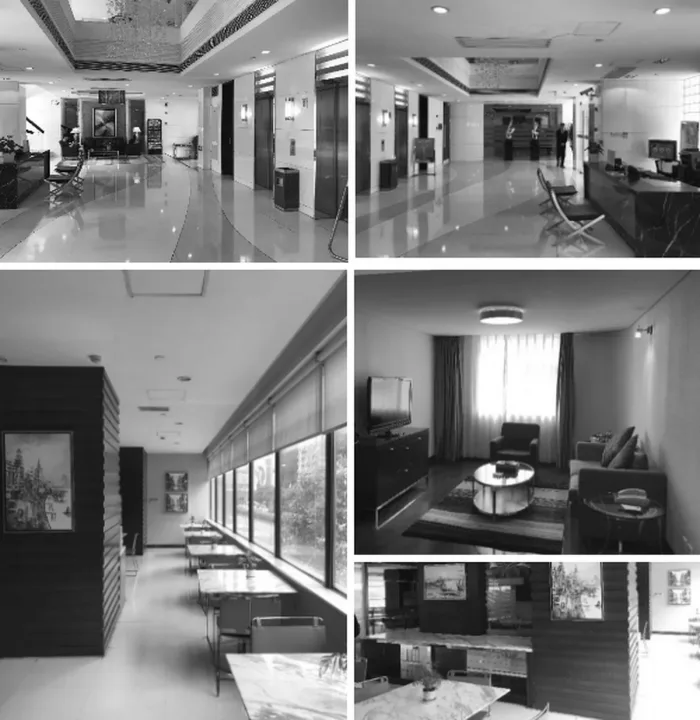
▲ Interior renovation images
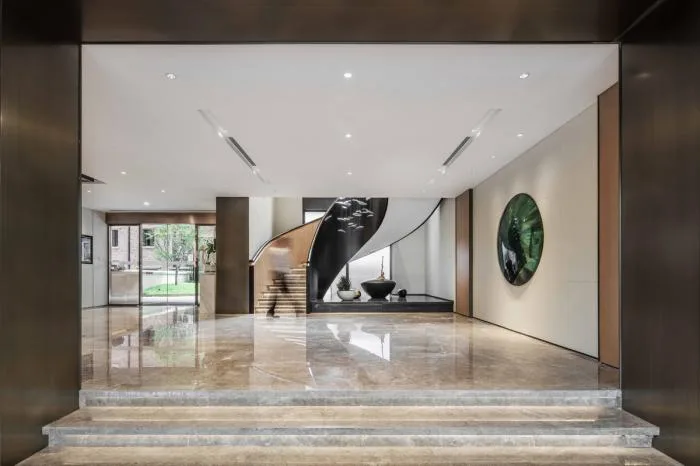
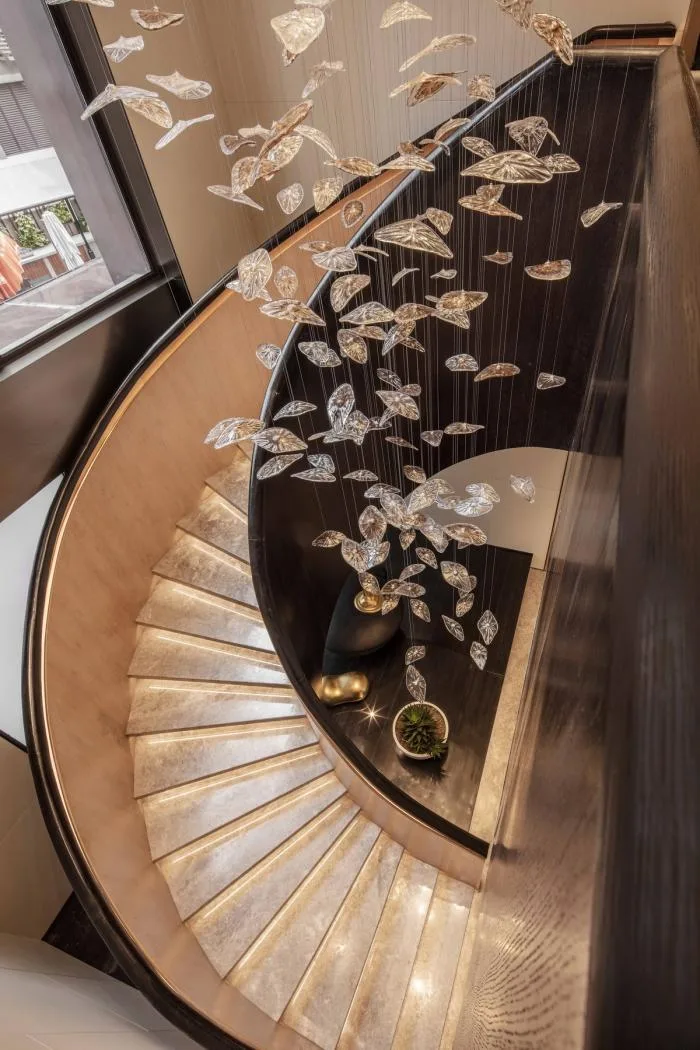
The first-floor lobby has been opened up, with the spiral staircase’s distinctive shape and artwork serving as a striking backdrop. The double-layered hollow in the center offers a cozy resting area filled with natural light and a landscaped courtyard that changes with the seasons, adding warmth and comfort to residents’ homes.
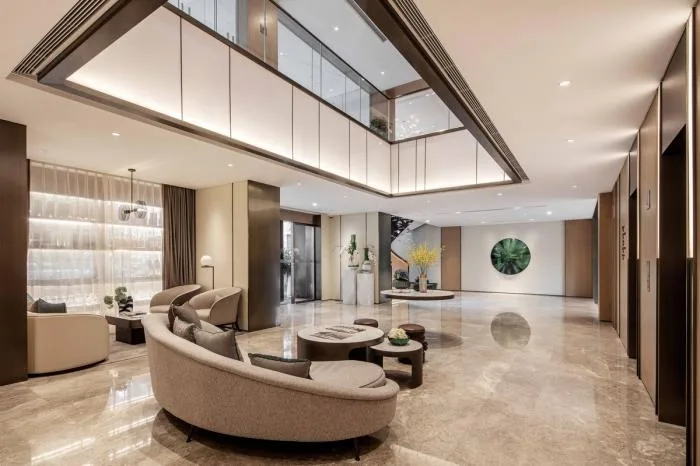
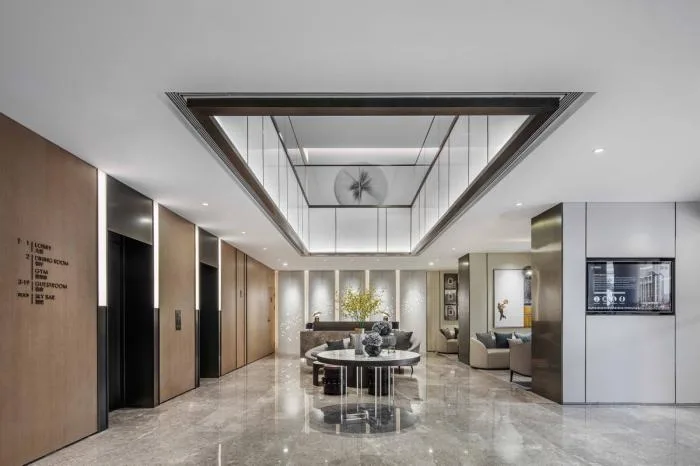
The circular corridor surrounding the void between the first and second floors enhances spatial interaction. The gym features full-length mirrors that visually expand the space, while embedded LED strips in the walls, ceiling, and floor create a modern, technological box-shaped lighting effect. The extensive use of mirrors also reflects the outdoor scenery indoors. Residents can enjoy views of the elegant courtyard garden through the full glass.
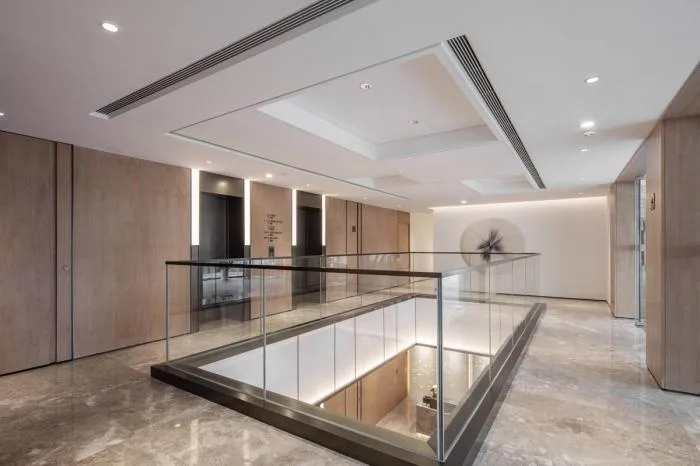
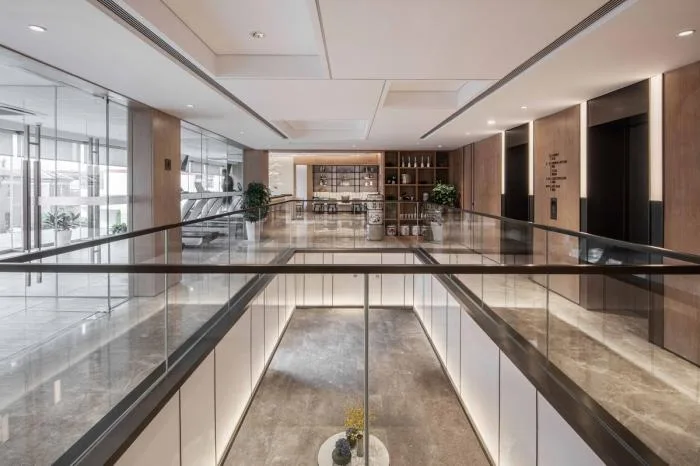
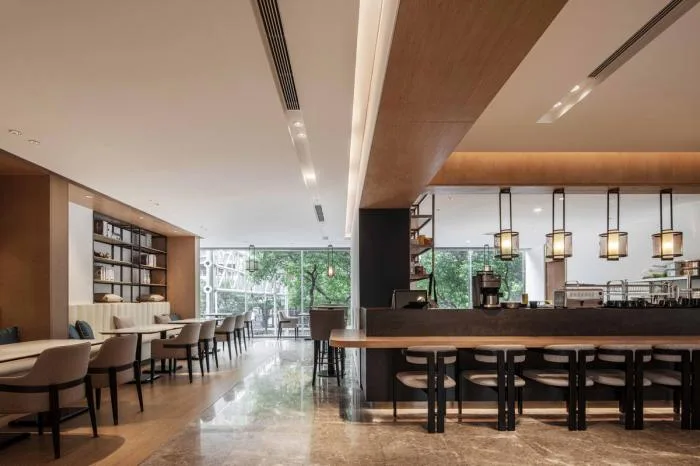
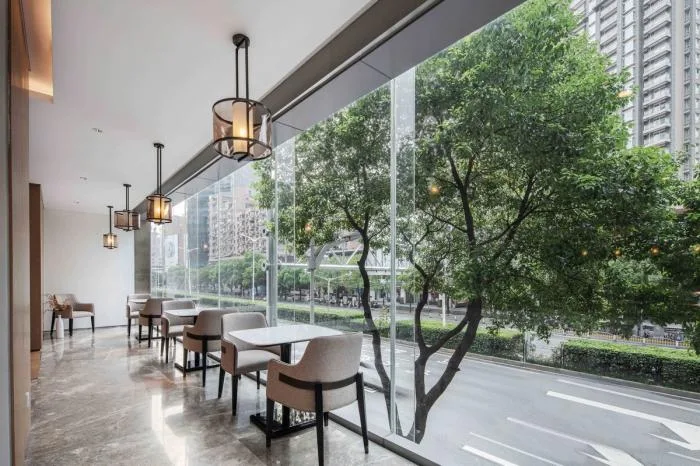
The second-floor restaurant and gym are accessible via the spiral staircase. The restaurant features an open layout with a bar and wine cabinet. A long dining table in the corner serves dual functions as a dining area or multifunctional conference space, offering residents a flexible shared environment. The renovated full glass French windows provide expansive city views and integrate the restaurant with the urban atmosphere.
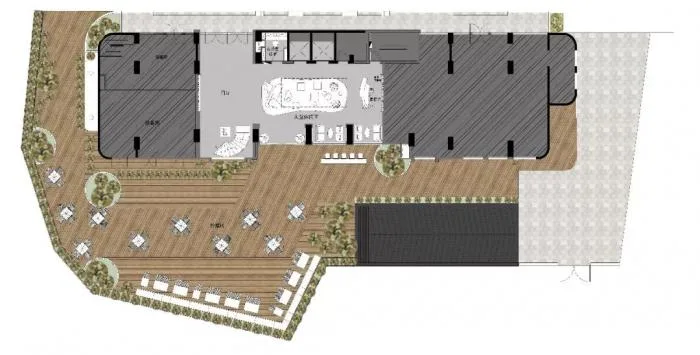
▲ First floor plan
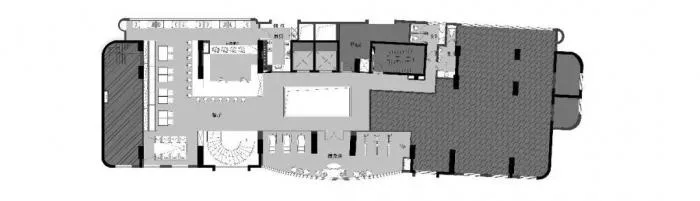
▲ Second floor plan
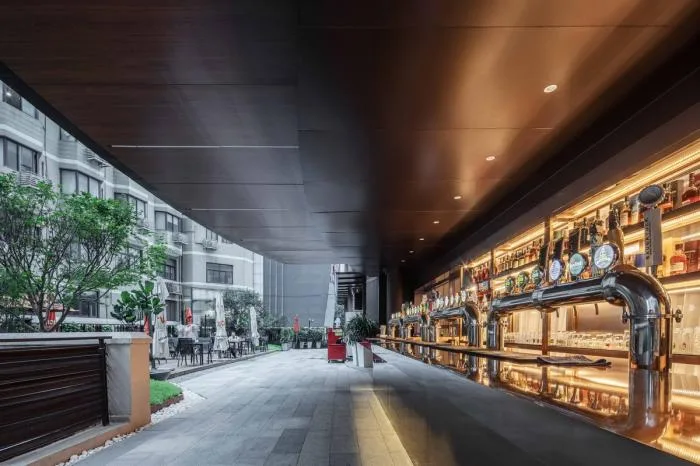
The rooftop, formerly an equipment room with underutilized space, has been transformed into a bar and sky garden. This addition enriches the spatial complexity and enhances venue cohesion and interactivity. From the garden, visitors can enjoy views of Zhongshan Park and intuitively experience the rhythms of day and night, seasonal changes, and the harmonious relationship between city life and nature.
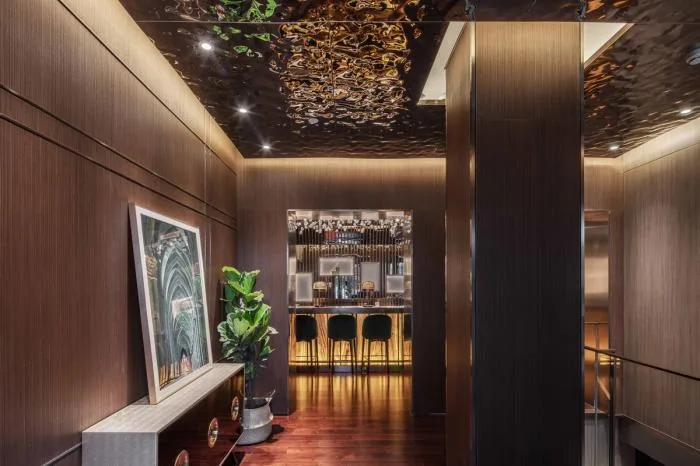
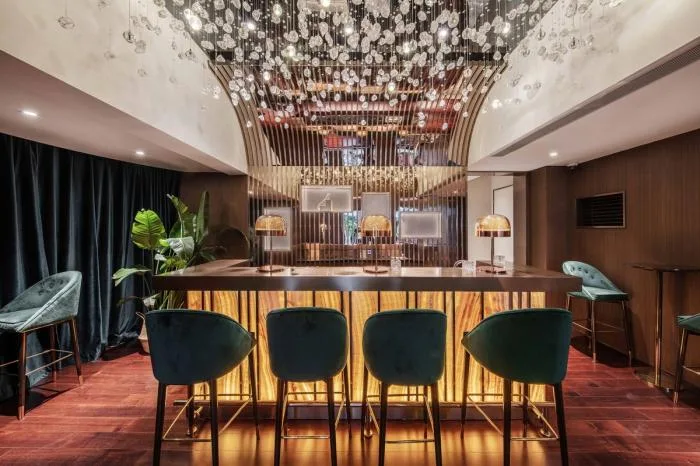
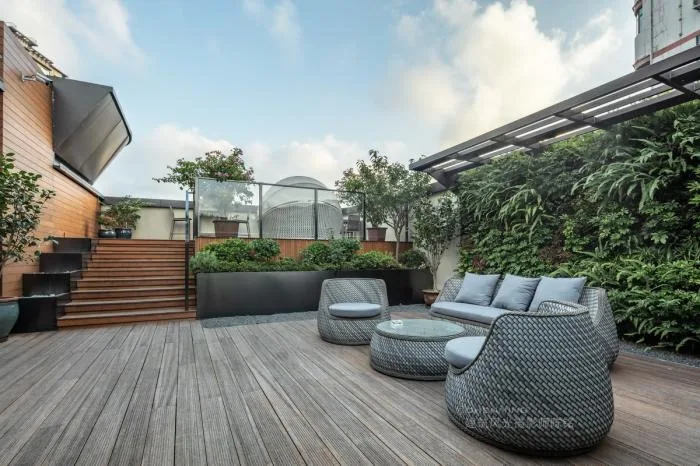
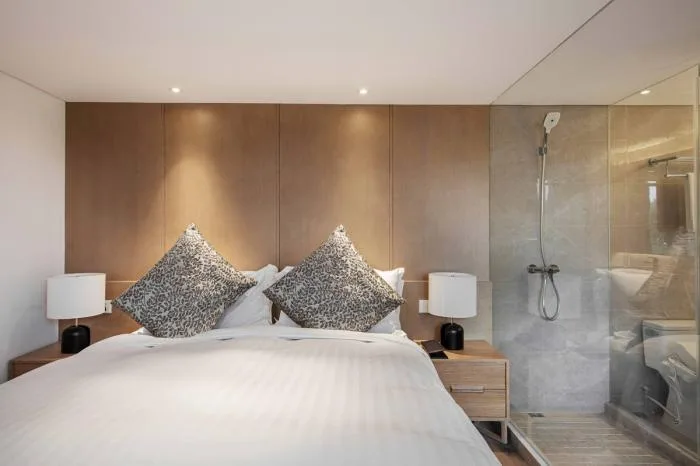
The refined lifestyle for contemporary high-end residents is reinterpreted as providing a sanctuary for physical and mental relaxation. Transparent bathrooms with glass partitions and open ceilings free up space. The use of warm, natural, and simple materials replaces gaudy colors and sensory overload. Under natural light and shadow, the design is simple in form yet rich in depth.
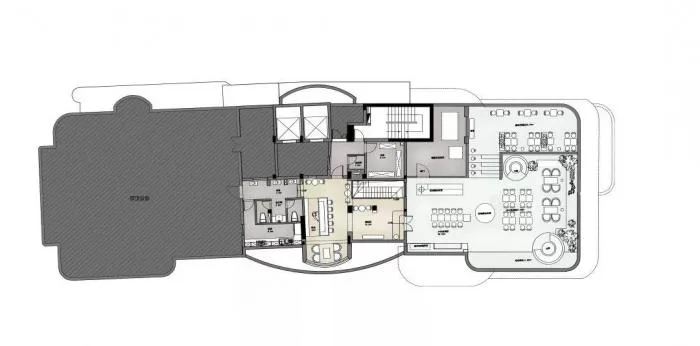
▲ Roof plan
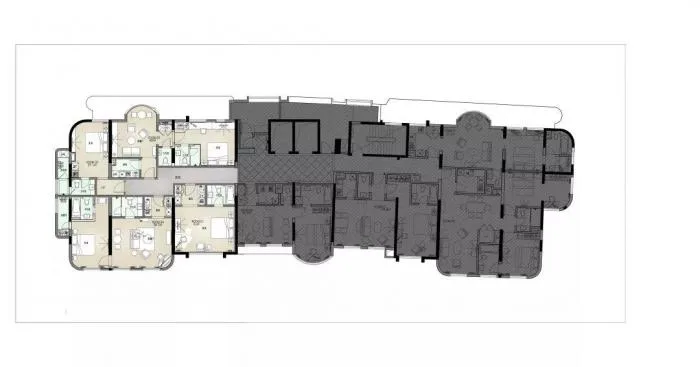
▲ Typical floor plan
Space reflects society not merely as a mirror but as a manifestation of its structure. Urban renewal should transcend surface-level changes and address deeper structural issues. It is crucial not only to improve the city’s material environment but also to strengthen the unique spatial frameworks and social networks within communities, ensuring sustainable and organic growth.
Project Information
Project Name: Shanghai Jingruiyue Zhuzhen Selection (Zhongshan Park Store)
Location: No. 889 Changning Road, Changning District, Shanghai
Project Owner: Jingrui Holdings Limited
Renovation Area: 6,400 square meters
Architectural Design: Shanghai Chengzhi Architectural Design Co., Ltd
Chief Architect: Li Jie
Design Director: Xue Yu
Design Team: Zhang Yaohui, Ge Xiaoqiang, Jiang Hongyan, Zhang Xuejiao
Interior Design: Shanghai Chengzhi Architectural Design Co., Ltd
Design Director: Wu Xueyan
Design Team: Tang Ji, Shen Liping, Xue Chengzong
Landscape Design: Shiji Landscape Design (Shanghai) Co., Ltd
Design Period: July 2018
Completion Date: September 2019
Project Photography: Chen Ming












Must log in before commenting!
Sign Up