
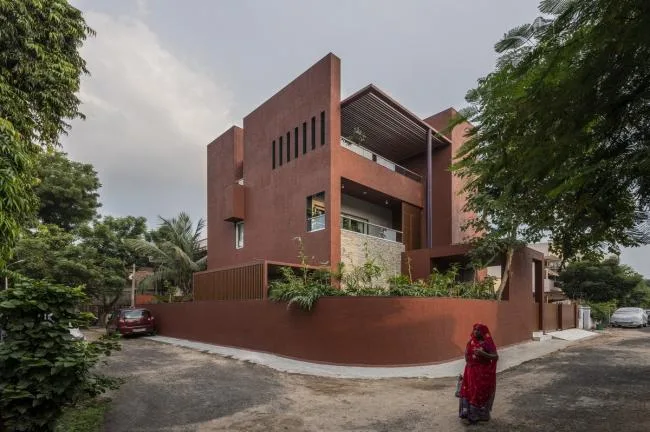
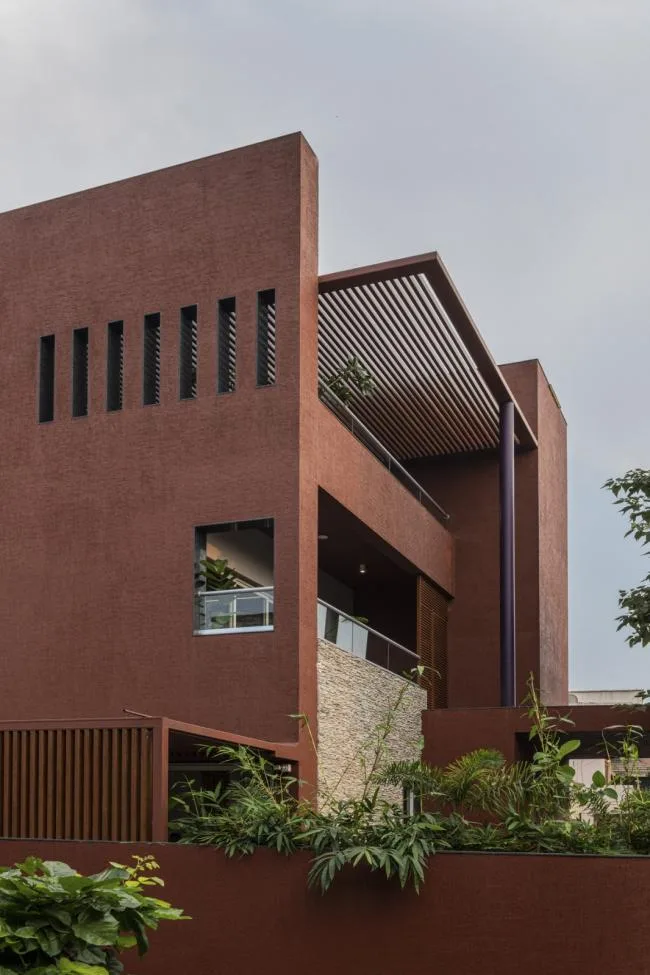
This project tackles a set of seemingly conflicting requirements, aiming to harness the strengths of the site while mitigating its weaknesses. The introverted yet inclusive architectural approach reflects the architect’s optimistic vision from the outset.
The site measures approximately 334.5 square meters and is situated within a densely populated neighborhood typical of middle-class Indian communities. The design’s primary objective was to eliminate any intimidating presence, instead using vivid and striking visual language to assert its identity within the urban fabric. Additionally, the created spaces maintain a strong connection to the outdoors without compromising privacy.
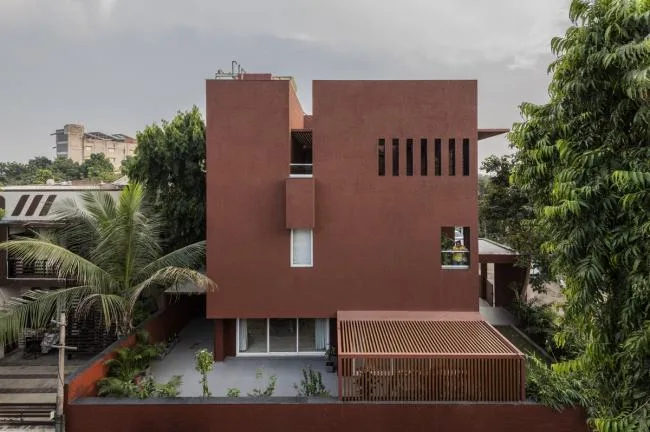
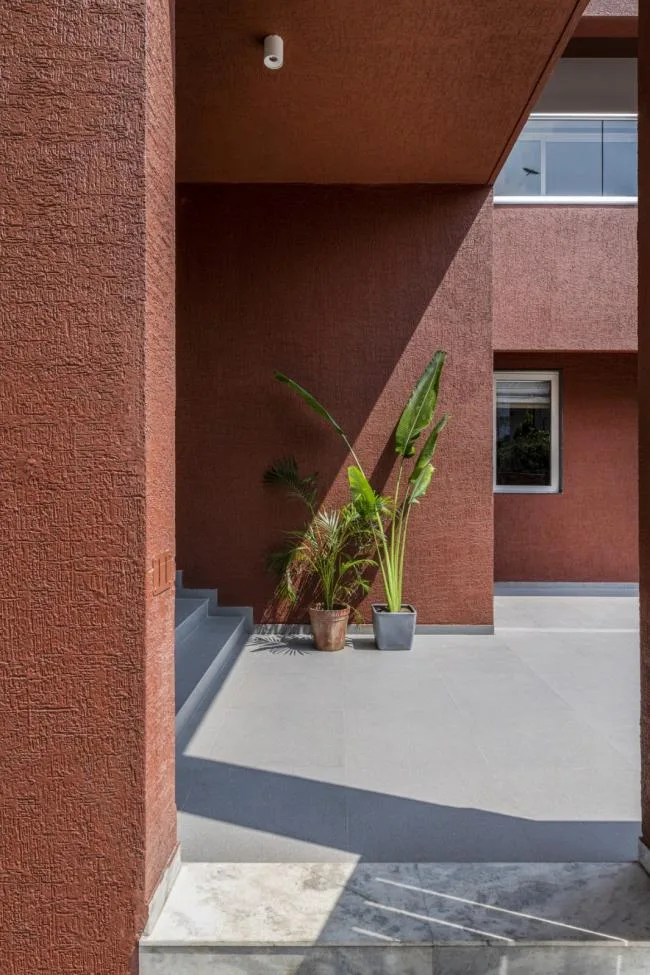
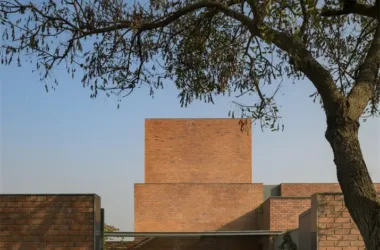
To address these contrasting demands, the architects opted for a straightforward design with clean lines. The building showcases a bold red textured façade, softened by sandstone elements that balance its strong color and mass. The façade extends outward, revealing functional details and construction nuances that highlight the relationships between various components.
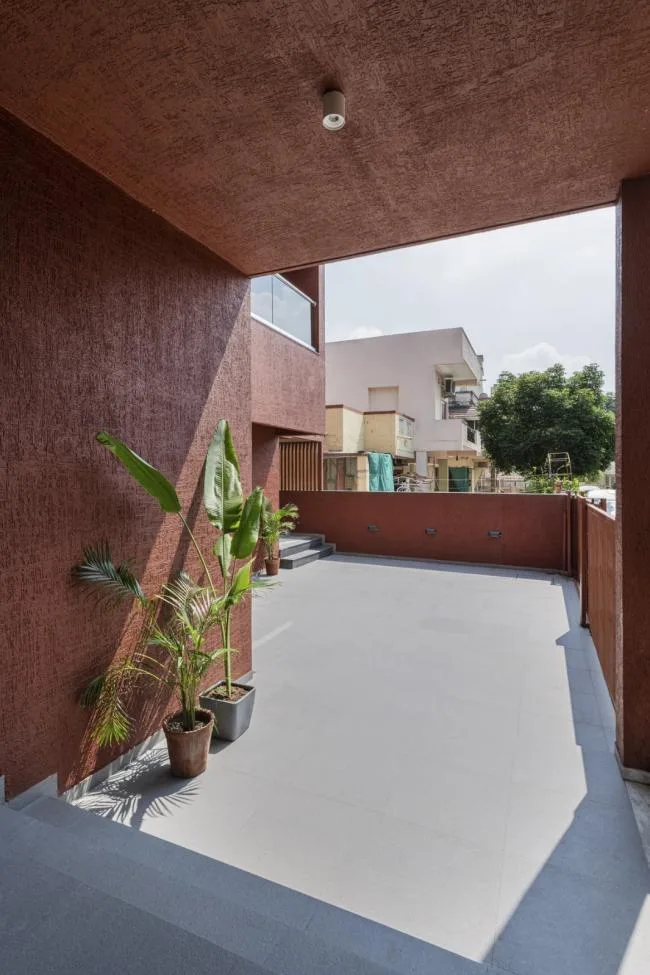
The main structure is enclosed by a composite wall that remains relatively low overall but rises proportionally where privacy is needed more. Due to the limited site area, expansive landscaping with outdoor seating is not feasible. Instead, recreational spaces are located on the rooftop terrace, complemented by an elegant garden that serves as a quiet retreat.
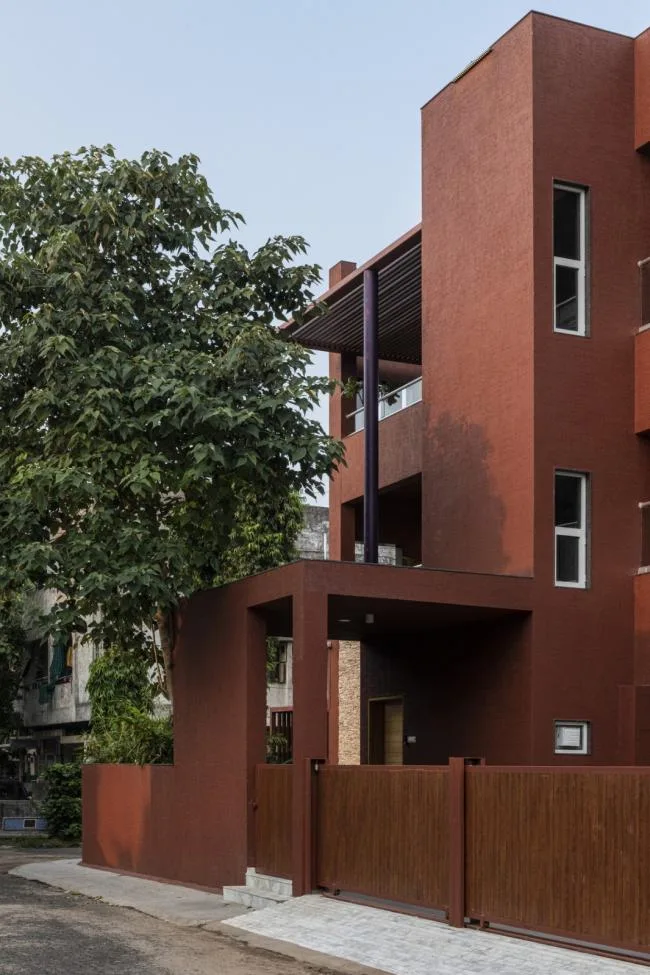
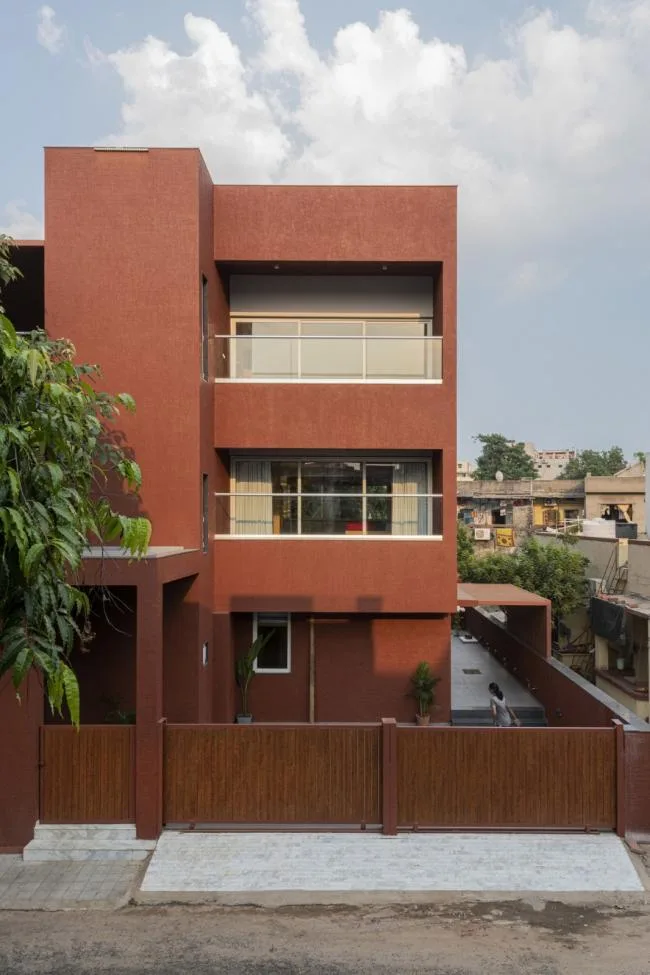
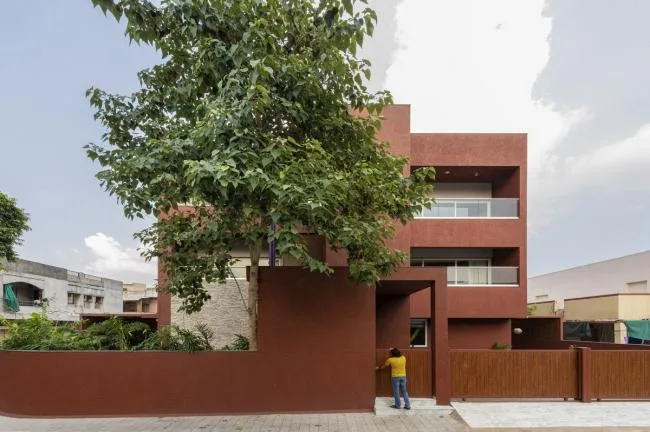
The enclosed area is rich with lush vegetation, including mature trees preserved during planning and construction. The architect designed three outdoor recreational zones shaded by horizontal sunshades within the greenery. The semi-outdoor pergola offers dramatic interplay of light and shadow, shielding residents from the afternoon sun while creating a dynamic spatial experience.
These semi-enclosed spaces strike a delicate balance between privacy and openness: they enable visual connection with the interior while preventing excessive exposure to public view.
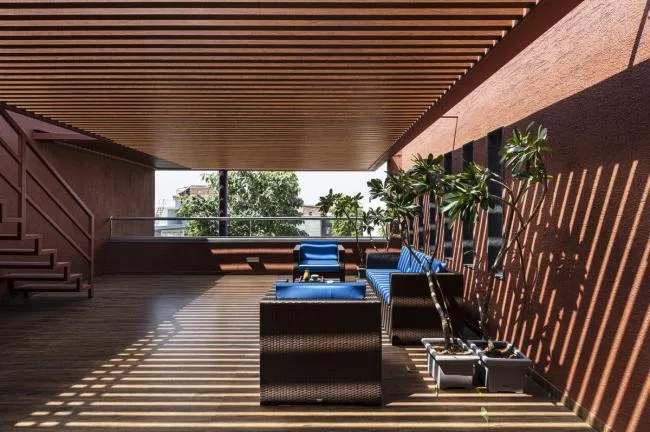
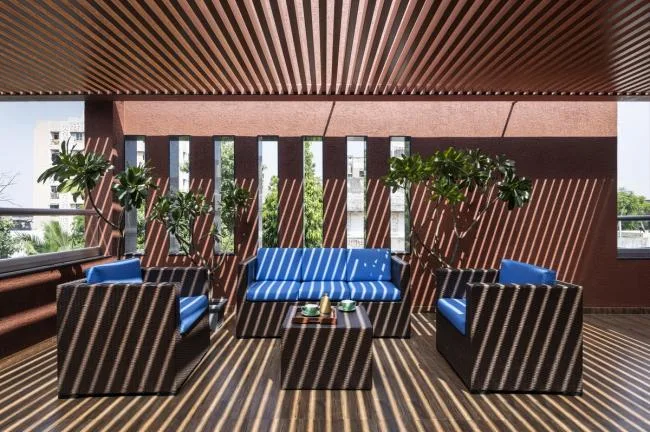
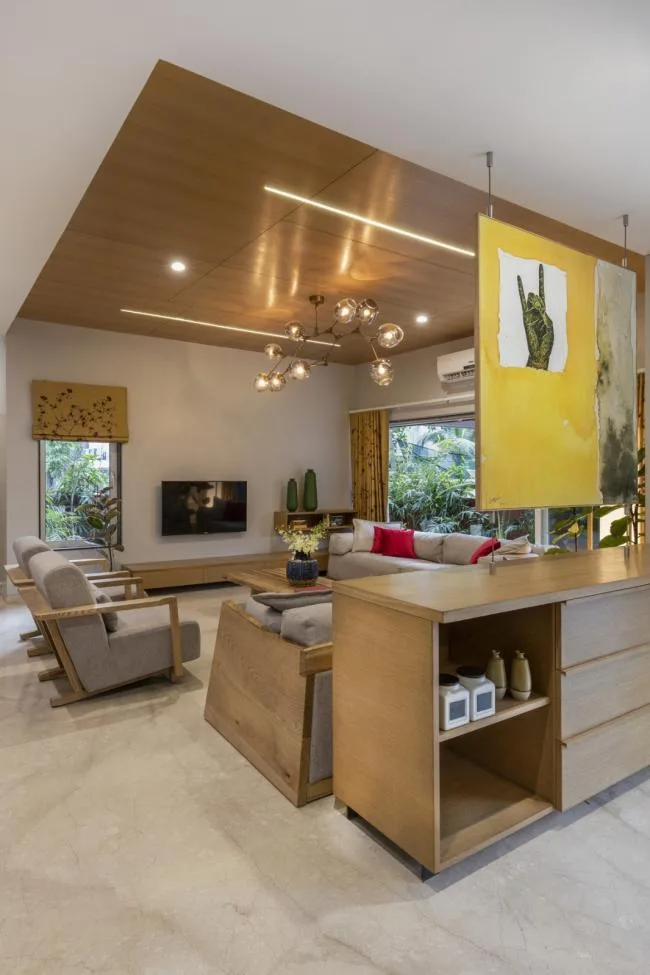
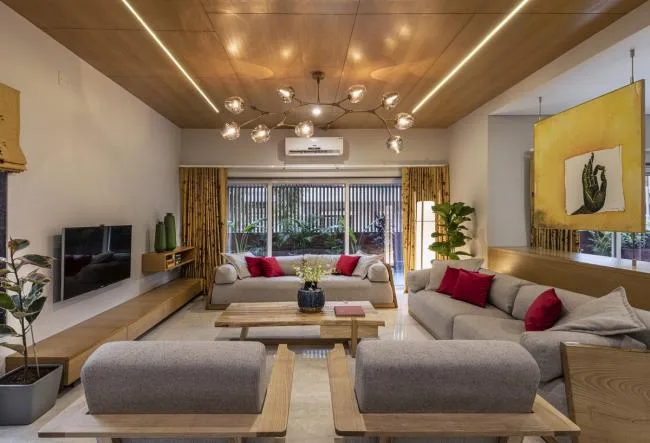
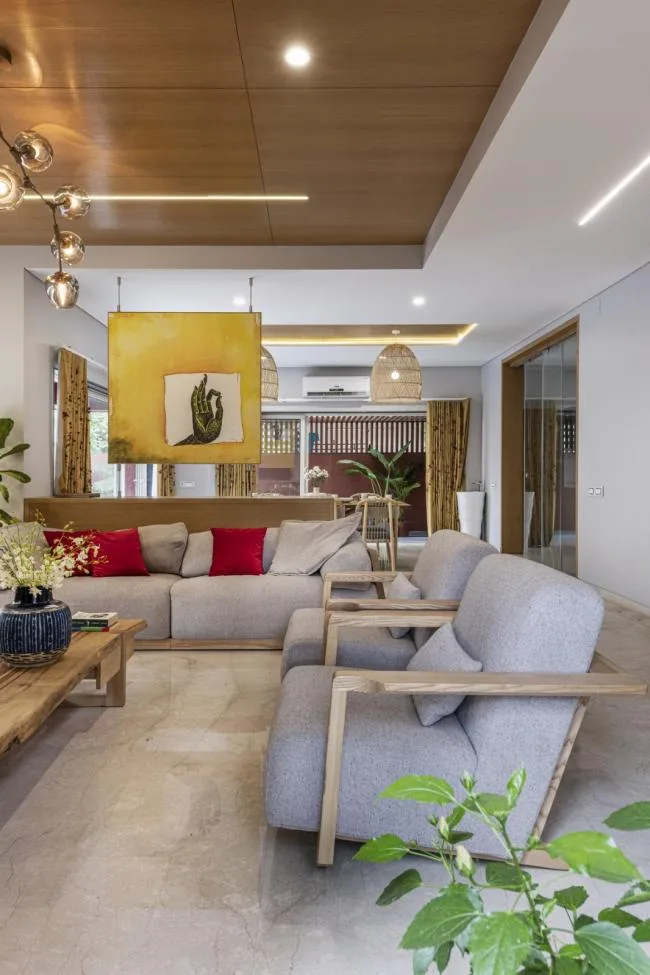
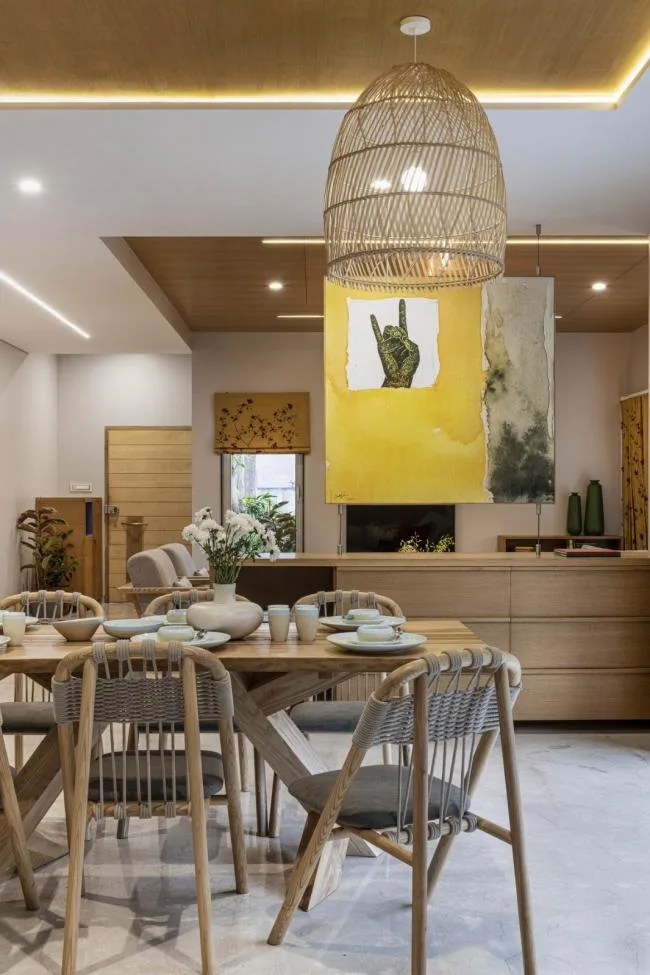
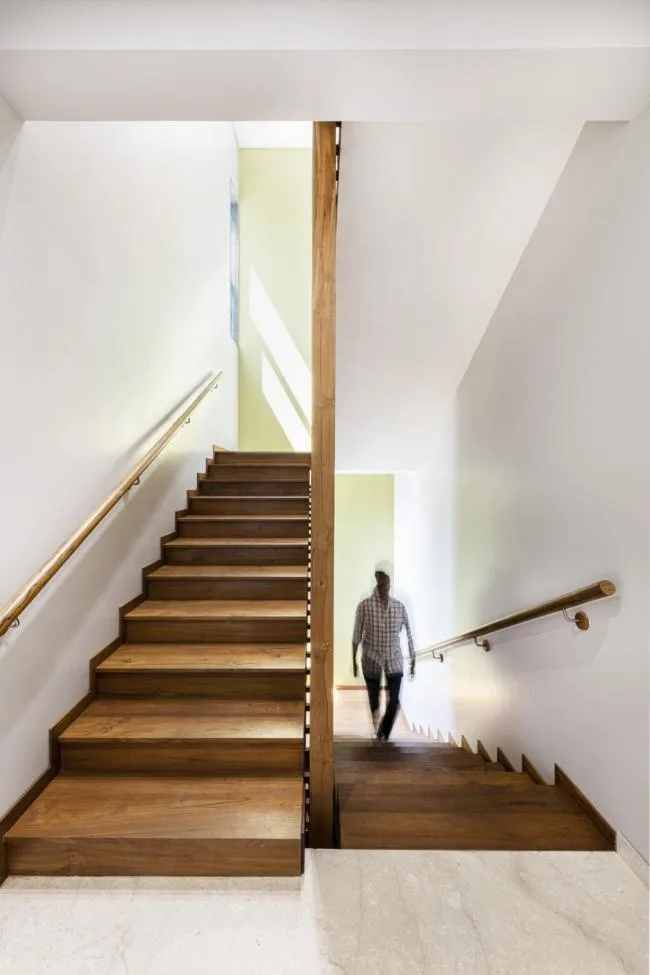
Inside, the layout prioritizes spatial transparency and user experience. Circulation areas are minimized to encourage open, flowing spaces. Architectural elements like walls, window frames, pergolas, window sills, concrete corners, and tree wells create a sequence of gradually varied spaces that offer different levels of privacy.
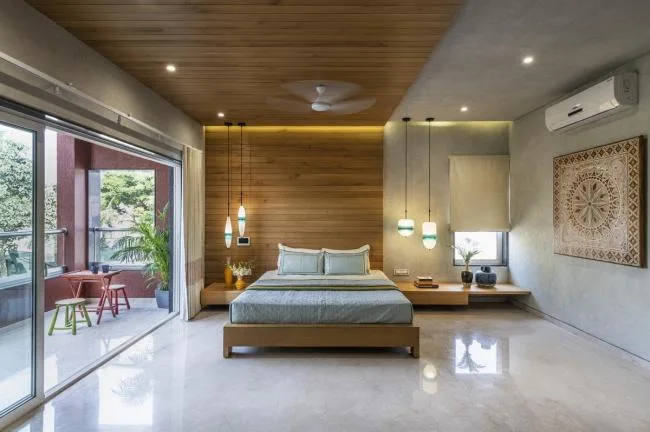
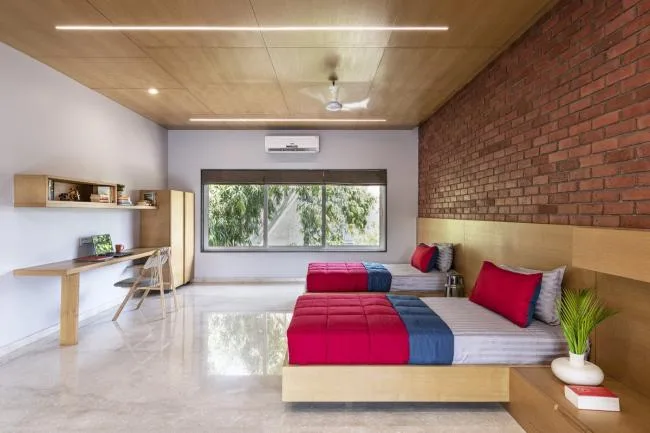
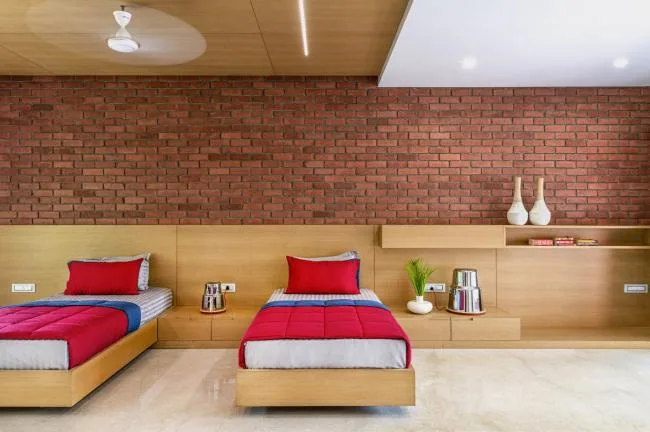
The building maintains continuous interaction between interior and exterior through large and small windows, semi-open terraces, and shaded balconies. The ground floor serves as a social hub with living and dining rooms, bedrooms, and a semi-integrated kitchen. The upper level houses two master bedrooms—one for parents and one for children—while the terrace accommodates a gym, family theater, and pergola-covered living area.
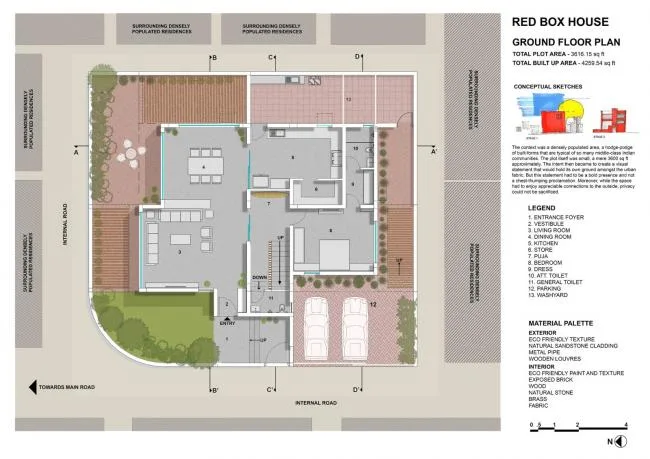
▲ First floor plan
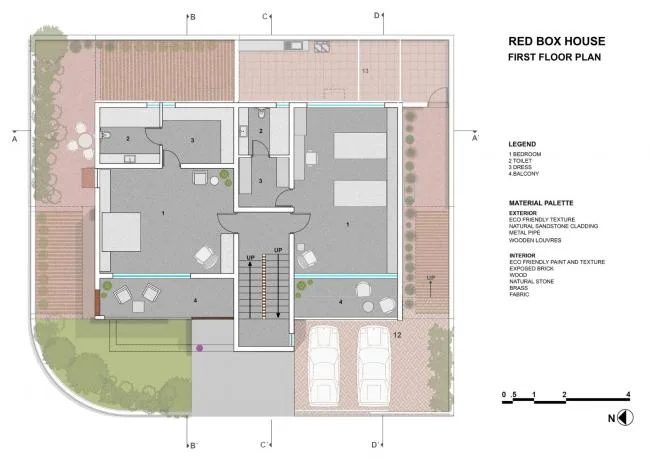
▲ Second floor plan
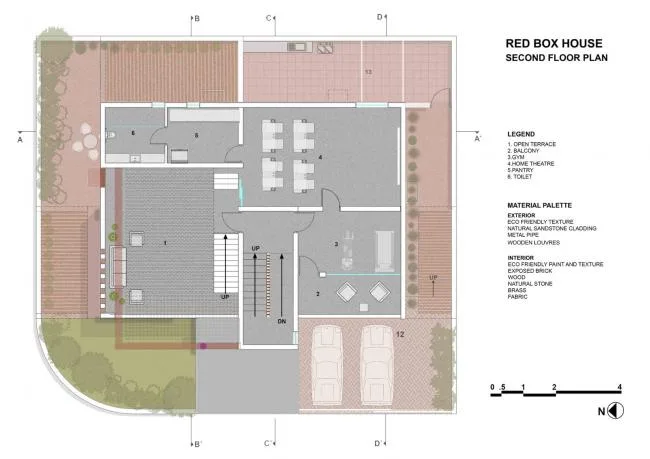
▲ Third floor plan
As suggested by its name, the ‘Red Box’ home embraces a lifestyle that values urban living with a close connection to nature. It overcomes site and environmental constraints to offer a living model that inspires us to rethink our built environment through creative design.
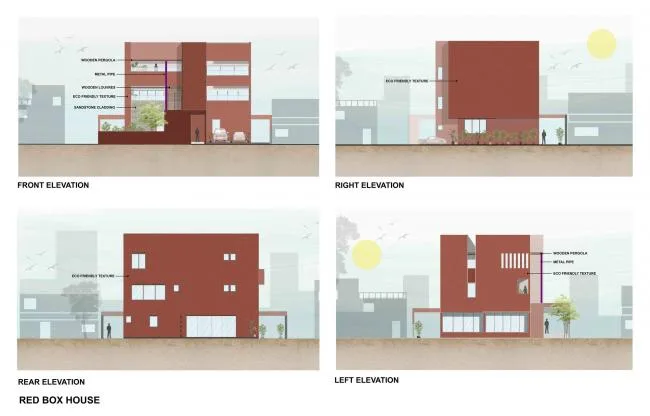
▲ Elevation view
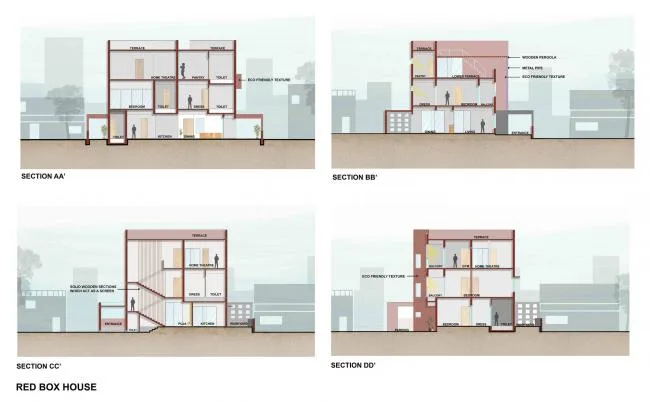
▲ Sectional view
Project Information
Project type: Independent residential building
Project location: Ahmedabad, India
Architect: The Grid Architects
Area: 400.04 ㎡
Year: 2019
Photographer: Photographix India
Partners: Trimble Navigation, Asian Paints, Tata Steel, AutoDesk, Saint-Gobain, Ultratech
Lead Architects: Snehal Suthar, Bhadri Suthar, Vishvajit Hada
Design Team: Snehal Suthar, Bhadri Suthar, Vishvajit Hada, Aanal Shah
Engineer: In-house
Landscape Design: The Grid Architects
Site area: 334 square meters













Must log in before commenting!
Sign Up