
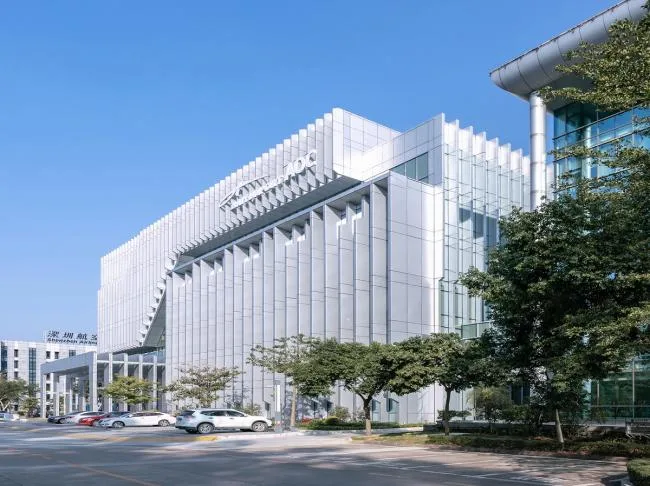
Guangzhou Baiyun International Airport ranks among China’s top three major hub airports. To support the continuous and rapid growth of the aviation industry and future information development needs, a new comprehensive information building (BIM-engineered) was constructed within the airport’s operational area. This facility enhances overall airport control, coordinates operational resources, and effectively integrates management across the entire region and processes.
From an aerial perspective, the comprehensive information building aligns with the airport’s overall texture, seamlessly blending into its surroundings with an orderly, subtle presence. Along Airport Avenue, from the city center to the terminal, buildings maintain a consistent sequence intertwined with greenery. The comprehensive information building harmonizes with this environment, standing out while remaining cohesive.
True creativity arises not from being different for its own sake, but from a thorough understanding of design challenges. After a comprehensive study of Baiyun International Airport, three core issues were identified: urban relationships, façade imagery, and functional integration. The hope is that, as Giorgio Ponti once said, this building will endure “because it is art, because it transcends practicality.”
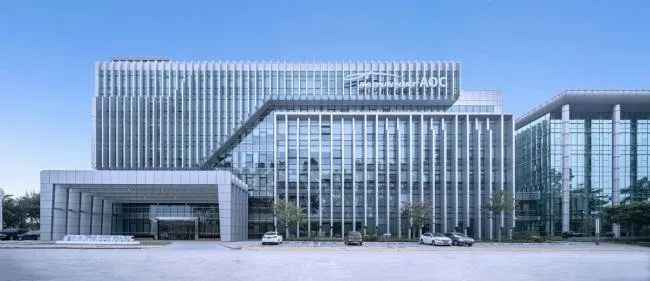
Urban Relations: Designing Architecture Through Urban Context
Baiyun International Airport is divided into two primary operational zones—north and south—with the terminal building at the center. The comprehensive information building is situated in the southern zone, adjacent to Guangzhou’s main city, separated from Airport Avenue only by a green belt. From the city’s perspective, the building’s role is clearly defined: it respects the district’s hierarchy and coordinates with the surrounding areas.
Spatial Design: Enclosed Form and Textural Integration
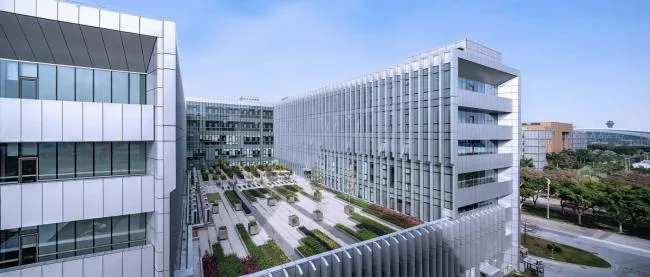
The building adopts a U-shaped layout with an east-facing opening, which preserves the continuity and integrity of the west-facing street façade. This design establishes a strong dialogue with the adjacent east-side Public Security Command Center office building, which features a reverse enclosure. Together, these two structures embrace an open internal courtyard, offering a quiet and comfortable resting space for staff.
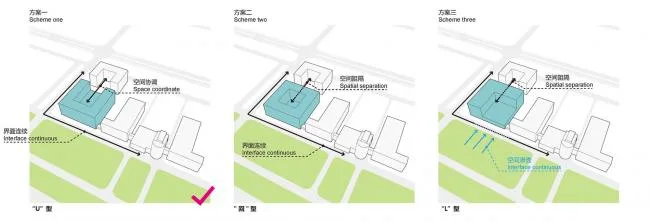
▲ U-shaped building volume
Façade Design: Local Coordination and Contextual Harmony
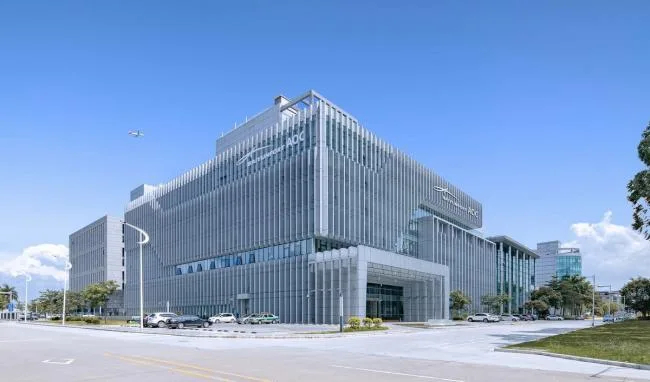
Building upon the U-shaped form, the southern wing is partially lowered by one floor to match the height of the existing office building to the south, creating a unified and transitional roofline. A section of the west façade highlights this connection, using similar textures to achieve formal harmony. An iconic corridor space at the northwest corner marks the main entrance, enhancing the street-facing display and serving as a visual focal point.
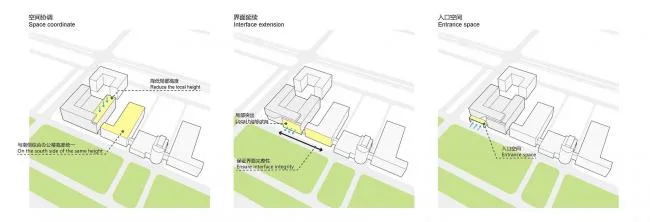
▲ Evolution of building volumes
Façade Concept: Digital Information Cloud Reflecting the Blue Sky
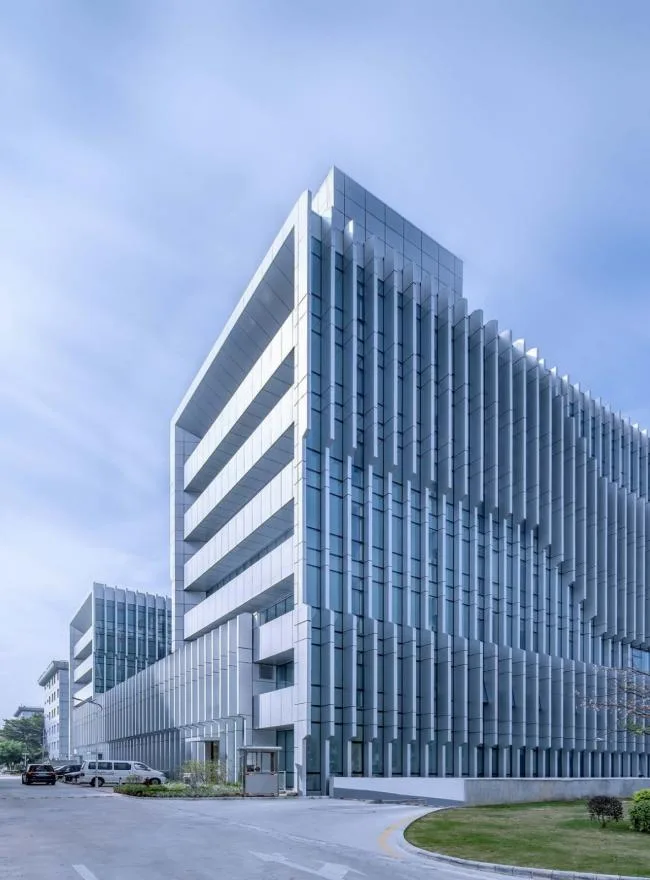
Guangzhou Baiyun International Airport takes its name from Baiyun Mountain, a renowned natural landmark in southern Guangdong known as “the first beauty of Guangzhou.” Inspired by this, the façade design embraces continuity and evokes the imagery of white clouds and technology, allowing the building to resonate with the airport’s dynamic environment.
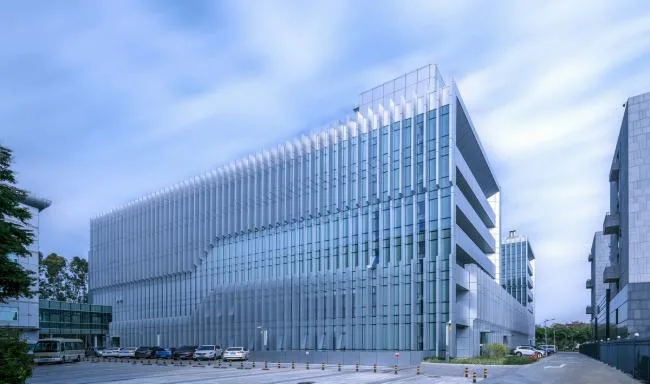
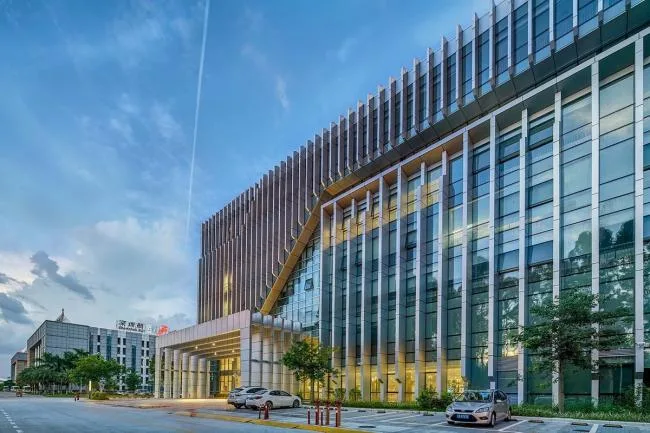
The design concept of a “digital technology and information cloud” reflects the blue sky and the airport’s characteristic atmosphere. Silver-white vertical rods unify the exterior, symbolizing technology, while the alternating concave and convex forms create a three-dimensional cloud-like effect. A multi-layered curtain wall adds depth and detail. Transparent glass skin provides essential functions such as maintenance access, lighting, and ventilation. The flowing sequence of rods on the façade resembles a fashionable garment, expressing the technological essence of an “information cloud” with fluidity reminiscent of clouds and water.
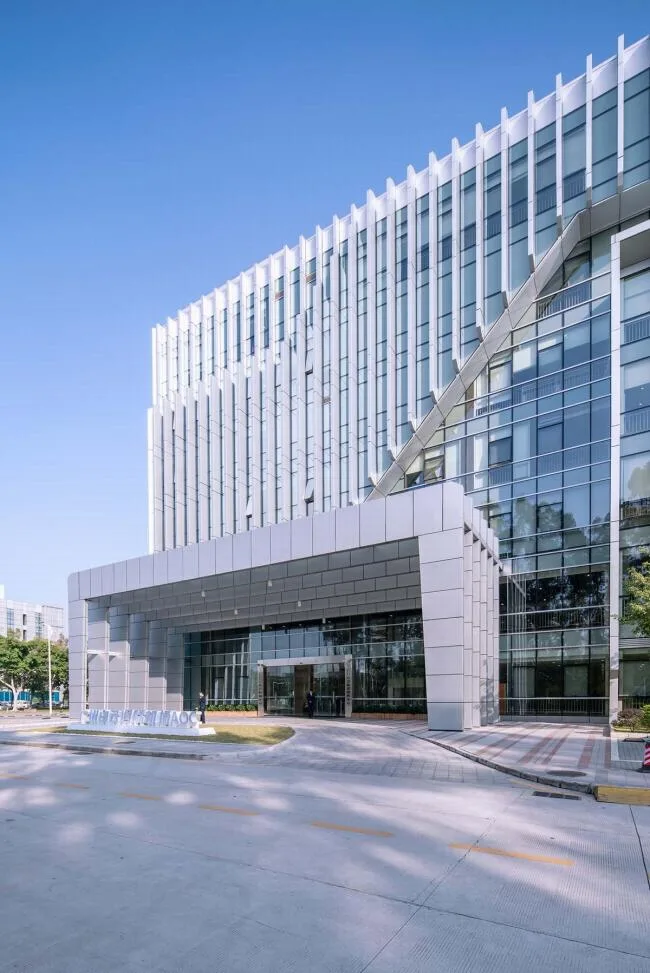
The varied depth and spacing of the vertical rods are carefully calibrated for functional benefits: increased depth on the west side reduces solar exposure and boosts energy efficiency; denser rod placement shields computer rooms from direct sunlight, maintaining cool indoor temperatures; and a balanced rhythm near duty rooms ensures ample lighting and pleasant views. Located within the flight visibility zone, the building’s rooftop (the “fifth façade”) is a key focus of integrated design, featuring a “digital rain” concept that blends technology with nature. This creates an immersive courtyard landscape where technology and nature coexist harmoniously.
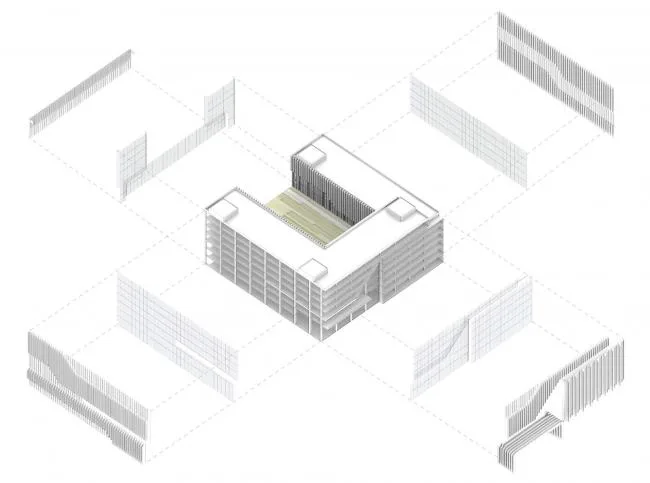
▲ Façade detail breakdown
Functional Integration: The Brain Behind Efficient Airport Operations
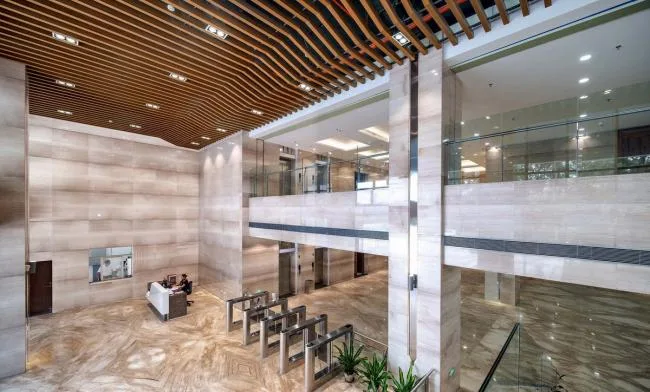
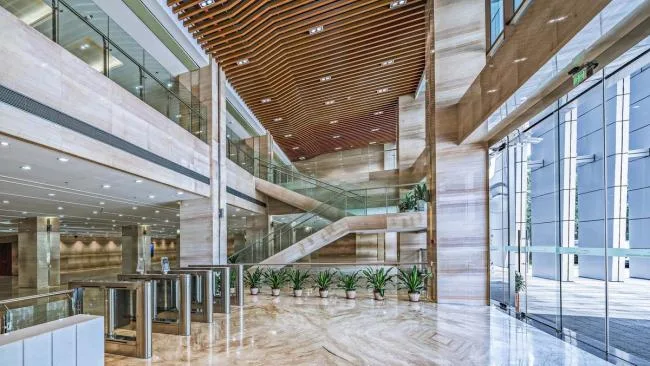
As the “behind-the-scenes command center” for Baiyun International Airport, the building’s functional layout is critical. The design employs a “human-machine separation” strategy, segregating human activity areas from equipment-intensive computer rooms. The square layout maximizes spatial efficiency.
The building organizes five main functional zones: the operation control center and exhibition hall occupy the ground floor, with rooftop landscape courtyards providing pleasant rest areas for staff. The data center, focused on IT processing, is located in the south wing, designed for high efficiency. High-traffic spaces such as the duty room are positioned in the north wing, offering better urban views. Auxiliary spaces—offices, conference rooms, press rooms—connect the north and south wings for ease of movement. The top floor houses archive rooms, used less frequently but essential for function.
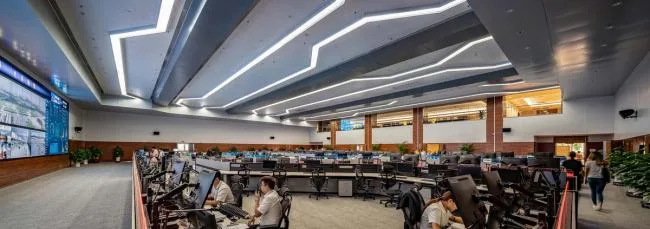
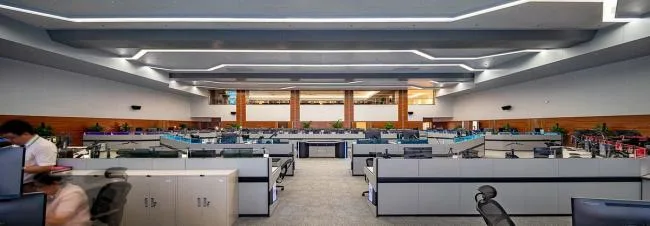
The BIM design control hall, the building’s core, mirrors the exterior façade’s theme inside, featuring continuous cloud-shaped light strips that create a technological “information cloud” ambiance.
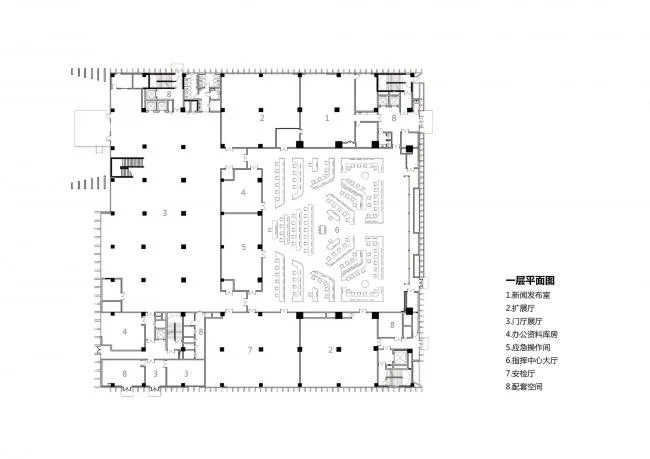
▲ First floor plan
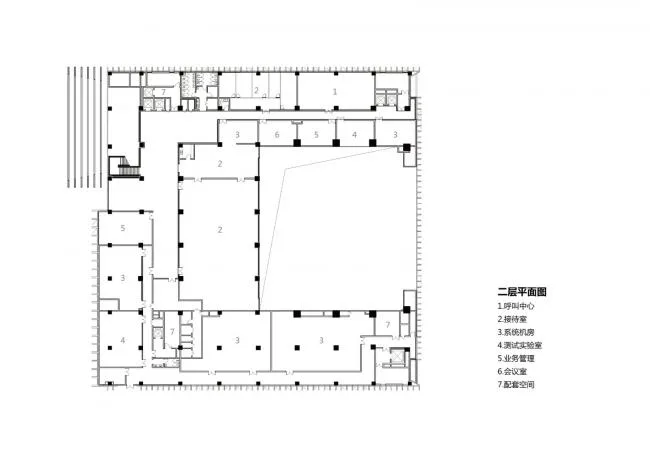
▲ Second floor plan
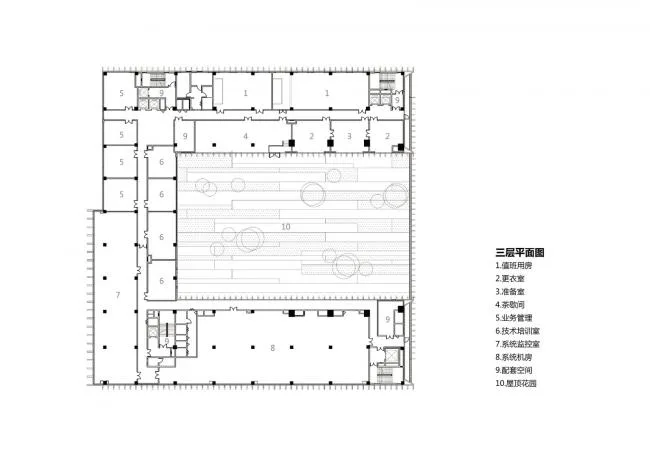
▲ Third floor plan
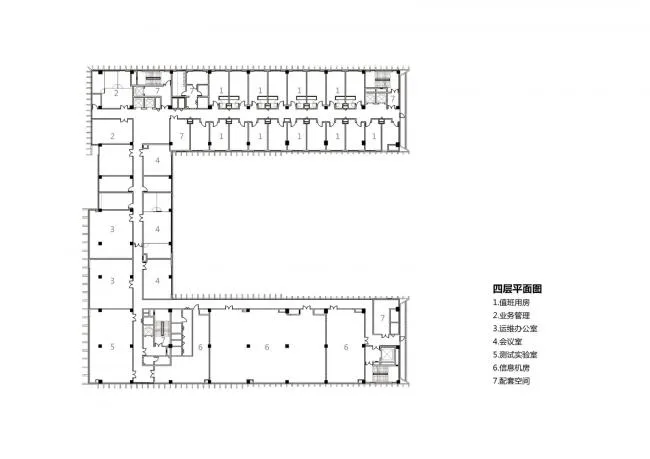
▲ Fourth floor plan
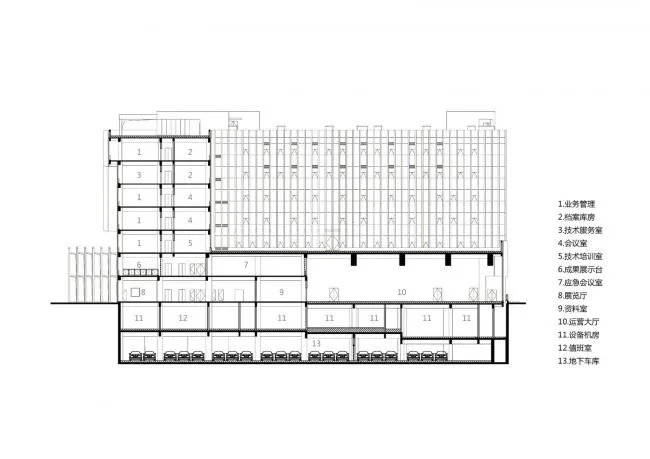
▲ Section view
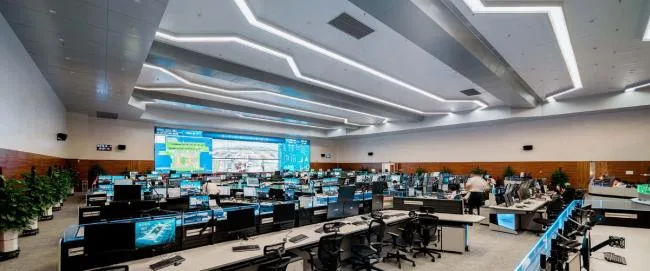
Good design is only the beginning of a building’s life. The integration of BIM technology enables comprehensive lifecycle management across design, construction, operation, and maintenance, ensuring that the building continues to shine over time.
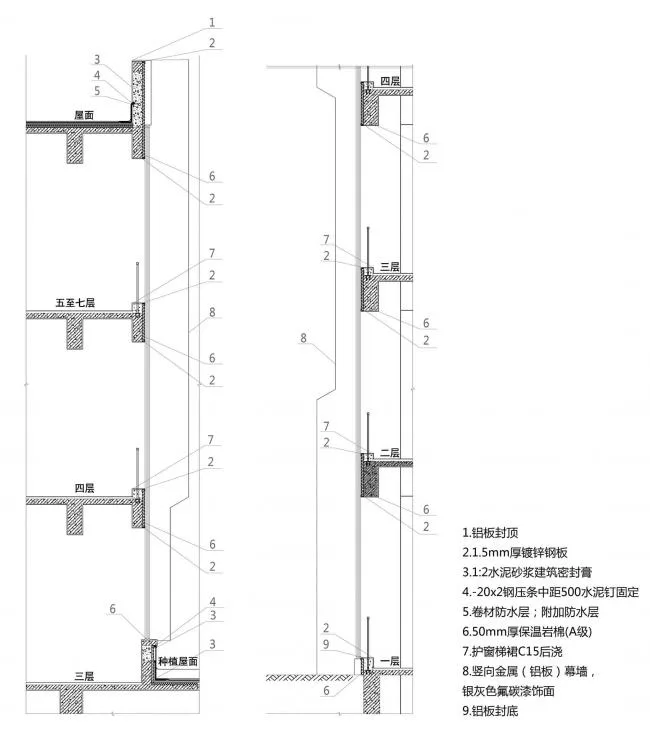
▲ Detailed architectural drawing
Project Information
Architectural firm: Wuhan Zhonghe Yuanchuang Architectural Design Co., Ltd
Location: Southeast Work Area, Baiyun International Airport, Guangzhou, China
Category: Office Facilities
Lead Designer: Yan Xiaobo
Design Supervisor: Hou Jin
Design Team: Luo Tingting, Xia Yan, Xiong Bingning, Yang Lu, Li Zhe, Wu Wenhui
Building Area: 32,710 square meters
Project Year: 2017
Structural Engineering: Chen Ping, Liang Liyong, Pan Bo
HVAC Engineering: Yuan Chong
Water Supply & Drainage: Zhang Yong
Electrical Engineering: Li Li
Weak Current Systems: Xiang Xiaoguang
Geotechnical Engineering: Lu Yang
BIM Team: Zou Zixi (Architecture), Pan Bo (Structure), Yuan Chong (HVAC), Zhou Tao (Water Supply & Drainage), Tao Jie (Electrical)












Must log in before commenting!
Sign Up