
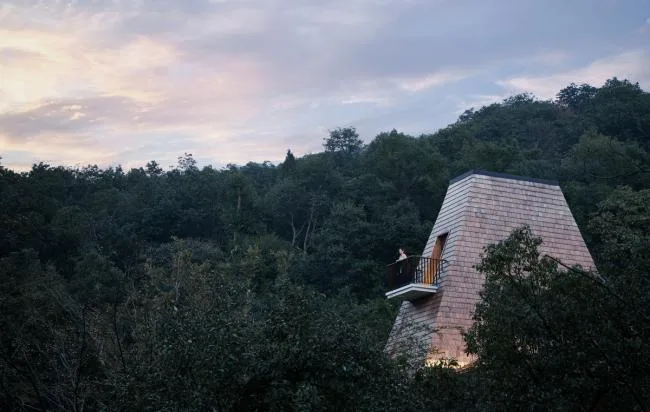
Venue Impression
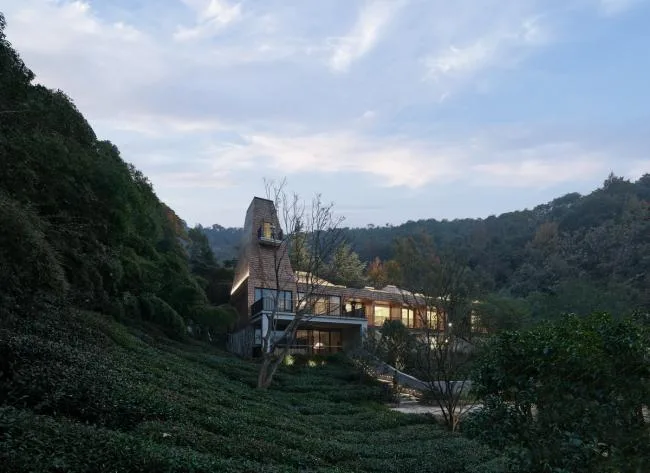
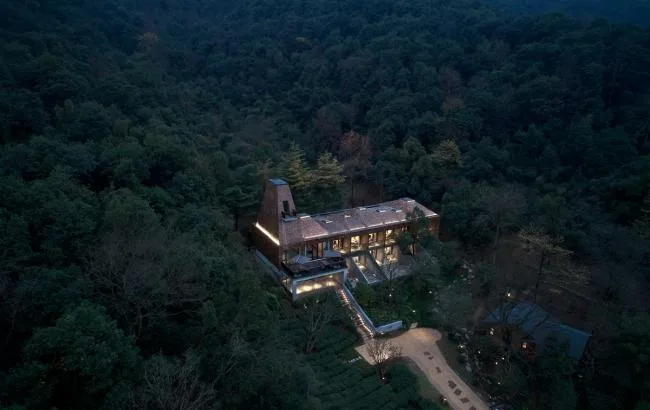
Located in Kaiyuan Forest Park, Hangzhou, this valley is abundant with tea gardens. As you ascend the valley slope, you reach a cluster of tall pine trees at the valley’s end. Beyond the valley, the distant city skyline appears faintly, evoking a desire to climb higher. The combination of tea gardens, pine trees, and the valley’s highlands imparts a unique character to the site.
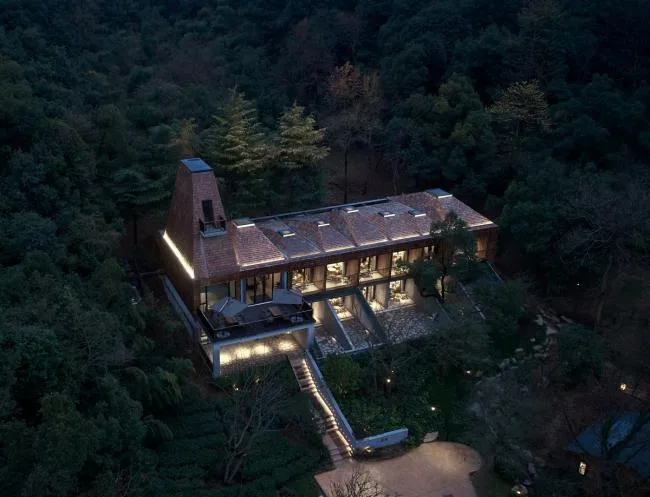
Response to Venue – “Heaven” and “Entering the Earth”
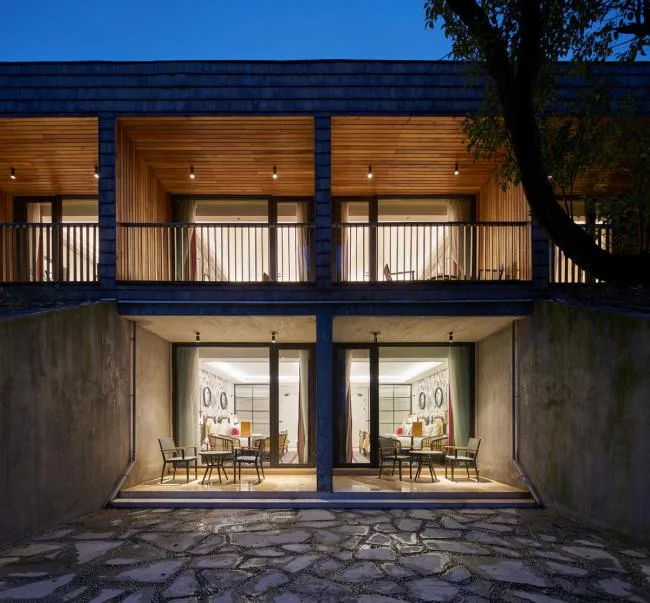
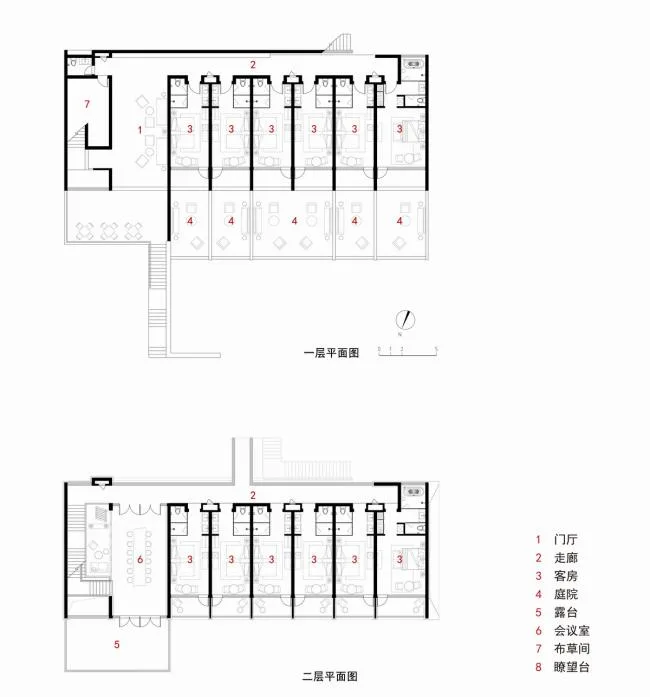
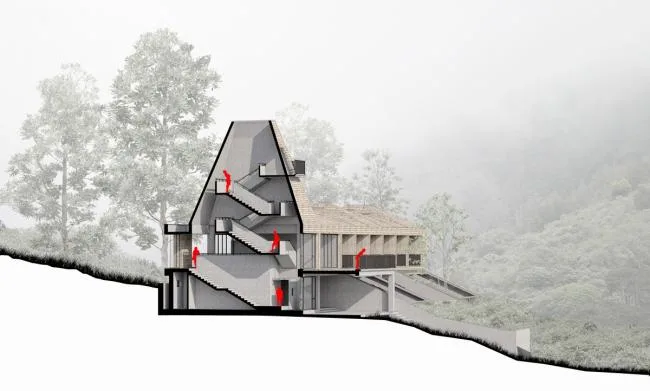
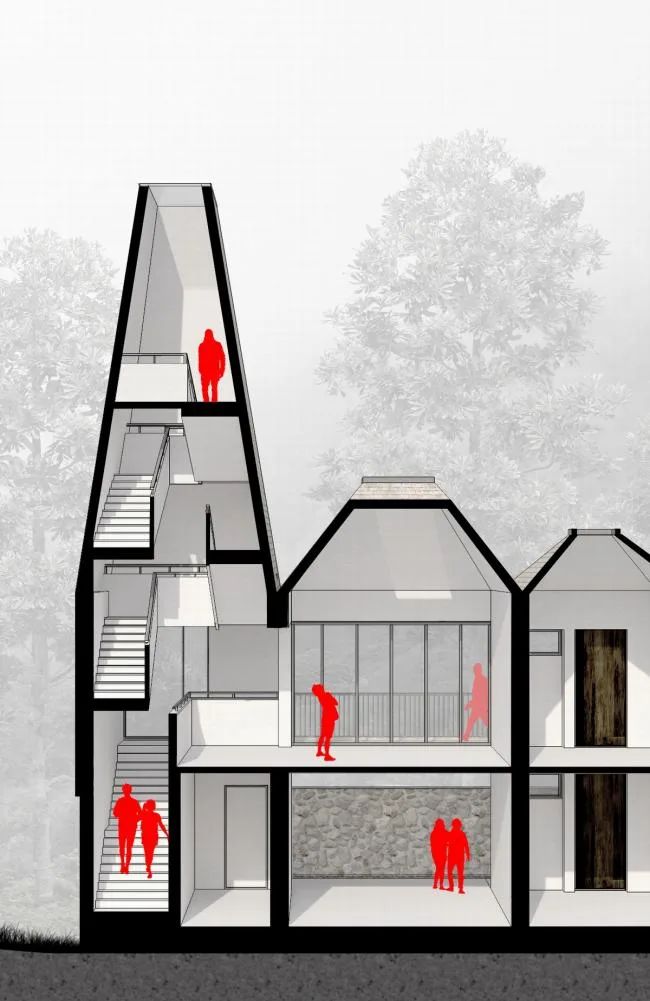
The tea gardens are deeply rooted in the earth, with pine trees soaring into the blue sky, while the buildings nestle between them, serving as both a backdrop to the tea gardens and a complement to the pines. The final design features a two-story resort building. The first floor focuses on connecting with the tea garden, where each room boasts its own garden, separated by sloped walls. These walls extend deep into the earth, seamlessly merging with the tea garden landscape.
The second floor emphasizes harmony with the pine trees, offering panoramic views of both the tea garden and the nearby amusement park. The building accommodates six rooms per floor, totaling twelve guest rooms, along with a public activity hall and an outdoor terrace on the second floor for shared use.
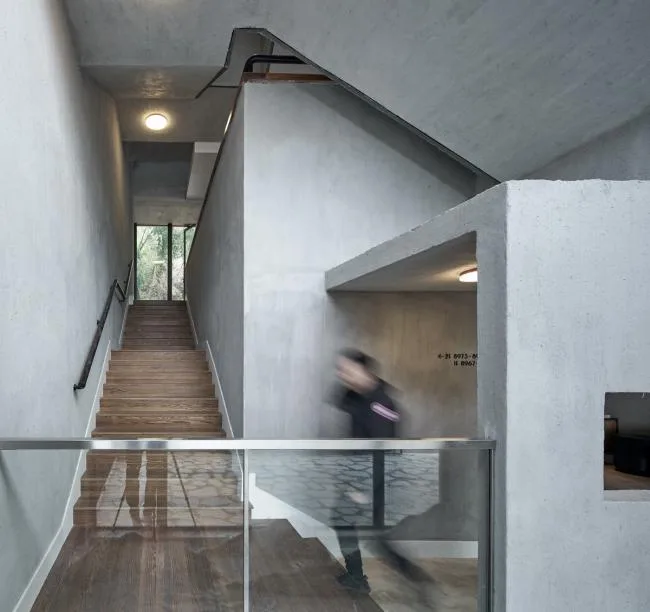
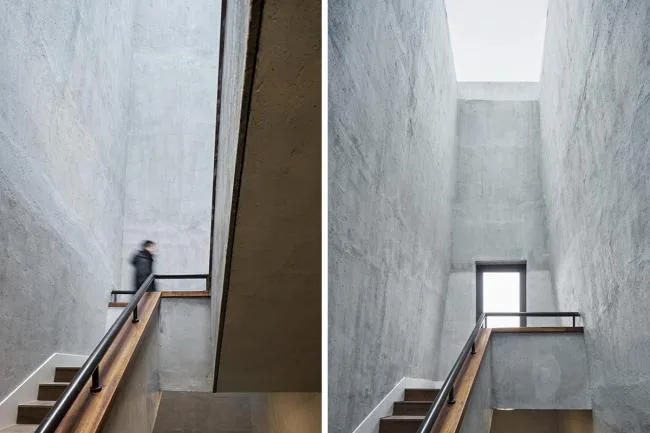
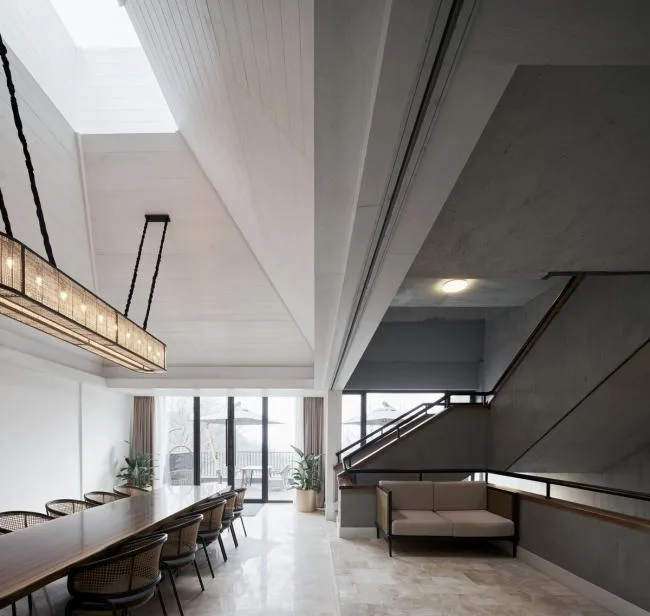
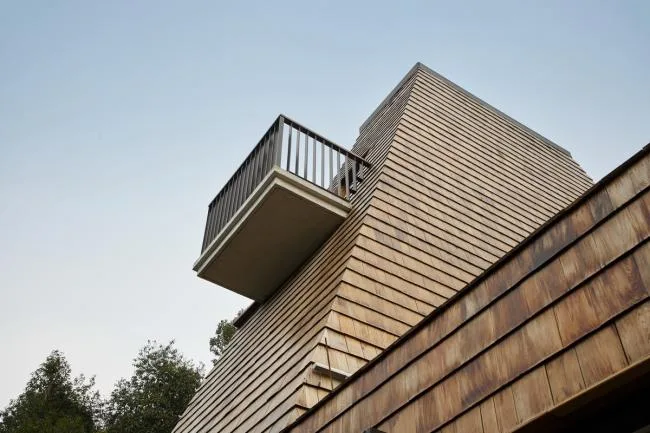
Inspired by the initial idea of climbing higher to take in the view, the design incorporates a staircase ascending two floors through the public lounge, leading to an observation deck created with BIM technology. This deck is intended to be the highest point in the entire valley, overlooking the theme park below. The tranquil location and functional design make this space ideal for corporate team-building events and student gatherings.
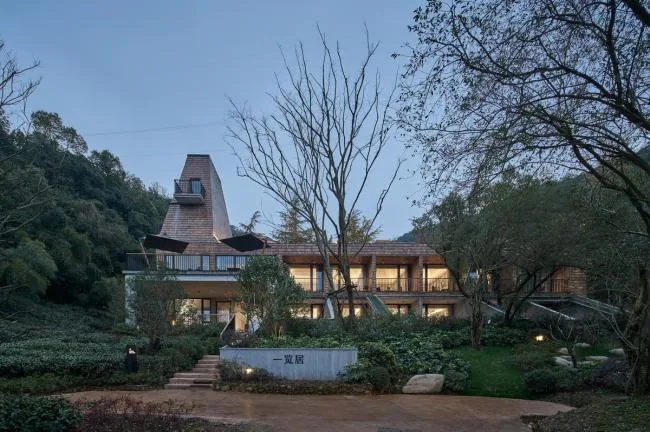
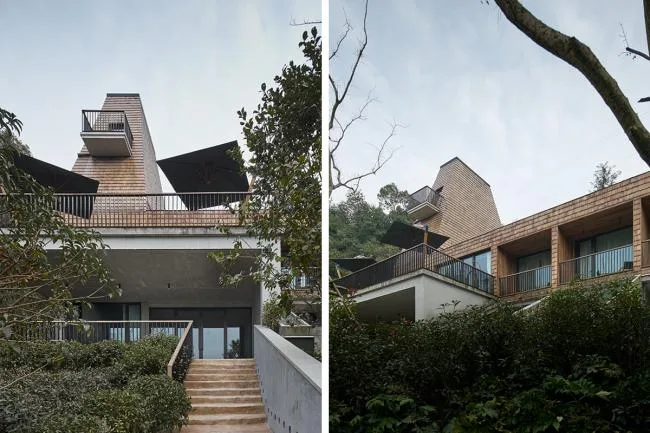
Presentation in Contrast
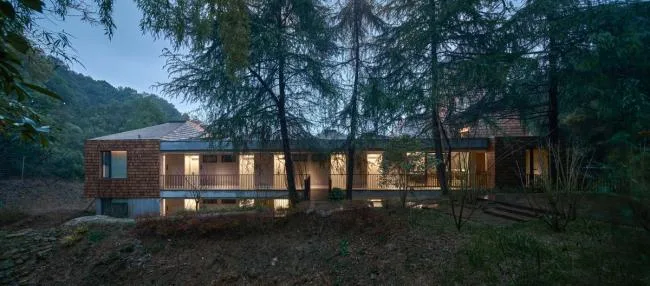
The architectural style presents a striking contrast: the first floor utilizes traditional craftsmanship with cement lime mixed with straw, resulting in a simple, solid base that serves as the backdrop for the tea garden. In contrast, the second floor is clad in wood, creating a light, floating effect above the heavier first floor.
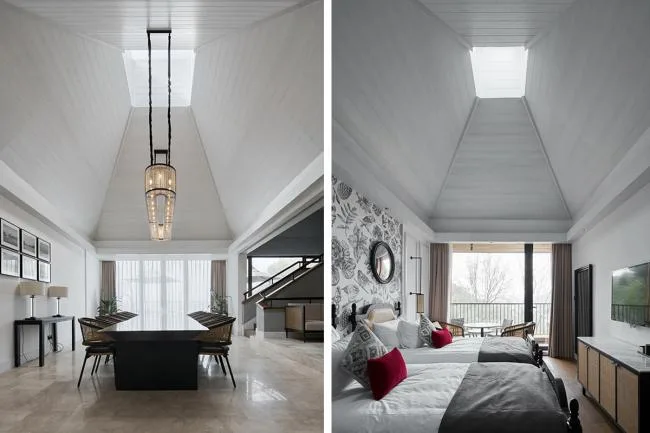
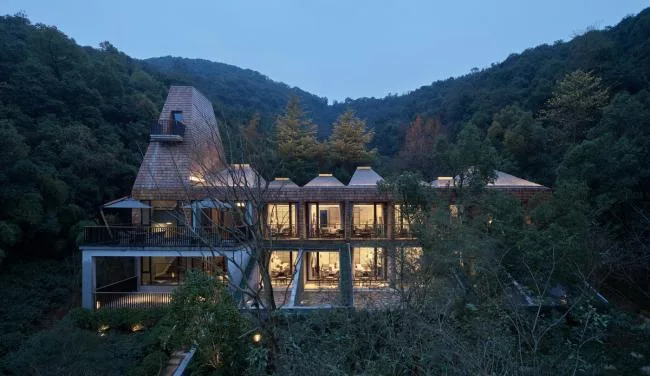
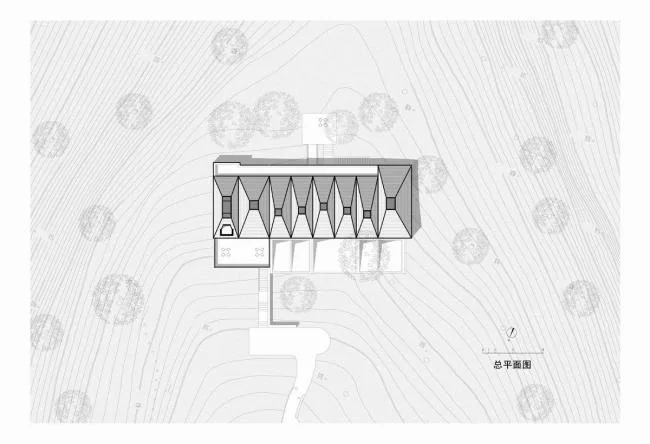
The roof features four gentle slopes with varying angles, forming a dynamic skyline that complements the row of pine trees behind the building. A large tree located centrally on the site appears to emerge through the building itself, symbolizing the project’s commitment to ecological preservation, deep roots in the tea garden, and harmony with the surrounding pine trees.
Looking Back — The Overture
The design process began with careful observation and analysis of the site. The building’s prominent skyline peak is faintly visible upon entering the amusement park, serving as a visual guide and source of anticipation. As visitors pass through the tea garden, they ascend a series of thoughtfully varied steps and stairs. The top skylight allows natural light and shadow to play along the path, creating a dynamic and engaging experience that avoids the monotony typically associated with stair climbing.
Reaching the floating observation platform symbolizes “reaching the summit and overlooking the hills,” offering a moment of accomplishment and breathtaking views. Ultimately, the architecture embodies the experience of immersion and enjoyment within the natural environment, becoming an engaging focal point in the landscape.
Project Information:
Project Name: Watchman in the Valley – A View of the Residence
Designer: Landscape Architecture Design and Research Institute of China Academy of Art
Website: __AI_S_TURL_0__
Contact Email: __AI_S_SC0__
Owner: Kaiyuan Tourism Group
Principal Architects: Chen Xiawei, Wang Kai
Project Location: Hangzhou
Project Year: January 2019
Total Construction Area: 490 square meters
Building Area: 850 square meters
Photography: Shi Zheng, Aoguan Architectural Vision
Design Team: Ke Lijun, Jin Tuo, Chen Liangxing
Project Manager: Yu Guangjie
Interior Design: Montessori Design













Must log in before commenting!
Sign Up